
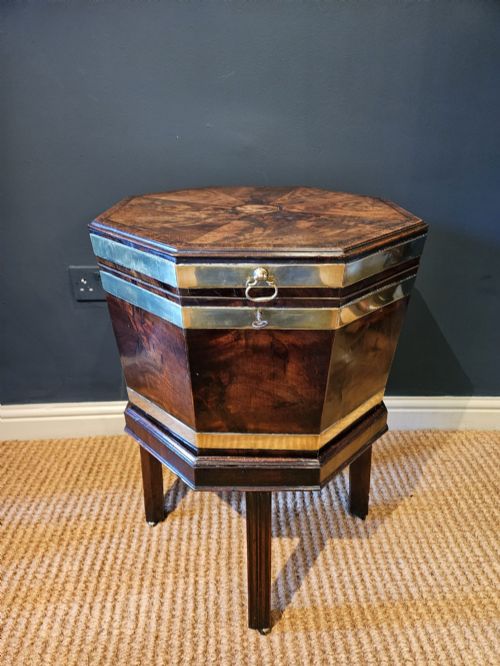
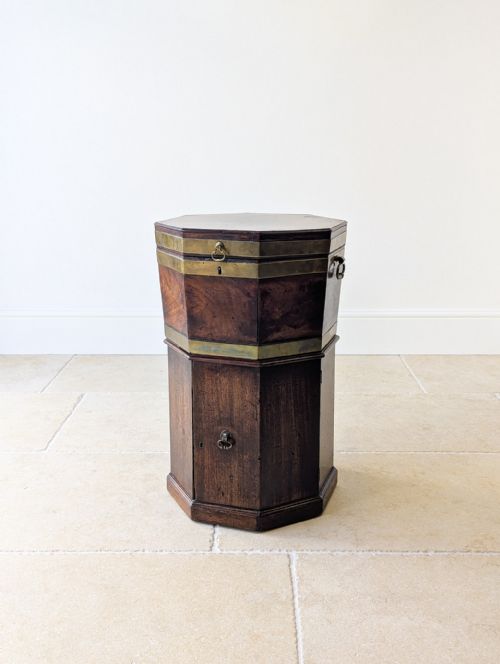
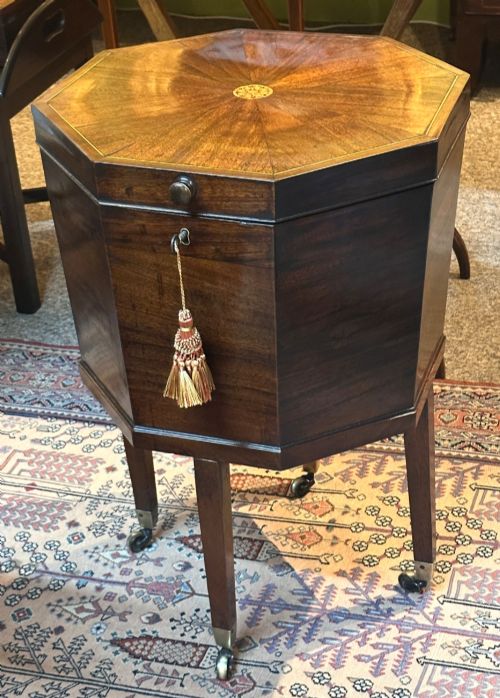
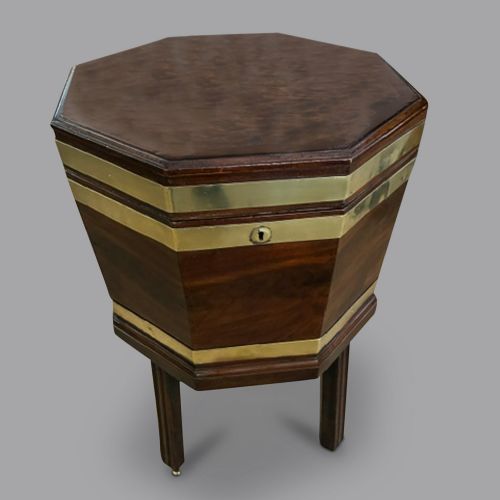


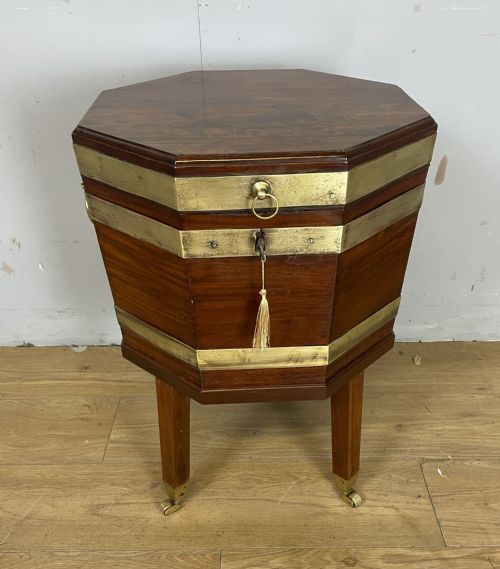


Octagonal Mahogany Wine Cooler
An octagonal mahogany wine cooler keeps bottles chilled at table while showing the finest cabinet-maker's geometry.
Octagonal Mahogany Wine Cooler
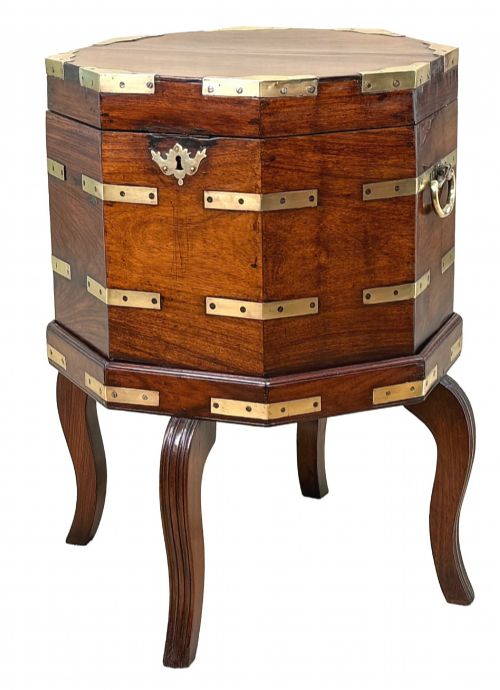
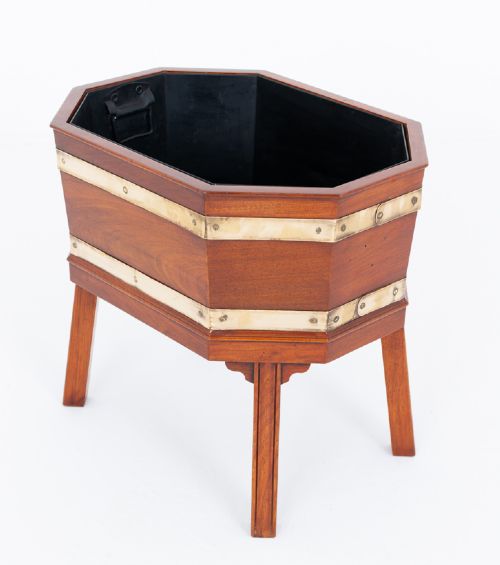
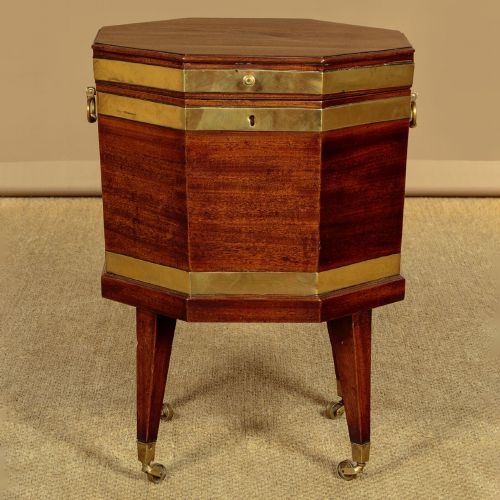
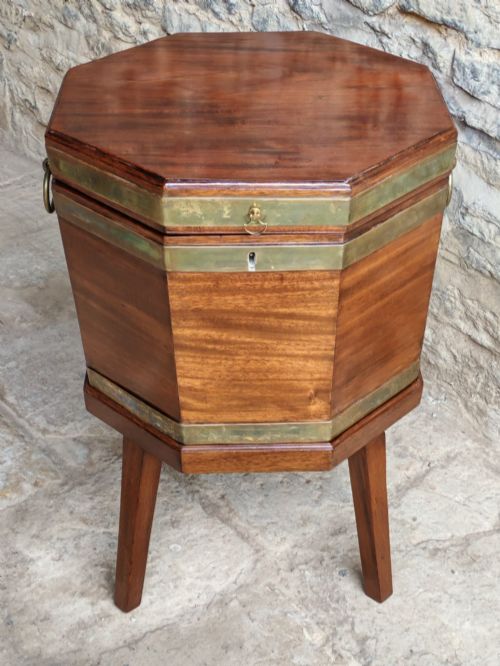
An octagonal mahogany wine cooler is a specialised dining room receptacle designed to hold wine bottles and ice during meals. These items appear primarily in Georgian and Regency forms, alongside later revivals from the twentieth century. The search phrase covers both freestanding vessels and those raised on stands.
Buyers encounter sturdy brass-bound examples alongside refined pieces featuring satinwood inlay or exotic padouk timbers. The majority follow eighteenth and early nineteenth-century traditions, balancing practical utility with formal dining room elegance.
How they were made
Cabinet-makers constructed the bodies from solid mahogany or wood veneer, often utilising tight stave construction to hold liquids securely. Metal bands in brass provided both structural reinforcement around the octagonal shape and a decorative contrast to the dark timber.
Detailed versions incorporate delicate wood inlay and satinwood banding, whilst others rely entirely on the rich grain of the primary wood. Makers integrated lead linings or internal compartments to handle ice and bottles effectively.
Listings span the Georgian and Regency periods alongside twentieth-century revivals, utilising mahogany, padouk, brass, and satinwood.
What varies in quality
Quality rests in the precision of the eight-sided joinery and the selection of the mahogany timber. Superior examples display thoughtful grain matching across the panels and crisp detailing in the brass work.
Later revivals sit alongside eighteenth-century originals, where the depth of colour and patination on the wood separate standard decorative items from superior period pieces.
The Octagonal Mahogany Wine Cooler Glossary
- Cellaret
- A lockable container used for storing wine bottles in the dining room before serving. These pieces often feature internal dividers and lead linings.
- Brass Bound
- Construction reinforced with structural and decorative brass bands encircling the wooden body. This technique adds both strength and visual contrast.
- Padouk
- A dense tropical timber with a rich reddish hue used in colonial cabinet-making. It provides exceptional durability for freestanding dining furniture.
- Satinwood
- A light-coloured, lustrous wood utilised for contrasting inlay and decorative banding on darker cabinet fronts. It creates sharp geometric patterns.
Octagonal Mahogany Wine Cooler: Frequently Asked Questions
How were wine coolers used historically?
These vessels stood beneath sideboards or beside dining tables during grand meals, packed with ice and water to cool bottles before serving.
Servants retrieved the wine as needed throughout the course of the dinner without requiring trips to the cellar.
What is the difference between a cellaret and a wine cooler?
The terms are often used interchangeably in historical records and modern listings to describe bottle-holding furniture.
Strictly speaking, cellarets frequently included locks to secure valuable vintages, whereas wine coolers focused purely on chilling.
How do I identify a Georgian period piece?
Georgian examples display period construction methods, traditional timber ageing, and specific brass hardware configurations typical of the eighteenth century.
Later revivals from the twentieth century often use machine-cut elements and lack the deep patination found on older surfaces.
Where should I place a wine cooler at home?
These versatile pieces work well as freestanding decorative items in dining rooms, living spaces, or hallways.
Their distinct octagonal shape allows them to sit comfortably in corners or beside larger pieces of case furniture.