



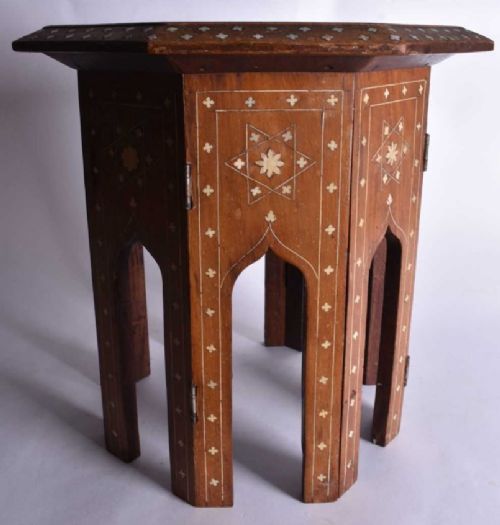
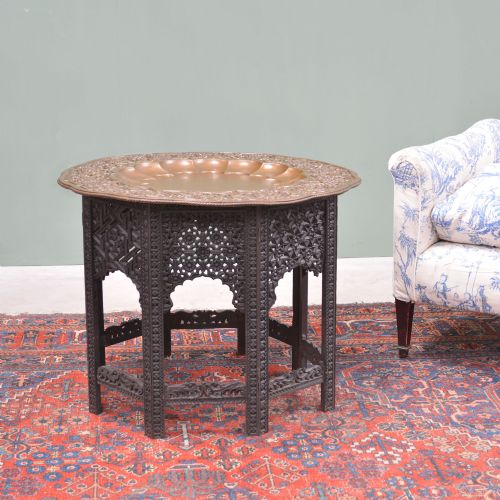
Octagonal Indian Table
When you search for an octagonal indian table, you encounter intricate folding pieces shaped by nineteenth-century colonial craftsmanship and detailed geometric design.
Octagonal Indian Table
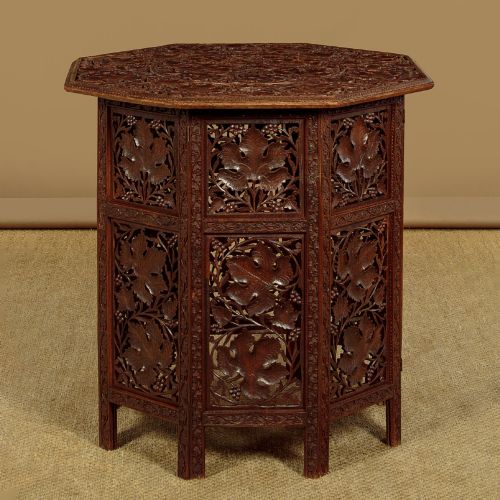
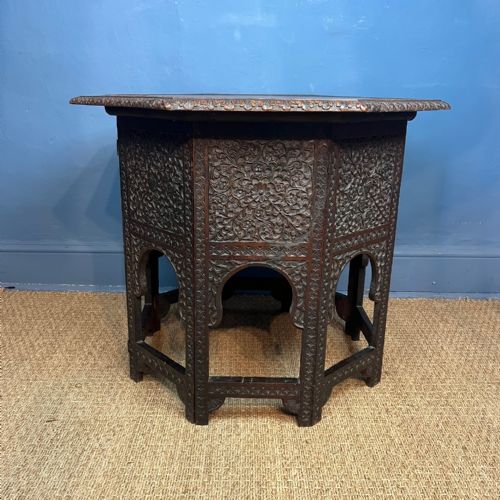
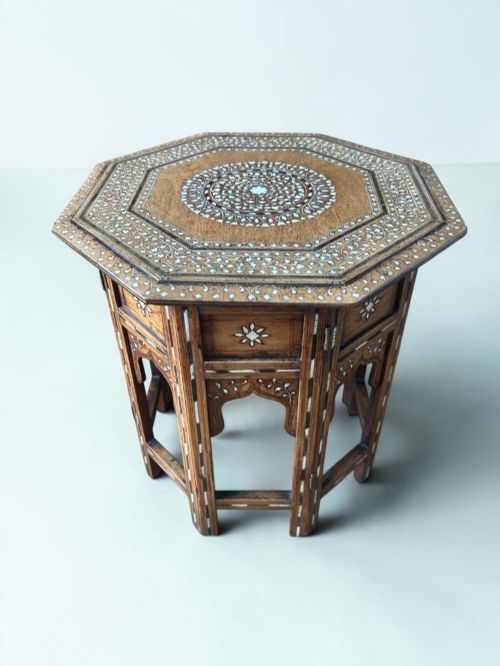
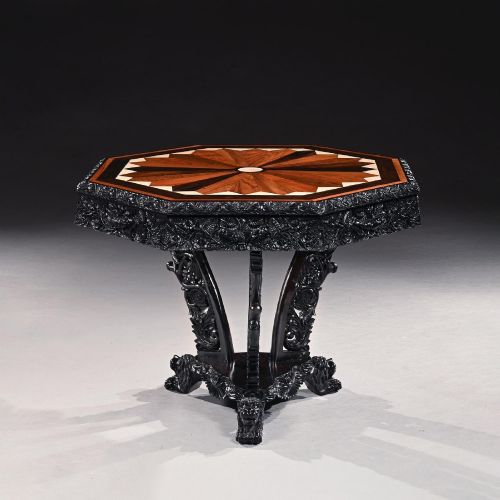
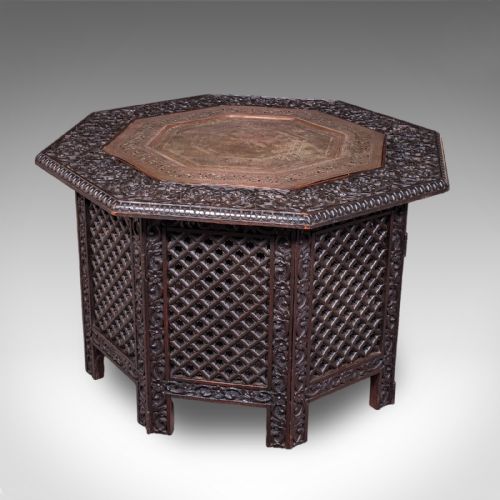
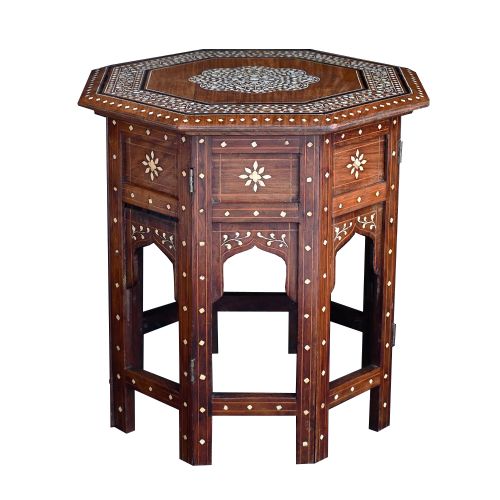
An octagonal indian table typically serves as a compact occasional, side, or coffee table, often featuring a clever folding base that separates from the top for easy storage. Most examples stem from the nineteenth century through the early twentieth century, reflecting Anglo-Indian, Burmese, and Moorish revival aesthetic influences.
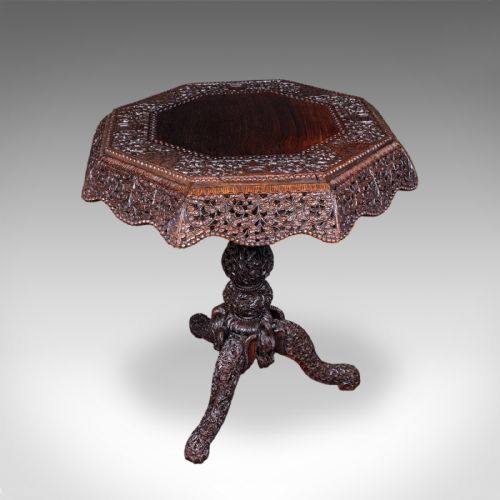
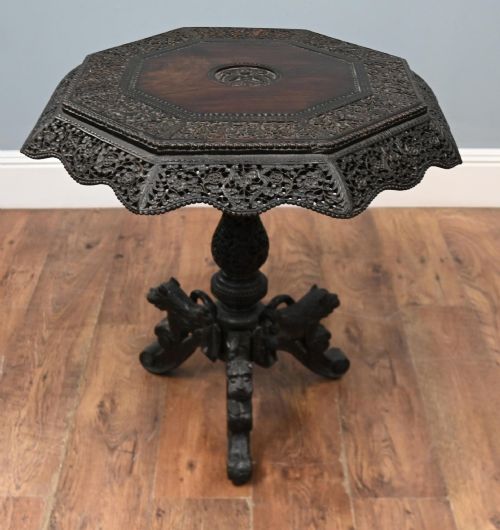
Makers in regions such as Hoshiarpur and the Bombay Presidency produced these items extensively, utilising distinctive geometric silhouettes suited for domestic sitting rooms. Buyers frequently encounter surfaces enriched by elaborate regional carving or contrasting inlay work.
How they were made
Artisans constructed the structural frames using dense tropical hardwoods, including teak, rosewood, padauk, and shisham, which provided a stable foundation for intricate relief carving. Pierced fretwork panels were hand-carved to form collapsible bases that interlock without metal hinges.
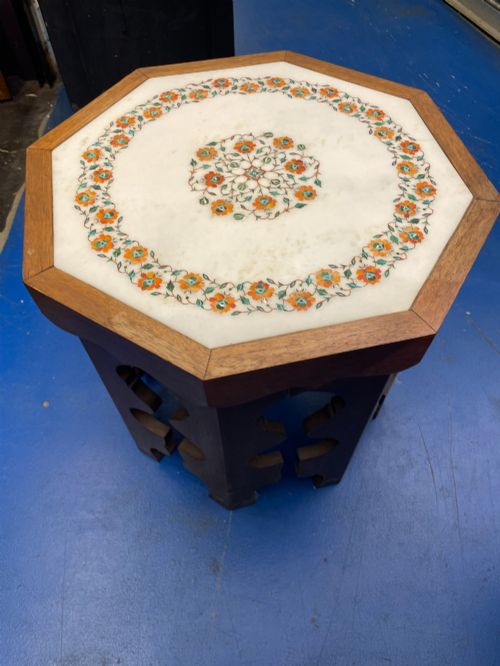
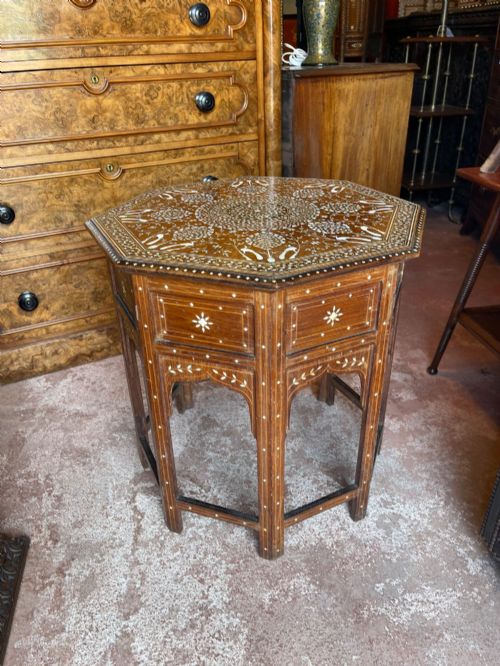
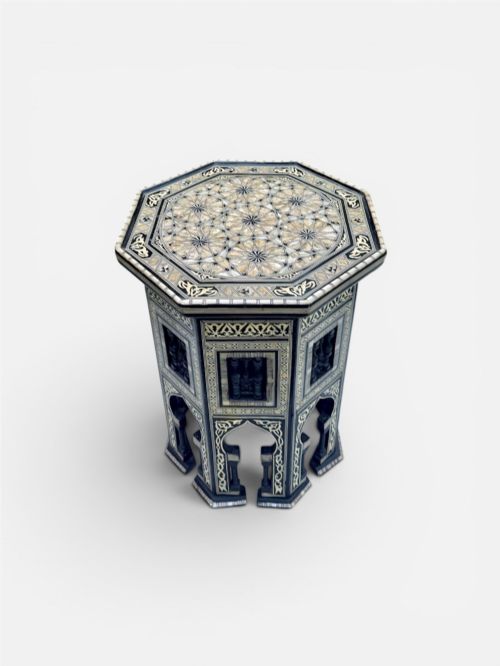
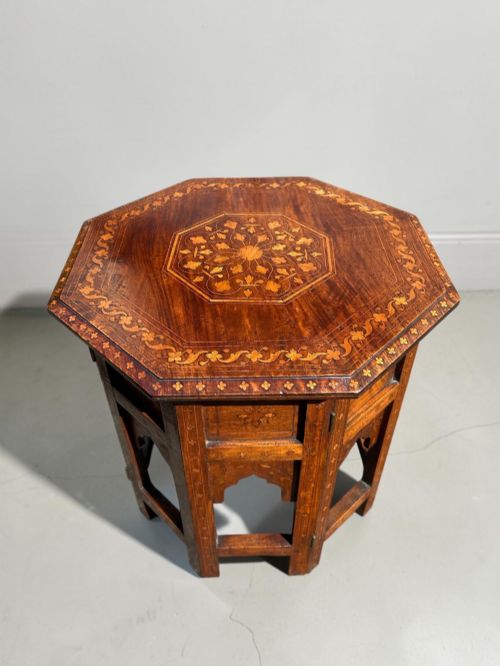
Surfaces were embellished through meticulous inlay techniques, inserting pieces of brass, copper, bone, mother-of-pearl, and specimen woods into shallow chiselled channels within the timber. Certain pieces also incorporate painted Kashmiri designs or marble table tops.
Octagonal Indian Table Retail Price Guide 2026
Typical asking prices for octagonal indian table among the pieces listed under this phrase on Sellingantiques today, from the lower quarter to the upper quarter. They describe what is for sale here now, not the wider market.
Several vintage tables feature cleverly concealed elephant motifs carved directly into the folding wooden bases, offering a subtle nod to their subcontinent origins.
What varies in quality
The distinction between standard and superior pieces lies in the density and precision of the surface decoration, where deeply undercut carving and tightly fitted inlays demonstrate advanced workshop skill. Tables boasting complete, undamaged inlays of bone or mother-of-pearl alongside intricate pierced lattice bases represent higher levels of period execution.
Material selection further defines the range, with dense hardwoods like ebony and padauk or heavy brass wirework commanding greater regard than simpler painted or plain softwood constructions.
Hoshiarpur Workshops·Bombay Presidency Guilds
The Octagonal Indian Table Glossary
- Hoshiarpur
- A district in Punjab renowned for producing intricately carved and inlaid wooden furniture. Craftsmen from this region specialised in geometric bone and brass inlay on dark hardwood.
- Tray top
- A removable tabletop featuring a raised moulded or carved gallery edge designed to prevent items from sliding off. This portable top rests upon a folding support base.
- Shisham
- An Indian rosewood timber frequently utilised for nineteenth-century occasional furniture. Its dark, durable grain accepts fine carving and contrasting inlay exceptionally well.
- Fretwork
- An ornamental design created by piercing wood with a fretsaw to form openwork patterns. This technique forms the lightweight, collapsible lattice bases seen on many folding tables.
- Anglo-Indian
- A stylistic descriptor for furniture made in India during the British colonial period for European export. These items blend traditional regional craft with Western domestic forms.
Octagonal Indian Table: Frequently Asked Questions
How do I fold the base?
The folding mechanism relies on interlocking wooden panels that unlatch and lie flat when lifted from the tabletop. You simply pull the hinged or slotted sections apart to collapse the support structure.
Ensure you support the weight of the top while assembling or dismantling the frame to protect the joints. Many nineteenth-century designs were built for portability and require no tools to pack down.
Were these made for export?
The majority of these tables were produced in India during the colonial era specifically for British and European households. They combined traditional regional woodworking with furniture forms suited to Western drawing rooms.
Exporters shipped thousands of these items back to Britain, which explains their widespread presence in the antique market today.
How do I clean bone inlay?
Dust the intricate carved surfaces gently with a soft, dry brush to remove particles trapped within the recesses. Avoid using liquid cleaners or harsh chemicals that can discolour bone or loosen the surrounding wood.
Applying a minimal amount of appropriate natural wax helps preserve the timber without harming the delicate metal or shell details.
What rooms suit these tables?
Their compact octagonal footprint makes them practical as side tables beside armchairs or as central display surfaces in smaller spaces. The reflective qualities of brass and mother-of-pearl inlay also brighten darker corners.
They pair effectively with various interior styles by introducing warm wood tones and textured geometric patterns into a room.