

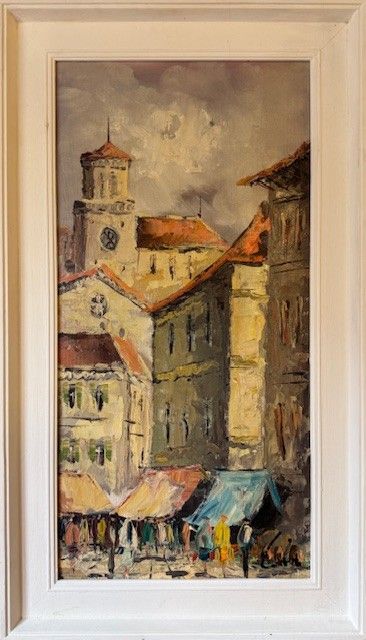


Ochre Framed Canvas Art
Ochre framed canvas art comprises oil paintings on canvas set within wooden frames, spanning Victorian, Impressionist and Mid-Century Modern periods.
Ochre Framed Canvas Art
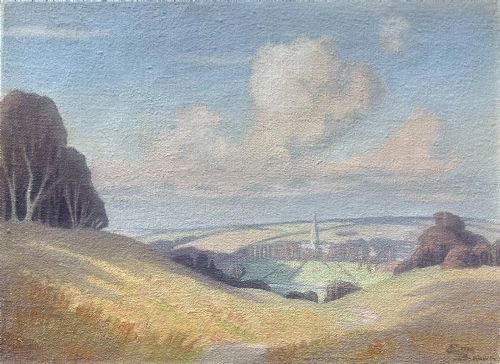
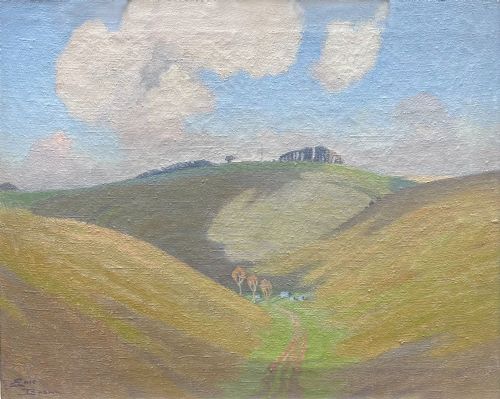
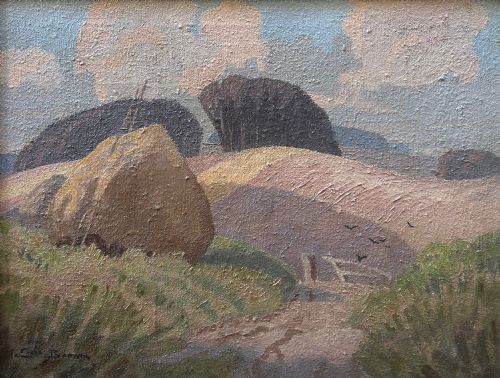
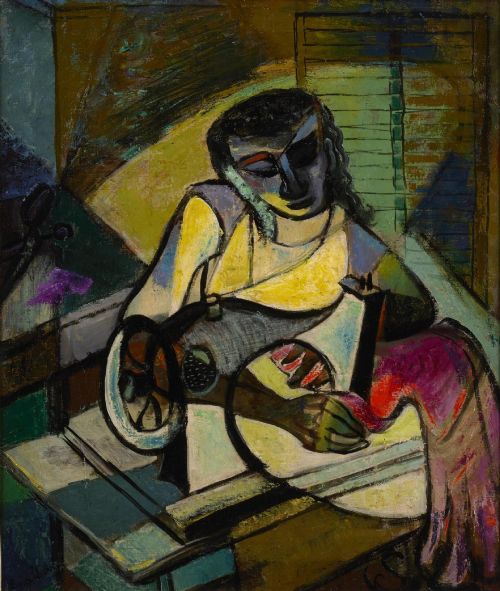
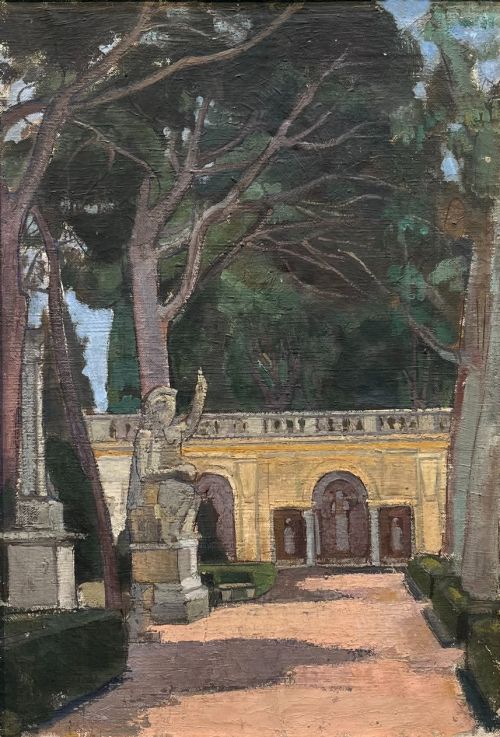
Ochre framed canvas art spans centuries of painted oil works on canvas, ranging from nineteenth-century realism and Victorian portraits to mid-century impressionist landscapes and abstract interiors. These pieces capture diverse subjects such as continental townscapes, rural scenes, river views and figurative studies rendered in oil paint.
The works originate from British, French, Scandinavian, Belgian and international schools, reflecting stylistic shifts from post-impressionism to modernism. Canvas supports dominate the selection, often housed in period wooden frames that complement the painted compositions.
How they were made
Artists painted primarily with oil paint on stretched canvas supports, building rich textures and luminous colour layers that define impressionist and modernist surfaces. Wood provides the structural base for both the stretcher bars and the surrounding frames.
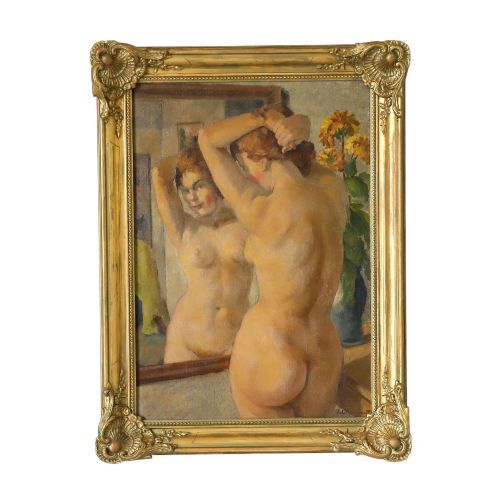
Many frames incorporate gesso mouldings finished with gold leaf or gilt layers, adding depth and tonal warmth around the canvas edge.
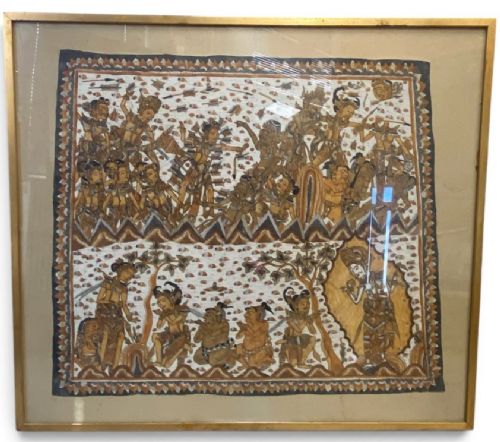
A Balinese Kamasan painting depicts spirited deities on textile, proving that ochre framed canvas art sometimes ventures onto woven cloth.
What varies in quality
Brushwork confidence and composition set ambitious works apart from formulaic studio output, revealing the artist's ability to capture light, atmosphere and form with precision. The harmony between the canvas and its original or period wooden frame also influences the overall integrity of the piece.
Eric Brown·Lena Gurr·Philippe de Rougemont·Raymond Picque·Reginald Grange Brundrit·Cecil Rochfort D'Oyly-John·Amile Coppieters·Ron Folland·William George Meadows·Frederick Christian Lund·Robert Lesley Howey·Ernest Higgins Rigg·Ludwig Hermann·Abdul Kadir Al Rassam·Francis Wall·Otto Rothenburgh
The Ochre Framed Canvas Art Glossary
- Canvas
- A heavy woven fabric stretched across a wooden frame to form the primary painting surface for oil works. This flexible base accepts multiple paint layers without warping.
- Gesso
- A plaster-like mixture applied to wooden frames as a smooth base before gilding or painting. It creates crisp relief details along the moulding.
- Impressionism
- A nineteenth-century painting style prioritising visible brushstrokes and natural light over strict academic finish. Artists captured transient moments in plein air settings.
- Oil Paint
- A slow-drying medium made from pigment particles suspended in drying oils such as linseed. It allows rich blending and heavy impasto textures.
Ochre Framed Canvas Art: Frequently Asked Questions
How do I care for an oil painting on canvas?
Keep the canvas away from direct sunlight and dramatic humidity shifts to prevent paint cracking or wood warping. Dust the surface gently with a soft, dry brush without using water or cleaning fluids.
Ensure the room maintains a stable temperature and inspect the back occasionally to check that the stretcher keys and canvas tension remain secure.
Are these works all original paintings?
Every piece listed under ochre framed canvas art is a unique hand-painted oil work on canvas rather than a reproduction print. Artists applied pigment directly to woven supports using brushes or palette knives.
Signatures or period documentation often accompany the pieces, helping verify their origin across nineteenth and twentieth-century schools.
How can I tell the period of a canvas?
Stylistic markers such as impressionist brushwork, mid-century abstraction or Victorian subject matter offer the first clues to a painting's era. Examining the back of the canvas, stretcher construction and frame style provides further evidence.
Older stretchers often feature wedge keys at the corners and oxidized wood, while canvas textures and nail types change noticeably between the nineteenth and mid-twentieth centuries.
Where were these framed canvas artworks created?
The collection includes pieces from British, French, Scandinavian, Belgian and Middle Eastern artists working within various regional movements. Creators often painted local landscapes, town squares or domestic interiors in their home countries.
Colonies, travels and international schools also influenced artists who captured foreign markets, deserts and alpine vistas during the nineteenth and twentieth centuries.