

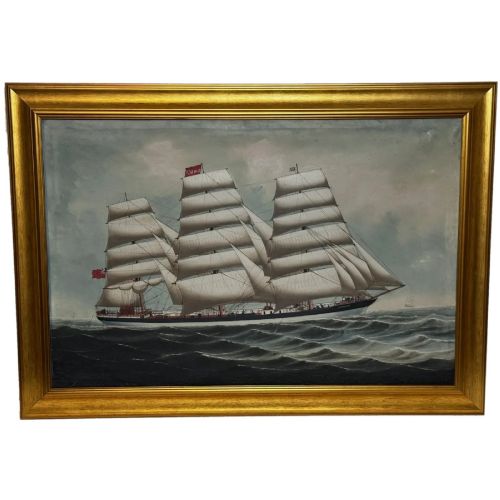
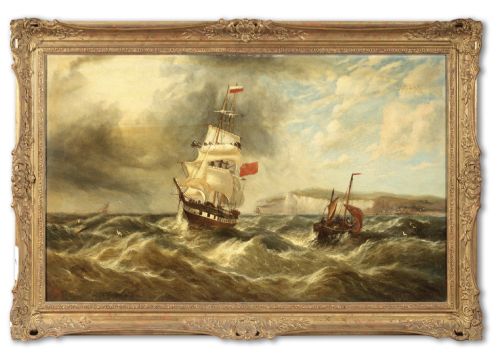
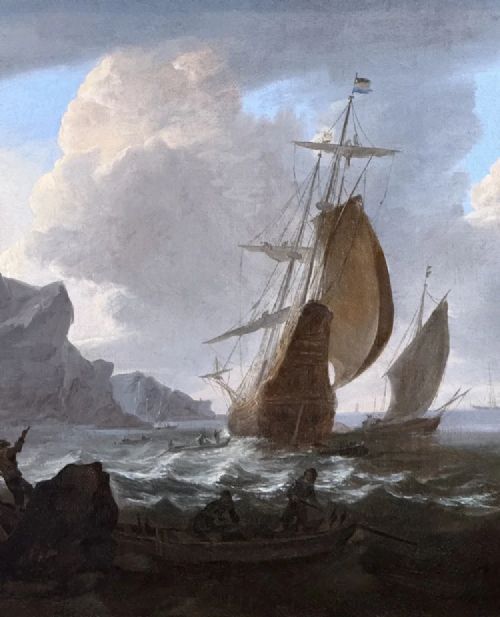
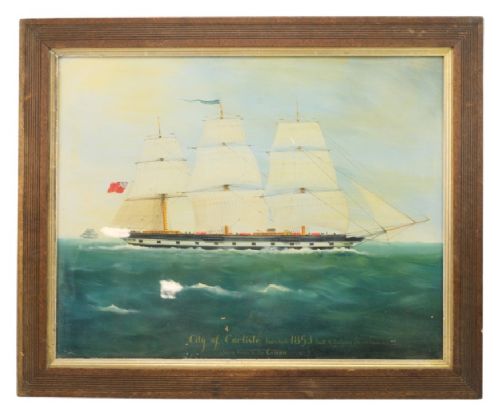
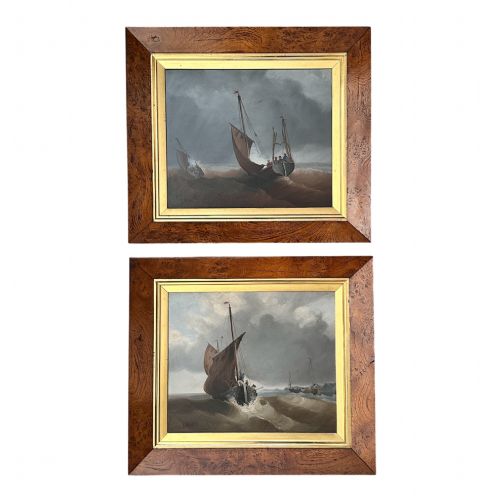
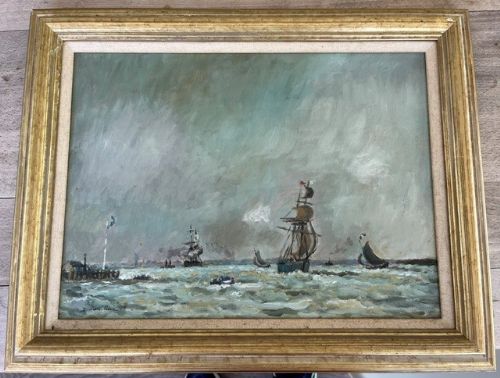


Ocean Sailing Oil Painting
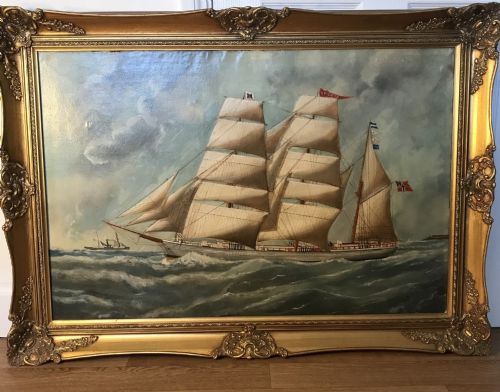
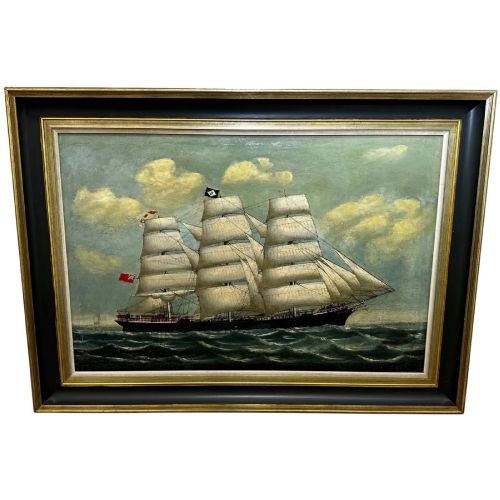
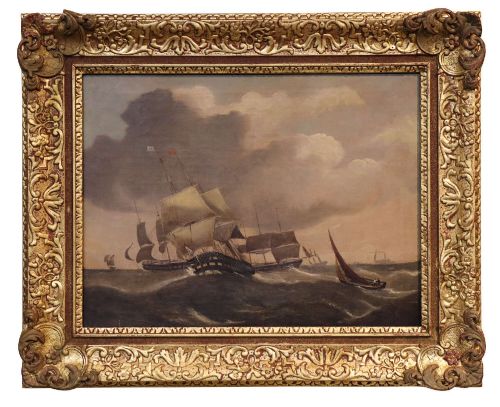
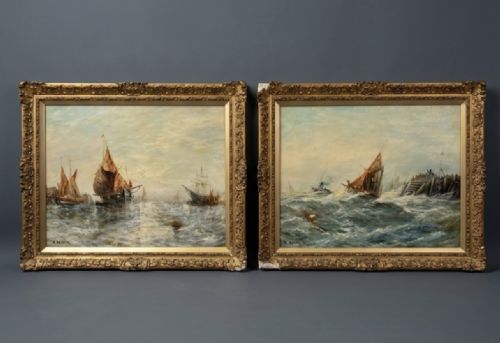
An ocean sailing oil painting captures the drama of square-riggers, barques and coastal craft battling heavy seas or catching a fair breeze on canvas.
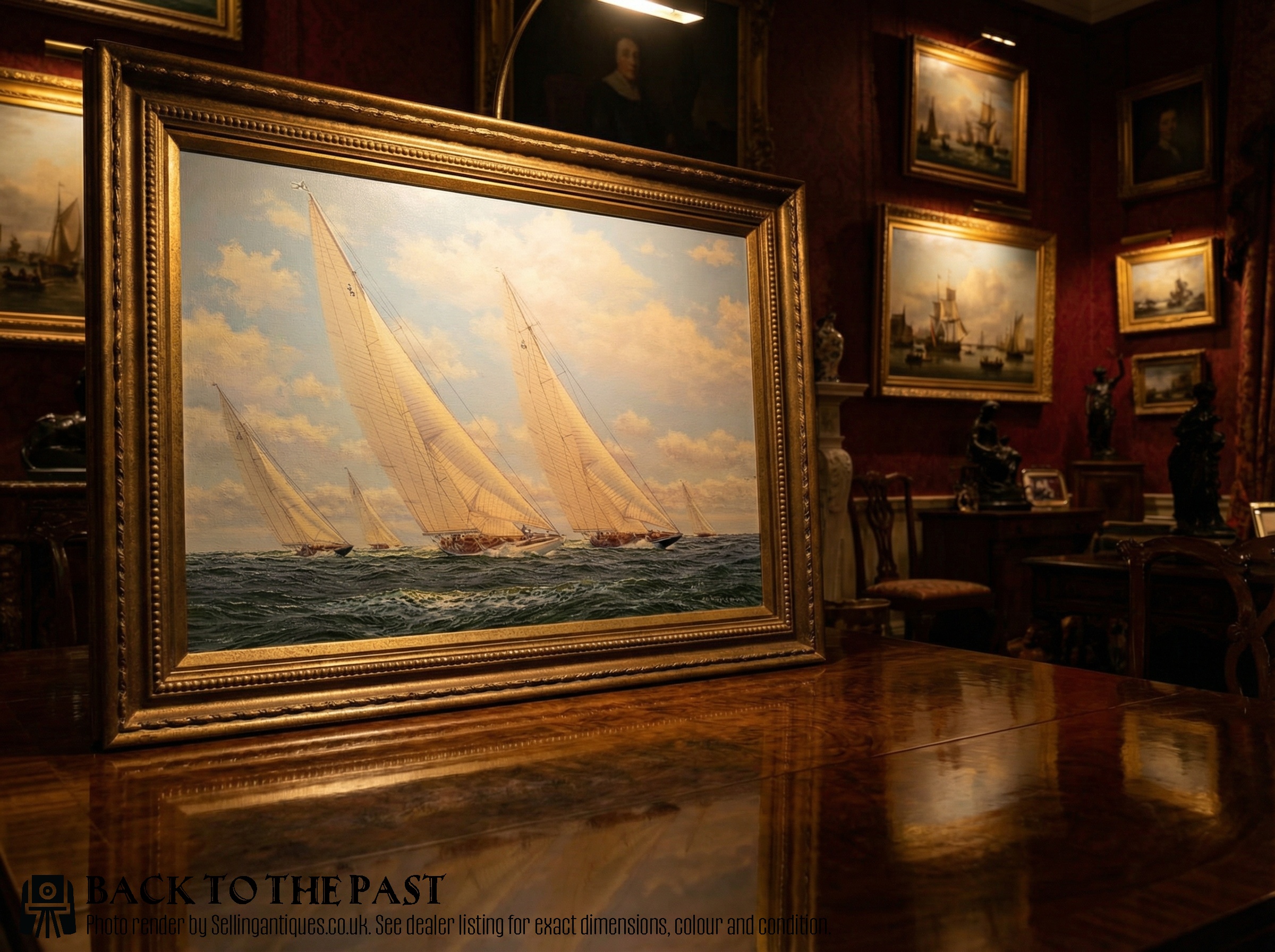
Ocean Sailing Oil Painting
An ocean sailing oil painting is a maritime artwork depicting ships, schooners and clippers navigating open waters, coastal inlets or heavy gales. These works span from the 17th century through the Victorian era and into the mid-20th century, capturing historical vessels and dramatic nautical scenes.
The versions most commonly met on this page are 19th-century and Victorian canvases rendered in oil paint on canvas or board, often housed in original gilt frames. They portray British merchant ships, Dutch fishing boats and clipper ships under various weather conditions.
Subjects range from tranquil coastal scenes off the Isle of Wight to tempestuous night seascapes and historic ship portraits. Painters record specific named vessels, such as the Cutty Sark and the Thermopylae, alongside atmospheric depictions of unknown maritime traffic.
Materials and Technique
Artists utilise oil paint applied to prepared canvas or wooden board, building up rich layers to render the churn of water and the swell of canvas sails. The medium allows for subtle tonal gradations in capturing the grey and blue hues of open seas.
Gilt frames, frequently embellished with gold leaf over wood, enclose many of these maritime pieces to complement the painted light within the composition. Canvases are stretched over wooden frames or secured to boards, occasionally showing historic signatures and attribution inscriptions.
The selection spans from seventeenth-century Dutch boats to mid-twentieth-century impressionist seascapes.
Gradations in Quality
The standard of execution in a maritime canvas rests upon the artist's command of marine architecture, rigging accuracy and the fluid dynamics of breaking waves. Stronger works demonstrate a precise understanding of how wind and swell interact with a vessel's hull and sails.
Provenance and attribution elevate certain pieces, particularly when signed by documented marine painters or tied to specific historical vessels and shipping lines. The integration of the original gilt frame and the preservation of the paint surface also influence the standing of an individual work.
Reginald Arthur Borstel·John Rose Miles·Bonaventura Peeters·Lai Fong·John Moore of Ipswich·Elisabeth Bardon·Charles Napier Hemy·Daniel Sherrin·Abraham Hulk Snr·Stephen J. Renard·Dion Pears·George Gregory·George Henry Knight·Marie-Edouard Adam·John Callow·Gustave de Breanski·Richard Ball Spencer
The Ocean Sailing Oil Painting Glossary
- Canvas
- A heavy woven fabric stretched across a wooden frame to serve as the foundational support for oil painting.
- Gilt
- A thin layer of gold leaf or gold paint applied to wooden picture frames to provide a decorative metallic finish.
- Seascape
- A pictorial representation depicting the sea, coastal views, ships or maritime engagements.
- Impasto
- A technique where paint is laid on an area of the surface in very thick layers, standing out from the canvas.
- Clipper
- A very fast nineteenth-century merchant sailing ship with three masts and a square rig.
Ocean Sailing Oil Painting: Frequently Asked Questions
How do I identify the ship in a painting?
Look for painted lettering on the hull, stern or flying pennants, which often record the vessel's name or home port. Contemporary inscriptions on the reverse of the canvas or frame also help identify the ship.
Matching the rig, hull form and funnel details against historical records of clipper ships and merchant barques provides further confirmation.
Where should I hang a marine painting?
Position these works away from direct sunlight and steady heat sources to protect the oil paint and canvas from drying out or warping. A wall with stable ambient room temperature ensures the preservation of both the painting and its gilt frame.
Selecting a position with balanced room lighting allows the textured impasto and fine brushwork of the sea to read clearly.
How do I distinguish nineteenth-century works?
Examine the canvas preparation, stretcher frame construction and the ageing characteristics of the oil paint layer under magnification. Nineteenth-century maritime art frequently employs specific colour palettes dominated by deep indigo waters and warm ochre skies.
Stylistic conventions of the period prioritize accurate rigging and dramatic atmospheric conditions over abstract interpretation.
What is the difference between board and canvas?
Canvas consists of woven textile stretched over a wooden frame, offering slight give and a textured surface for brushstrokes. Board utilises a rigid wooden or composition panel base that provides a completely stable painting surface.
Both supports were used across different periods, though board often appears in smaller coastal studies and plein air sketches.