

Oak Writing Desk Cabinet
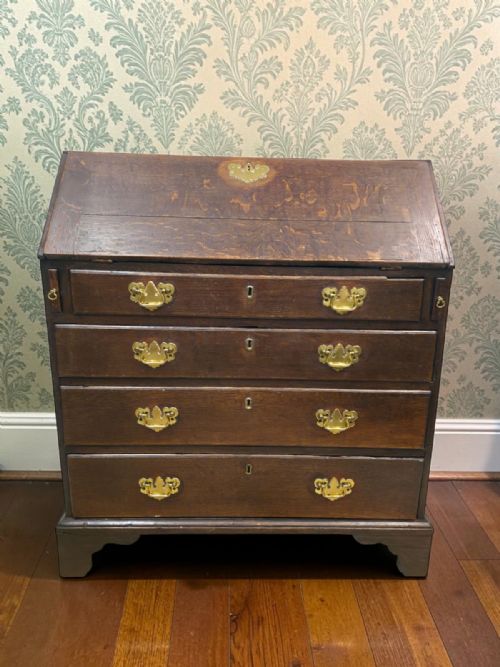
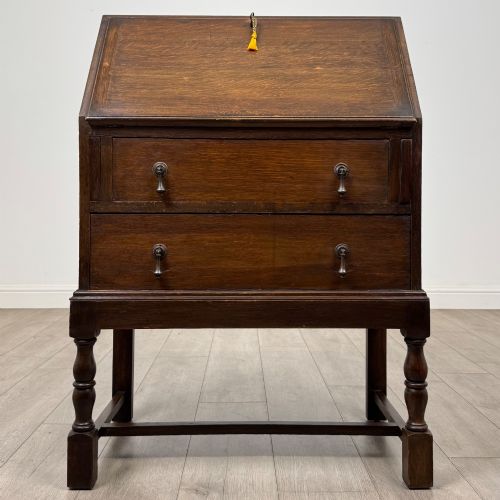
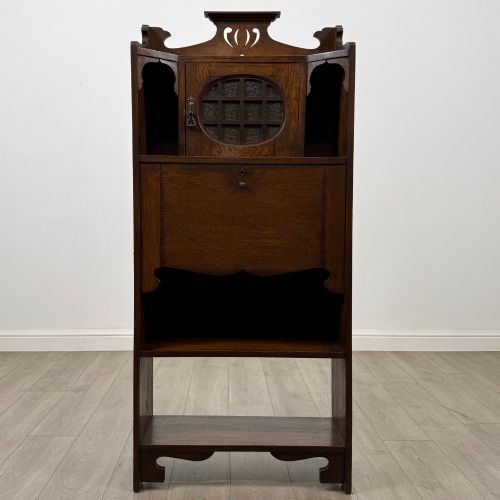
An oak writing desk cabinet brings solid timber and fitted compartments together to anchor a study in traditional craftsmanship.
Oak Writing Desk Cabinet
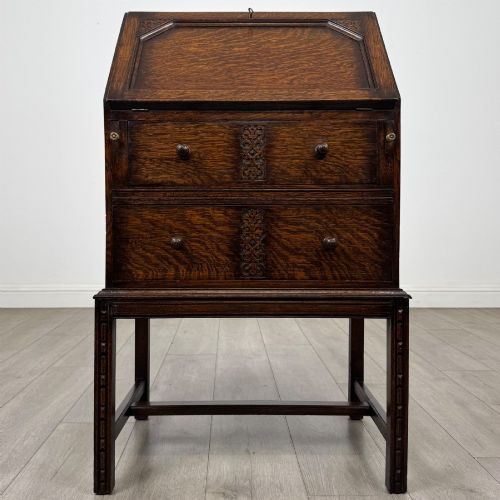
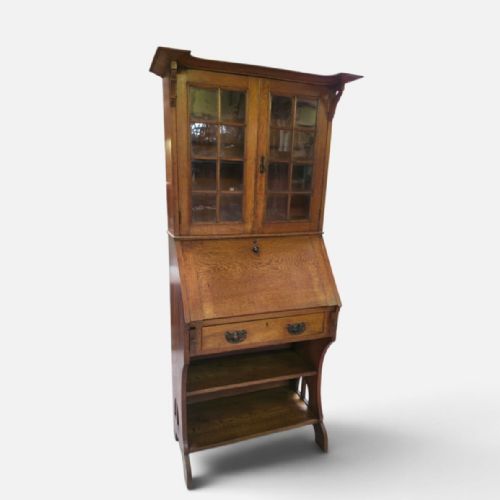
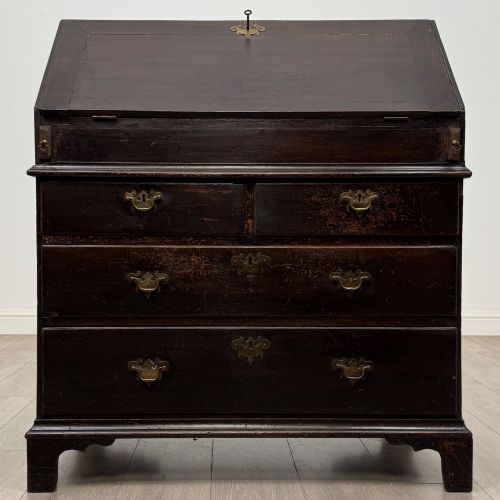
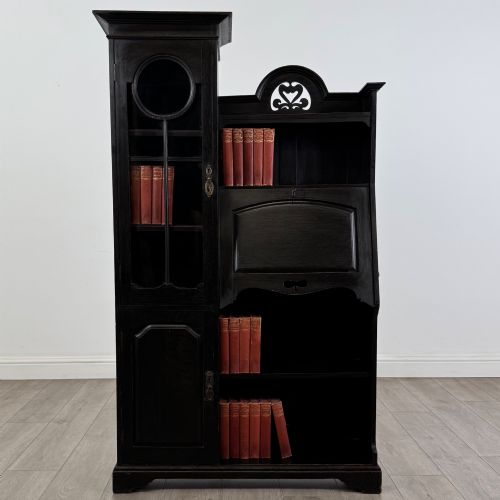
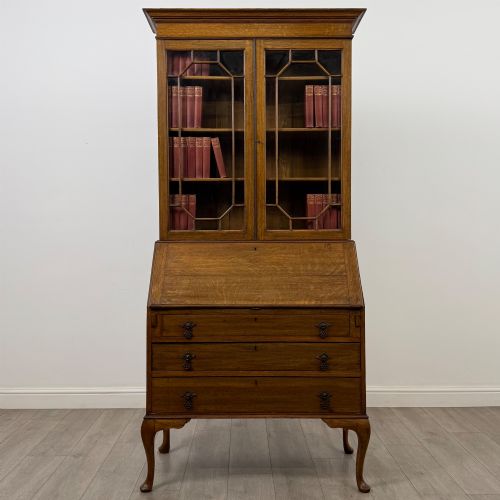
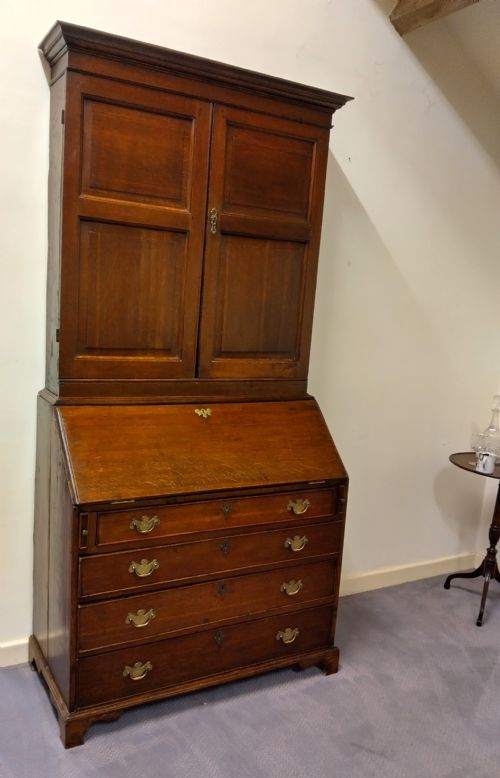
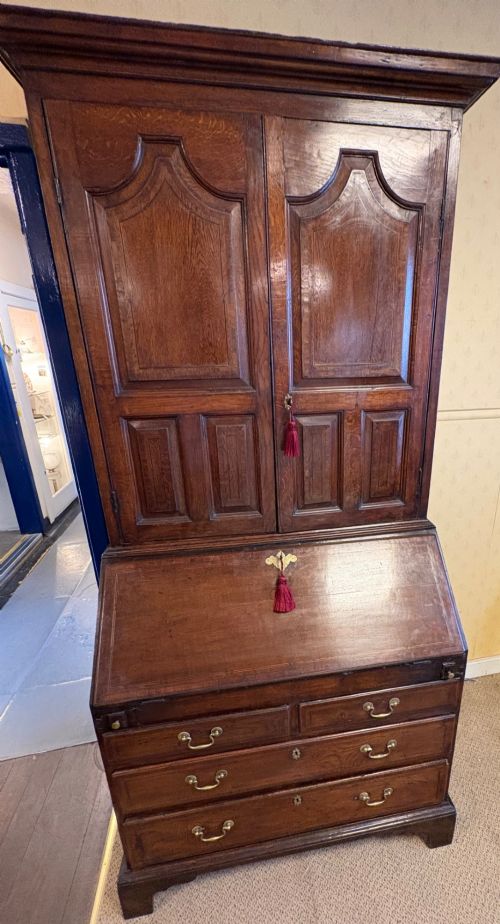
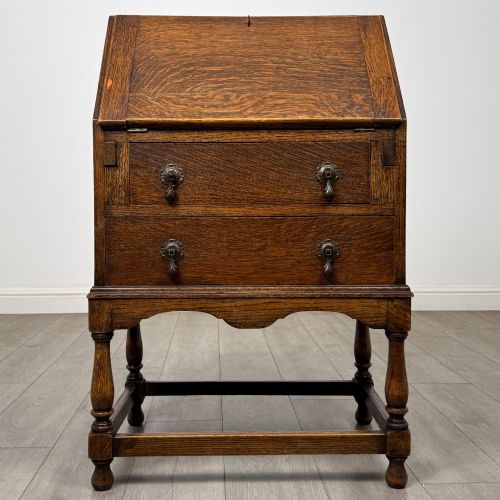
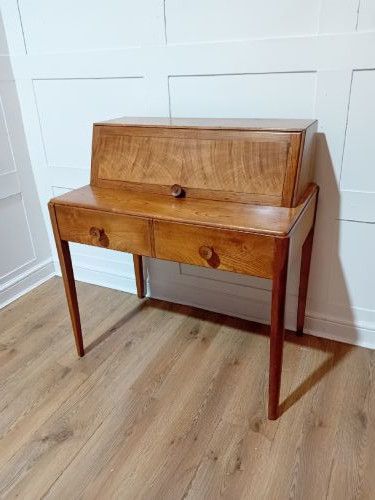
Edwardian and Victorian examples appear frequently on this page, alongside earlier Georgian and 17th Century forms. Bureau bookcases and fall-front writing desks dominate the selection, offering drop-down writing surfaces paired with internal pigeonholes and shelving.
Materials and construction methods
Makers utilised solid oak, often selected for its durability and prominent grain, sometimes finished in golden tones or ebonised surfaces. Structural integrity relied on traditional joinery, whilst secondary elements incorporated brass hardware, leather writing inserts, and glazed cabinet doors.
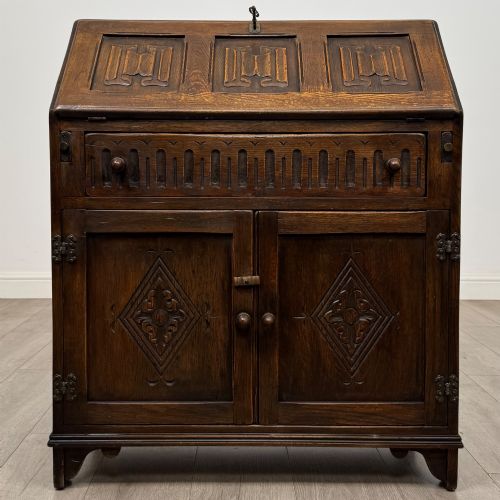
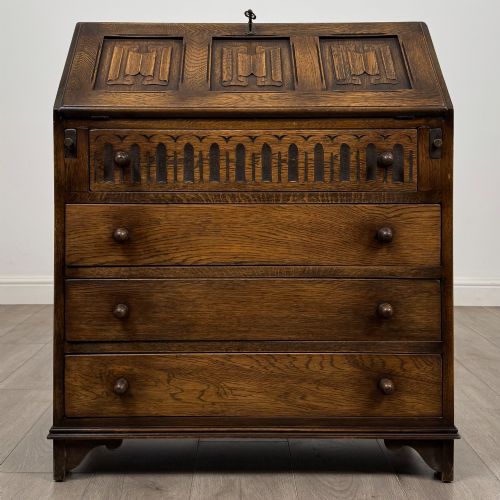
Decorative details showcase hand-carved motifs such as linenfold panelling and Green Man reliefs, particularly on pieces from the Victorian and Edwardian eras. Later Arts and Crafts examples demonstrate simpler lines, sometimes featuring wrought iron hinges or specific workshop labels.
The listings span eight distinct periods, reaching from 17th Century strong boxes and vernacular desks up to 1930s Arts and Crafts workshop pieces.
Defining characteristics of quality
The standard of a piece rests on the calibre of its timber selection, the crispness of any hand carving, and the complexity of the internal arrangement. Superior examples exhibit finely dovetailed drawers, panelled backs, and well-proportioned stepped interiors rather than plain surfaces.
Construction details distinguish workshop pieces from mass-produced items, such as the weight of the brass handles and the tight fit of the fall-front writing slope. Original glass in the bookcase sections and intact leather inserts elevate the standing of a desk cabinet.
ARTHUR BASIL REYNOLDS·Stanley Webb Davies·Bryn Mawr
The Oak Writing Desk Cabinet Glossary
- Bureau bookcase
- A writing bureau combined with an upper shelving or display section enclosed by doors. This form maximises vertical storage space in smaller rooms.
- Fall front
- A hinged writing flap that pulls down to create a horizontal desk surface. It conceals pigeonholes and small drawers when closed.
- Linenfold
- A style of carved wooden panelling that imitates folded linen cloth. It appears frequently on Tudor Revival and Edwardian pieces.
- Secretaire
- A piece of furniture containing a drawer or compartment that drops down to form a writing desk. These often integrate into bookcases or cabinet furniture.
- Stationery box
- A tabletop cabinet designed to hold writing paper, envelopes, and inkwells. They often feature fall-front lids or sloping doors.
Oak Writing Desk Cabinet: Frequently Asked Questions
What is a bureau bookcase?
A bureau bookcase combines a sloping writing desk with a shelved upper cabinet enclosed by doors. It provides a complete workstation and library in a single vertical footprint.
Lower sections feature drawers beneath the writing flap, whilst upper tiers use wood-panelled or glazed doors to display books.
How do I use a fall-front desk?
The hinged front panel lowers to form a flat writing surface supported by pull-out desk arms or the drawer fronts themselves. This reveals an interior fitted with small drawers and pigeonholes.
When writing concludes, the flap lifts back into a vertical position to conceal correspondence and keep the workspace tidy.
What is an Arts and Crafts bureau?
An Arts and Crafts bureau emphasises visible hand craftsmanship and simple structural forms over heavy ornamentation. These pieces often highlight the natural grain of golden oak.
Hardware tends to consist of hammered brass or wrought iron, reflecting ideals that rejected industrial standardisation in favour of traditional workshop methods.
How do I identify a Georgian oak desk?
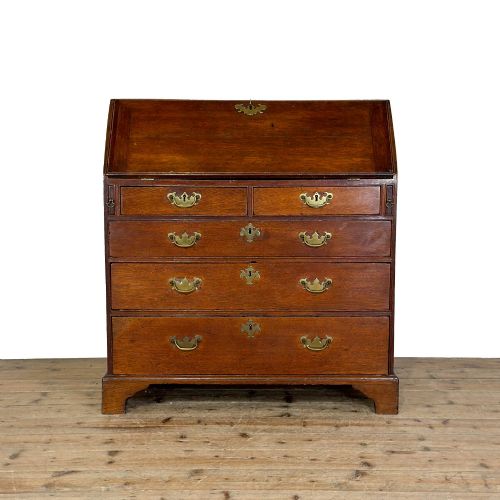
Georgian oak pieces date from the 18th Century and early 19th Century, displaying robust proportions and restrained panel construction. Interiors often feature stepped arrangements of small drawers.
Drawer construction relies on hand-cut dovetails and solid oak linings, whilst exterior decoration remains minimal compared to later Victorian carving.