

Oak Writing Bureau Cabinet
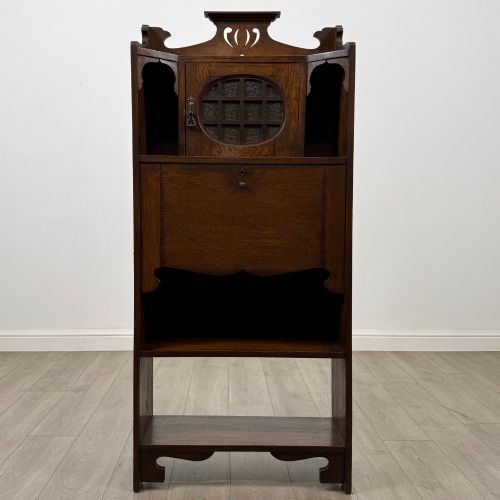
An oak writing bureau cabinet brings together a sloping fall front and fitted interior with upright storage, uniting workspace and bookcase.
Oak Writing Bureau Cabinet
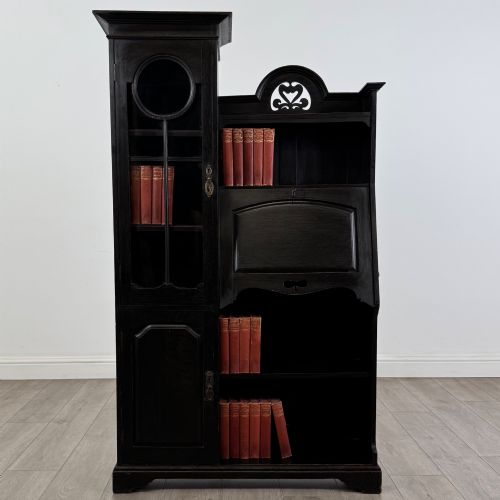
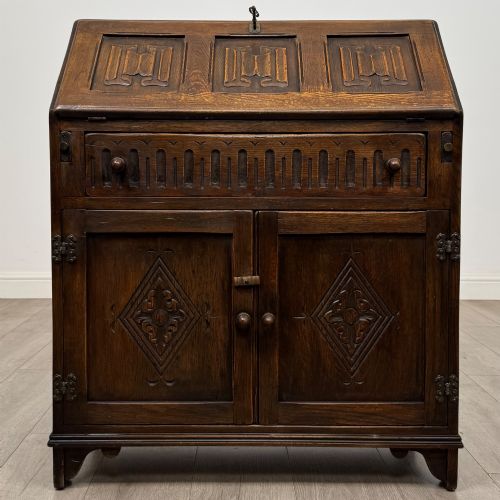
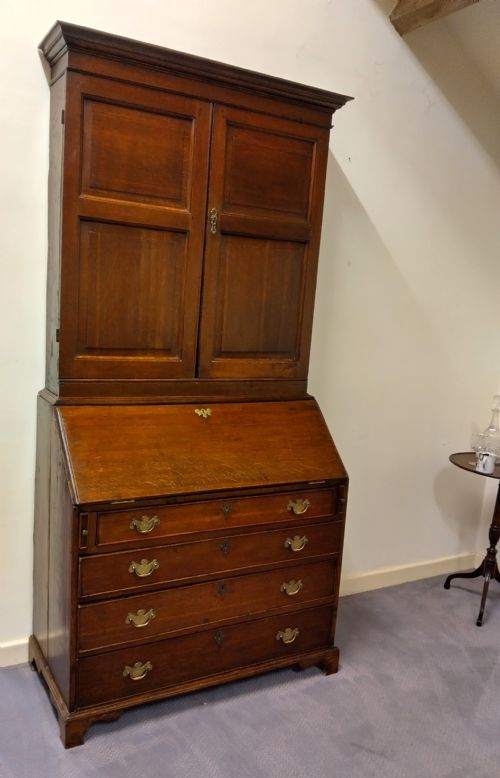
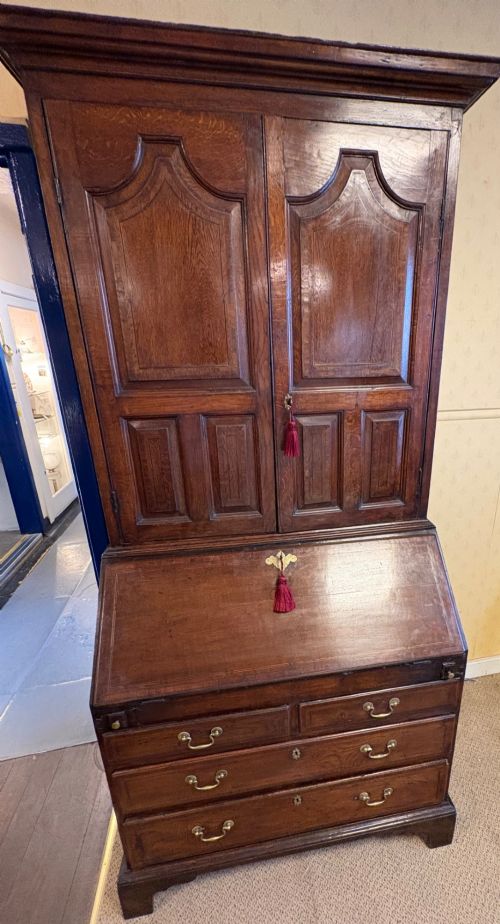
An oak writing bureau cabinet combines a drop-down writing surface with upper shelving or glazed display space, creating a dual-purpose piece for study and storage. The form spans several centuries, appearing in vernacular 17th-century vernacular shapes, Georgian fall-front iterations, Victorian carved interpretations, and later Arts and Crafts expressions.
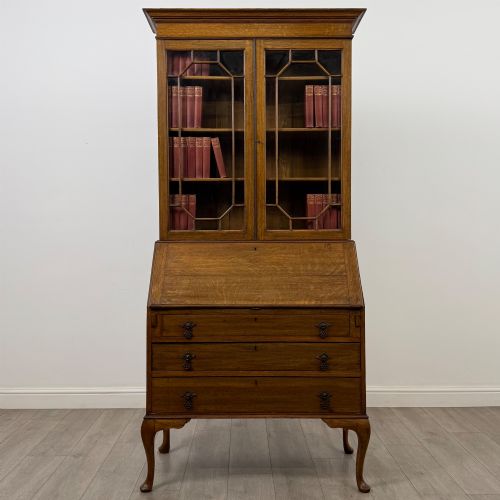
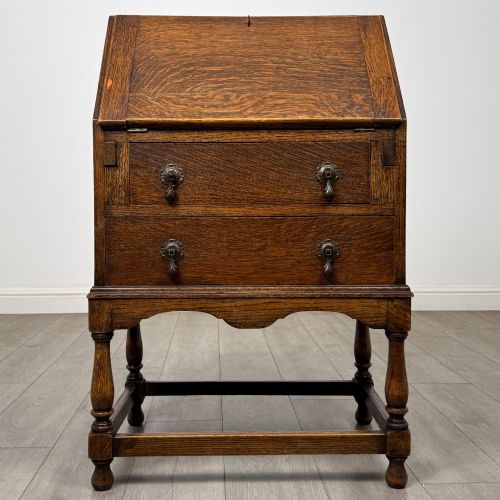
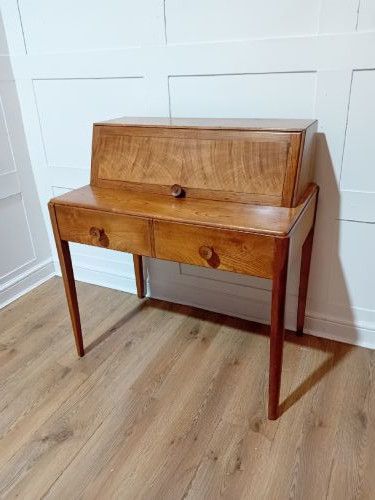
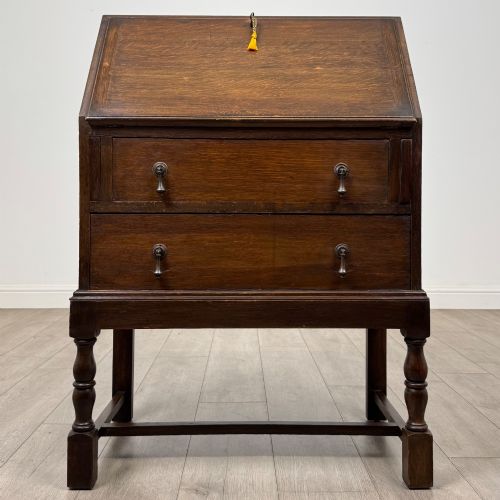
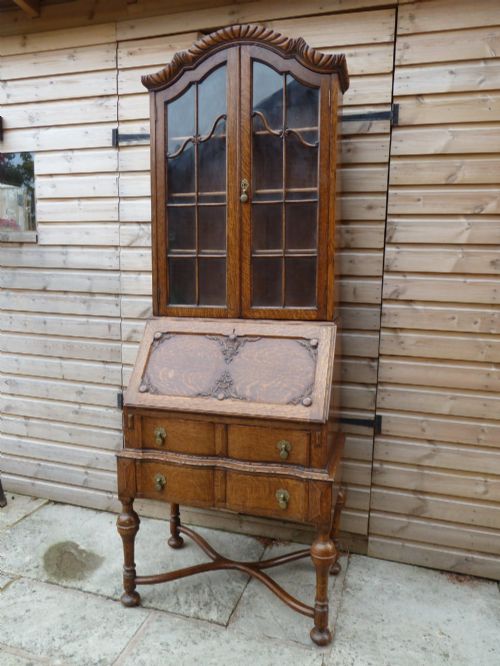
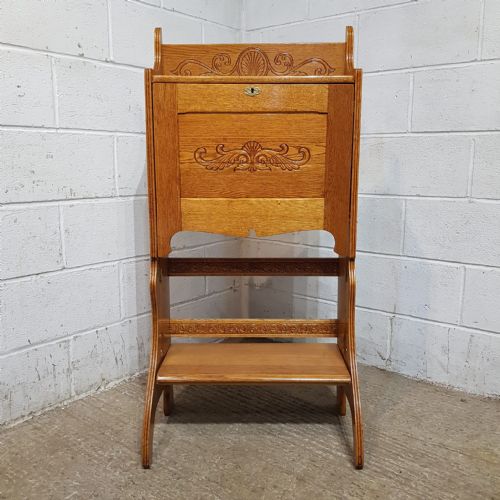
The version most commonly met on this page is the Edwardian or 1920s oak bureau bookcase, standing upright with leaded or glass doors above a fitted writing flap. Simpler student desks and drop-front secretaire forms also appear alongside grander bureau bookcases.
Makers and workshops range from Cotswold School designers to larger commercial cabinets like The Bath Cabinet Makers, reflecting shifts in domestic utility across periods from 1700 to the 1930s.
What varies in quality
The distinction between standard commercial production and finer craftsmanship rests in the depth of timber selection and the complexity of the interior joinery. A stepped interior with secret compartments and well-figured grain indicates higher workshop ambition than a plain, utilitarian carcase.
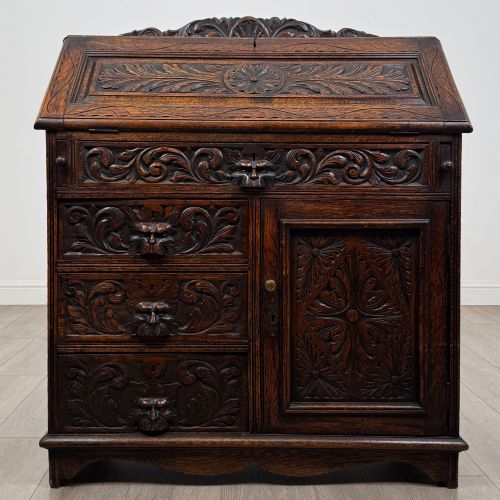
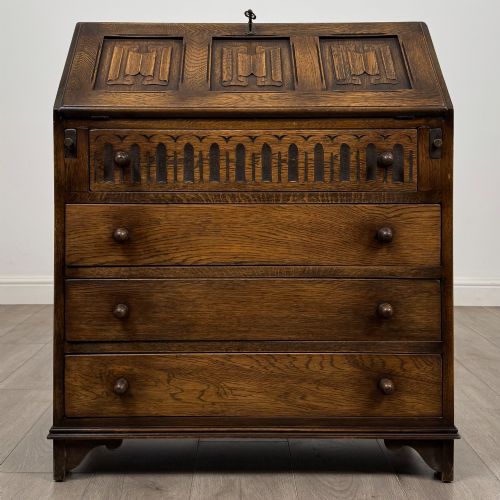
Carved details reveal execution quality, ranging from crisp hand-carved linenfold panels and Green Man motifs to simpler stamped or machine-run mouldings. The integrity of the fall-front hinges and the balance of the upper bookcase section determine structural success.
Some Victorian desks feature carved Green Man faces glaring out from the wood, watching over your correspondence.
ARTHUR BASIL REYNOLDS·Stanley Webb Davies·Bryn Mawr·Morris & Co·George W Jack·The Bath Cabinet Makers
The Oak Writing Bureau Cabinet Glossary
- Bureau bookcase
- A combination of a slope-front writing desk and an upper shelving or cabinet section enclosed by doors. This form maximises vertical wall space for both storage and working.
- Fall front
- A hinged writing flap that lowers to a horizontal position for writing and lifts vertically to conceal the pigeonholes and small drawers inside. It often relies on lopers for structural support when open.
- Stepped interior
- An internal arrangement of small drawers and pigeonholes built in receding tiers. This tiered layout is frequently found in 18th-century and later writing furniture.
- Linenfold
- A style of carved wooden panelling that resembles folded vertical lengths of cloth. It appears frequently on Edwardian and revival oak pieces.
- Pollard oak
- Oak timber taken from pollarded trees, showing knotty, highly figured growth rings. Cabinet makers utilised this veneer for decorative drawer fronts and panel highlights.
Oak Writing Bureau Cabinet: Frequently Asked Questions
What is a bureau bookcase?
A bureau bookcase is a dual-purpose item featuring a sloping fall-front desk compartment below an upright glazed or panelled cabinet for books. It combines upright storage with a fold-down writing surface.
These pieces developed to save floor space in domestic studies and parlours by merging two distinct items into a single cabinet.
How do I date an oak bureau?
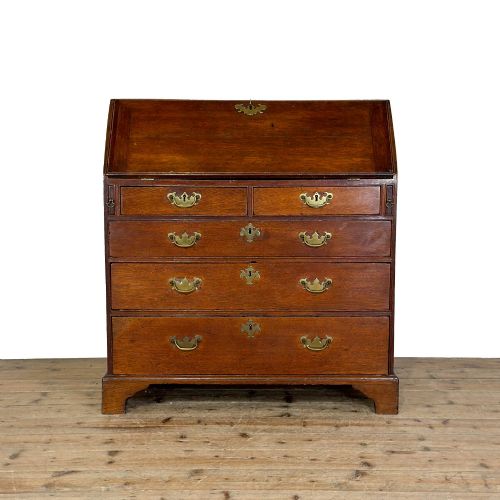
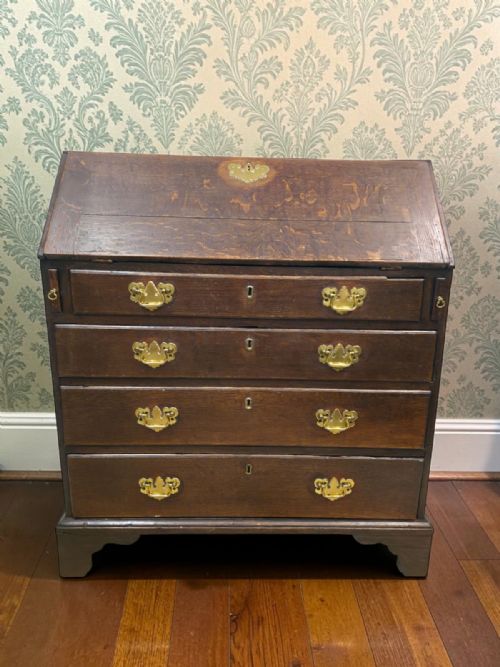
Dating relies on construction methods, timber choice, and decorative style, ranging from early 17th-century vernacular frames to Edwardian linenfold carving. Georgian examples often show fine dovetails and bracket feet, while 1930s pieces reflect Arts and Crafts simplicity.
Hardware styles, including brass handles and key escutcheons, provide additional clues to the period of manufacture.
How do I use a fall front?
The fall front lowers on hinges to create a flat writing desk, supported by wooden pull-out arms called lopers. Lifting it back up closes the writing space and conceals the inner pigeonholes.
Care should be taken not to place excessive weight on the open flap when writing.
What is a stepped interior?
A stepped interior refers to small drawers and pigeonholes arranged in ascending tiers inside the bureau. This layout creates a sense of depth and architectural proportion within the writing space.
Finer examples include central locking cupboards or hidden compartments within these tiers.