

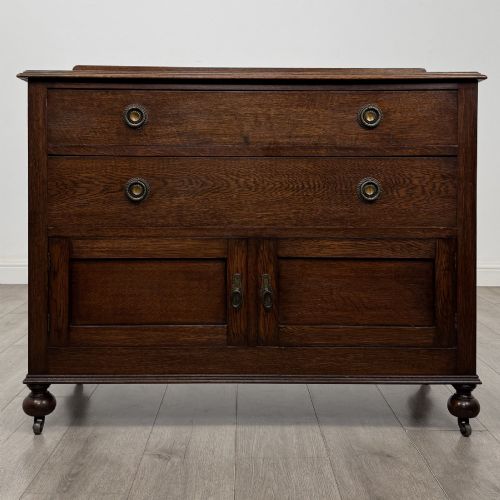
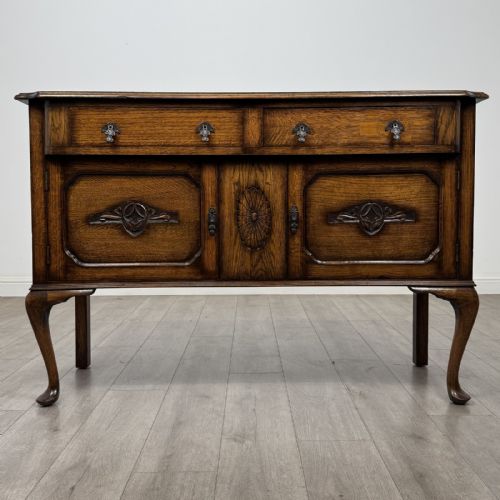
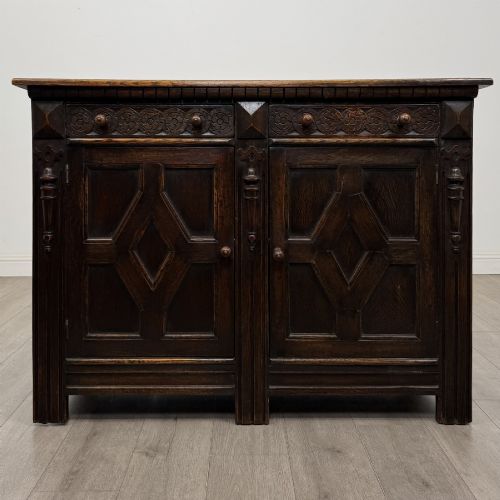
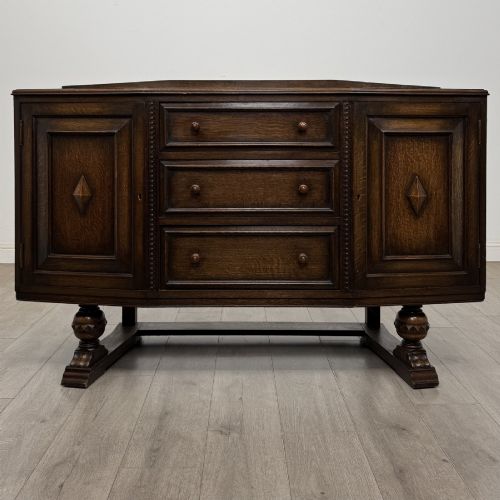
Oak Wood Credenza
An oak wood credenza brings solid timber and enduring storage into a room, spanning periods from the seventeenth century to the mid-twentieth.
Oak Wood Credenza
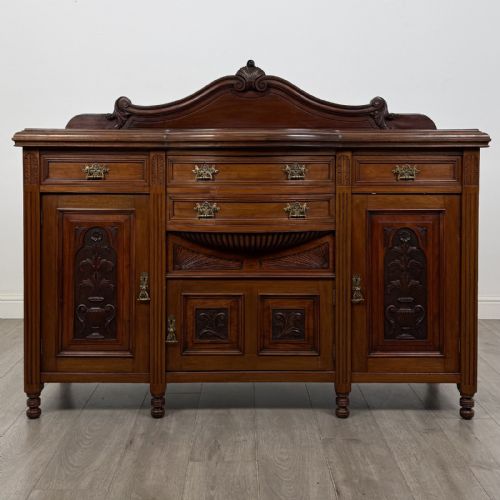
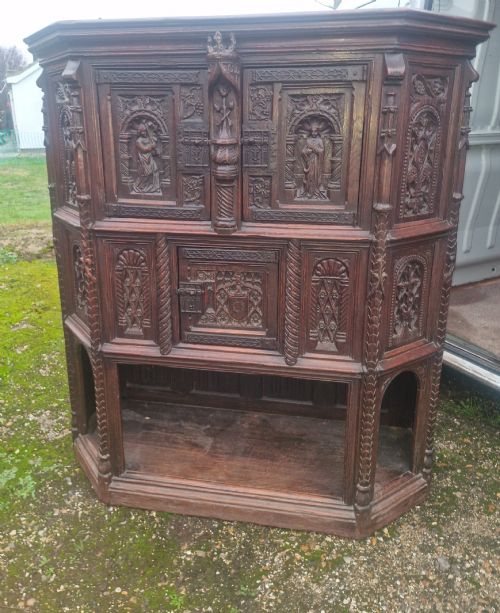
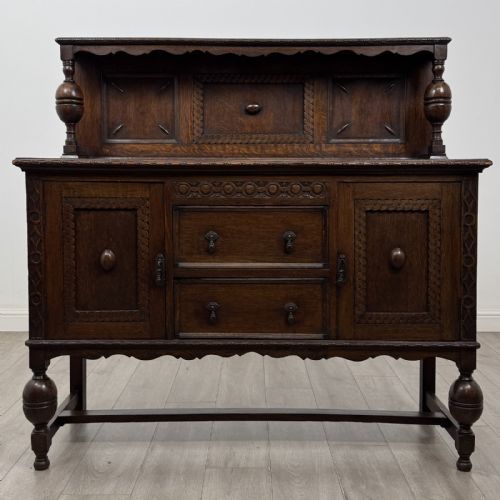
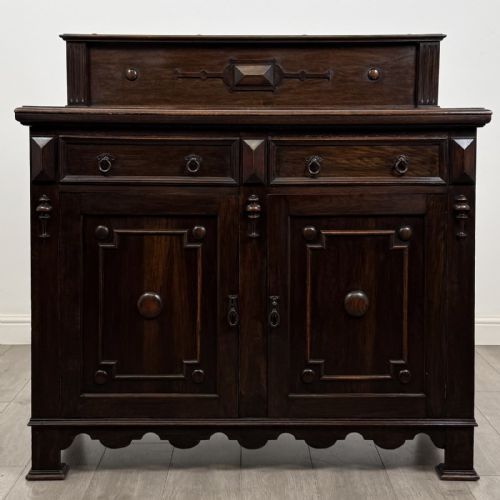
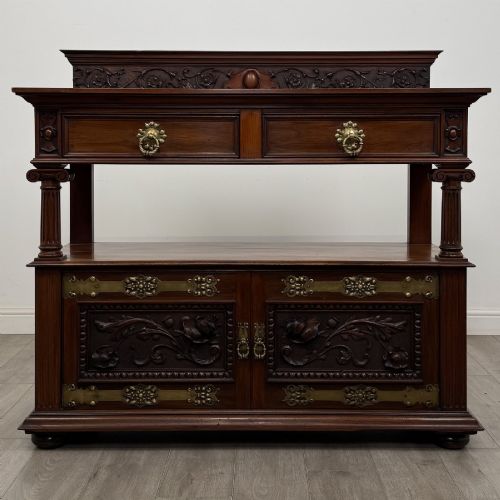
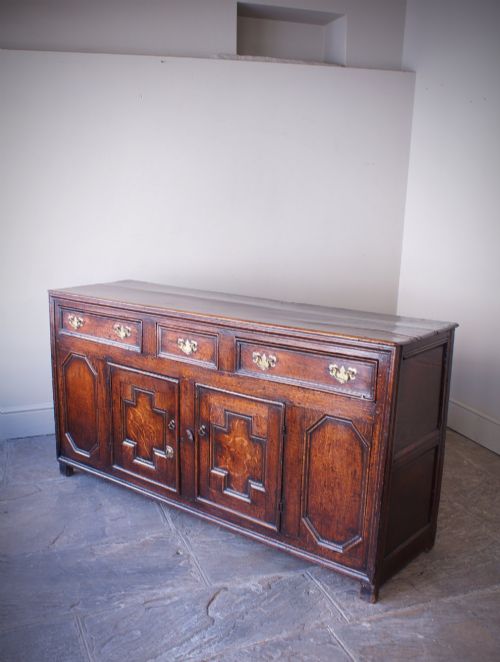
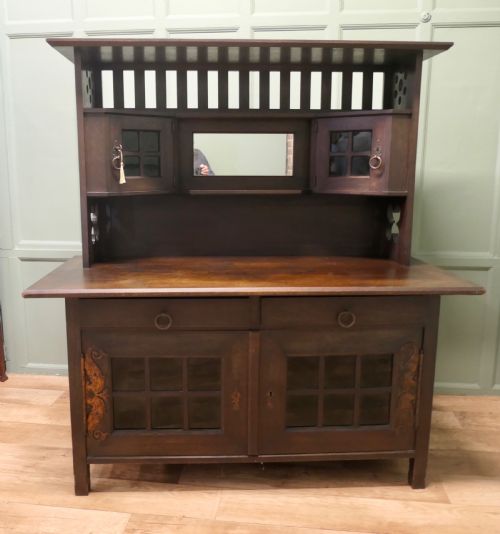
Buyers seeking an oak wood credenza encounter a diverse grouping of heavy storage furniture, encompassing sideboards, dresser bases, and large cupboards. These pieces predominantly date from the Victorian and Edwardian eras, alongside select examples from the seventeenth and eighteenth centuries.
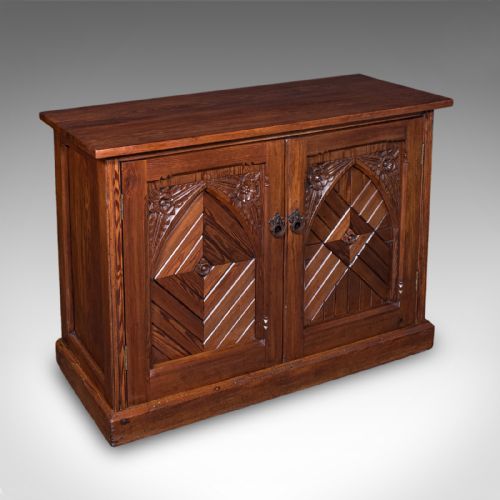
The form frequently overlaps with traditional British dresser bases and sideboards rather than strictly modern credenzas. Pieces range from straightforward vernacular boards to heavily carved Gothic Revival and Arts and Crafts iterations.
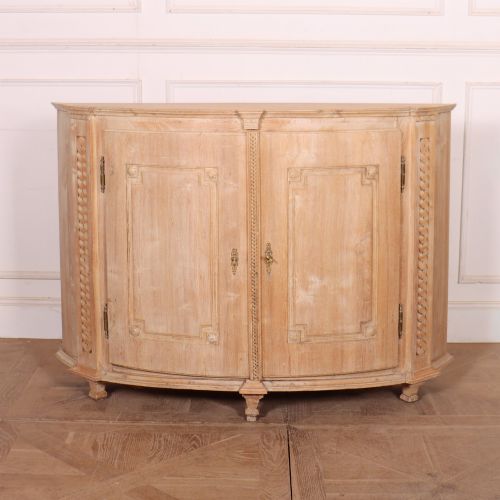
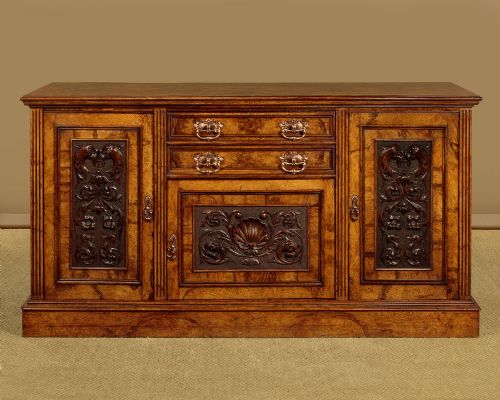
Origins span English, Scottish, French, and Dutch workshops, reflecting regional preferences in joinery and ornamentation. The timber itself varies from standard oak to pollard oak and burr elm combinations.
Distinctions in Quality and Execution
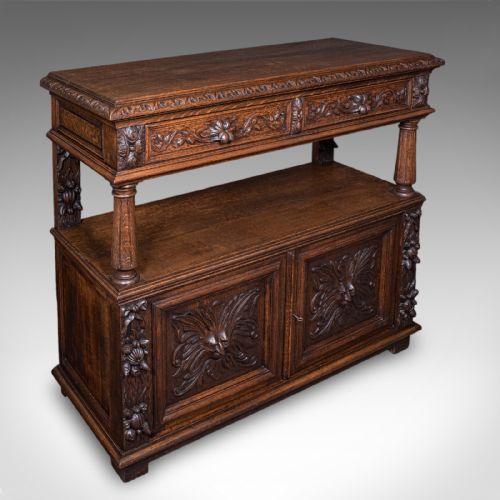
The standard of a piece depends heavily on the depth and crispness of the hand-carving, particularly on figural motifs like Green Men or cherubs. Finer examples display meticulous attention to proportion, especially in smaller scale or narrow proportions.
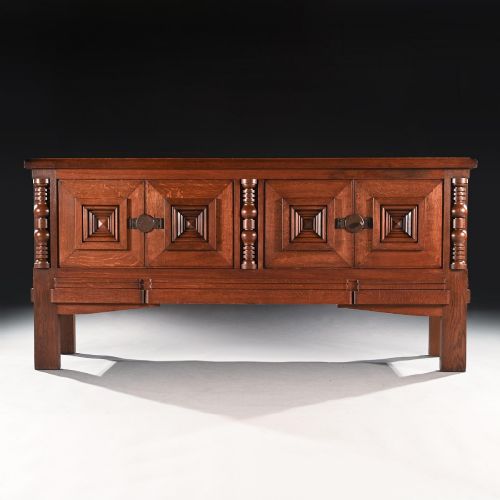
Material selection dictates much of the distinction, where figured timbers like pollard oak or burr elm elevate the visual weight. Integral hardware, original stretchers, and well-executed geometric panelling further separate standard production from exceptional workshop output.
Oak Wood Credenza Retail Price Guide 2026
Typical asking prices for oak wood credenza among the pieces listed under this phrase on Sellingantiques today, from the lower quarter to the upper quarter. They describe what is for sale here now, not the wider market.
Listings include oak furniture spanning the 17th, 18th, 19th, and 20th centuries, alongside walnut, pine, iron, and brass.
Leonard Wyburd for Liberty and Co·Charles Dudouyt
The Oak Wood Credenza Glossary
- Dresser base
- A low wooden sideboard or serving table featuring drawers above cupboards or an open potboard shelf below. These pieces formed the backbone of utilitarian dining room storage.
- Bracket feet
- Simple architectural supports projecting from the bottom corners of a cabinet. They elevate the body slightly off the floor while maintaining a stable footprint.
- Pollard oak
- Timber taken from trees that were cut back near the trunk to encourage dense branch growth. This pruning creates a highly swirled and mottled grain pattern prized for cabinet doors.
- Stretcher base
- Horizontal wooden bracing connecting the legs of a table or sideboard near the floor. This construction adds rigidity to large heavy case furniture.
- Green Man
- A sculptural architectural ornament depicting a human face emerging from or entwined with foliage. It appears frequently on nineteenth-century revival sideboards.
Oak Wood Credenza: Frequently Asked Questions
How do I date an oak sideboard?
Dating relies on examining the construction methods, handle hardware, and stylistic revival markers present in the timber framing. Tool marks and joint types often point clearly toward seventeenth-century vernacular work or nineteenth-century revival periods.
Secondary woods used inside drawers and back panels also provide reliable clues to the era of manufacture. Examining secondary elements helps distinguish original eighteenth-century surfaces from later Victorian alterations.
What is the difference between a sideboard and a credenza?
Sideboards traditionally feature cupboards and drawers designed for storing dining linen and cutlery, often standing on substantial legs or stretcher bases. Credenzas historically denote low cabinets without legs, though modern marketplace terminology often groups these heavy storage forms together.
Both serve similar placement needs in dining rooms and living spaces for surface display and concealed storage. Regional naming conventions in British and continental furniture often dictate whether a piece is termed a buffet, server, or sideboard.
Are these pieces made of solid oak?
Most examples utilise solid oak for primary visible surfaces, structural frames, and drawer fronts. Secondary timbers like pine or elm frequently appear in internal drawer linings and backboards.
Revival and Victorian pieces often combined heavy oak frames with burl veneers to create decorative contrast on cupboard doors. Checking internal components confirms the extent of solid timber construction versus veneered surfaces.
How do I care for antique oak furniture?
Maintaining antique oak requires keeping pieces away from direct heat sources and dramatic humidity shifts that cause timber to split. Regular dusting with a dry lint-free cloth preserves the natural finish without requiring heavy polishes.
Occasional application of traditional beeswax feeds the dry wood and enhances the grain depth. Avoiding synthetic silicones ensures the historic patina remains intact over decades of use.