
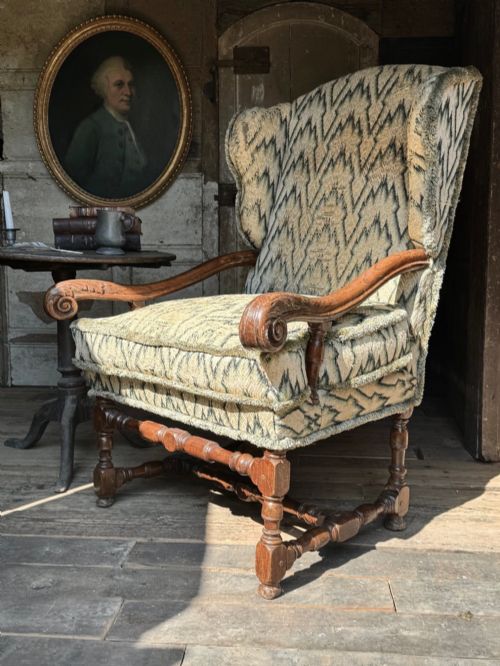


Oak Winged Fireside Chair
An oak winged fireside chair brings warmth and solid construction to a room, offering high sides that block cold draughts.
Oak Winged Fireside Chair
An oak winged fireside chair provides traditional seating designed to keep hearthside warmth contained around the user. These pieces appear across various periods, stretching from the seventeenth century through to the Edwardian era and the 1920s.
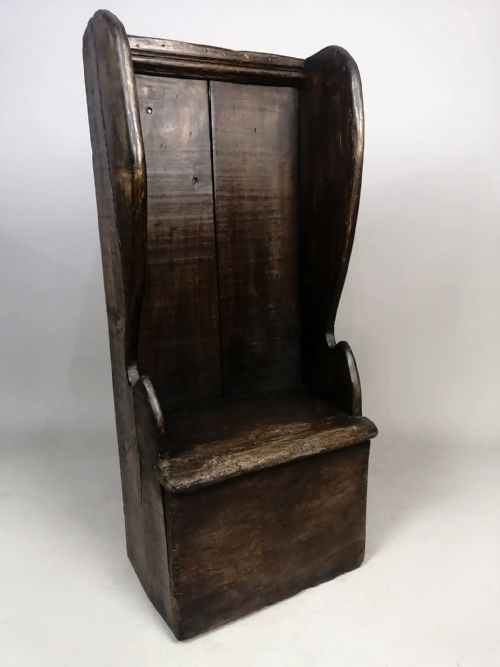
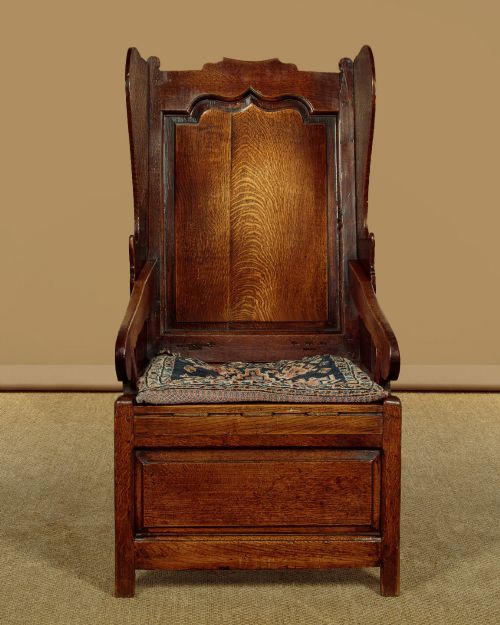
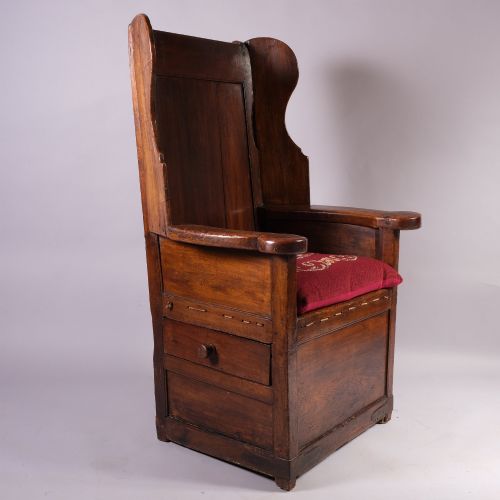
The selections here showcase distinct regional forms, including vernacular lambing chairs and Carolean style wing backs. Buyers will encounter both simple country styles and larger upholstered versions covered in leather or damask fabric.
Materials and construction
Makers built these frames primarily using solid oak, occasionally turning to fruitwood or walnut for specific regional pieces. Timber frames often incorporated brass details alongside textile, damask fabric, or leather upholstery.
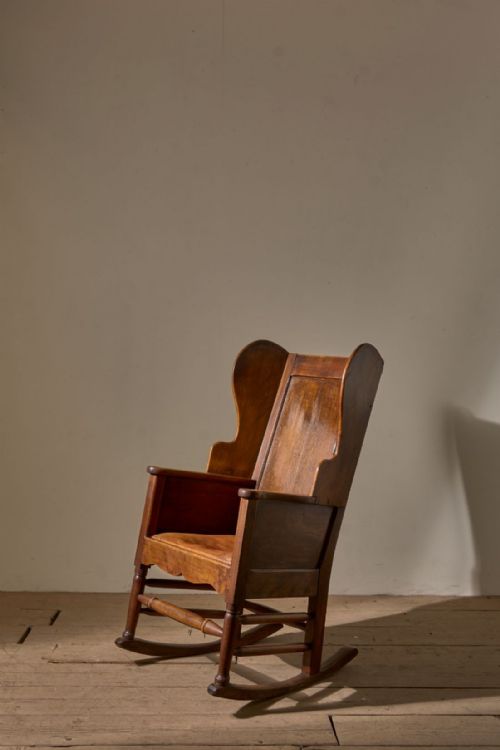
Joinery techniques relied on sturdy wooden framing suited to heavy daily use by the hearth. Upholstered sections were secured directly to the wooden structures, creating substantial armchairs and rocking chairs.
Early lambing chairs included enclosed sides specifically designed to shelter shepherds nursing newborn lambs by the cottage fire through freezing nights.
Assessing quality and character
Quality rests in the integrity of the timber frame and the proportion of the wings in relation to the seat. Earlier examples display hand-worked timber surfaces, while later revival pieces focus on carved details and upholstery finish.
The integration of the wings with the main armchair structure dictates both historical accuracy and the comfort of the piece. Superior examples maintain balanced proportions between the wooden frame and the soft coverings.
The Oak Winged Fireside Chair Glossary
- Wingback
- A chair design featuring high sides attached to the arms to shield the sitter from draughts. These projections became standard on fireside seating from the seventeenth century onward.
- Lambing chair
- A traditional form of fireside seat featuring high solid wooden sides, often equipped with a storage compartment beneath the seat. These rural pieces typically used oak or fruitwood.
- Vernacular
- Objects built by local craftsmen using regional traditions rather than strict academic architectural designs. These pieces display honest construction suited to country homes.
- Carolean style
- A decorative manner dating from the reign of Charles II characterised by rich carving and scrolled woodwork. Revival versions appeared during the Victorian period.
Oak Winged Fireside Chair: Frequently Asked Questions
What is an oak winged fireside chair?
An oak winged fireside chair is a traditional seat featuring protective side panels designed to keep out cold draughts near an open fireplace. These armchairs combine timber frames with upholstered or solid wooden sides.
They appear in various styles ranging from seventeenth-century vernacular lambing chairs to later Edwardian and Victorian upholstered designs.
How do I date an antique armchair?
Dating relies on examining the construction methods, timber species, and styling details present in the frame. Seventeenth and eighteenth-century pieces often show simpler vernacular joinery.
Later Victorian and Edwardian examples incorporate revival motifs, factory-prepared fixings, and different upholstery methods.
Where were these chairs used?
These chairs served primarily in domestic living spaces, placed close to the hearth to provide shelter from room draughts. Country houses and vernacular cottages favoured solid wooden lambing variants.
Later periods saw these forms move into formal parlours and libraries as heavily upholstered leather or fabric armchairs.
How do I care for leather upholstery?
Leather upholstery requires regular dusting and occasional treatment with appropriate conditioning balms to prevent the material from drying out. Keeping the leather away from direct heat sources preserves its suppleness.
Avoid using harsh chemical cleaners that can strip the natural finish of antique hides.