
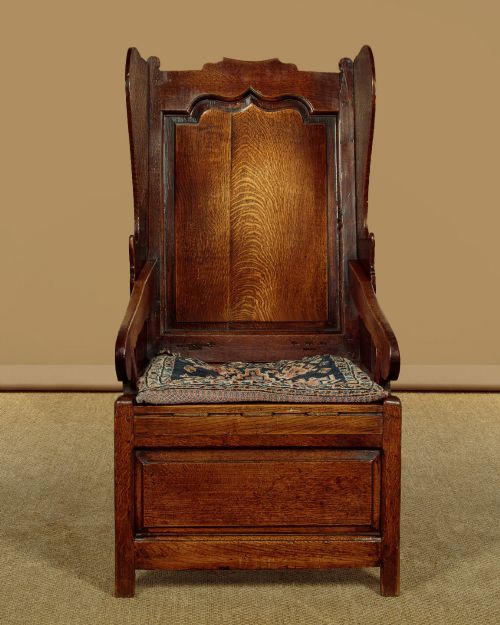
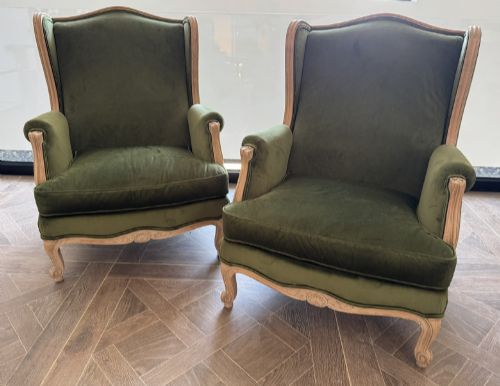
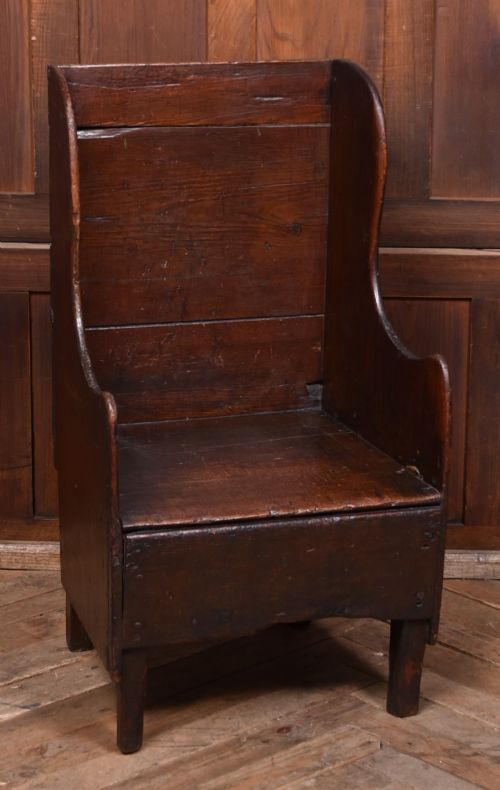
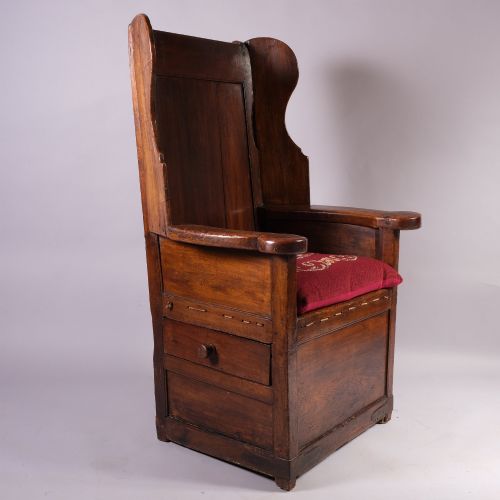


Oak Winged Armchair
An oak winged armchair brings solid timber frame construction and draught-excluding wings together for fireside comfort.
Oak Winged Armchair
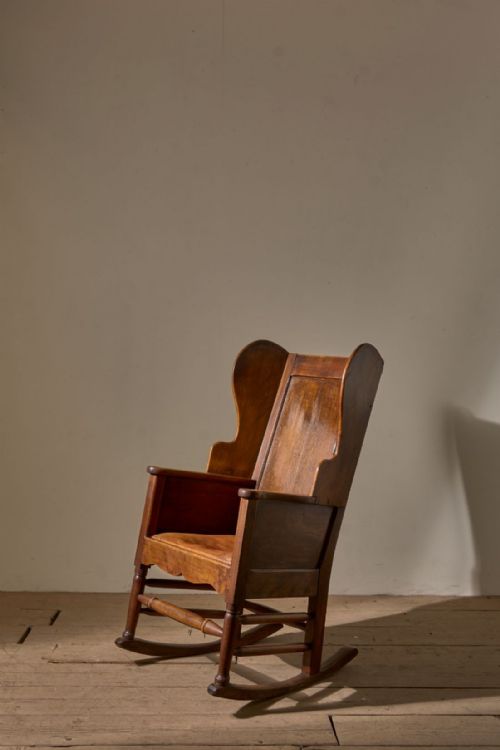
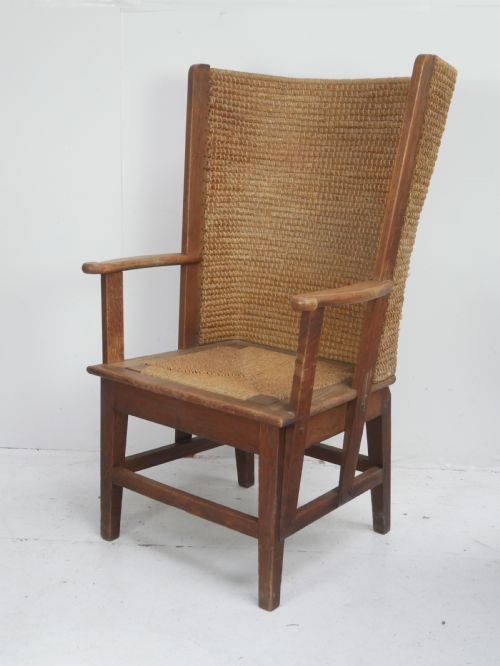
An oak winged armchair provides a high back and protective side panels designed to block draughts in older rooms. Pieces meeting this description span centuries of regional building traditions, ranging from seventeenth-century vernacular forms to twentieth-century revivals.
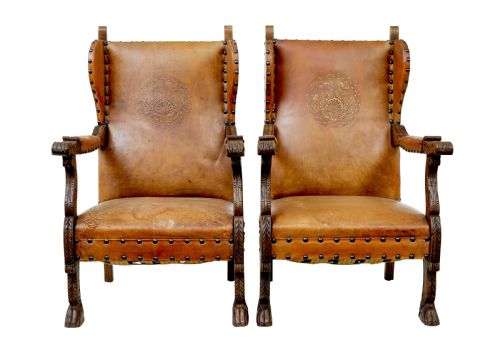
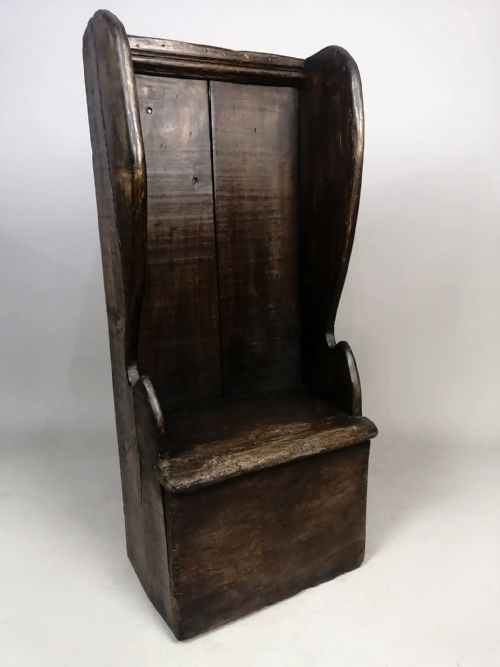
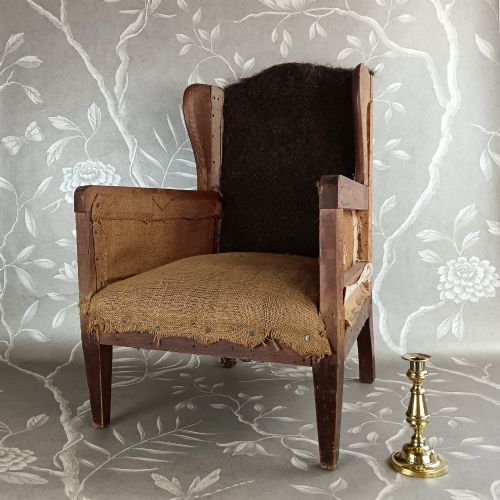
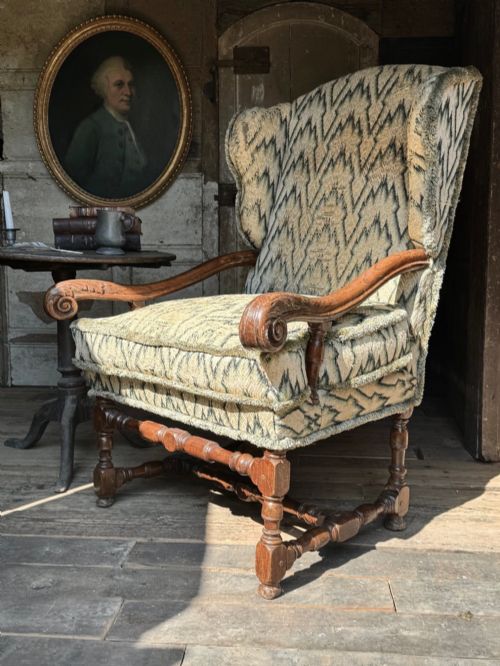
Buyers encounter various iterations on this page, including traditional lambing chairs with enclosed timber sides and fully upholstered library armchairs framed in oak. The selection encompasses child-sized versions alongside generous proportions intended for adults.
Assessing quality in the range
Quality differences stem from the integrity of the original timber frame and the skill of the carving or joinery. Early vernacular pieces show hand-finished tool marks and clever structural adaptations made by regional carpenters.
Later revival pieces vary according to the weight of the oak timber selected and the proportion of the wings to the seat base. Sympathetic reupholstery using period-appropriate materials maintains the integrity of the piece better than modern synthetic replacements.
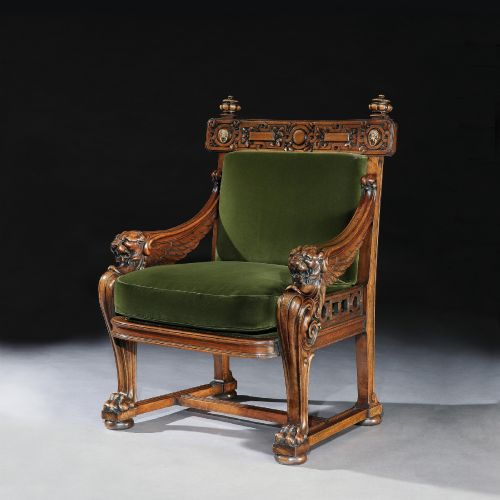
The recorded styles across these chairs range from seventeenth-century vernacular and Georgian country to Victorian Gothic Revival and Edwardian framing.
George Montague Ellwood
The Oak Winged Armchair Glossary
- Wingback
- An armchair featuring protective flaps or wings attached to the back and armrests. This design originally shielded the sitter from draughts in unheated rooms.
- Lambing chair
- A traditional form featuring a high hooded back and enclosed sides, historically used by shepherds during lambing season. These examples typically utilise solid timber construction.
- Vernacular
- A style of furniture built by regional craftsmen following local traditions rather than metropolitan design patterns. These pieces demonstrate honest construction methods using readily available local woods like oak.
- Monopodia
- Furniture supports carved to resemble a single animal leg and foot, often associated with neoclassical revival designs. This decorative feature appears on select nineteenth-century seating.
- Mortise and tenon
- A traditional woodworking joint where a protruding tongue fits tightly into a matching cavity. This method secures the structural framework without relying on modern metal fasteners.
Oak Winged Armchair: Frequently Asked Questions
What is a lambing chair?
A lambing chair is a traditional seating form characterised by a high wooden back and enclosed sides designed to keep out cold draughts.
These pieces often include a hidden compartment beneath the seat for warming stones or tending to newborn livestock.
How do I care for leather upholstery?
Leather upholstery requires regular dusting and occasional treatment with appropriate conditioning creams to prevent the hide from drying out.
Keep these chairs away from direct heat sources and strong sunlight to preserve the natural surface texture.
Are these chairs comfortable for daily use?
Many examples provide firm support through traditional padding methods, though comfort varies depending on the original design and current internal condition.
Upholstered library models offer softer cushioning compared to solid timber lambing variants.
How do I identify seventeenth-century oak?
Seventeenth-century oak exhibits distinct medullary rays, often referred to as silver grain, visible across the sawn timber surfaces.
Hand-cut joinery marks and pegged frame construction further distinguish these early pieces from later revival furniture.