





Oak Umbrella Rack Drip Tray
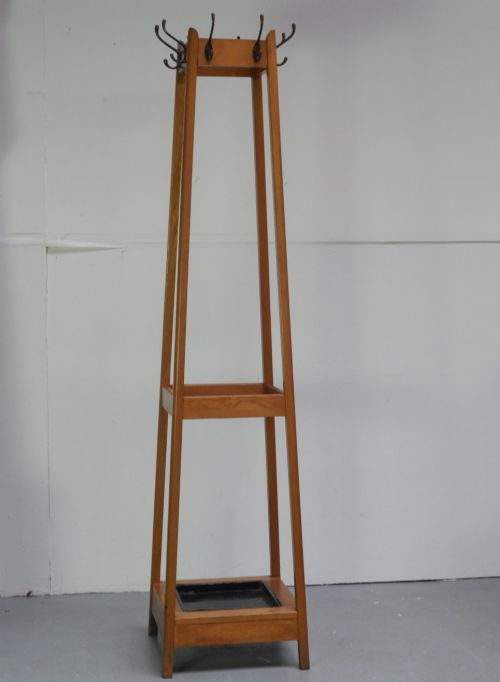
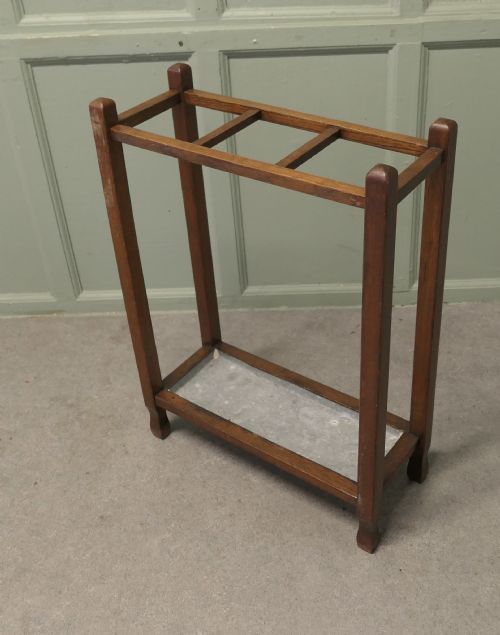
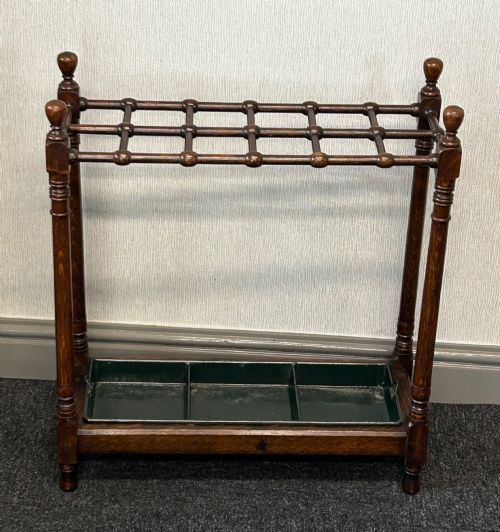
These oak umbrella rack drip tray pieces are sturdy hallway essentials designed to catch rainwater from wet walking sticks, combining functional metal trays with solid timber frames.
Oak Umbrella Rack Drip Tray
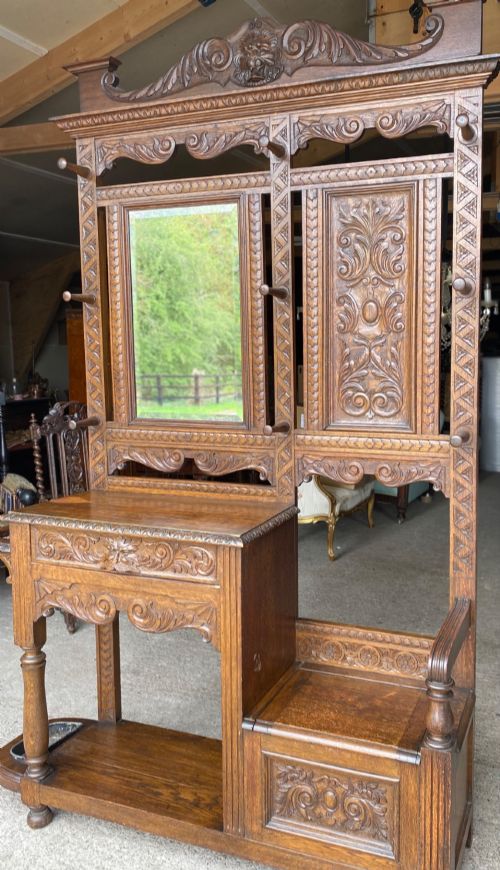
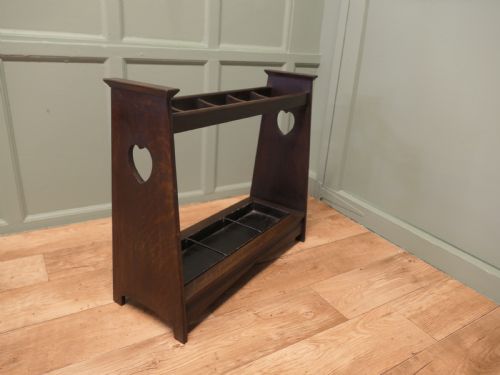
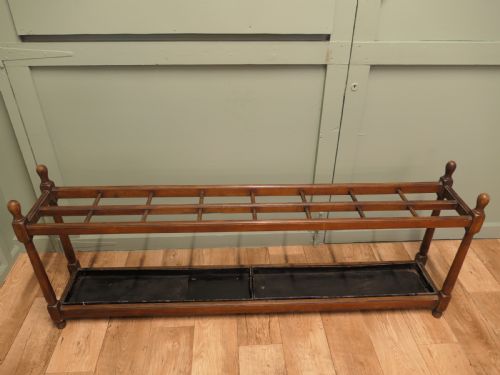
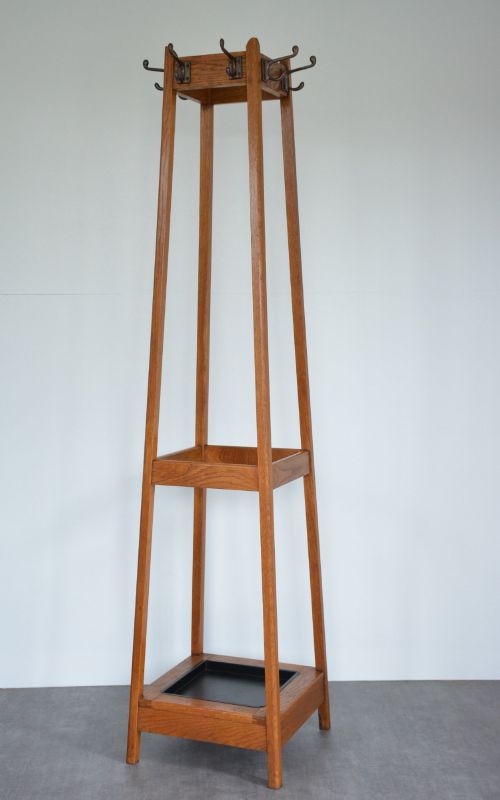
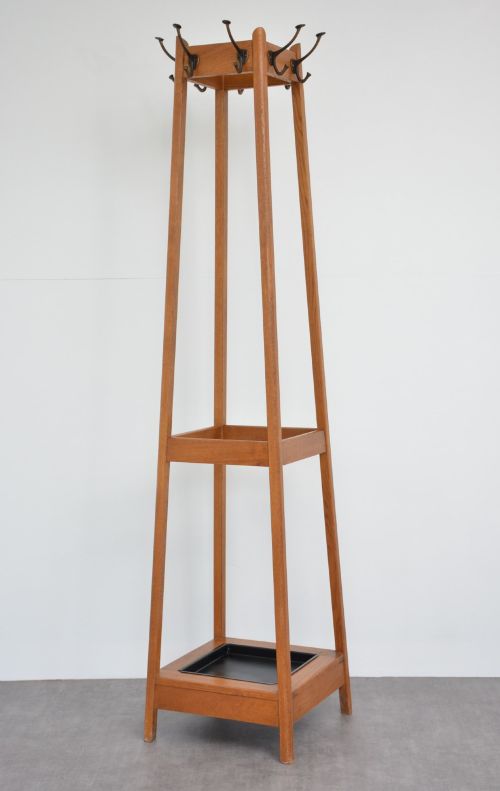
When you search for an oak umbrella rack drip tray, you are looking at hallway furnishings built to hold walking sticks and wet umbrellas while protecting interior floors. These hall pieces range from dedicated stick stands to substantial hall stands that combine coat hooks and hat racks with a lower water basin.
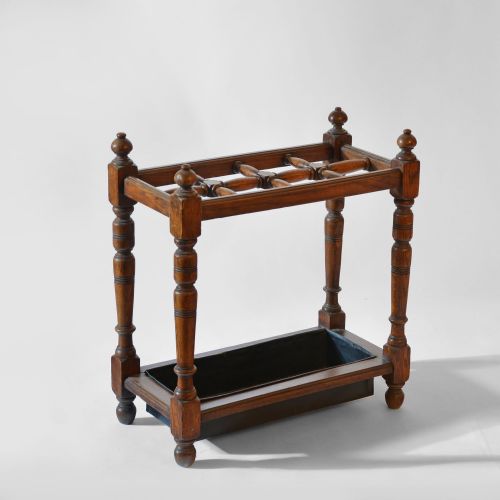
You are most likely to meet examples from the Victorian and Edwardian periods, alongside Arts and Crafts interpretations that emphasise straightforward construction and visible timber grain. These utility items often appear with divided upper partitions and internal metal pans to manage dampness.
Materials and construction
Makers relied primarily on solid oak, chosen for its strength and ability to withstand heavy daily use in busy entrance halls. Timber sections were joined using traditional methods to support the weight of wet wood and metal elements.
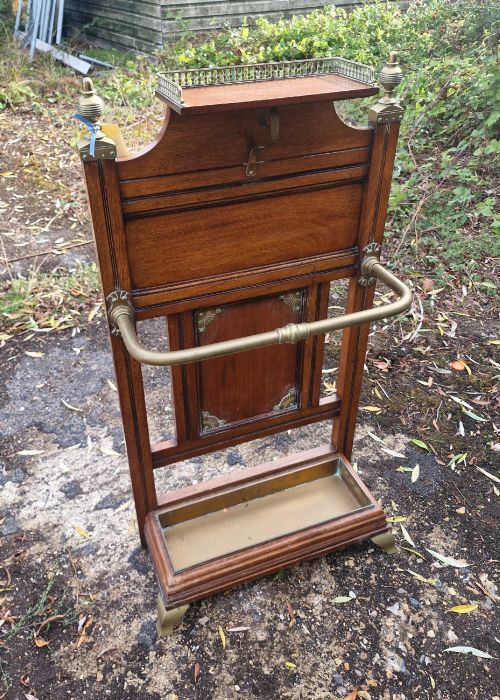
Functional water management required durable metal components placed beneath the umbrella divisions. Zinc, brass, copper, and cast metal were utilised for the removable drip trays, preventing moisture from reaching the wooden floorboards.
Oak Umbrella Rack Drip Tray Retail Price Guide 2026
Typical asking prices for oak umbrella rack drip tray among the pieces listed under this phrase on Sellingantiques today, from the lower quarter to the upper quarter. They describe what is for sale here now, not the wider market.
Distinctions in quality
Quality reveals itself in the integrity of the timber frame and the durability of the internal water containment. Superior examples integrate the metal drip tray seamlessly into the base without relying on crude modern replacements.
Design ambition separates basic utility pieces from works associated with known retailers or specific stylistic movements. Pieces displaying thoughtful joinery, carved detailing, or brass hardware reflect greater workshop attention during production.
Liberty Design·Heals of London·GW Evans
The Oak Umbrella Rack Drip Tray Glossary
- Drip tray
- The removable metal basin situated at the base of the stand to catch water from umbrellas. This component prevents moisture damage to the surrounding wooden floor.
- Hall stand
- A multi-functional hall piece combining umbrella storage with coat hooks, hat racks, and frequently a mirror or glove box. These larger structures serve as the central furniture item in a period entrance.
- Arts and Crafts
- A design movement prioritising handcraftsmanship, simple forms, and honest expression of materials. Pieces in this style frequently display exposed joinery and minimal ornamentation.
- Aesthetic Movement
- A late nineteenth-century style focusing on visual beauty and artistic design over strict historical revival. Furniture from this group often incorporates slender profiles and decorative metal accents.
Oak Umbrella Rack Drip Tray: Frequently Asked Questions
What is an oak umbrella rack drip tray?
An oak umbrella rack drip tray is a hallway furnishing designed to hold wet umbrellas and walking sticks while catching runoff water in a removable metal base.
These pieces range from compact umbrella stands to large architectural hall stands incorporating coat hooks and mirrors.
How were these stands used historically?
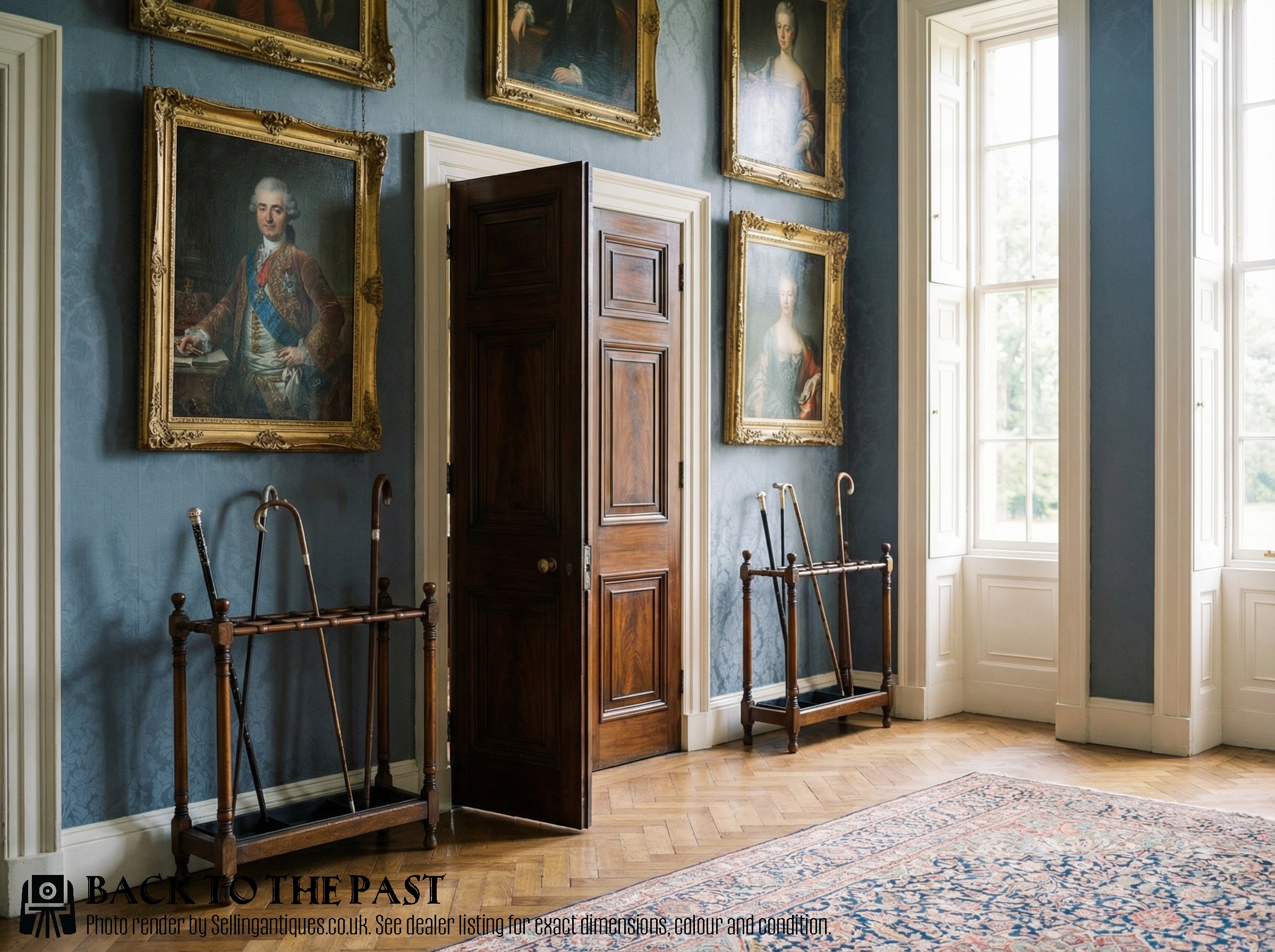
They stood in entrance halls of homes to provide an organised drop-off point for outdoor gear before visitors entered main living areas.
The inclusion of a zinc, brass, or copper tray ensured that wet canvas and wooden shafts caused no damage to interior floors.
How do I care for the oak and metal?
Keep the timber clean with dry or lightly waxed cloths to maintain the finish without introducing excess moisture.
Empty and dry the internal metal tray regularly to prevent corrosion and protect the surrounding wooden base.
How can I identify the period?
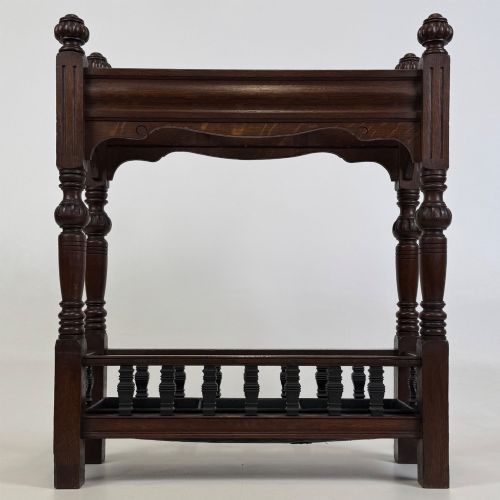
Victorian and Edwardian versions often display period characteristics such as Gothic Revival detailing, Aesthetic Movement lines, or robust turned supports.
Construction details and hardware styles help align a piece with specific late nineteenth or early twentieth-century workshops.