
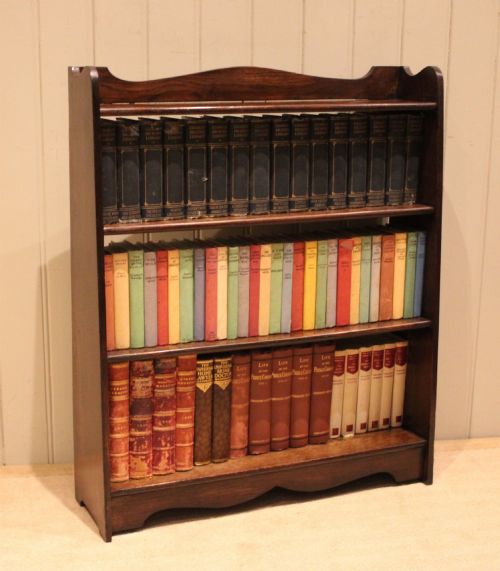
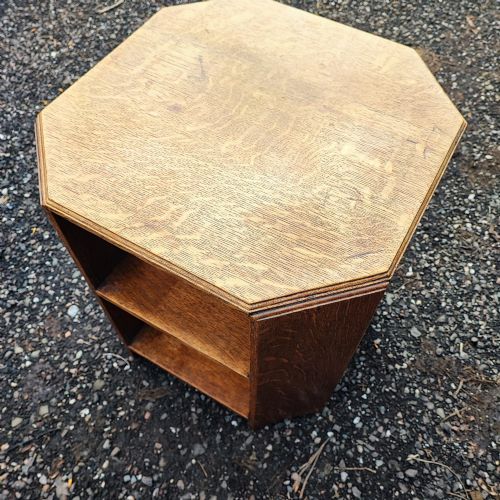
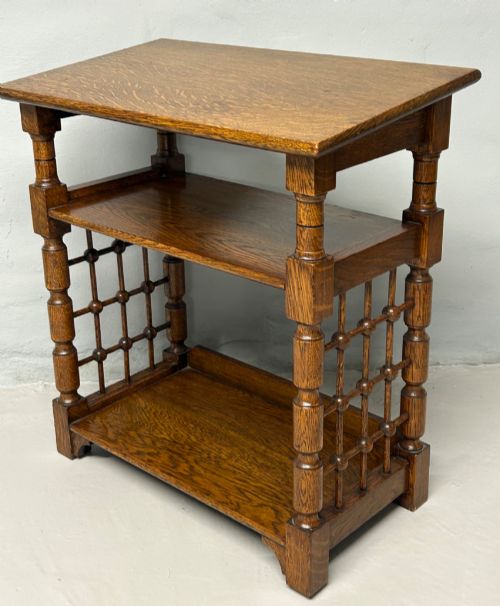


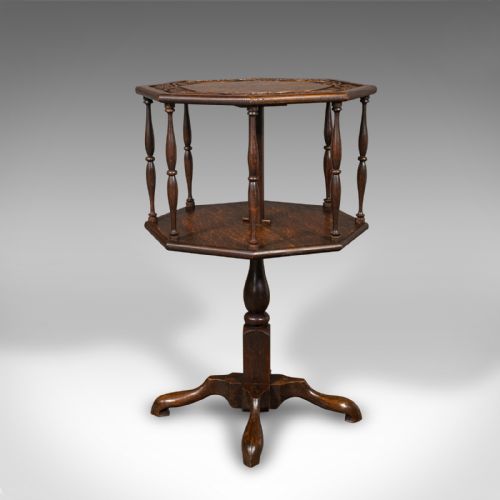

Oak Trough Bookcase
An oak trough bookcase is a compact, sloping storage piece that holds volumes upright or at an angle, bringing honest utility to a study.
Oak Trough Bookcase
When you search for an oak trough bookcase, you encounter compact open storage pieces designed to keep volumes accessible on tables or beside firesides. The records show these items span the Victorian era, the Edwardian period, and the nineteen-twenties, appearing in forms from slope-shelf troughs to table-top revolving stands and extending slides.
The dominant aesthetic across the inventory is Arts and Crafts, accompanied by Victorian Gothic and Art Deco expressions. These pieces emerge in oak, occasionally paired with cane, reflecting practical domestic utility rather than grand formal design.
You most frequently meet variants with open fronts and angled shelves meant for everyday reading material. They range from small tabletop accessories to low two-tier floor stands.
How they were made
Makers relied primarily on solid oak, selected for durability and straight grain, sometimes finished to a golden tone or enriched with carved details. Construction methods focus on straightforward joinery suited to open shelves, slopes, and extending mechanisms.
Certain pieces incorporate cane panels or carry maker stamps and registration numbers, pointing to workshop production methods of the late nineteenth and early twentieth centuries.
Some items double as fireside companions, ready to hold your evening reading while keeping your toes warm.
What varies in quality
Distinction in these pieces rests upon the crispness of joinery, the selection of figured oak, and the integrity of structural elements like extending slides or revolving mechanisms. Simpler vernacular items contrast with workshop-attributed pieces that display deliberate decorative carving or stamped registration numbers.
Proportion and utility drive the standing of individual examples, separating standard utilitarian furniture from items bearing distinct regional characteristics or stylistic movement traits.
Shapland and Petter·Liberty·Pugin·Heals
The Oak Trough Bookcase Glossary
- Trough bookcase
- An open shelving form featuring a sloping or V-shaped trough to cradle books at an accessible angle.
- Arts and Crafts
- A design movement prioritising traditional craftsmanship, visible construction, and simple oak forms.
- Book slide
- An extending desk or table accessory designed to hold a variable number of volumes upright between bookends.
- Victorian Gothic
- A nineteenth-century style influenced by medieval architecture, featuring pointed arches and heavy carved details in oak.
- Revolving bookcase
- A small tiered stand mounted on a rotating base to allow easy selection of books from any angle.
Oak Trough Bookcase: Frequently Asked Questions
Where should I place an oak trough bookcase?
These compact pieces suit tabletops, sideboards, or hearthside floors where you keep daily reading volumes close at hand. Their open fronts allow quick selection of books in studies or living spaces.
Because they have modest footprints, they fit neatly into corners or narrow gaps between seating without dominating a room.
How do I care for antique oak furniture?
Keep oak pieces away from direct heat sources and dramatic humidity swings to prevent the wood from drying or splitting. Dust regularly with a dry cloth and occasionally apply a suitable beeswax to nourish the finish.
Avoid synthetic sprays or excessive moisture, which can damage the grain and soften older finishes over time.
What is the difference between a trough and a standard bookcase?
A standard bookcase relies on vertical shelves where books stand upright with their spines facing out. A trough bookcase incorporates an angled or sloping bed that holds volumes in a semi-reclined position for easy viewing.
This trough design is specifically intended for smaller collections, periodicals, or books currently in active use.
How can I tell an Edwardian piece from a Victorian one?
Victorian Gothic examples tend to feature heavier proportions, darker finishes, and architectural carvings inspired by medieval buildings. Edwardian items often display lighter oak tones and simpler Arts and Crafts lines. Nomenclature and registration marks, when present, help clarify the production era.