
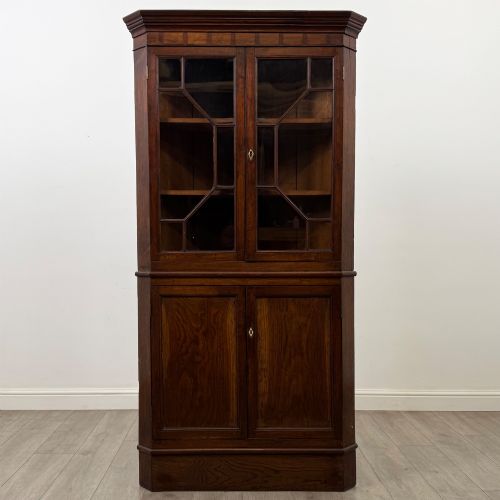
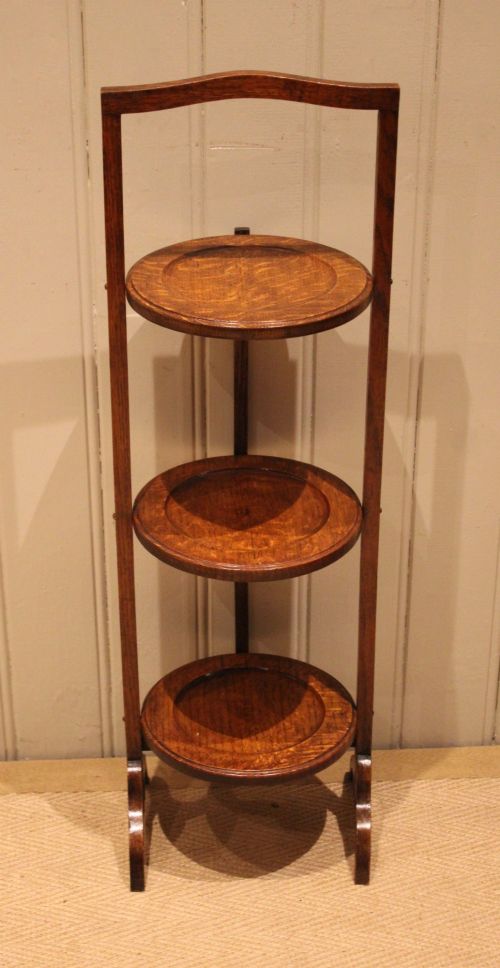
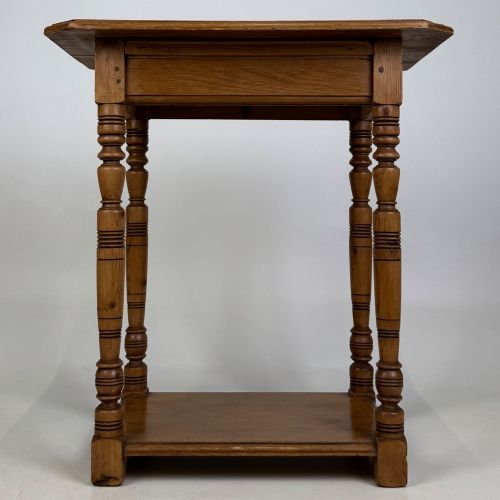
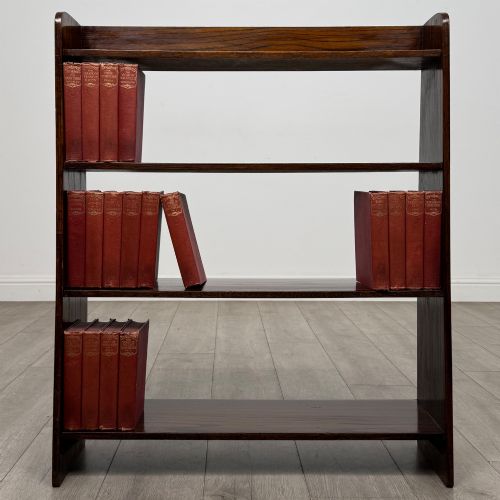
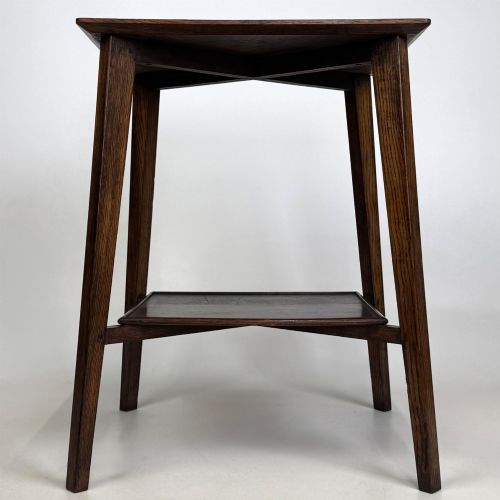
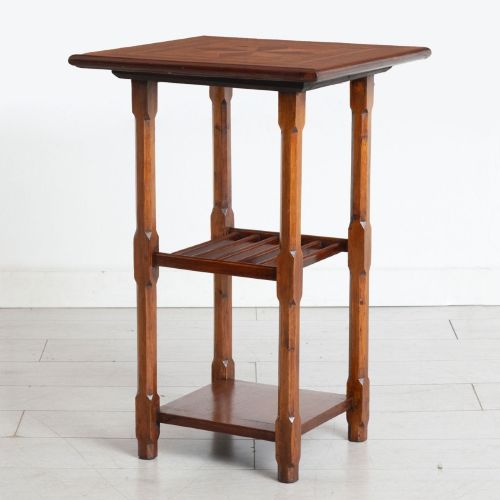
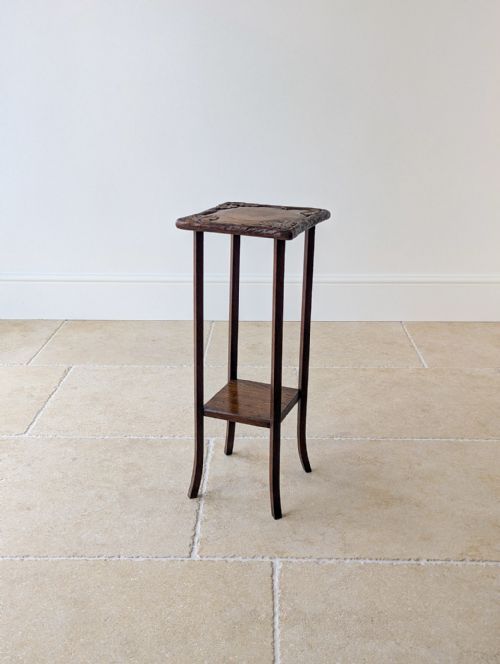
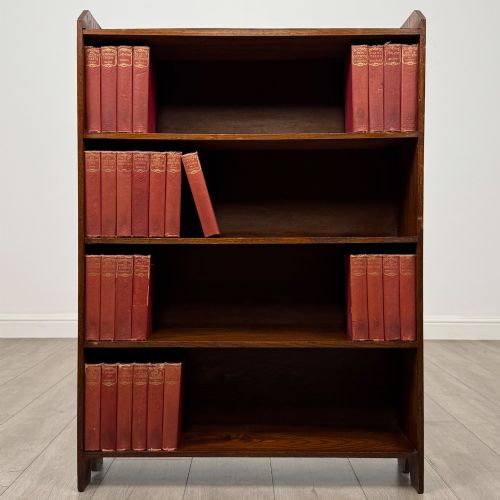


Oak Tier Display Stand
Oak tier display stand pieces are multi-level timber fixtures built to hold objects, combining practical shelving with distinct period character.
Oak Tier Display Stand
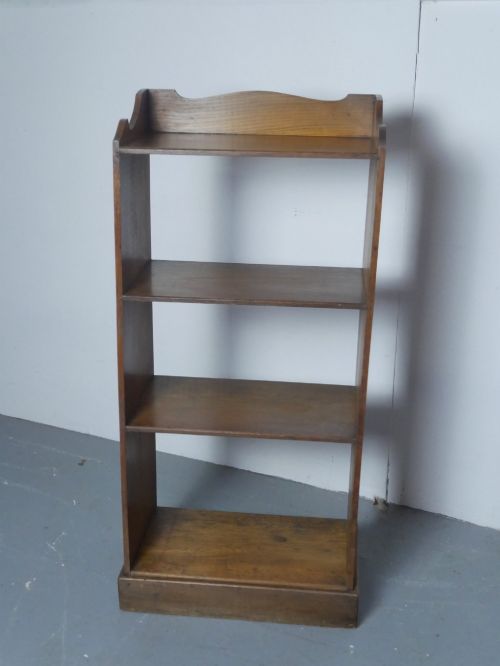
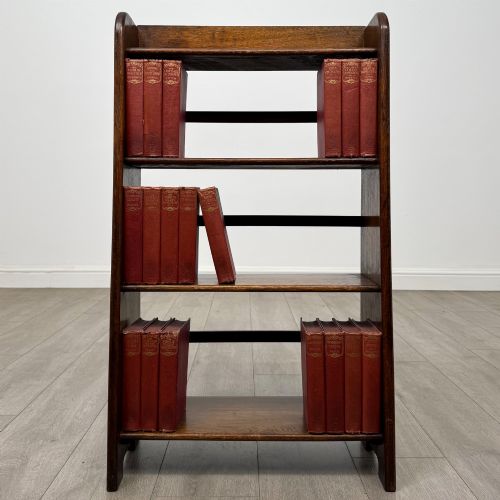
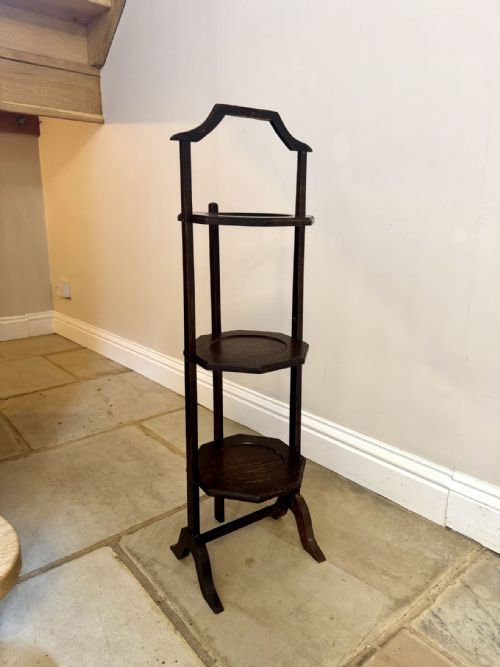
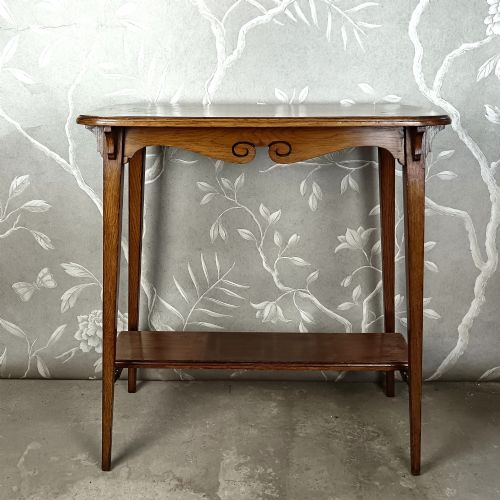
An oak tier display stand brings together multi-level surfaces and sturdy construction, appearing primarily in Edwardian and early twentieth-century forms such as cake stands, plant stands, and occasional tables. These pieces span eras from the nineteenth century through the 1930s, utilising stepped platforms to exhibit books, plants, and decorative objects without taking up excessive floor space. Buyers frequently encounter folding designs from the Edwardian period, alongside occasional tables and etageres that utilise multiple levels for storage and presentation.
The configurations vary from simple open bookcases to specialised shop fittings and pedestal stands, reflecting both domestic and commercial origins. French and English examples demonstrate how diverse makers adapted the basic tier principle for different rooms, incorporating marble, glass, and brass details alongside the primary timber structure.
Assessing quality in tiered stands
Quality in an oak tier display stand rests on the selection of the timber, the rigidity of the multi-level joints, and the precision of decorative details like fret-cutting or turning. Better pieces display dense, well-figured oak grain and stable construction across every shelf or tier, ensuring the structure remains balanced under weight.
Simpler utility items contrast with finer examples that incorporate specialised hardware, such as bronze fittings or matched pairs of pedestals, where the joinery conceals stresses and maintains clean geometric lines through decades of use.
Listings feature oak combined with materials including glass, brass, bronze, cast iron, specimen wood, and marble across styles from Georgian to Industrial.
The Oak Tier Display Stand Glossary
- Etagere
- A piece of furniture consisting of a nest of open shelves or tiers for displaying small objects. These pieces often feature French provincial styling or incorporate marble and canework.
- Whatnot
- An open set of shelves used for displaying ornaments or books. This traditional form relates closely to the multi-tier display stand.
- Fret-cut
- Woodwork pierced or perforated with ornamental patterns using a fretsaw. This technique decorates waterfall bookcases and side tables.
- Barley twist
- A type of woodturning resembling a spiral rope. Plant stands and occasional tables frequently utilise this decorative support style.
- Plant stand
- A tall, narrow piece designed to elevate flora. These single- or multi-tier structures appear frequently in Edwardian oak designs.
Oak Tier Display Stand: Frequently Asked Questions
What is an oak tier display stand used for?
These multi-level fixtures serve primarily to elevate and organise objects in living spaces, acting as practical surfaces for books, plants, and decorative items. Their stepped design allows users to display multiple pieces vertically within a minimal floor footprint.
Historically, variations such as folding cake stands and etageres fulfilled both domestic serving needs and formal display functions, adapting easily to changing room layouts.
How do I date an oak tier display stand?
Dating relies on observing construction details, timber preparation, and stylistic markers associated with specific periods like the Edwardian era or the nineteenth century. Simple turned supports and fret-cut sides often point toward early twentieth-century production.
Heavier framing, distinct moulding profiles, and regional timber choices help separate earlier Georgian or Victorian examples from later mass-produced variations.
Are these stands stable enough for heavy items?
Solid oak construction provides inherent strength, but stability depends heavily on the design of the tiers and the condition of the joints. Plant stands and pedestal bases are engineered to bear downward weight securely when placed on even flooring.
Multi-tier folding stands require careful handling to ensure the supporting hinges and locking mechanisms remain fully engaged during use.
How do I clean and maintain oak tiers?
Routine maintenance involves dusting with a dry, soft cloth to prevent particulate buildup in the grain and carved details. Periodic application of a suitable beeswax preserves the moisture and lustre of the timber surface without leaving a heavy film.
Harsh chemical cleaners and excessive moisture must be avoided to protect the original polish and prevent warping in older oak panels.