
Oak Table with Leaves
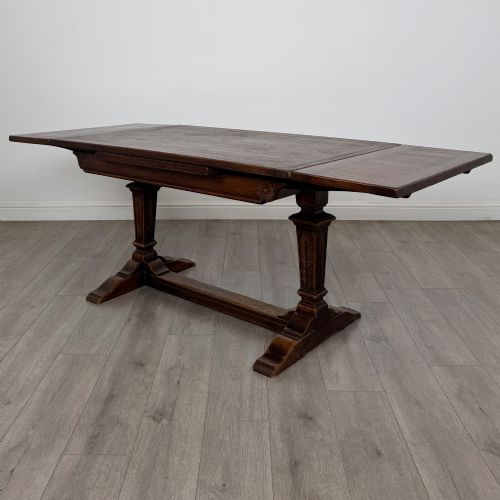
These oak table with leaves pieces offer practical surfaces that expand for dining and shrink for storage using hinges, pull-out sections or drop leaves.
Oak Table with Leaves
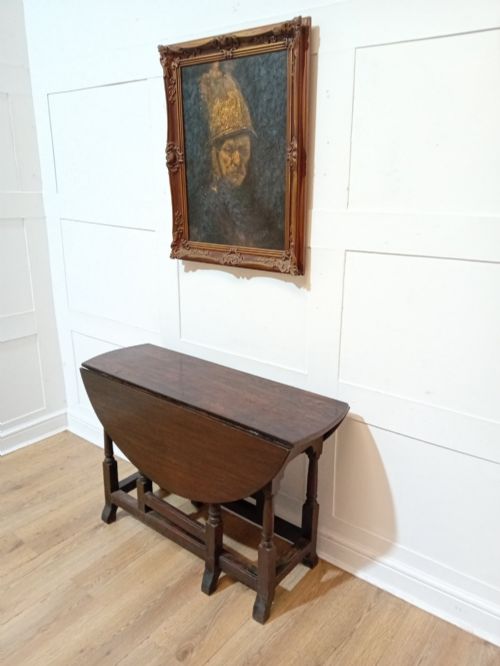
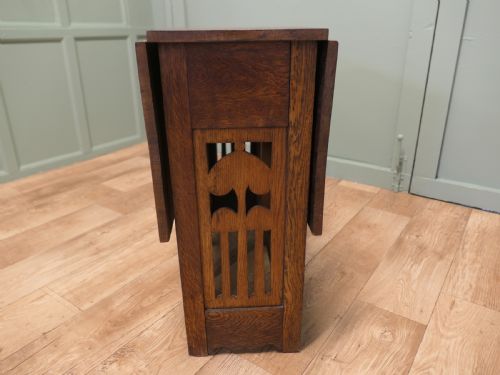
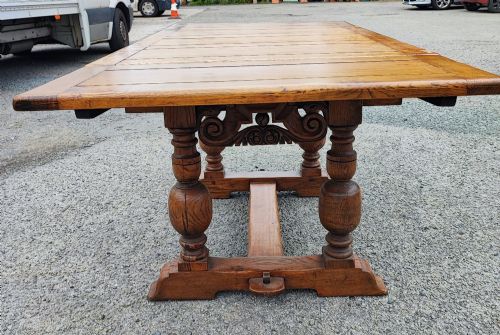
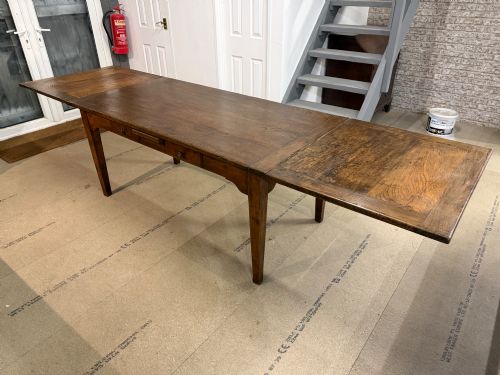
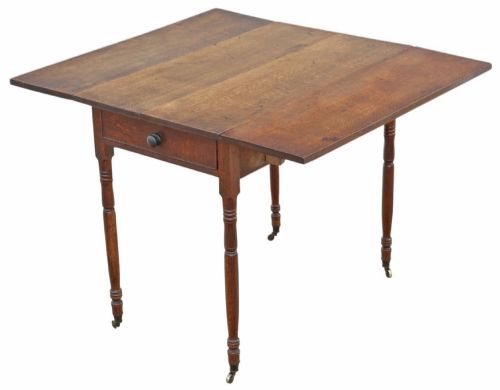
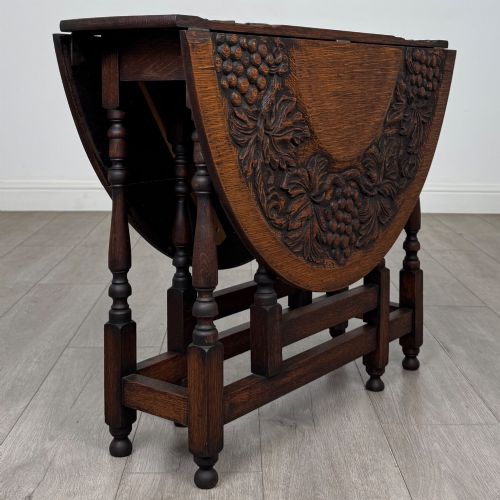
An oak table with leaves is a versatile piece of furniture designed to adapt its surface area for dining, writing or tea service. When searching for this category, buyers encounter a mix of compact gateleg designs, extending dining tables and writing desks.
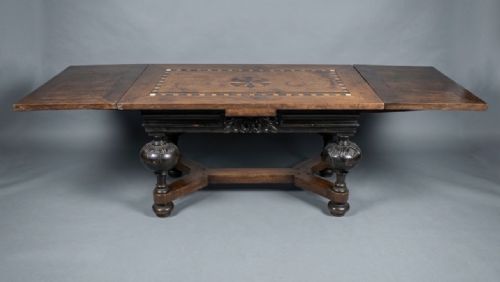
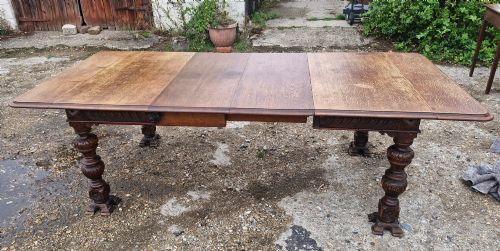
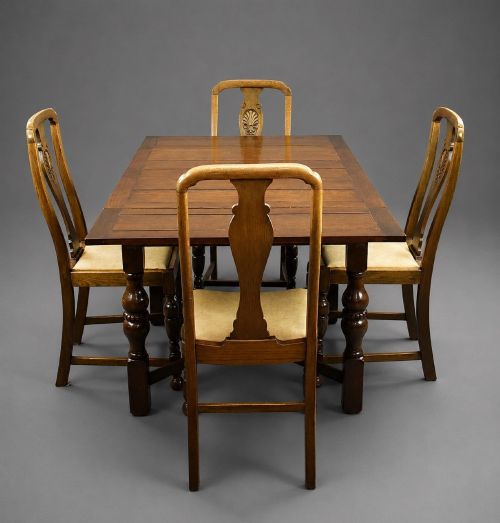
The selection ranges from seventeenth-century gateleg forms to Edwardian and Victorian extending dining tables. Gateleg tables dominate the earlier periods, while wind-out mechanisms and draw leaves appear frequently in later nineteenth and twentieth-century examples.
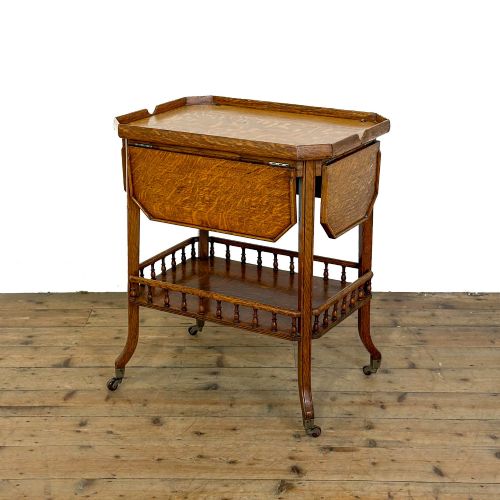
Smaller variants such as tea trolleys, bedside tables with leaves and writing tables also emerge within this grouping. These pieces span centuries of British and European craftsmanship, utilising timber surfaces supported by clever folding or sliding mechanisms.
What varies in quality
The standard of a piece depends heavily on the crispness of the turning, the integrity of the timber and the smooth operation of its leaves or extension mechanisms. Tables featuring original patina and uncompromised structural joints command greater appreciation.
Earlier seventeenth-century examples derive their standing from the depth of the timber grain and the proportion of the baluster or bobbin legs. Later Victorian and Edwardian extending tables are judged by the mechanical precision of their winding systems and how seamlessly the additional leaves integrate with the main top.
Listings feature oak tables spanning the seventeenth century through the Edwardian period, incorporating brass, iron, mahogany and leather elements.
J & T Scott Edinburgh·Heals
The Oak Table with Leaves Glossary
- Gateleg table
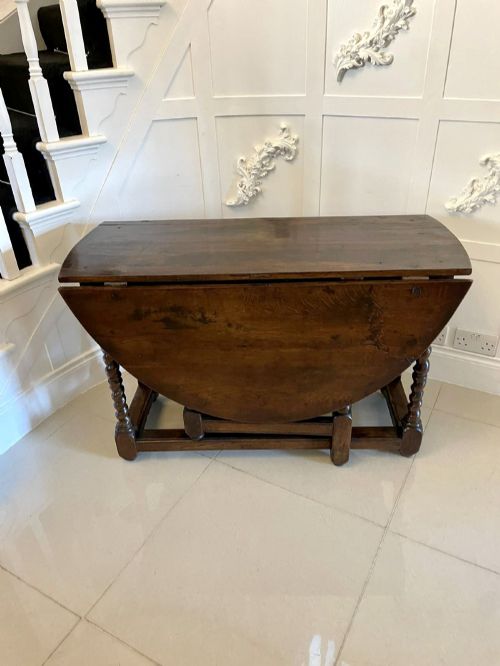
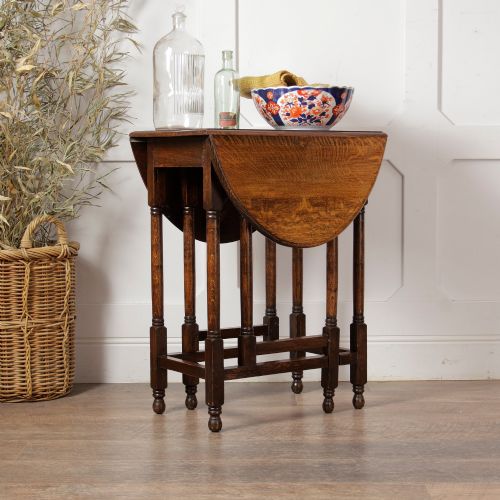
- A table with hinged flaps or leaves supported by swing-out legs on either side. This form allows the surface area to reduce significantly when not in use.
- Draw leaf
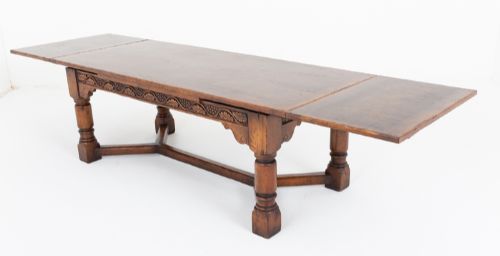
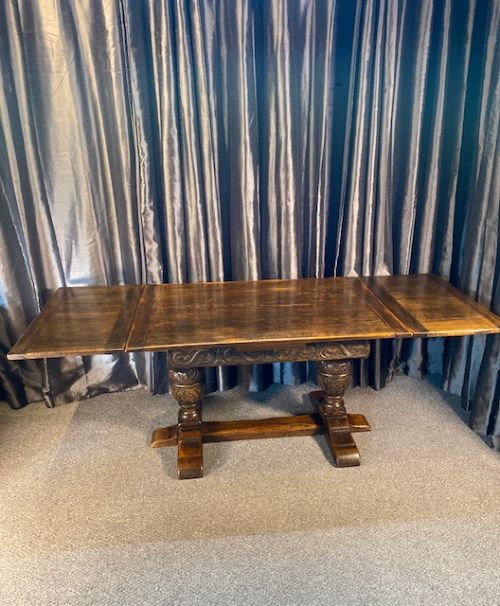
- An extension system where two leaves store underneath the main top and pull out from the ends. The main surface drops slightly into place as the leaves are positioned.
- Bobbin turned
- A style of leg decoration shaped on a lathe to resemble a series of wooden bobbins or spools stacked end to end. This turning style appears frequently on seventeenth-century pieces.
- Wind out
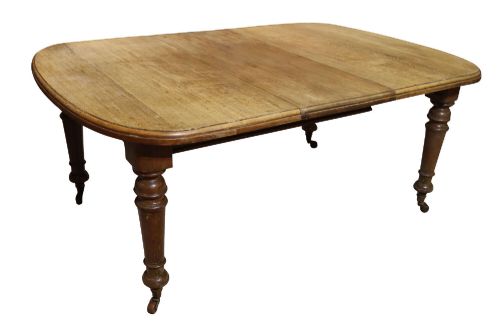
- A mechanical extension system operated by a handle or key that turns internal wooden screws to pull the table halves apart. Additional leaves drop into the central gap.
- Patina
- The deep surface sheen and colour developed by aged wood through decades of handling, polishing and exposure to light.
Oak Table with Leaves: Frequently Asked Questions
How do gateleg tables work?
Gateleg tables use hinged flaps on either side that fold down when not needed. To expand the surface, two legs swing outward on wooden pivots to support the raised leaves.
This design allows a large dining surface to fold into a narrow console or side table for easy storage against a wall.
How do wind-out tables function?
Victorian wind-out tables use an internal metal screw mechanism operated by a removable handle. Turning the handle separates the two halves of the tabletop along wooden runners.
Once the gap is wide enough, extra leaves are dropped into the centre and the mechanism is wound back together to secure them tightly in place.
How do I care for an oak table?
Solid oak furniture responds best to regular dusting with a soft cloth and occasional waxing to nourish the timber. Avoid placing these tables near direct heat sources or strong sunlight to prevent the wood from drying out.
Using coasters and placemats protects the polished surface and preserves the original patina over time.