

Oak Study Desk Drawers
These oak study desk drawers bring together solid timber utility and period character, offering practical workspace built to endure.
Oak Study Desk Drawers
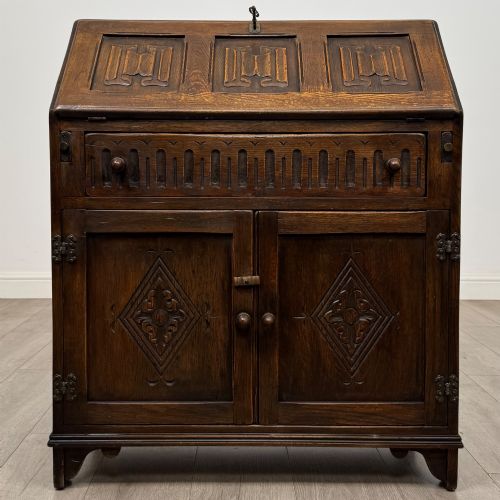
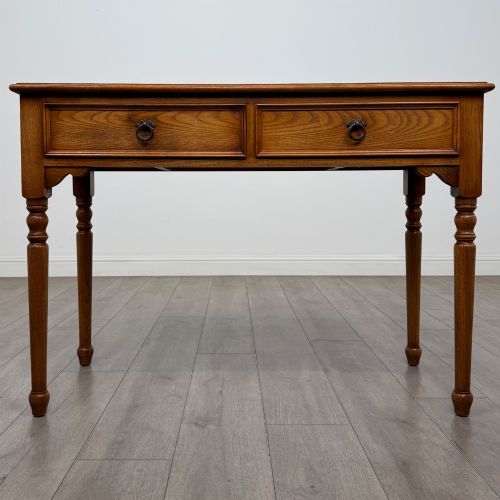
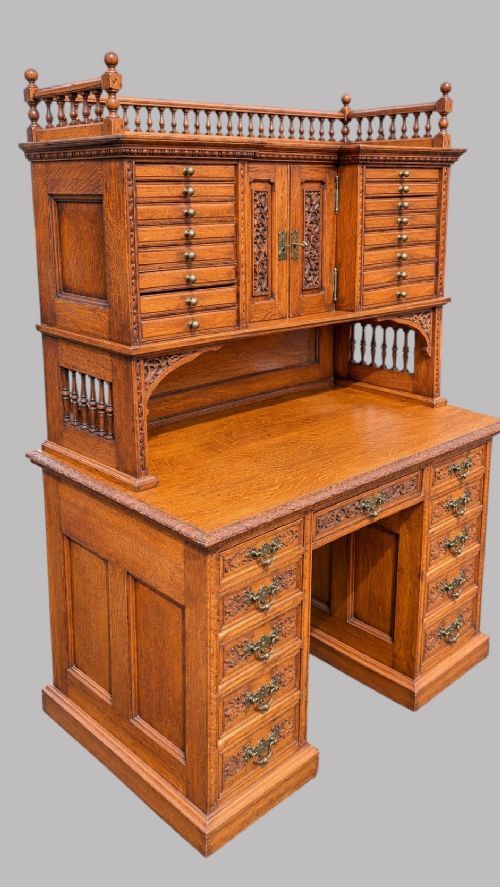
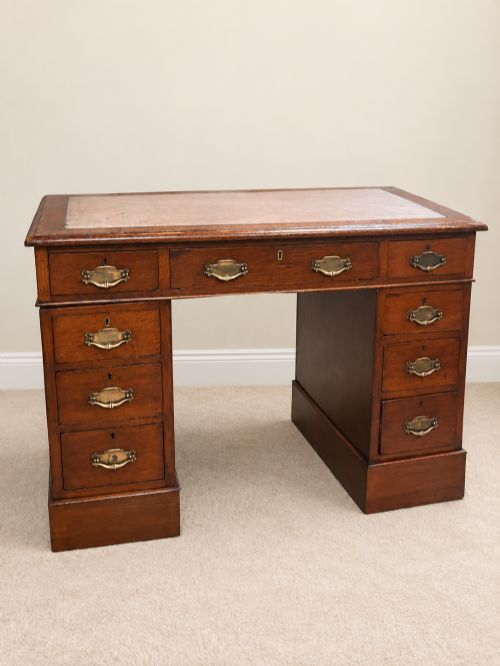
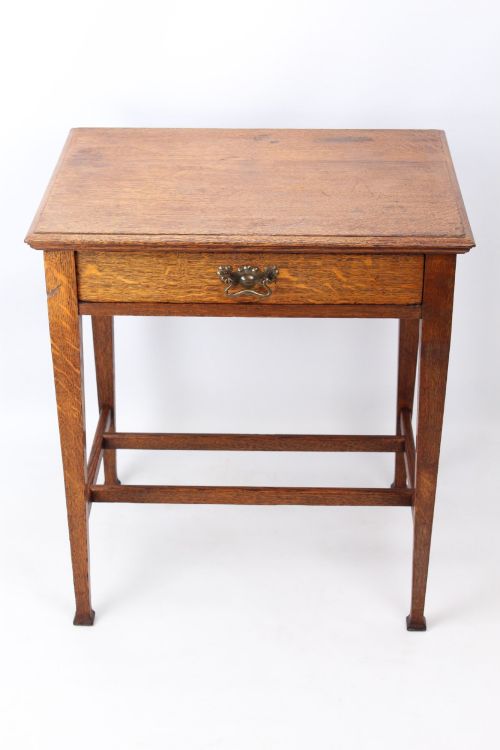
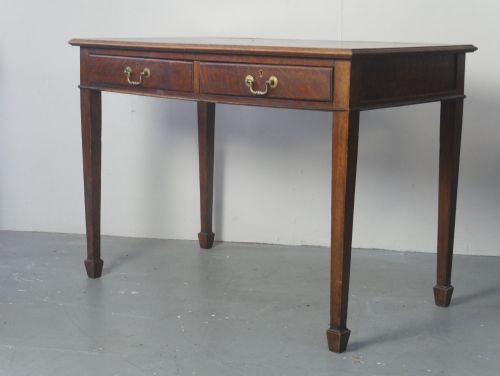
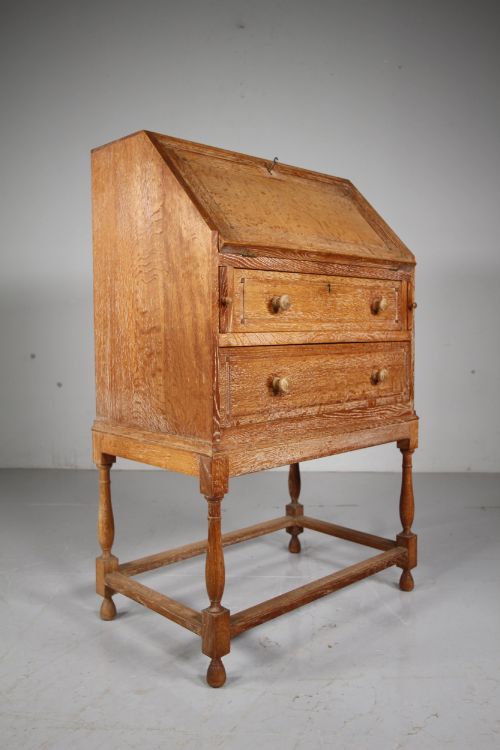
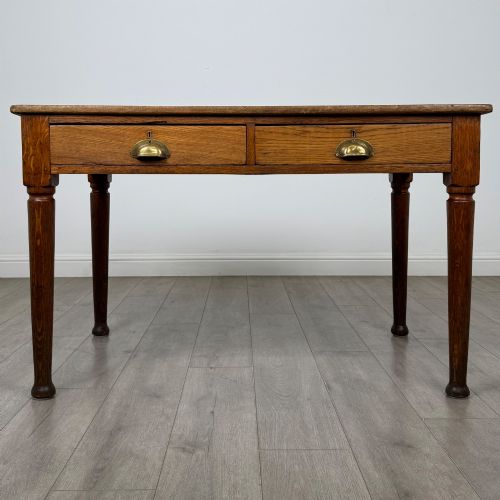
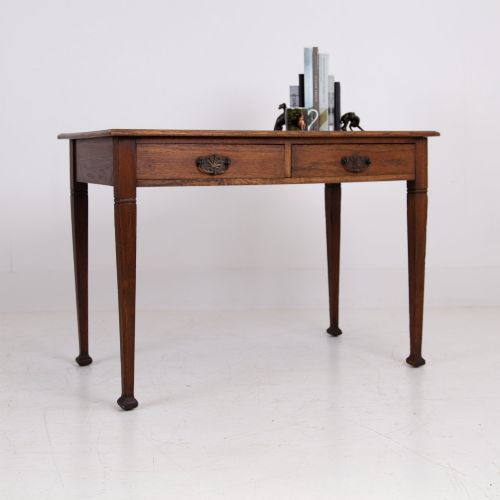
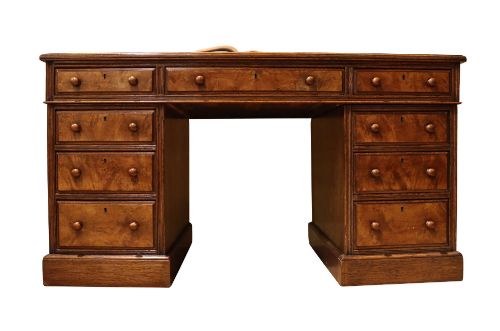
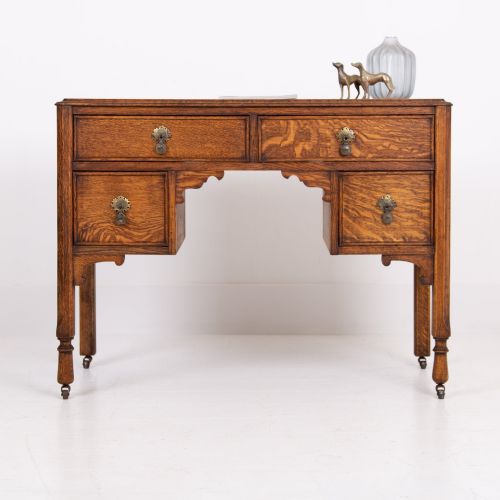
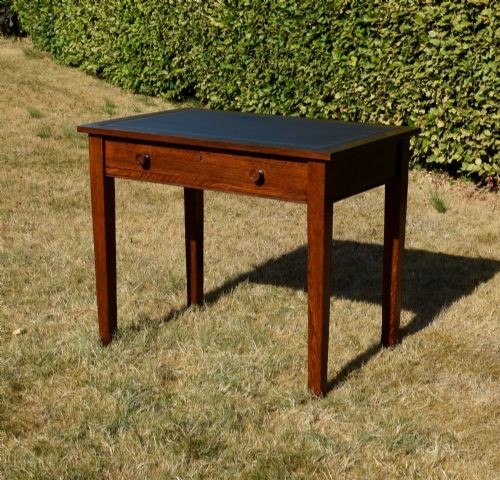
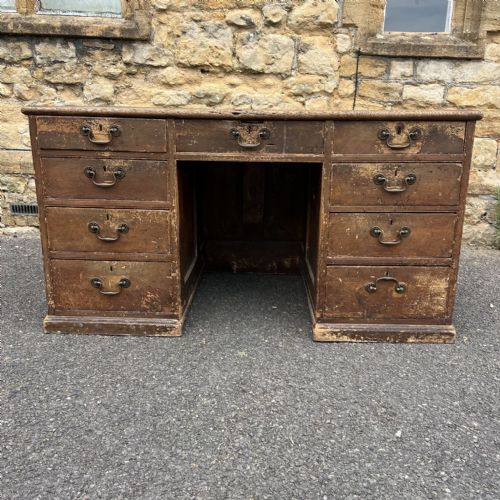
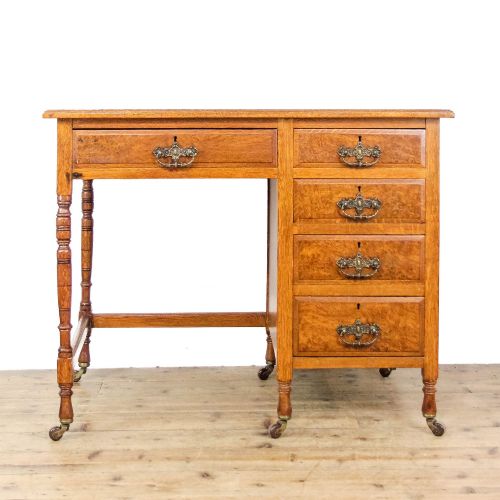
When you search for oak study desk drawers, you are looking at utilitarian and writing furniture constructed primarily from oak across the Victorian, Edwardian, and early twentieth-century periods. These pieces range from simple two-drawer writing tables and compact bureaus to substantial nine-drawer pedestal desks and kneehole configurations.
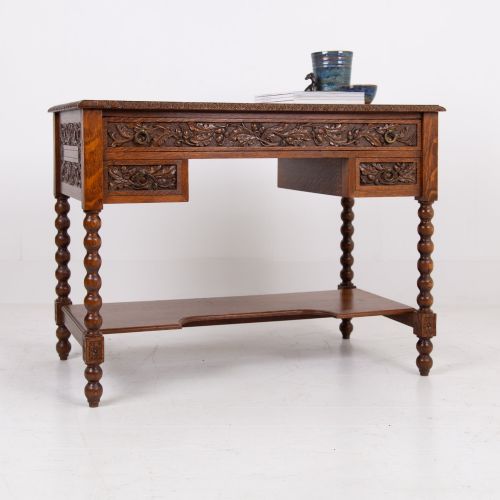
The versions you are most likely to meet on this page date from the late nineteenth century to the 1920s, reflecting Victorian and Edwardian domestic and office tastes. Styles span plain English country forms, Arts and Crafts minimalism, and heavier revival designs including Jacobean and Tudor motifs.
Makers and retailers such as Heals of London and Blyth and Son occasionally appear alongside unbranded estate pieces and provincial workshop productions. The primary function remains writing and study, supported by banks of graduated drawers and occasionally fitted interior compartments.
Materials and construction methods
Solid oak serves as the primary structural material, frequently complemented by secondary timbers such as pine in internal drawer linings and carcass framing. Cabinetmakers utilised quartersawn oak to reveal attractive medullary rays, while auxiliary woods and decorative veneers like burr walnut, satinwood, and pollard oak appear on selected surfaces.
Hardware consists chiefly of brass handles, swing drops, and locks, paired with leather writing surfaces inset into the top boards. Iron and other metals appear in internal mechanisms and hinges, supporting the robust day-to-day use expected of office and study furniture.
Listings include oak, burr walnut, and pine, spanning Victorian, Edwardian, and Georgian revival periods.
Factors influencing quality
The distinction between standard utility items and finer examples rests on timber selection, decorative carving, and internal joinery. Desks utilising figured golden oak, subtle linenfold panelling, or secondary burr walnut veneers demonstrate higher workshop ambition than plain commercial equivalents.
Construction details such as hand-cut dovetails on drawer linings, original brass hardware, and maker labels from recognised firms elevate a piece above standard mass-produced office furniture from the same period.
Heals of London·Blyth and Son·Jenners
The Oak Study Desk Drawers Glossary
- Bureau
- A sloping desk with a hinged writing flap that covers internal pigeonholes and small drawers. They frequently stand on bracket feet or straight legs.
- Pedestal desk
- A heavy freestanding desk with two supporting banks of drawers beneath the main work surface. These units often feature nine drawers in total.
- Kneehole desk
- A compact writing desk with a central recessed space for the legs, flanked by single or multiple vertical stacks of drawers. This form became common in the Victorian period.
- Linenfold
- A style of carved wooden panelling that resembles folded fabric, often seen on Edwardian and revival oak cabinet doors and drawer fronts.
- Crossbanding
- A decorative border technique where thin strips of veneer are laid perpendicular to the grain of the main surface. It appears on finer Edwardian and Victorian writing tables.
Oak Study Desk Drawers: Frequently Asked Questions
How do I care for a leather desk top?
Leather writing surfaces require gentle cleaning with a damp cloth and occasional treatment with appropriate leather balms to prevent cracking.
Avoid placing hot cups or liquids directly onto the hide to preserve the original surface texture and colour.
Are these desks suitable for daily computer work?
Many of these period desks accommodate modern laptops and paperwork, though older kneehole spaces can be narrower than contemporary standards.
Checking internal drawer dimensions and leg clearance helps ensure comfortable daily use in a modern study.
How do I date an oak pedestal desk?
Dating relies on examining construction techniques, hardware styles, and timber preparation methods alongside any maker labels.
Hand-cut dovetails, brass locks, and specific revival design motifs help narrow down the period from the mid-nineteenth century to the 1920s.
What is the difference between a writing table and a pedestal desk?
A writing table typically stands on four legs with one or more drawers built into the frieze beneath the top. Pedestal desks replace simple legs with substantial drawer columns on both sides.