



Oak Stick Back Armchair
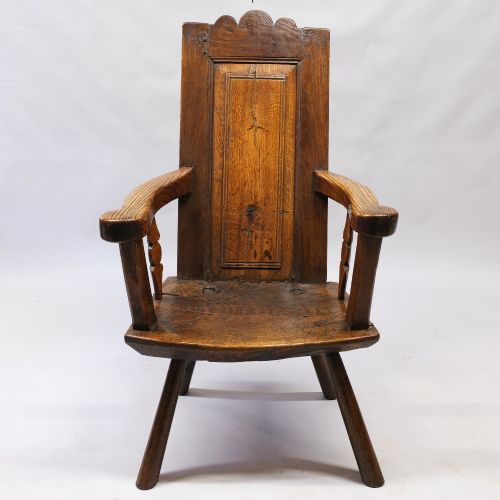
An oak stick back armchair brings sturdy vernacular character to a room, offering honest country craftsmanship from past centuries.
Oak Stick Back Armchair
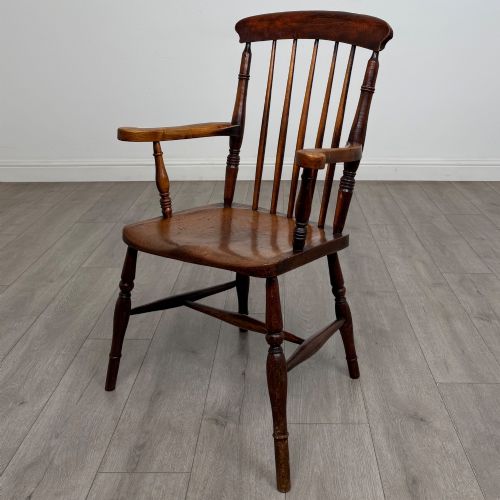
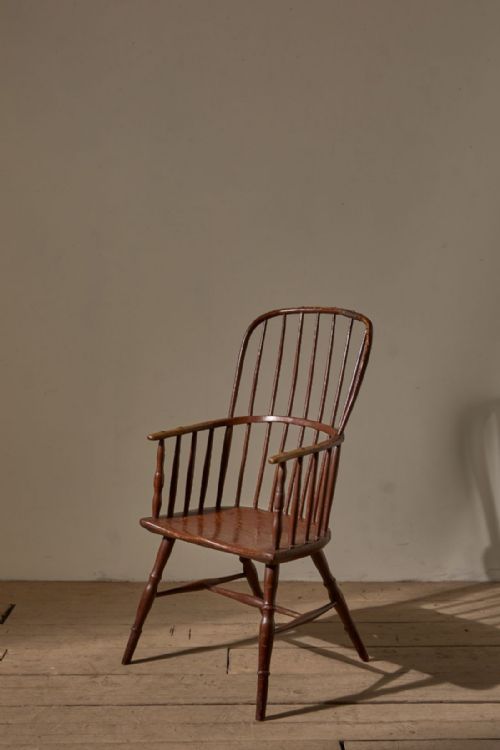
An oak stick back armchair is a traditional country seat built by regional makers, combining sturdy timber frames with slender turned spindles.
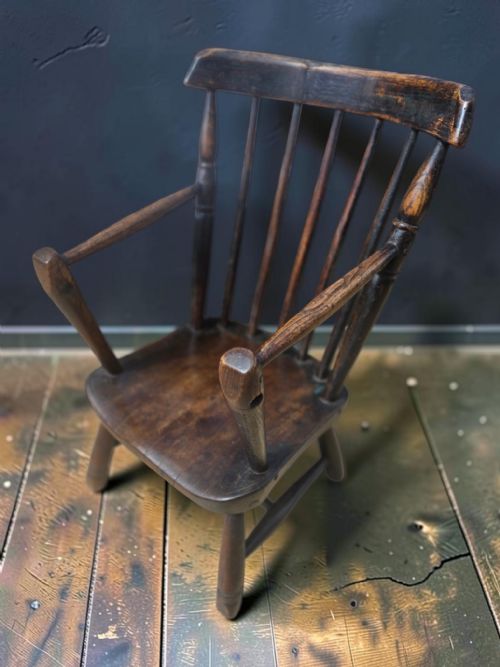
You will encounter pieces originating from the eighteenth and nineteenth centuries, including vernacular styles from Wales, Scotland, and English counties alongside smaller children's chairs.
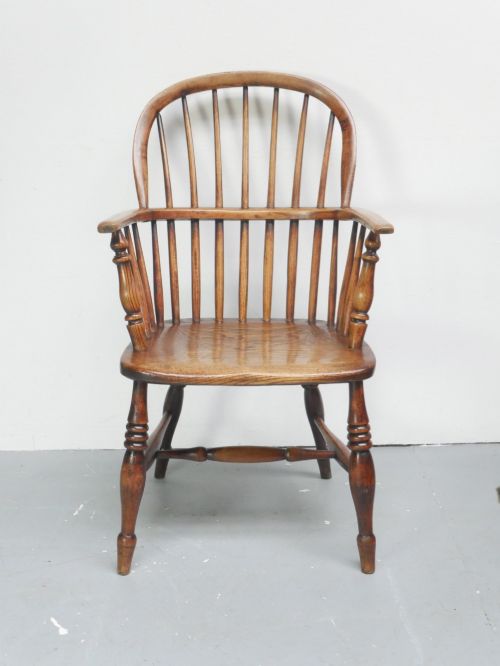
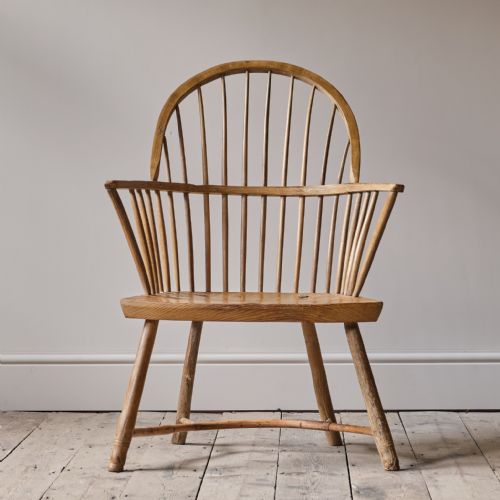
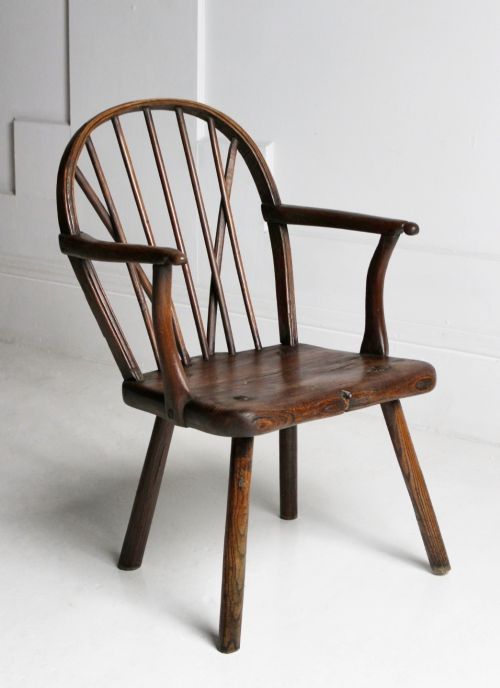
The selection ranges from simple farmhouse stick backs to comb backs and hoop backs, reflecting diverse local building traditions across Britain.
How they were made
Maker construction relies on a mix of local timbers, combining oak for frames with elm, ash, beech, yew, and fruitwood for seats, spindles, and bent parts.
Constructed using traditional bodging techniques, these chairs feature shaved spindles and legs wedged directly into solid plank seats.
Several miniature and child's versions appear among the full-sized armchairs, built with the exact same traditional techniques.
What varies in quality
Quality rests in the balance of proportions and the integrity of the timber, where original patination and honest wear distinguish superior rural examples.
The sophistication of the spindle turnings and the comfort of the carved seat reveal the skill of the regional maker.
The Oak Stick Back Armchair Glossary
- Stick back
- A chair design where turned or shaved wooden spindles form the backrest rather than solid splints.
- Comb back
- A chair style featuring a high backrest topped by a horizontal crest rail resembling a comb.
- Vernacular
- Objects built by local craftsmen using regional traditions and readily available native materials.
- Bodging
- The traditional craft of green woodworking and chair leg turning carried out in woodland workshops.
Oak Stick Back Armchair: Frequently Asked Questions
Where were they made?
These seats originate from rural workshops across Britain, with distinct regional styles found in Wales, Scotland, and English counties.
Local makers utilised nearby timber supplies, giving chairs from different areas distinct structural traits.
Are they comfortable to sit in?
Country makers shaped solid wooden seats to fit the body, making them surprisingly supportive for daily use.
Adding a simple cushion can increase comfort while preserving the antique timber surface.
How do I care for the wood?
Maintain the finish by keeping the timber away from direct heat sources and sudden temperature changes.
Applying a traditional beeswax occasionally helps nourish the dry grain and protects the historic surface.