



Oak Stationery Desk
An oak stationery desk brings order to paper and ink, offering compartmentalised storage crafted to last.
Oak Stationery Desk
When you search for an oak stationery desk, you encounter a variety of desktop organisers, correspondence boxes, and small cabinets designed to keep writing materials tidy. These pieces date predominantly from the Victorian and Edwardian eras, spanning the nineteenth and early twentieth centuries, with occasional examples reaching back to the Georgian period.
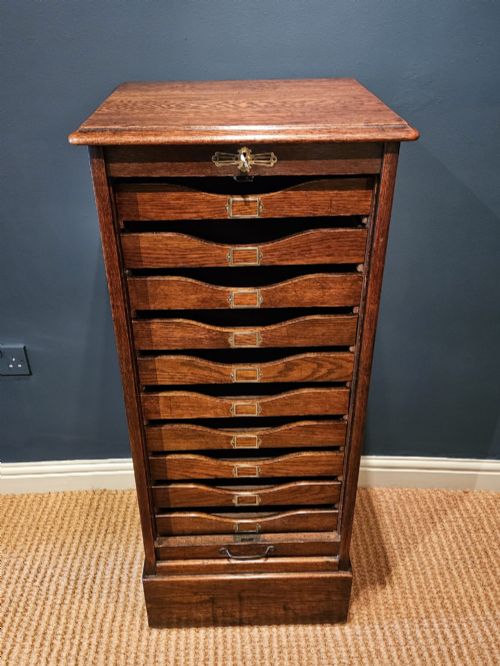
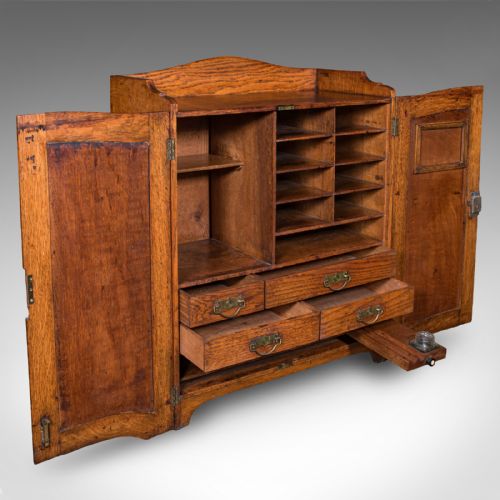
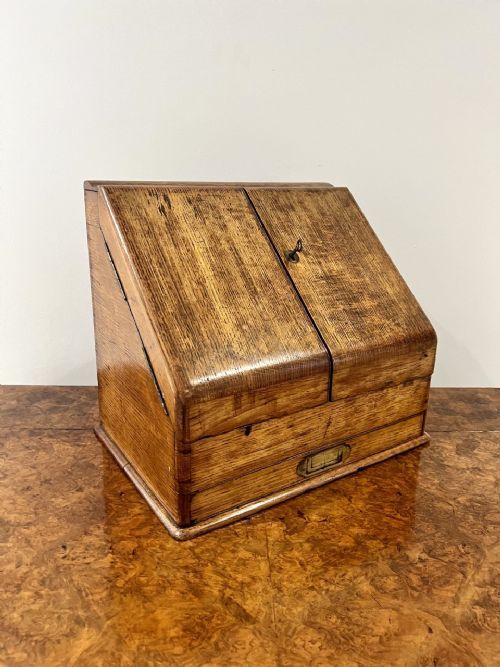
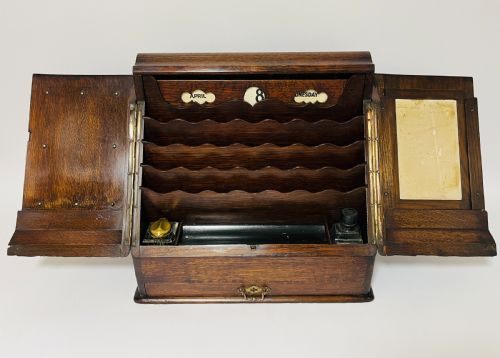
The most common forms on this page include stationery cabinets with fall fronts or tambour doors, letter boxes, and desk boxes fitted with internal partitions and pigeonholes. Makers also produced variations incorporating calendars, inkstands, and pen trays to serve the writing needs of period offices and country houses.
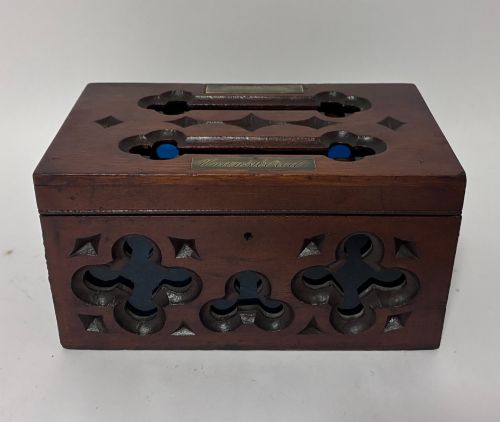
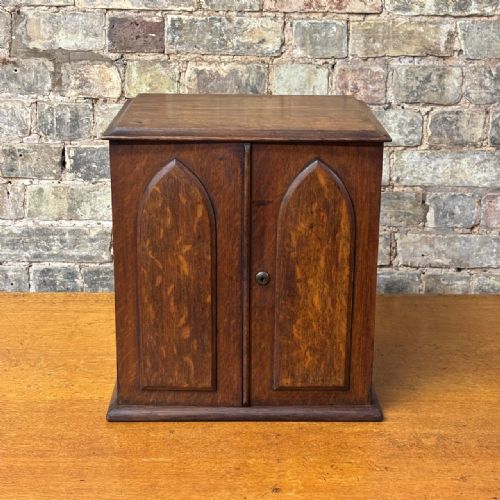
Stylistic influences range from plain utilitarian designs to Gothic Revival and Arts and Crafts pieces. Golden oak is frequently seen alongside darker Victorian tones, reflecting the timber preferences of different decades.
Materials and Technique
Cabinet makers built these pieces primarily from solid oak, sometimes utilising golden oak or pollard oak for decorative grain effects. Timber selection ensured durability for items subjected to daily handling on desks and tables.
Brass mountings, hinges, and handles provide structural reinforcement and visual contrast to the wood. Leather, glass ink bottles, and occasional fabric or metal details complete the interior fittings of the boxes and cabinets.
Listings span the Victorian and Edwardian periods, incorporating Arts and Crafts and Gothic Revival styles alongside plain oak utilitarian designs.
Cabinet Work and Fittings
The distinction between standard pieces and the finest examples lies in the standard of the cabinet work and the sophistication of the internal mechanisms. Superior pieces incorporate tight joinery, smoothly operating tambour doors or fall fronts, and well-fitted secret drawers.
Original hardware, such as substantial brass handles, fitted ink bottles, and working calendars, elevates a piece. Evidence of carved detail, seen in Gothic panels or Green Man motifs, points to skilled craftsmanship rather than mass production.
The Oak Stationery Desk Glossary
- Tambour
- A door constructed from narrow strips of wood glued to a flexible backing, allowing it to slide in a track around a curve. This mechanism is frequently found on office and stationery cabinets.
- Standish
- A desk set or inkstand holding inkwells, pen trays, and sometimes a sander or wafer box. These desk accessories gathered writing implements in one portable tray.
- Fall Front
- A hinged panel that drops down to open a compartment or reveal interior pigeonholes and drawers. It serves as a writing surface or access flap on stationery boxes.
- Correspondence Box
- A desktop container specifically sized for letter paper, envelopes, and incoming mail. They often feature tiered slots or fitted compartments.
- Pigeonhole
- A small compartment within a desk or cabinet used for sorting letters and documents. They form the internal organisation of stationery boxes and bureaus.
Oak Stationery Desk: Frequently Asked Questions
What is an oak stationery desk?
An oak stationery desk or desktop cabinet is a specialised storage piece designed to hold writing paper, envelopes, and correspondence. These items organise loose papers and keep writing implements contained on a desktop.
Most examples date from the Victorian and Edwardian periods, reflecting the heavy correspondence culture of those eras. They range from simple lidded boxes to elaborate cabinets with multiple internal compartments.
How were stationery boxes used?
In period offices and homes, these boxes sat on large desks or tables to keep writing materials clean and sorted. Slotted compartments held different sizes of paper, while drawers secured stamps and nibs.
Many included integrated ink bottles, pen trays, and adjustable calendars to manage daily correspondence tasks. The lockable lids ensured privacy for personal letters.
How do I date an oak box?
Dating relies on stylistic clues, construction methods, and hardware. Victorian pieces often display heavier proportions and Gothic or traditional carved decoration.
Edwardian and later pieces frequently utilise golden oak and clean Arts and Crafts lines, or feature tambour fronts and mechanical letter racks patented around the turn of the century.
Are these pieces suitable for modern use?
These cabinets and boxes function well on modern desks for storing stationery, notebooks, and small electronics. The internal partitions accommodate modern envelopes, notepads, and pens.
Placing them on a workspace preserves period craftsmanship while providing practical storage for daily office tasks.