

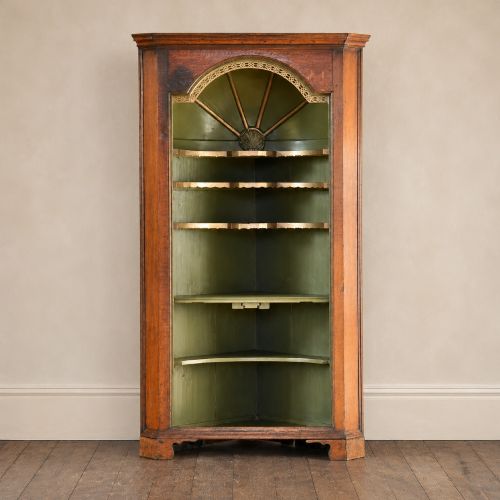
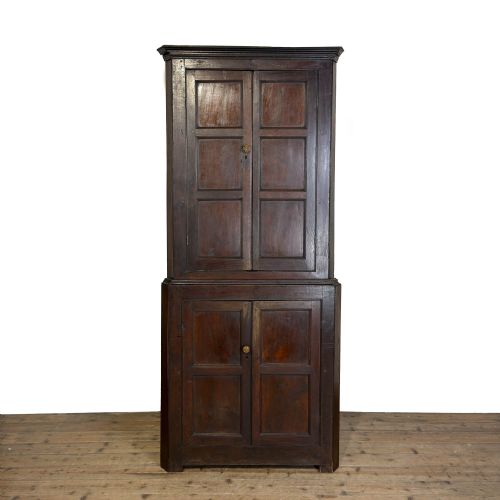
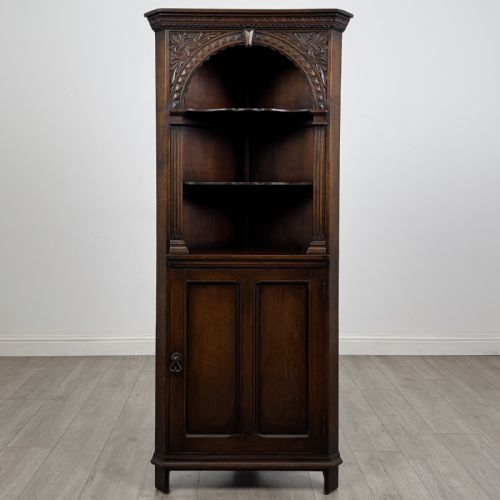
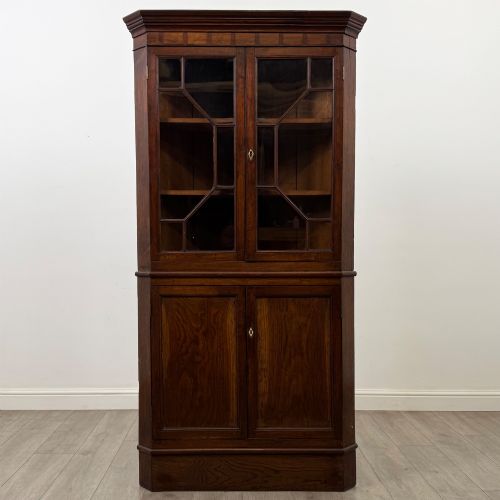
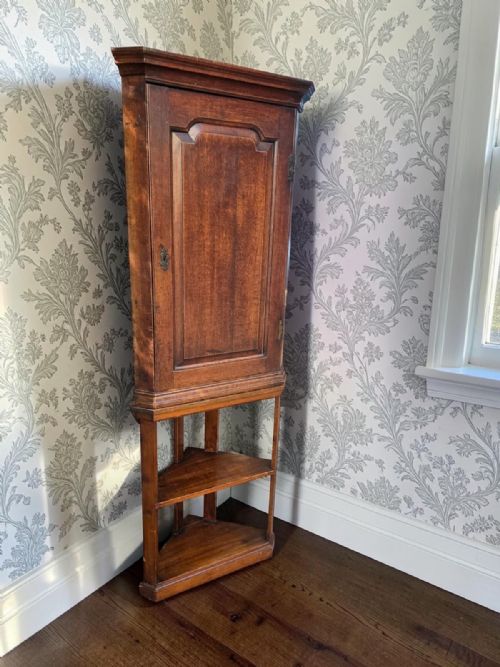
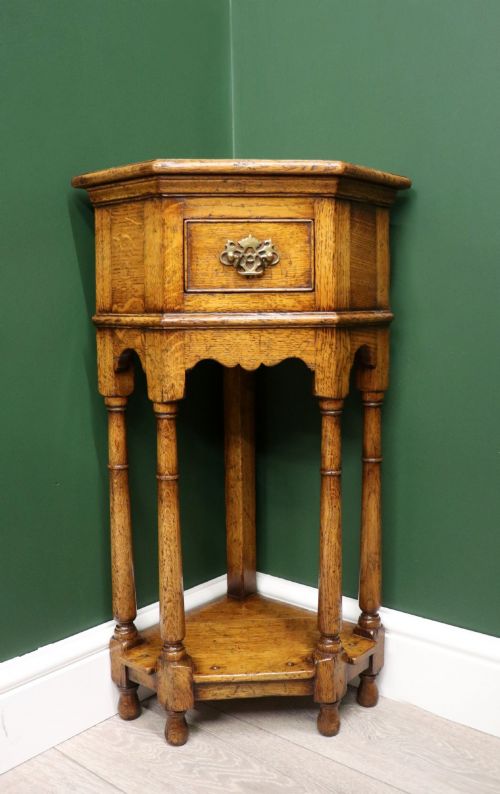

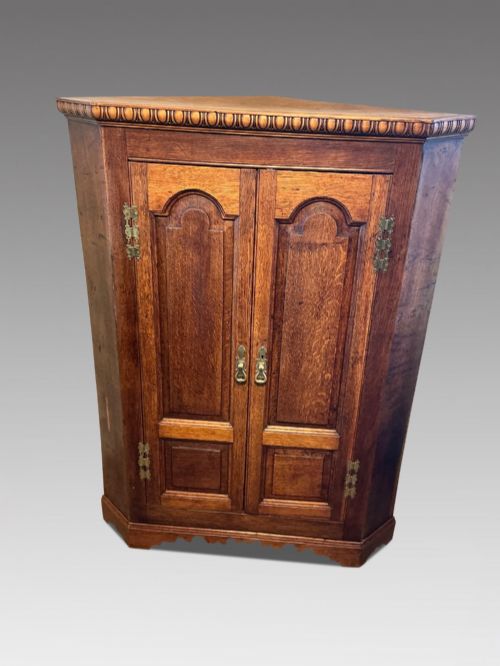
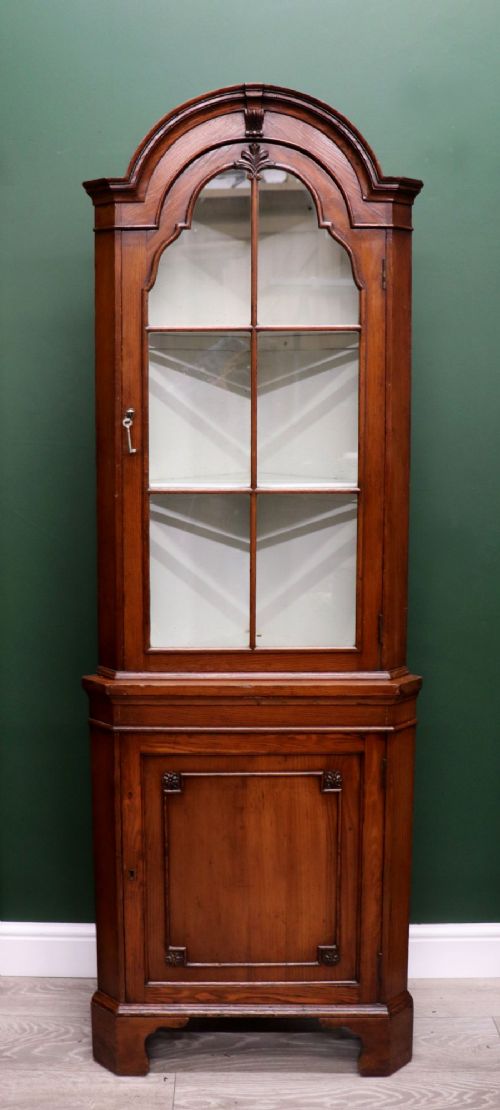


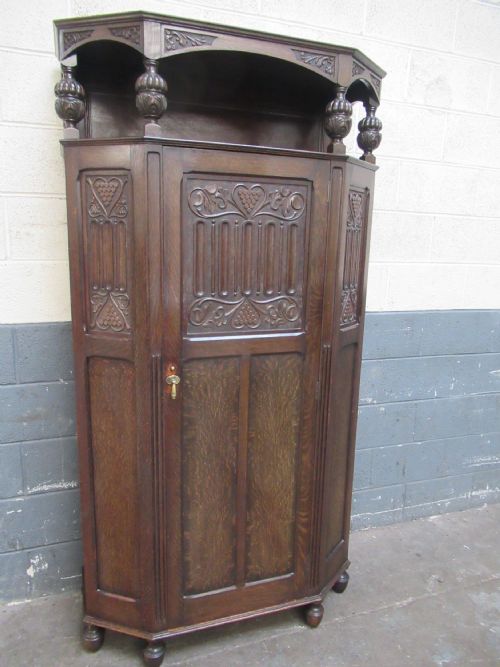


Oak Standing Corner Cabinet
An oak standing corner cabinet solves the awkward problem of empty room junctions with architectural presence and generous storage.
Oak Standing Corner Cabinet
An oak standing corner cabinet provides tall storage designed specifically to fit the intersection of two walls, making use of otherwise dead architectural space. These pieces anchor a room with solid timber construction, turning a neglected angle into a focal point.
The selections span distinct periods, featuring examples from the eighteenth century, the Georgian era, and the Victorian epoch, alongside later twentieth-century interpretations. Many take a two-part form, comprising an upper display or storage section resting upon a matching lower base.
Makers drew on various regional traditions, producing forms like Welsh country cupboards and pieces finished with arched alcoves or panelled doors. Buyers encounter both single-door designs and elaborate double cupboard configurations tailored for substantial dining rooms or halls.
Materials and construction methods
Cabinet makers relied primarily on solid oak, frequently augmented with secondary timbers such as pine or mahogany, and occasionally simulated finishes. Structural integrity depended on pegged joinery and panelled construction, which allowed the dense timber to expand and contract with seasonal temperature shifts.
Iron and brass hardware, including strap hinges and escutcheons, secured the doors and added functional detail to the facade. Glass panels appeared on display sections, while mirrors and limed surface treatments surfaced in specific nineteenth and twentieth-century interpretations.
Oak Standing Corner Cabinet Retail Price Guide 2026
Typical asking prices for oak standing corner cabinet among the pieces listed under this phrase on Sellingantiques today, from the lower quarter to the upper quarter. They describe what is for sale here now, not the wider market.
Several cupboards manage to look sternly monastic while simultaneously hiding your collection of board games.
Assessing quality and craftsmanship
Quality reveals itself in the selection of the timber and the precision of the joinery, particularly where the cabinet meets the wall at precise angles. Superior examples display thoughtful grain matching and well-proportioned cornices that balance the visual weight of the tall body.
The integrity of the original hardware and the crispness of carved details, such as those found on Jacobean or Gothic revival pieces, distinguish finer workshops from simpler regional production. Preserved interior shelving and sound structural alignment in two-part forms indicate careful historical maintenance.
The Oak Standing Corner Cabinet Glossary
- Corner cabinet
- A storage unit built with a triangular or segmental plan to fit snugly into the internal angle of a room. These units often feature shelving enclosed by panelled or glazed doors.
- Two-part
- A cabinet constructed in separate upper and lower sections stacked vertically. This method eased transport and installation for heavy floor-standing furniture.
- Panelled
- A method of construction where a central thin board floats within a grooved frame to accommodate wood movement. This technique prevents splitting as the oak ages.
- Cornice
- The moulded projection that crowns the top of the cabinet. It provides a finished architectural transition between the furniture and the ceiling.
- Escutcheon
- A protective plate surrounding a keyhole. It is commonly cast from brass or iron to prevent the timber from wearing around the lock.
Oak Standing Corner Cabinet: Frequently Asked Questions
How do I fit a standing corner cabinet into a modern room?
Measure the wall clearance from the corner outward on both sides to ensure the depth and door swing do not obstruct surrounding furniture. These tall cupboards naturally draw the eye upward, making them useful for framing a dining area or terminating a hallway.
Leave sufficient space around adjacent skirting boards and picture rails so the moulded cornice sits cleanly against the plaster. Positioning the unit away from direct heat sources protects the timber from drying out and splitting over time.
What is the difference between an eighteenth-century and a later revival corner cabinet?
Eighteenth-century examples typically display utilitarian regional construction with pegged frames, hand-planed panels, and honest signs of age in the timber. They were built to serve daily household needs in country houses and Georgian parlours.
Later revival pieces from the Victorian and twentieth-century periods often incorporate historical motifs from Jacobean or Gothic styles. These versions utilise heavier carved decoration and sometimes integrated mirrors or limed finishes reflecting the aesthetic tastes of their respective eras.
Are these cabinets stable on uneven floors?
Many older floor-standing pieces were originally fitted to specific houses with uneven flagstone or timber floors, meaning minor adjustments may be necessary. Placing discreet packers beneath the base plinth helps level the tall frame and ensures the doors hang straight.
Because corner units anchor securely against two intersecting walls, their triangular footprint inherently provides greater physical stability than standard flat-backed wardrobes of comparable height.
How should I care for antique oak furniture?
Maintain the timber by dusting regularly with a dry cloth and occasionally applying a traditional beeswax to nourish the dry grain. Avoid silicone-based sprays, which build up a residue and attract dust over time.
Keep the cabinet away from prolonged direct sunlight and radiators to prevent the solid oak panels from warping or shrinking. Stable indoor humidity levels preserve both the historic finish and the integrity of the original joints.