

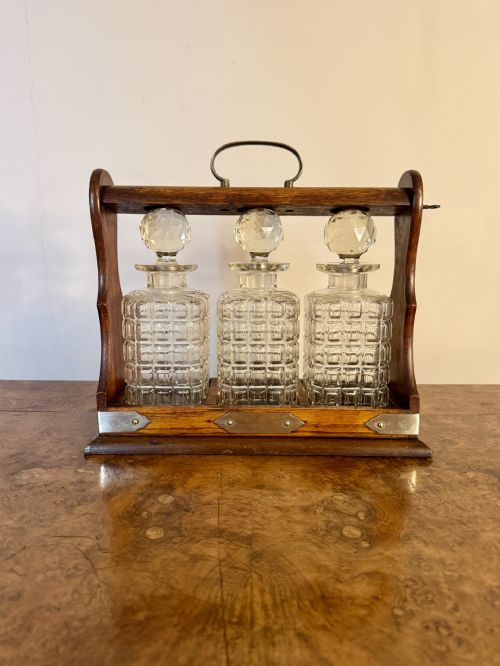
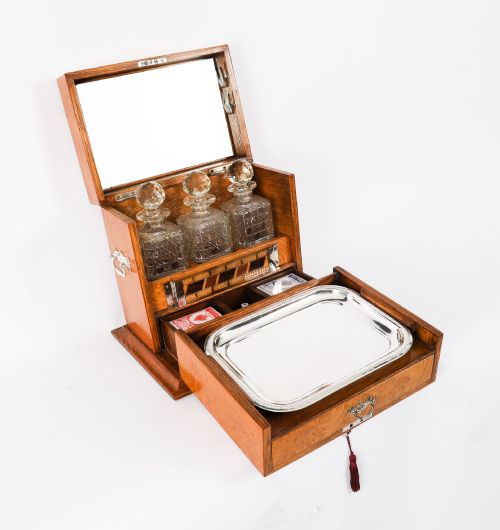
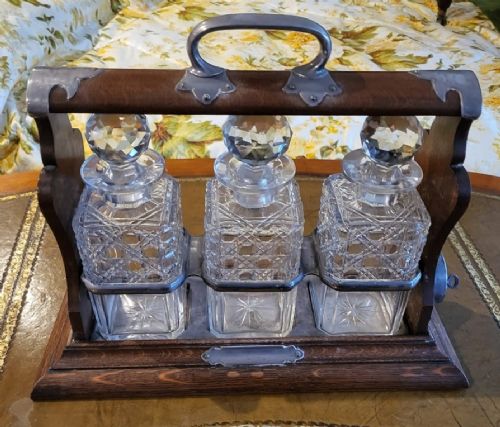
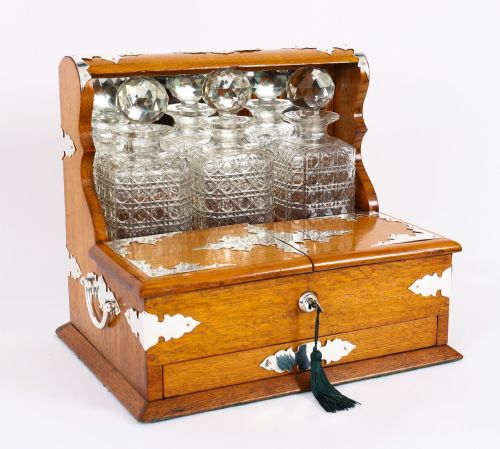
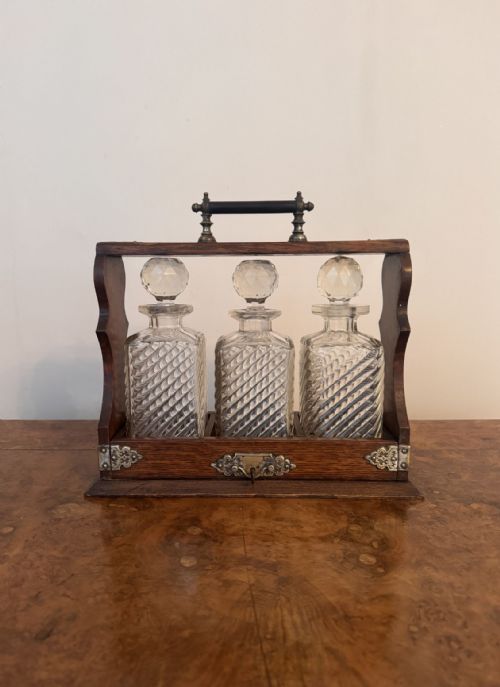
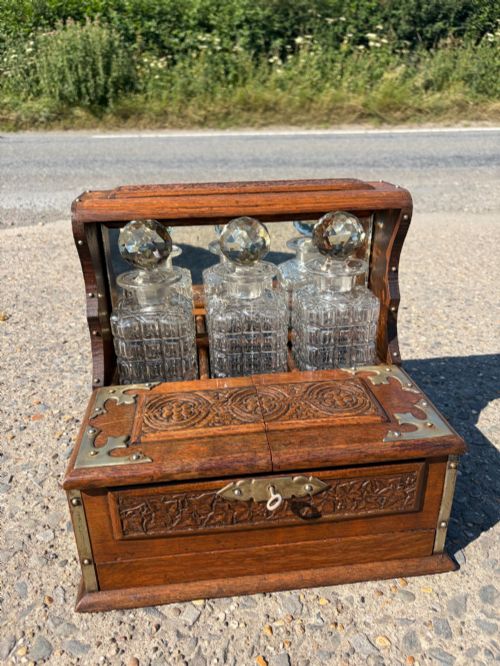


Oak Spirit Decanter
An oak spirit decanter is the quintessential Victorian and Edwardian locking barware container that keeps good whiskey secure from the staff.
Oak Spirit Decanter
When you search for an oak spirit decanter, you are looking at sturdy wooden barware containers and locking tantalus sets designed to hold glass decanters securely. These pieces date principally from the Victorian and Edwardian eras, stretching from eighteen eighty into the early twentieth century, alongside occasional later examples from nineteen thirty.
The version you are most likely to meet on this page is the three bottle oak tantalus, often mounted in brass or silver plate, housing cut glass or cut crystal bottles. You will also encounter games compendiums fitted with decanters, single bottle cases, and barrel forms mounted on Black Forest stands.
The form developed as a gentleman's after dinner necessity, combining heavy oak cabinetry with functional locking mechanisms to protect expensive spirits. These pieces serve equally well today as working home bars or striking decorative objects in a dining room.
Materials and Construction
Makers built these pieces primarily from solid oak, sometimes utilising blonde oak or applying marquetry stringing for decorative contrast. The wood was selected for durability and finished to highlight the natural grain before being fitted with hardware.
Metal mounts in brass and silver plate provide both structural reinforcement and visual contrast against the dark or blonde timber. These mounts include lock plates, carrying handles, corner brackets, and the lifting arms characteristic of locking tantalus frames.
The interior glass element typically consists of cut glass or cut crystal decanters, occasionally accompanied by small glasses or paired with glass mirror backs inside games boxes. Barrels and casks incorporate metal hoops and taps to dispense whiskey, gin, and brandy.
Oak Spirit Decanter Retail Price Guide 2026
Typical asking prices for oak spirit decanter among the pieces listed under this phrase on Sellingantiques today, from the lower quarter to the upper quarter. They describe what is for sale here now, not the wider market.
Victorian hosts used locking tantalus frames so the butler could decant the whiskey without temptation while tidying the dining room.
Judging Quality
Quality in an oak spirit decanter rests on the density of the timber, the crispness of any marquetry stringing, and the substantial weight of the brass or silver plated mounts. Better examples feature thick, well figured oak and heavy metalwork that shows no signs of cheap casting.
The complexity of the form dictates value, moving from simple single bottle cases up to elaborate partner's compendiums and Black Forest stands that combine games storage with locking spirit decanters. The inclusion of matching original cut crystal or cut glass bottles with their stoppers elevates an example significantly.
The engineering of the locking mechanism marks the division between standard production and superior work. A mechanism that engages smoothly and secures the decanters firmly within the oak frame demonstrates the original maker's skill.
The Oak Spirit Decanter Glossary
- Tantalus
- A locking device that holds decanters in place by their necks, preventing removal until the wooden bar is unlocked with a key. The name derives from Greek mythology, teasing the thirsty guest who can see the spirit but cannot pour it.
- Compendium
- A multi purpose box containing games equipment alongside decanters and glasses. These pieces combine social entertainment with after dinner drinking.
- Black Forest
- A style of carving originating in the mountainous region of central Europe, often featuring naturalistic animal and foliage motifs. On these pieces, it appears as elaborate stands supporting oak barrels.
- Marquetry
- The art of applying small pieces of veneer to a structure to form decorative patterns. On these pieces, contrasting woods create fine lines called stringing around the edges.
- Silver Plate
- A thin layer of silver applied to a base metal, commonly used for the handles, lock plates, and bottle collars. This finish offered the lustre of solid silver at a lower cost.
Oak Spirit Decanter: Frequently Asked Questions
How do you open an antique tantalus?
Most antique tantalus mechanisms require a small key to release the locking arm that secures the necks of the decanters. Once turned, the top bar lifts or slides aside to free the bottles.
If the piece lacks a key, a locksmith or specialist dealer can often pick or replace the small lever lock without damaging the surrounding oak framework.
What is the difference between a tantalus and a spirit cask?
A tantalus relies on an upright frame that locks the stoppers of standard decanters in place. The bottles remain visible and removable only when the wooden bar is unlocked.
A spirit cask takes the form of an oak barrel mounted horizontally on a stand, often with a metal tap for dispensing whiskey, gin, or brandy directly.
How should I clean my oak spirit decanter?
Feed the oak occasionally with a traditional beeswax polish applied with a soft cloth to maintain the lustre of the wood. Avoid modern silicone sprays or excessive moisture on the brass and silver plated mounts.
Wash the glass decanters by hand with warm water and bottle brushes, leaving the stoppers out until completely dry to prevent odours from forming inside.
Are the decanters usually original to the piece?
Many surviving tantalus sets retain their matching cut glass or cut crystal decanters, particularly those with fitted bases that dictate the exact bottle size. Because bottles were fragile, replacements of the correct period do occur.
Check whether the cut pattern on the glass matches the style of the oak frame and whether the stoppers fit snugly in the necks.