


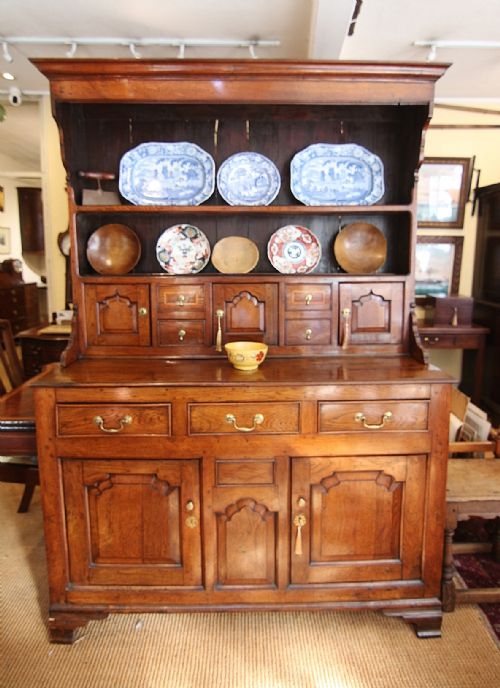
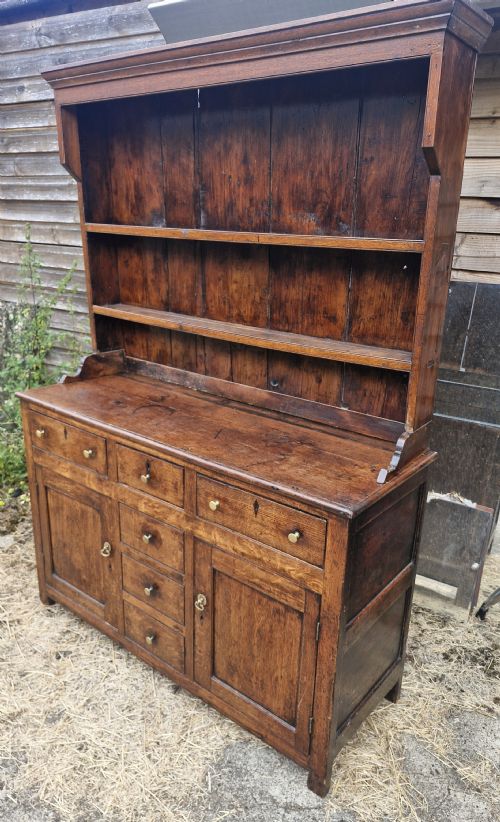
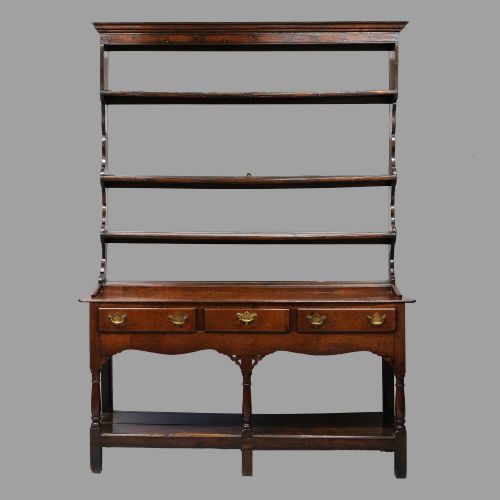
Oak Sideboard with Plate Rack
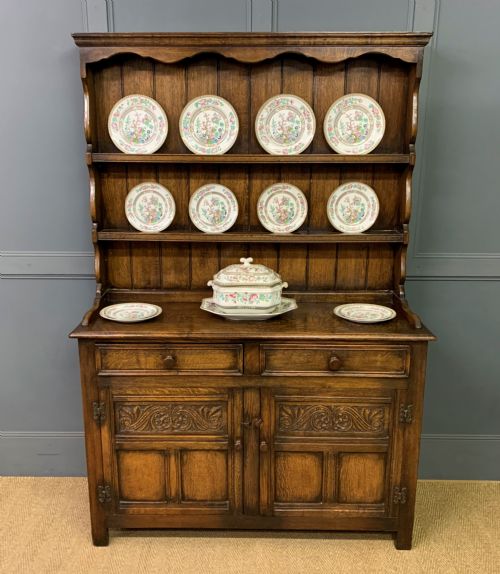
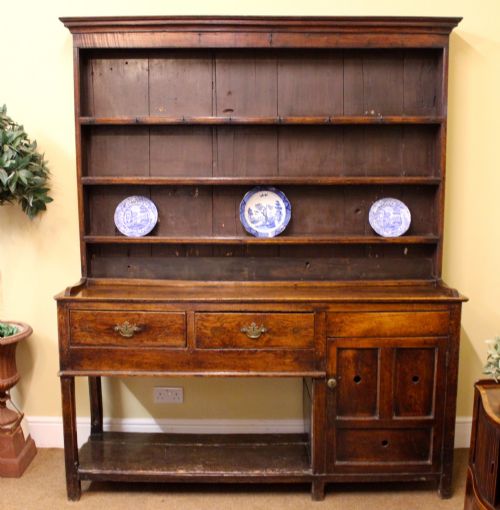
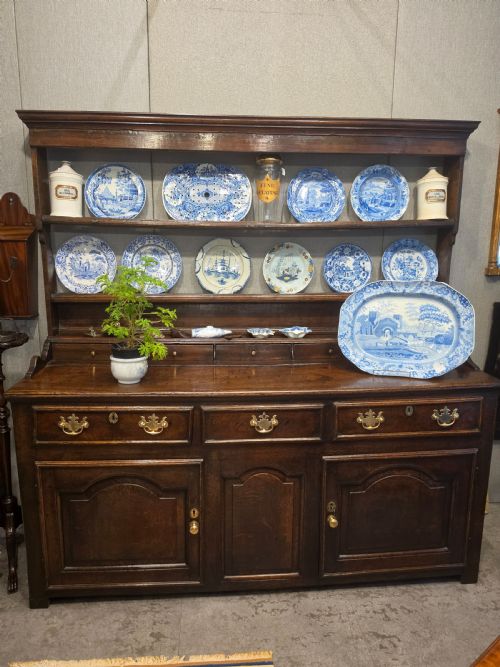
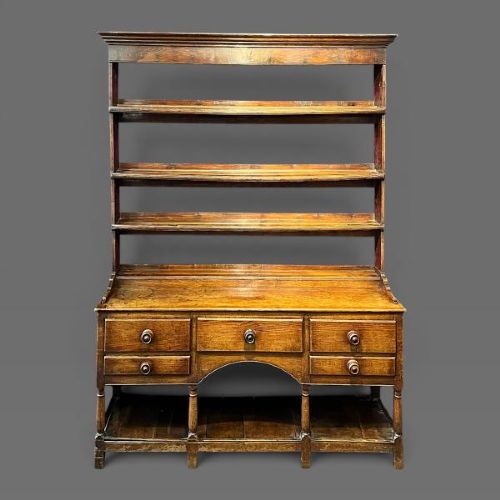
These oak sideboards with plate racks combine a sturdy timber base with open upper shelving, built to display pottery and store provisions.
Oak Sideboard with Plate Rack
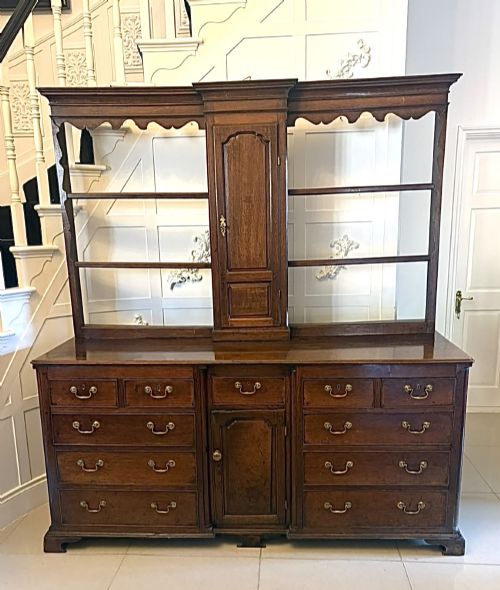
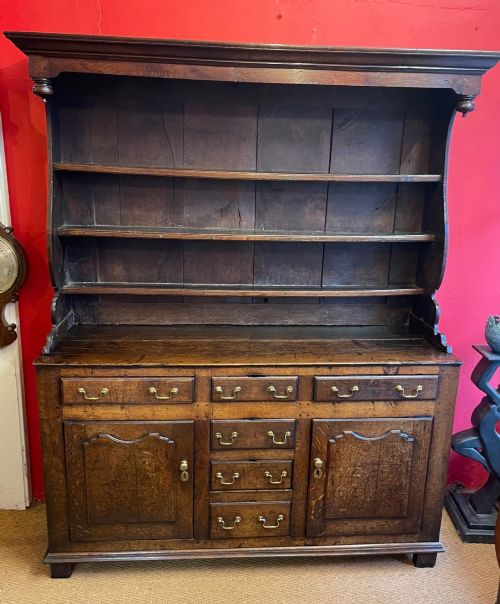
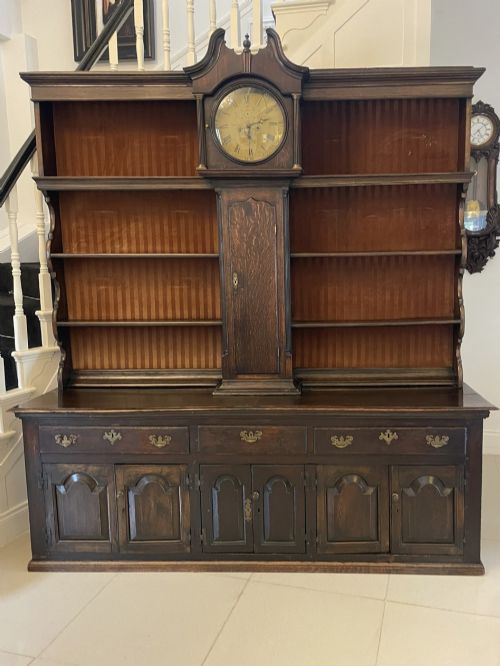
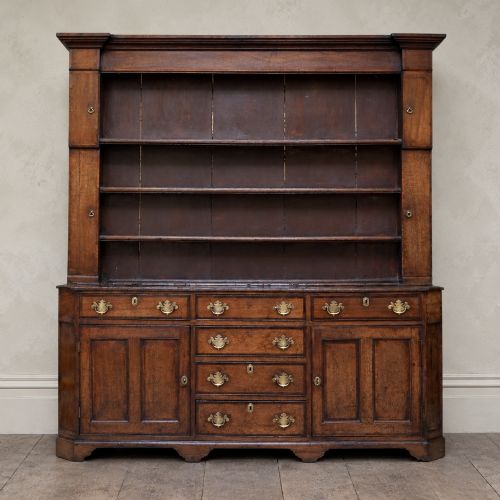
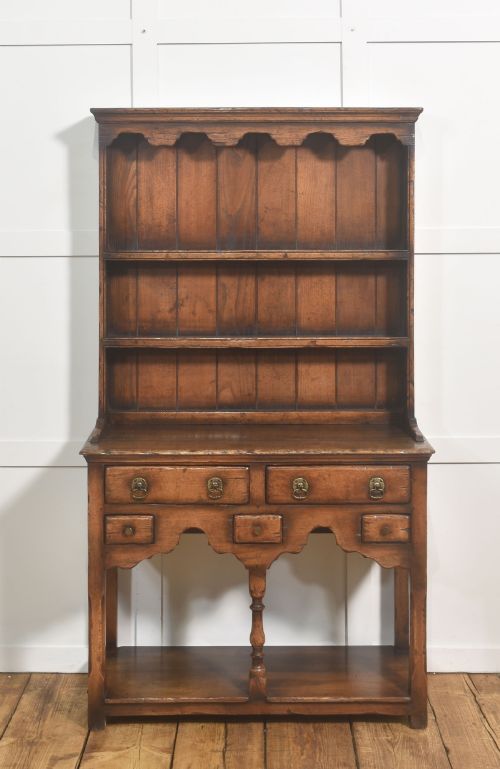
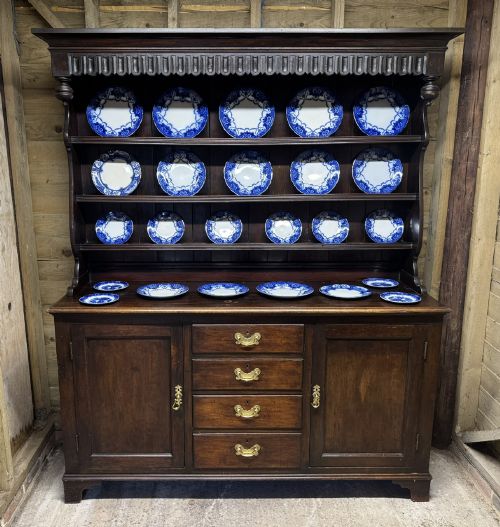
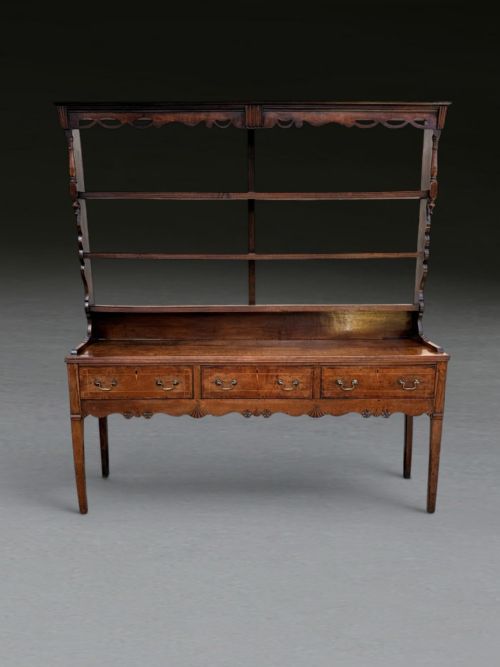
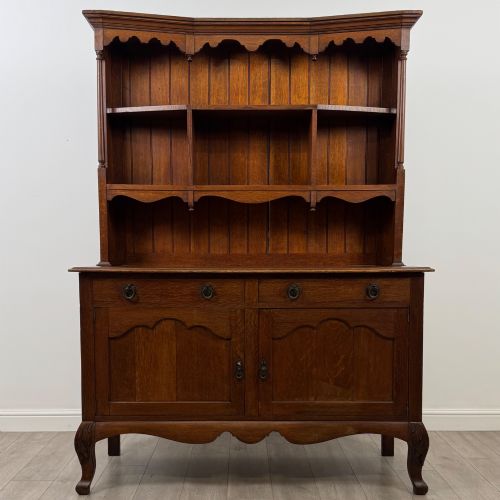
An oak sideboard with plate rack typically takes the form of a regional Welsh or English country dresser, uniting a lower base of drawers or a potboard with an upper tier of shelves. These pieces span centuries of domestic life, drawing heavily on eighteenth-century Georgian traditions alongside later nineteenth-century and Edwardian interpretations.
Regional variations appear frequently, from North Wales and Snowdonia to Shropshire and the West Country, displaying local preferences in drawer arrangement and board construction. The lower section functions as a heavy timber sideboard, while the attached rack provides stepped or open shelving designed specifically to hold ceramic plates and platters in plain view.
Materials and Construction
Makers relied primarily on native oak, frequently supplemented with secondary woods such as elm, pine, and mahogany for internal elements, crossbanding, or drawer linings. Brass hardware, iron fixtures, and occasional inlay wood details punctuate the heavy timber framework.
Construction methods reflect vernacular cabinet-making, utilising hand-planed boards, pegged joints, and open potboards or enclosed bases. Upper plate racks attach directly to the main sideboard body, integrating deep cornices and plate grooves to secure display items safely.
Oak Sideboard with Plate Rack Retail Price Guide 2026
Typical asking prices for oak sideboard with plate rack among the pieces listed under this phrase on Sellingantiques today, from the lower quarter to the upper quarter. They describe what is for sale here now, not the wider market.
Listings feature oak alongside elm, pine, and mahogany across Georgian, Victorian, and Edwardian periods.
Distinctions in Quality and Make
Quality rests on the depth of timber figure, the integrity of the original plate rack structure, and the proportion between the heavy base and the upper shelves. Finer examples display harmonious grain patterns in the primary oak, subtle crossbanding, and period brassware rather than later replacements.
Proportion and regional character dictate standing, with country pieces showing straightforward utility while elevated George II or George III iterations exhibit refined mouldings and balanced breakfront drawer layouts. The presence of an original rack matched to its base elevates the cohesion of the piece.
The Oak Sideboard with Plate Rack Glossary
- Potboard
- An open slatted lower shelf fitted beneath the main counter of a dresser, historically used for storing heavy pots and pans. This lower tier defines many traditional country forms.
- Plate Rack
- The upper shelving unit attached to the back of the sideboard, fitted with horizontal grooves to hold plates upright. It forms the primary display area for domestic ceramics.
- Crossbanding
- A narrow strip of veneer applied perpendicularly to the grain of the primary surface around drawer fronts or edges. This decorative technique highlights the timber border.
- Breakfront
- A cabinetry format where the central section projects forward from the flanking wings. This layout adds architectural depth to the lower drawer configuration.
Oak Sideboard with Plate Rack: Frequently Asked Questions
What is an oak sideboard with plate rack?
It is a traditional combination of a heavy timber lower base, fitted with drawers or a potboard, and an integrated upper shelving rack. The lower section provides enclosed or surface storage, while the upper tiers display ceramic plates.
These functional items evolved in regional workshops across England and Wales to serve as the central utility and display hub of the historic kitchen.
How were these dressers used historically?
Families used the lower cupboards and drawers to store dry provisions, linens, and everyday dining utensils. The upper rack kept plates and platters within immediate reach while showcasing the household's best ceramic wares.
In larger country houses and rural cottages alike, this furniture piece doubled as a food preparation counter and an open display dresser.
How do I fit one into a modern room?
Anchor the heavy timber piece against a solid dining room or kitchen wall to ground the interior space. The open upper shelves invite the display of everyday ceramics, glassware, or collected earthenware.
Ensure adequate wall clearance for the height of the plate rack and allow the warm oak grain to complement neutral walls or natural flooring.
How can I tell an older piece from a later style?
Examine the timber construction for hand-planed surfaces, pegged joinery, and natural wear patterns consistent with centuries of use. Eighteenth-century examples often display native oak boards with distinct regional construction traits.
Later Edwardian or twentieth-century interpretations tend to show standardised machine milling, lighter golden oak tones, and simpler bracket feet without period hand-tool marks.