

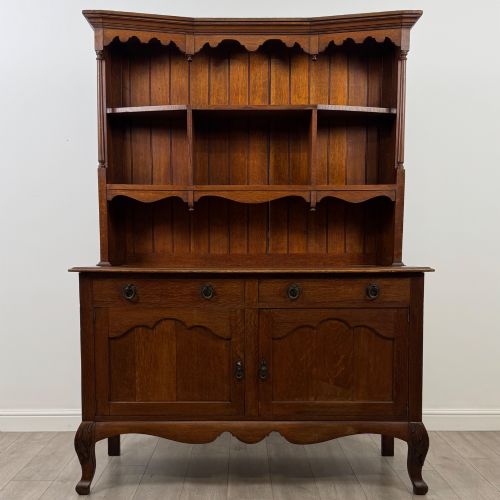
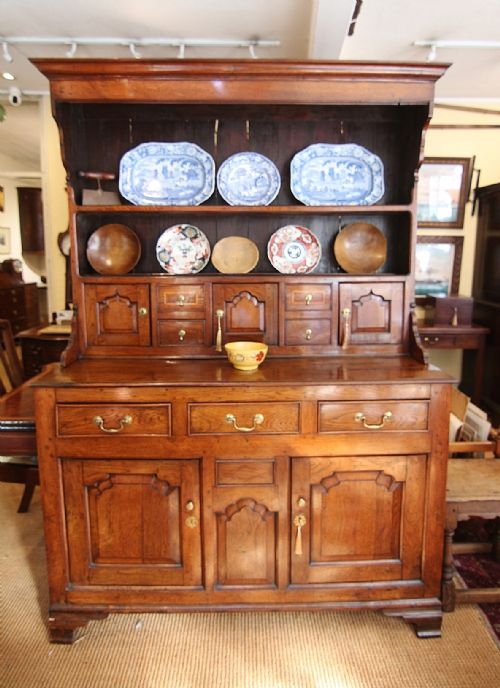
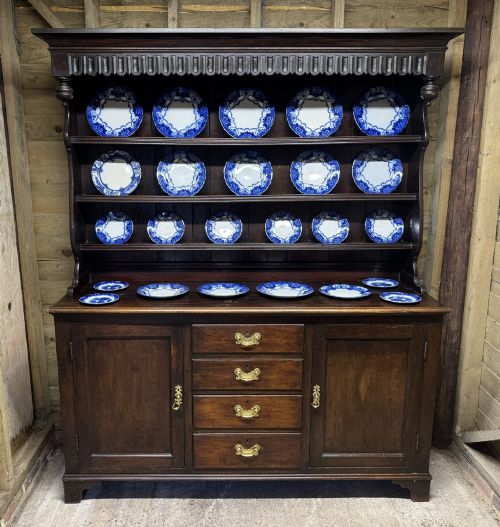
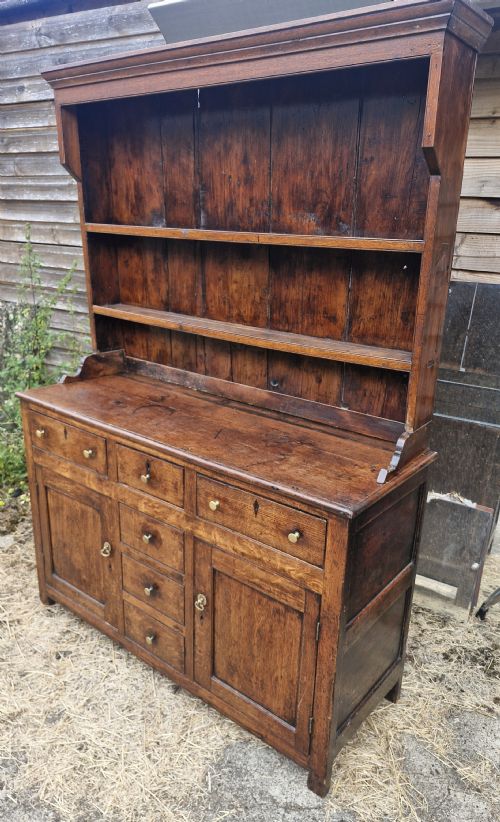
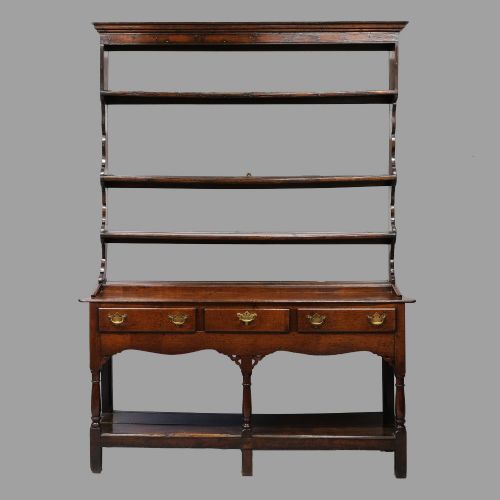
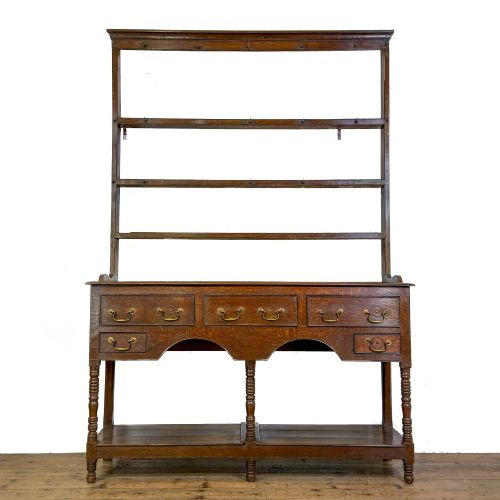
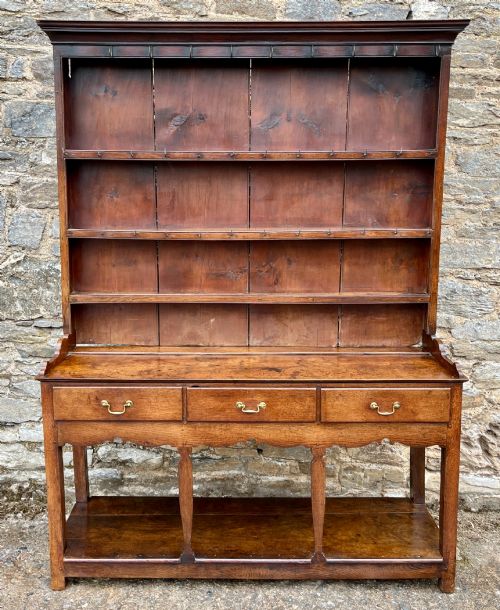
Oak Sideboard Plate Rack
An oak sideboard plate rack combines deep storage with open display, anchoring a room with heavy timber and centuries of utility.
Oak Sideboard Plate Rack
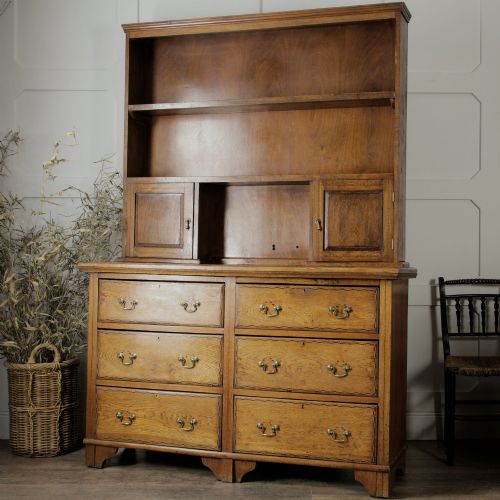
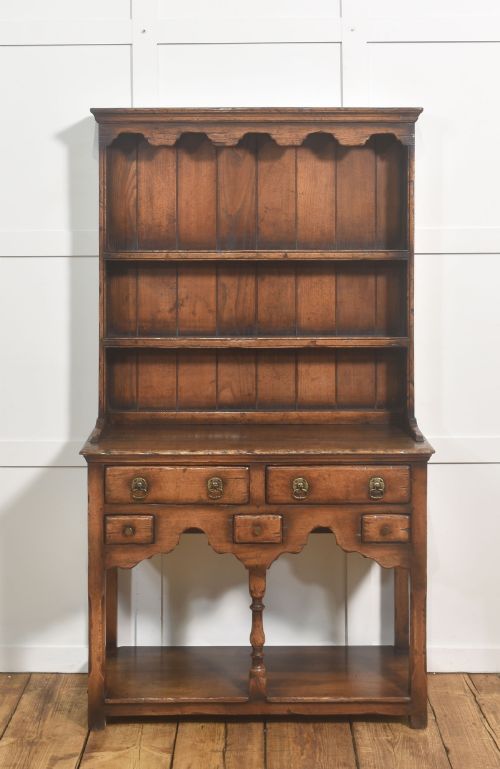
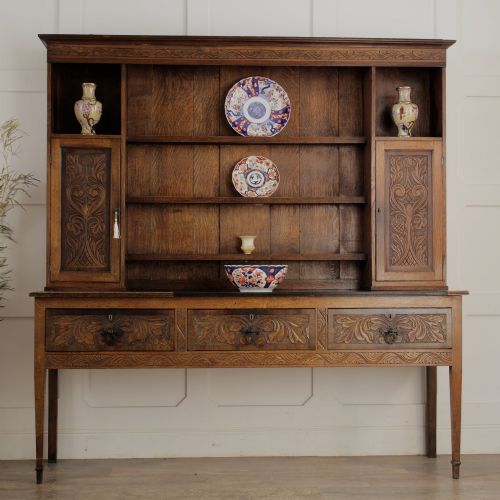
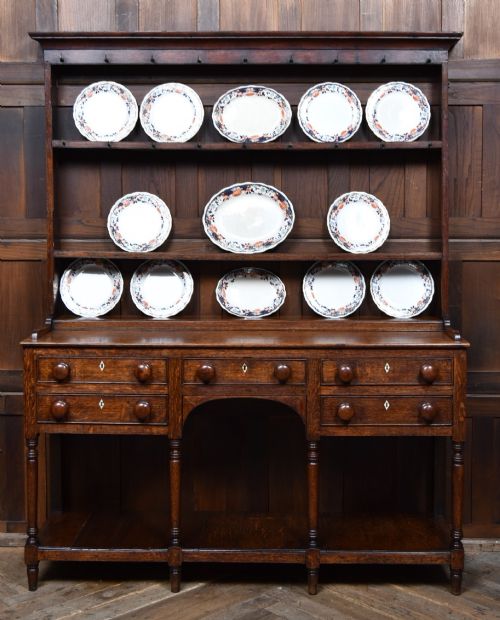
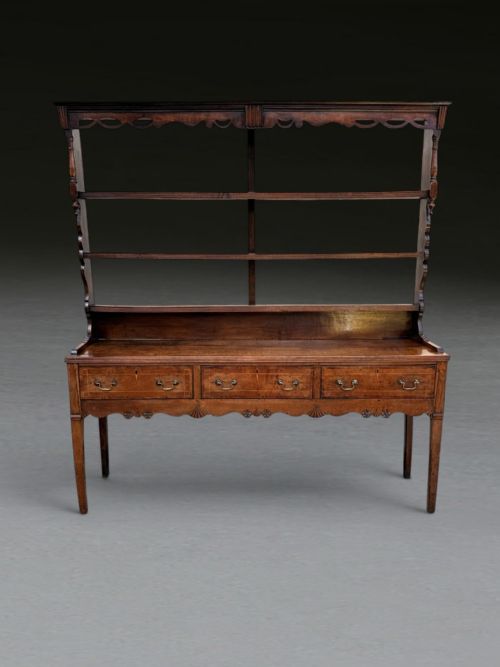
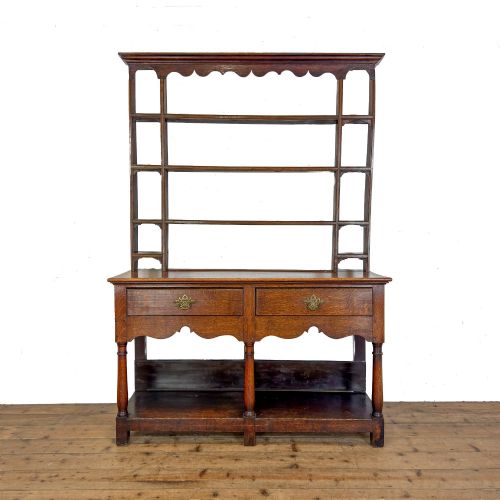
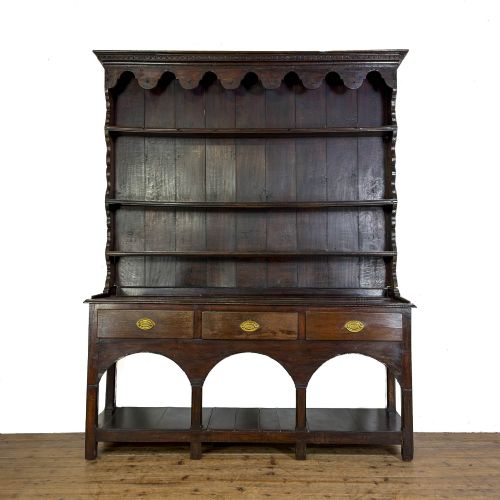
When you search for an oak sideboard plate rack, you encounter heavy timber furniture designed for both storage and display. These pieces combine a lower base, often featuring drawers or a potboard, with an upper tier of open shelves meant for holding crockery. The form spans regional English and Welsh vernacular traditions, alongside refined Georgian iterations.
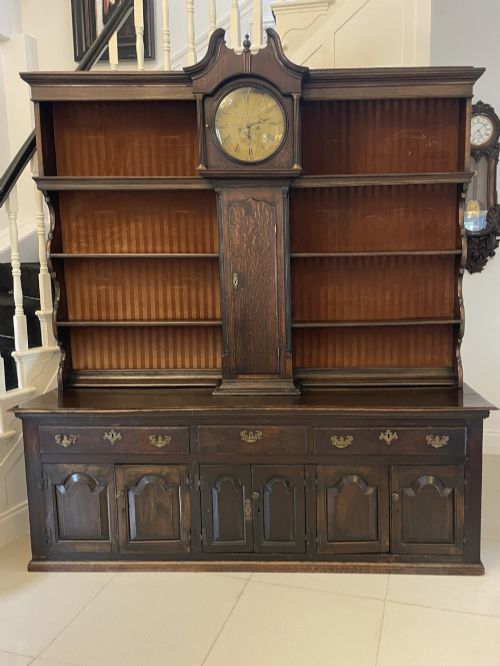
The versions most common on this page hail from the eighteenth and nineteenth centuries, often categorised simply as dressers or country furniture. You find regional variations from North and South Wales, Shropshire, and the West Country. These range from modest cottage pieces to large examples incorporating potboards and longcase clocks.
Makers built these pieces for domestic utility, utilising sturdy local woods to serve farmhouses and country homes. The upper plate racks usually feature grooved shelves to hold ceramic plates upright, flanked by boarded backs. The lower sideboards provide cupboards or rows of drawers beneath a generous serving surface.
What varies in quality
The distinction between ordinary and superior pieces rests on the presence of original plate racks paired to their bases, as married pieces reduce desirability. Fine examples exhibit crisp carving, well-figured timber grain, and minimal timber replacement across the top and base. West Country and Welsh regional origins often command attention due to distinct local moulding profiles and potboard configurations.
Proportion and scale dictate the visual success of the piece, with better examples maintaining harmonious balance between deep base drawers and tall shelving. The retention of original brass hardware, patinated surfaces, and untouched structural pegs elevates the standing of an individual dresser within the range.
One recorded dresser carries provenance from a cafe in Snowdon, complete with dogs from the location.
The Oak Sideboard Plate Rack Glossary
- Potboard
- A lower open shelf built into the base of a dresser, historically used for storing heavy pots and pans. This platform sits just above the floor, supported by sturdy stile legs.
- Plate rack
- The upper tiered shelving unit attached to the back of a sideboard, featuring grooved ledges to display plates safely. The boards behind the shelves prevent wall contact.
- Vernacular
- Furniture built by local country joiners using regional styles and readily available timbers rather than following strict London fashion. These pieces display charming regional quirks.
- Breakfront
- A cabinet or sideboard design where the central section projects forward from the flanking outer sections. This creates depth and visual rhythm across the drawer front.
Oak Sideboard Plate Rack: Frequently Asked Questions
What is an oak sideboard plate rack?
It is a traditional piece of furniture consisting of a lower storage base and an upper shelving unit for plates. These items serve both practical storage and display functions in domestic spaces.
They evolved in farmhouse kitchens before moving into dining rooms. The lower section typically includes drawers or cupboards while the upper tier holds ceramics.
How do I date an oak dresser?
Dating relies on examining construction methods, timber choice, and hardware styles across the piece. Hand-cut pegs, backboard construction, and drawer dovetails indicate the period.
Earlier eighteenth-century examples feature heavier timbers and hand-shaped mouldings. Later nineteenth-century versions often incorporate machine-cut elements and different internal woods.
Are the plate rack and base original?
Many pieces were separated over time, leading dealers to reunite bases and racks from similar periods. Checking timber grain, colour match, and fixing marks reveals if they belong together.
Original combinations display consistent ageing and matching wood species throughout. Married pairs show slight discrepancies in tone or construction detail where they join.
How do I care for antique oak furniture?
Keep wooden furniture away from direct heat sources and dramatic humidity fluctuations to prevent splitting. Regular dusting with a dry cloth maintains the surface.
Occasional application of traditional beeswax nourishes the dry timber. Avoid modern silicone sprays that build up and degrade the historic patina.