


Oak Side Table with Shelf
An oak side table with shelf brings enduring timber character and practical tier storage to any room.
Oak Side Table with Shelf
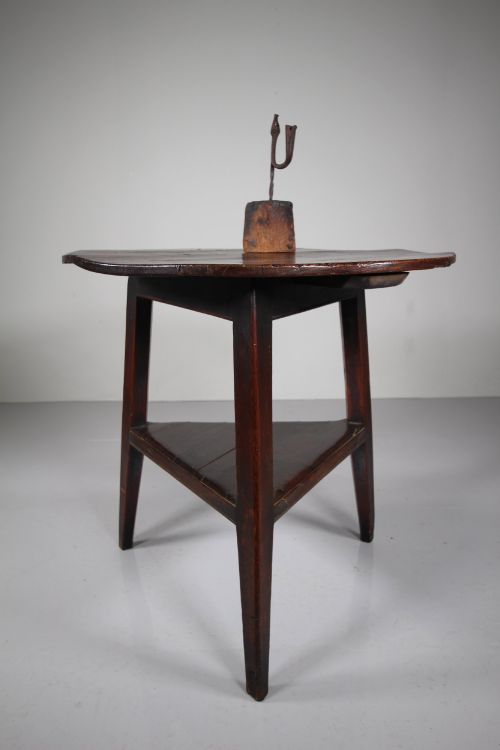
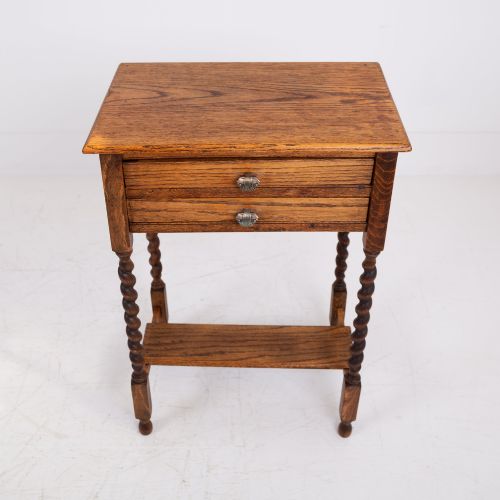
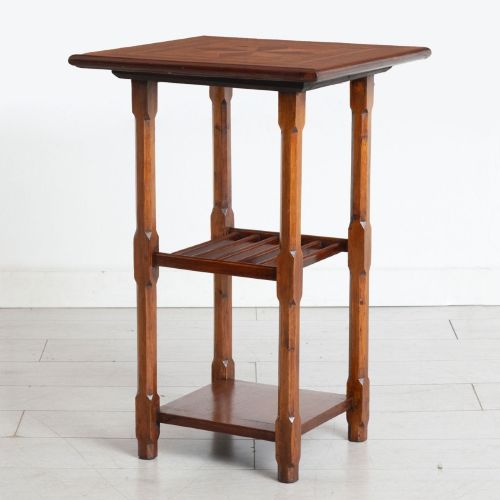
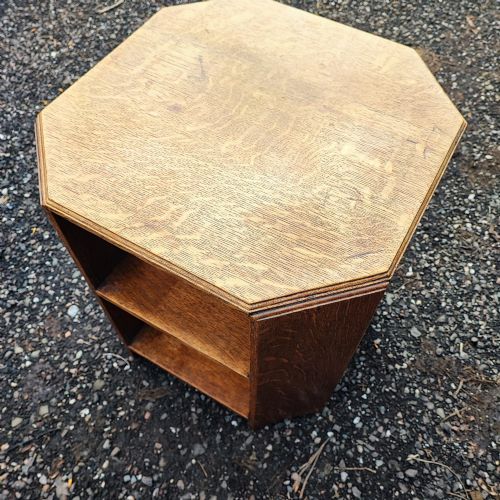
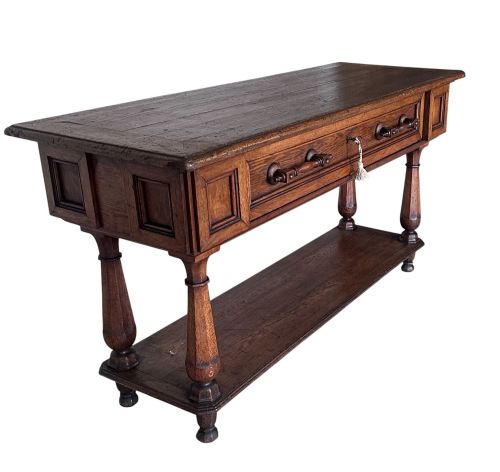
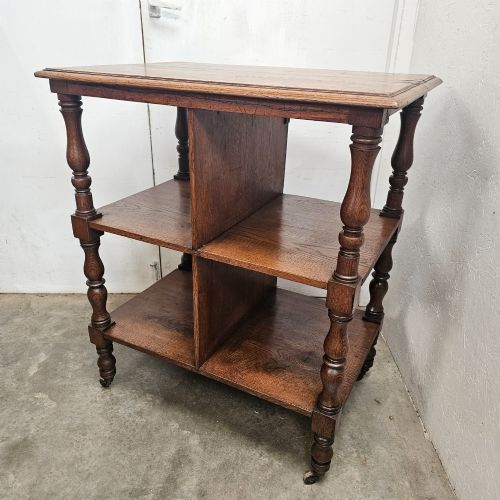
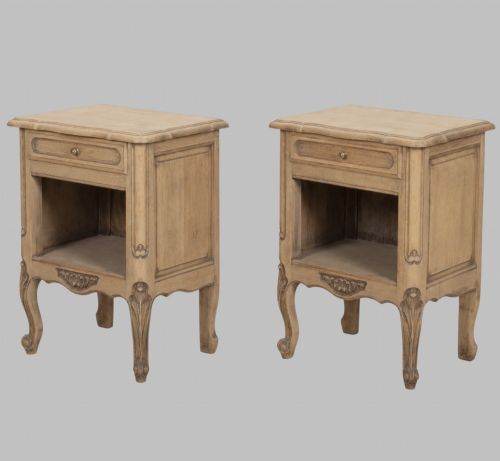
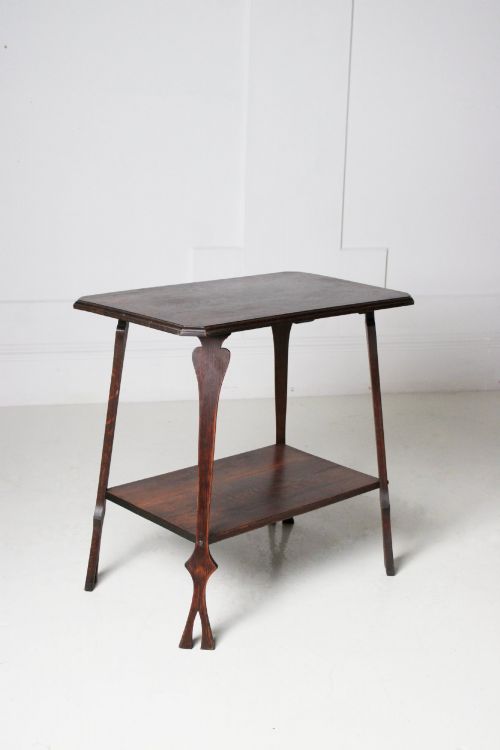
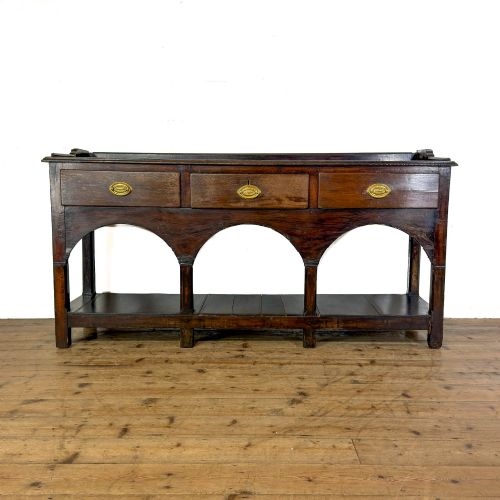
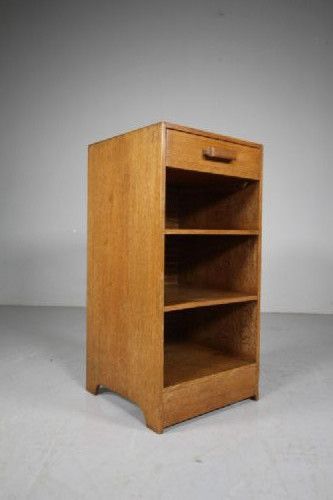
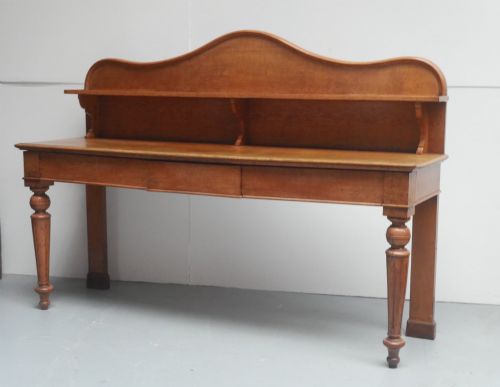
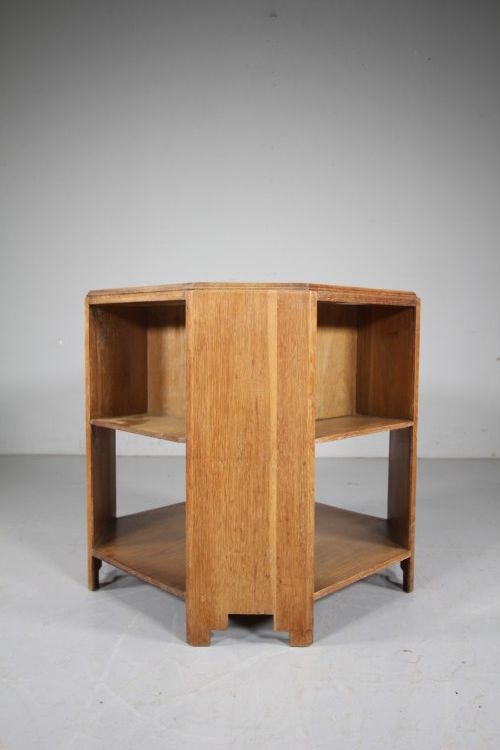
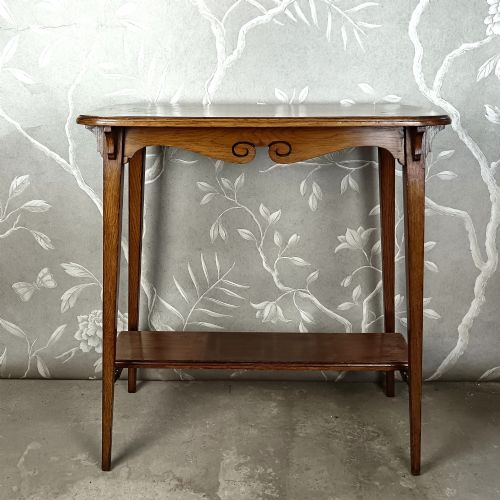
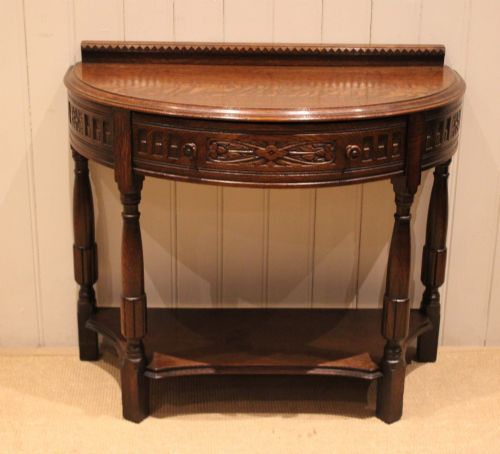
An oak side table with shelf brings solid timber grain and practical tier storage to a hallway, sitting room or bedroom. You will encounter forms ranging from rustic cricket tables and Georgian revival pieces to Arts and Crafts designs and 1930s modern variants.
The pieces listed span domestic origins across the eighteenth, nineteenth and early twentieth centuries, encompassing styles such as French provincial, English country vernacular and Jacobean revival. Most examples provide a lower tier or shelf beneath the primary surface for books, lamps or small objects.
Assessing quality and character
The distinction between ordinary and exceptional pieces lies in the choice of timber, the integrity of the joinery and the subtlety of any decorative carving. Superior examples show careful timber selection with harmonious grain across the top and shelf.
Proportion and structural balance also separate utilitarian items from finer examples, particularly in smaller forms where legs and stretchers must support the lower tier without visual heaviness.
Listings feature oak alongside painted wood, brass, and pine across periods from the eighteenth century to the 1930s.
Heals·Liberty
The Oak Side Table with Shelf Glossary
- Cricket table
- A small three-legged occasional table, typically with a round wooden top and a triangular under-tier or shelf supported by pegged legs.
- Demi-lune
- A half-moon shape used for console or side tables designed to stand flat against a wall.
- Vernacular
- Everyday furniture made by local regional makers using traditional local timber rather than following high London fashion.
- Jacobean Revival
- A style popular in the nineteenth and early twentieth centuries imitating seventeenth-century carved oak motifs and sturdy proportions.
- Occasional table
- A small, movable table designed for a specific brief use rather than permanent placement.
Oak Side Table with Shelf: Frequently Asked Questions
How do I date an old oak table?
Dating relies on examining construction marks, tool traces, timber selection and style evolution. Hand-cut dovetails and pegged joints usually point to earlier periods, while machine-cut elements suggest twentieth-century production.
Hardware styles and secondary woods also provide clues, though many vernacular pieces continued traditional methods long after academic periods shifted.
Where should I place a side table with shelf?
These tables work well beside a sofa or armchair where the lower shelf holds books or magazines. They also function effectively in hallways as a surface for keys and post with a lower tier for storage.
Smaller octagonal or round versions suit corners and landings where floor space is limited.
Are painted oak tables original?
Some period pieces received painted finishes during the nineteenth or early twentieth centuries, particularly in French provincial and country vernacular styles. Later decorative painting also occurs on vintage items.
Examining the wear beneath the paint helps determine whether the finish is a later addition or part of the object's working history.
How do I care for antique oak furniture?
Protect timber surfaces by keeping tables away from direct heat sources and strong sunlight, which can dry and split the wood. Regular dusting with a dry cloth is sufficient for maintenance.
Occasional application of appropriate wax preserves the sheen without building up excessive residue on the grain.