
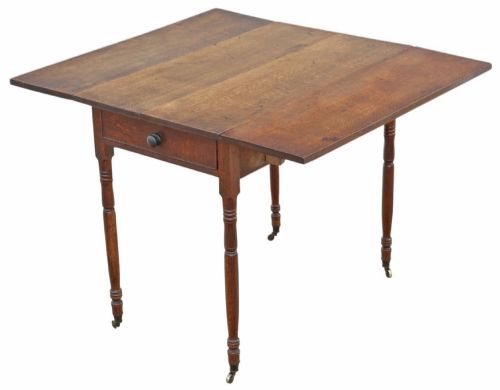
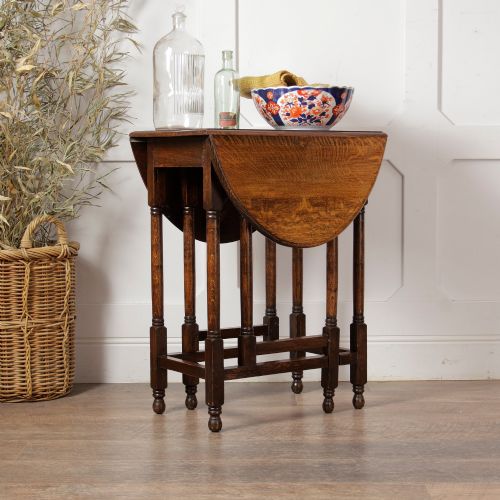
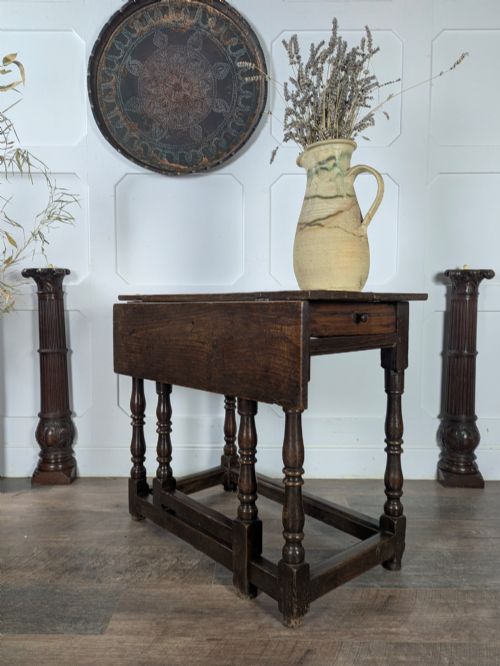
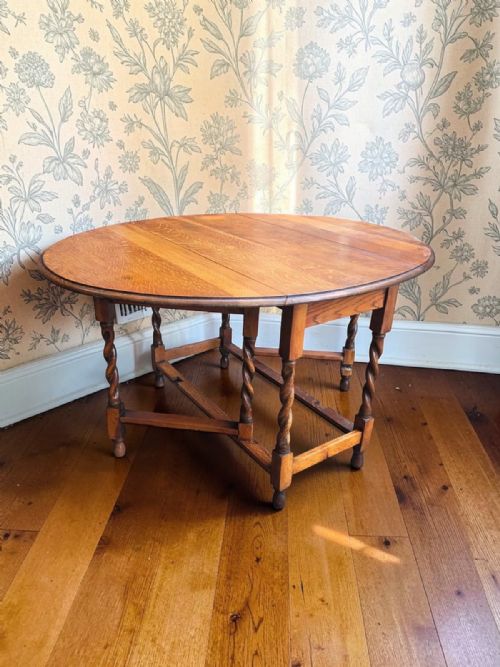


Oak Side Table Flaps
Oak side table flaps provide compact surfaces with folding leaves, spanning 17th century gatelegs to 20th century occasional pieces.
Oak Side Table Flaps
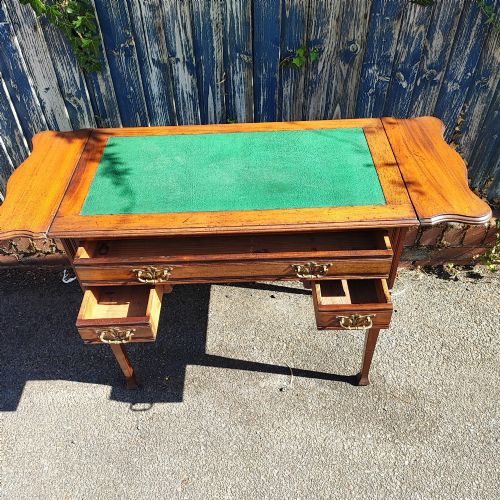
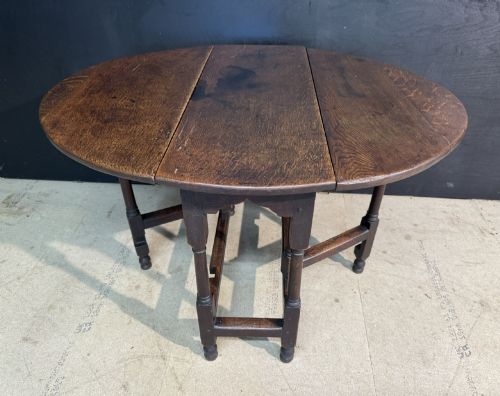
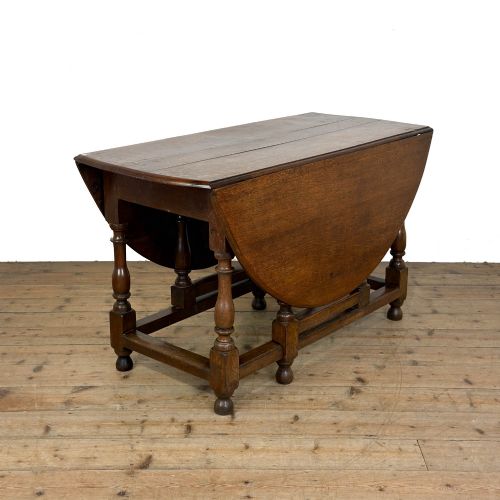
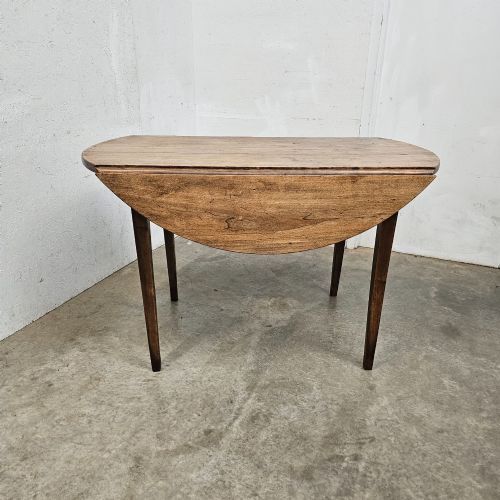
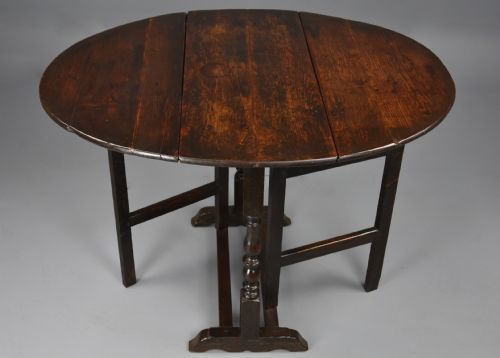
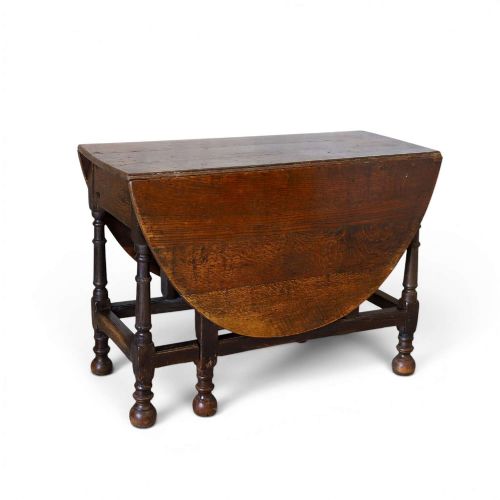
When searching for oak side table flaps, buyers encounter versatile folding furniture designed to save space in domestic interiors. These pieces primarily manifest as gateleg tables, drop-leaf dining tables, and small occasional coffee tables.
The selection ranges from early 17th century examples with deep patination to 1920s revivals featuring barley twist legs. Forms extend from compact writing tables to oval occasional tables with drop flaps.
English country and Georgian styles appear frequently alongside Jacobean revivals. Buyers are most likely to meet solid oak and pollard oak constructions configured as side or coffee tables.
Materials and construction methods
Makers utilised solid oak and pollard oak as the primary timber, occasionally combining elm or fruitwood for secondary elements. Brass and iron hardware provided the structural support for hinges and operational flaps.
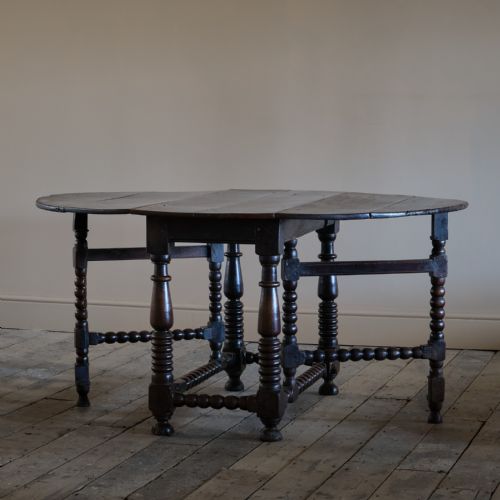
Joinery techniques relied on sturdy framing to support pivoting gate legs and drop leaves. Turning methods produced distinctive baluster, bobbin turned, and barley twist legs that define the visual character of the pieces.
Some tables double as sneaky writing desks, proving ancestors loved hidden multitasking just as much as we do.
Distinguishing quality across the range
The standard of timber selection and the depth of original surface patina distinguish finer examples from standard production. Early periods demonstrate careful hand-turning on baluster and bobbin posts, whereas later revivals rely on uniform machine turning.
The integration of original hinges and the stability of the folding mechanism indicate superior historical craftsmanship. Timber movement is managed successfully in higher quality pieces, preserving the alignment of the oval or rectangular top when open.
The Oak Side Table Flaps Glossary
- Gateleg table
- A table with hinged leaves supported by legs that swing outward like a gate. This form dominates the earlier centuries of the inventory.
- Patina
- The surface sheen and colour developed by wood over decades of handling and exposure. Original examples exhibit deep warmth across the oak top.
- Barley twist
- A spiral turning technique used on table legs, popular in 17th century furniture and revived during the early 20th century.
- Drop-leaf
- A table configuration featuring a central fixed board and movable side flaps supported by brackets or swinging legs.
- Pollard oak
- Timber gathered from trees pruned to encourage dense, decorative grain patterns. This material appears on select Regency occasional pieces.
Oak Side Table Flaps: Frequently Asked Questions
How do I date an oak gateleg table?
Dating relies on observing construction methods, hinge types, and leg turnings such as bobbin or barley twist styles. Earlier pieces from the seventeenth century display distinct joinery and hand-worked surfaces compared to later revivals.
Secondary woods and the character of the oak grain further assist in distinguishing seventeenth century examples from nineteen-twenties reproductions.
What is the difference between a gateleg and a drop-leaf table?
A gateleg table utilises swinging leg frames to support the extended flaps, creating a secure base for dining or side use. Standard drop-leaf tables may rely on simpler brackets or swing-out arms rather than a full pivoting leg.
Both forms serve the same space-saving function in domestic rooms but distribute weight differently when fully opened.
Where should I place a small oak flap table?
These compact tables function effectively as hallway side tables, bedside surfaces, or occasional tables in living areas. Lower coffee table heights also suit sitting rooms where surface space needs adjustment.
Folding one leaf down allows the piece to rest flat against a wall when floor space is restricted.
How do I maintain the surface patina?
Maintaining the finish requires regular dusting with a dry cloth and occasional application of appropriate wax suited for historic oak. Avoiding direct sunlight and excessive heat protects the timber from splitting.
Preserving original patination avoids harsh chemical cleaners that strip the historic character from the wood.