






Oak Settled Storage Bench
An oak settled storage bench offers sturdy seating alongside deep compartments, bringing centuries of practical craftsmanship straight into modern hallways.
Oak Settled Storage Bench
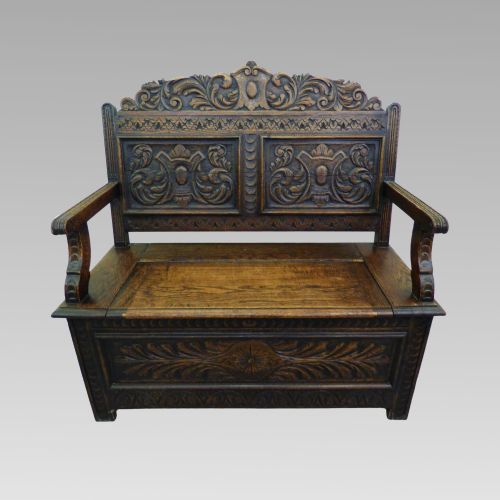
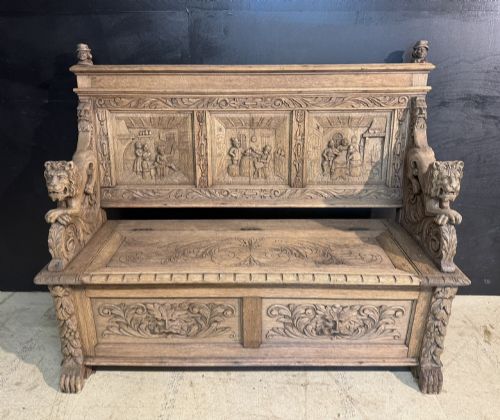
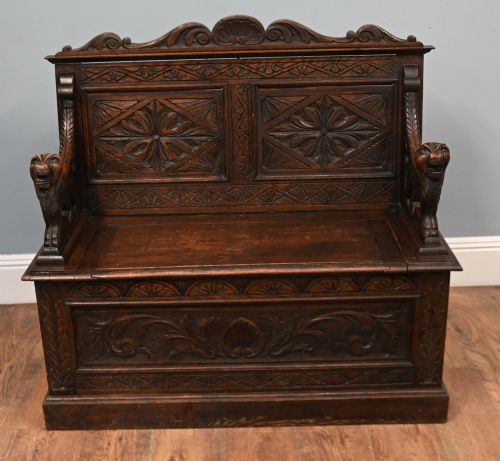
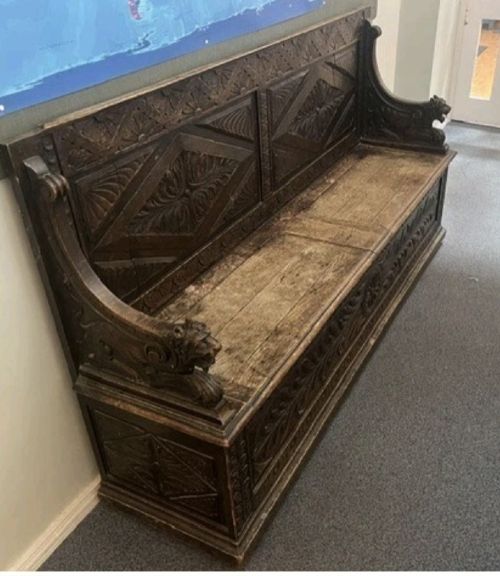
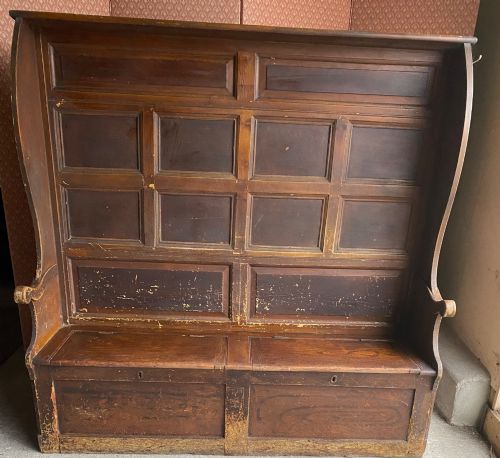
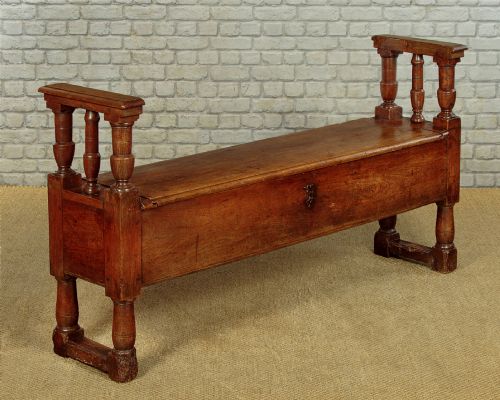
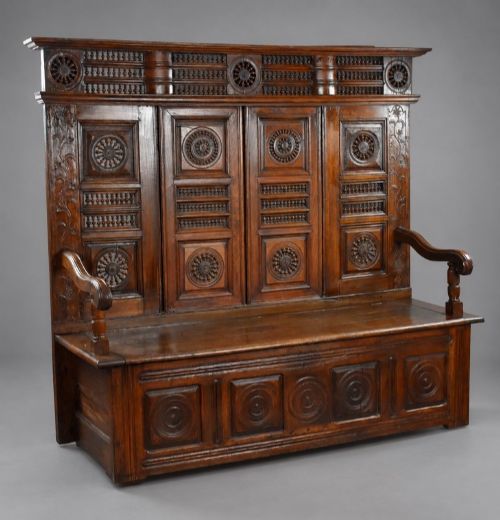
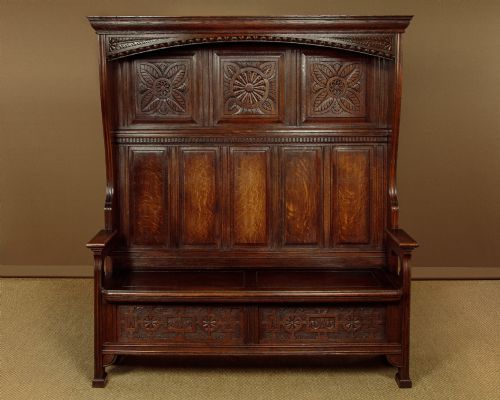
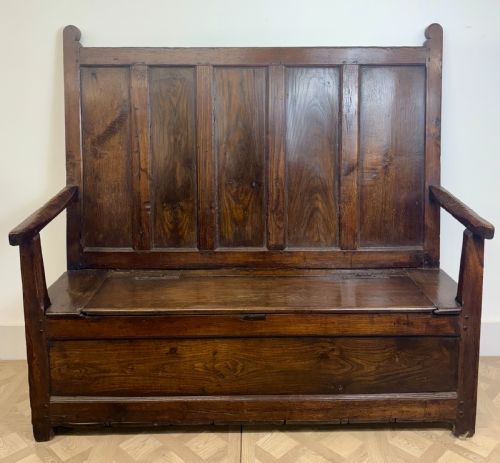
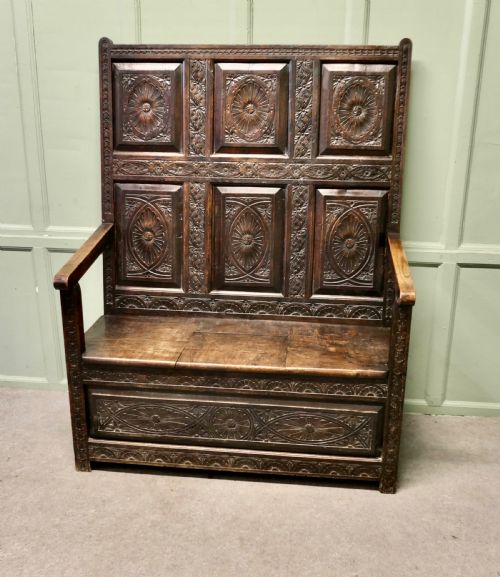
An oak settled storage bench brings together heavy timber seating and enclosed box bases designed to keep halls tidy. When searching for an oak settled storage bench, buyers encounter pieces ranging from tall seventeenth-century high backs to compact twentieth-century monk's benches.
The selection includes Welsh and country house box settles alongside Victorian hall seats with lift-up lids. Many versions utilise hinged mechanisms or fold-over table tops to serve dual purposes in domestic spaces.
Origins stretch from English and Welsh workshops to continental examples, spanning periods from the seventeen hundreds through to the Edwardian era. Buyers most frequently meet nineteenth-century interpretations and revival styles on this page.
Distinctions in Standard
The integrity of the timber and the depth of hand-carved detail separate standard workshop output from exceptional country house examples. Original hardware and undisturbed patina indicate superior preservation over time.
Proportion and scale dictate the visual weight of the piece within a hallway, with balanced high backs commanding greater presence than smaller later adaptations.
Oak Settled Storage Bench Retail Price Guide 2026
Typical asking prices for oak settled storage bench among the pieces listed under this phrase on Sellingantiques today, from the lower quarter to the upper quarter. They describe what is for sale here now, not the wider market.
Some nineteenth-century hall benches include hidden boot compartments specifically designed to keep muddy footwear away from tweed coats.
The Oak Settled Storage Bench Glossary
- Box settle
- A heavy wooden bench featuring an enclosed storage compartment beneath the seat, often equipped with a high back to block draughts in older properties.
- Monk's bench
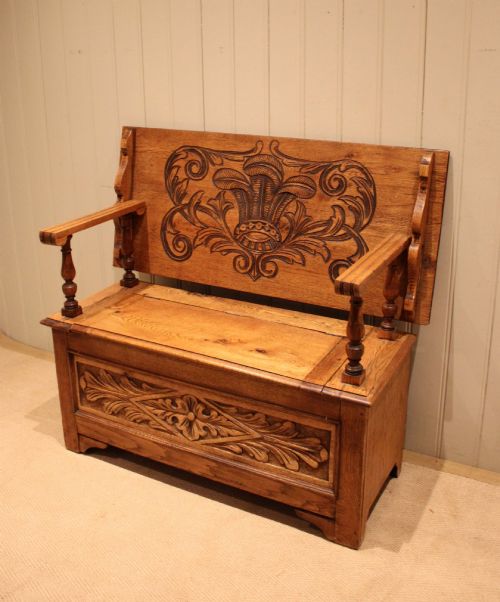
- A versatile form featuring a hinged back that folds down flat to convert the seat into a table top.
- Wingback settle
- A variant with enclosed sides extending upward to retain heat around the sitter.
- Panelling
- Framework composed of vertical stiles and horizontal rails enclosing thin wooden boards, used extensively on the backs of seventeenth and eighteenth-century examples.
- Patina
- The surface sheen and darkening developed by aged timber through decades of handling, polishing and exposure to light.
Oak Settled Storage Bench: Frequently Asked Questions
How do I use an oak settled storage bench today?
These benches fit naturally in entrance halls, serving as a seat for putting on shoes while hiding boots, bags, or winter wear inside the box base. Their high backs also create a distinct spatial division in open-plan rooms.
Compact versions with fold-over tops can function as small hallway tables when extra surface space is needed, blending historical utility with everyday modern living.
What is the difference between a settle and a monk's bench?
A traditional settle is a stationary bench with a high back and a fixed seat concealing a storage box underneath. It was built primarily to keep draughts away from the fireplace.
A monk's bench incorporates a movable back mechanism that folds over horizontally to form a table surface, offering multi-functional furniture design found frequently in later periods.
How can I tell the age of an oak settled storage bench?
Dating relies on examining construction techniques, joinery marks, and the style of carving present on the back panels. Early pieces from the seventeenth and eighteenth centuries often display hand-split timber, pegged joints, and vernacular regional details.
Later Victorian and Edwardian revivals utilise machine-cut elements, standardised hardware, and revival motifs such as Jacobean strapwork or Gothic tracery that imitate older eras.
Are these benches heavy to move?
Solid oak construction makes these pieces exceptionally dense and weighty, particularly high-backed examples with integrated storage boxes. Elm or ash components can occasionally lighten specific structural parts.
Moving them usually requires two people to lift carefully, ensuring that old joints and historical hinge fixings are not strained during relocation.