
Oak Server Cupboard
An oak server cupboard brings sturdy dining storage into a room, joining practical surface space with enclosed timber shelving.
Oak Server Cupboard
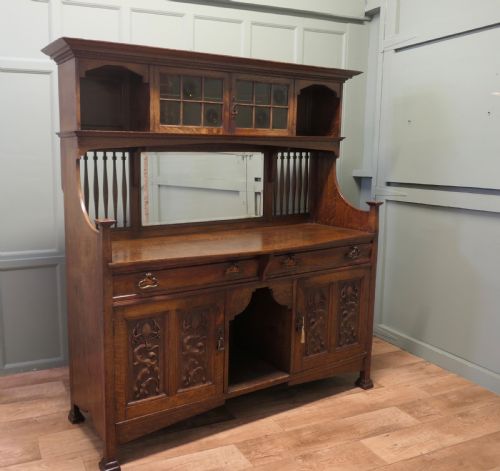
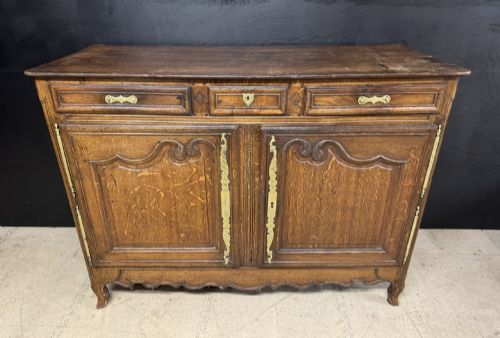
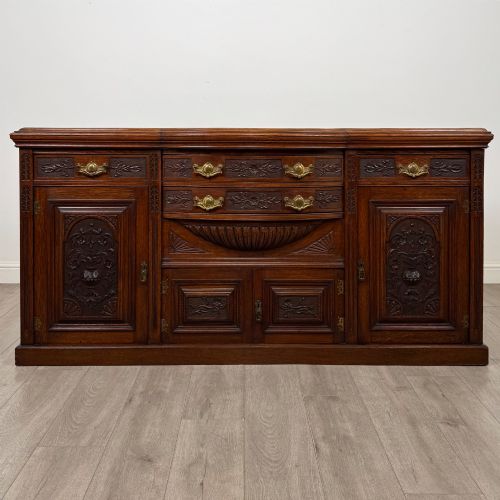
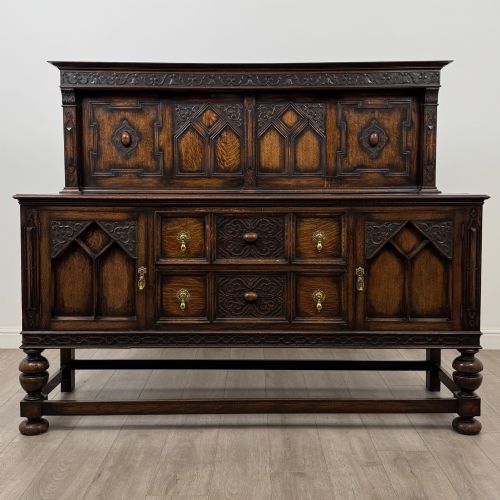
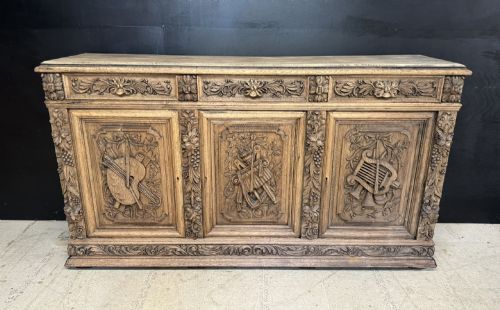
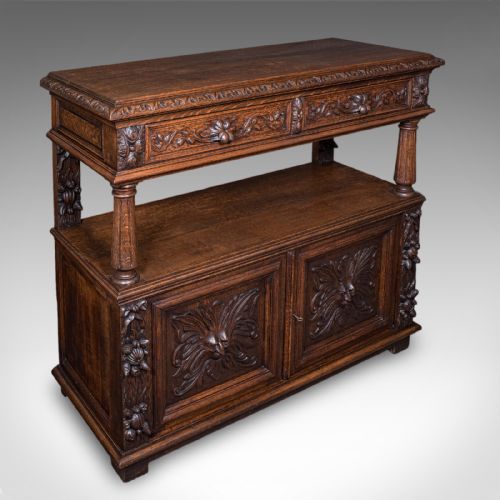
An oak server cupboard functions primarily as a heavy dining room or kitchen storage piece, merging sideboard surfaces with enclosed cupboards. When searching for an oak server cupboard, buyers encounter forms that span centuries of English, Scottish, and French cabinet making.
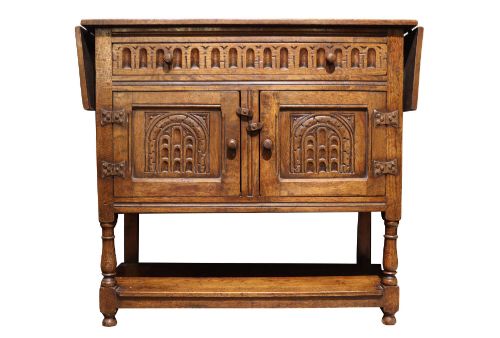
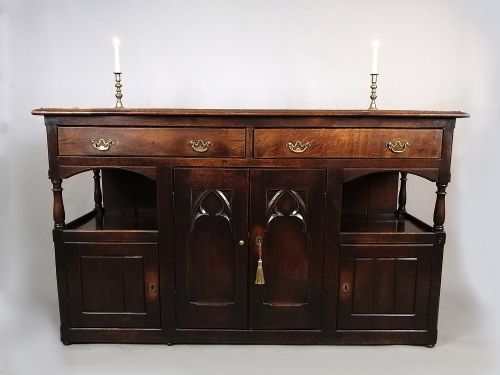
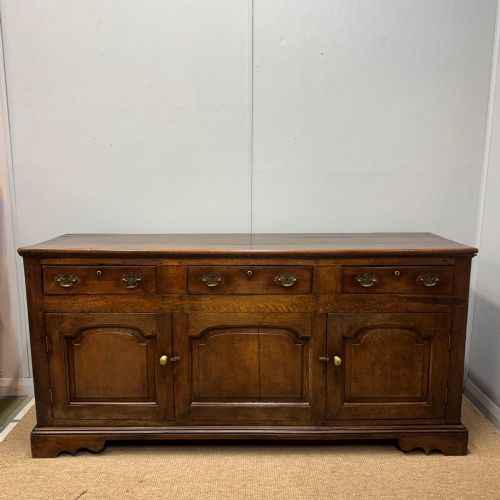
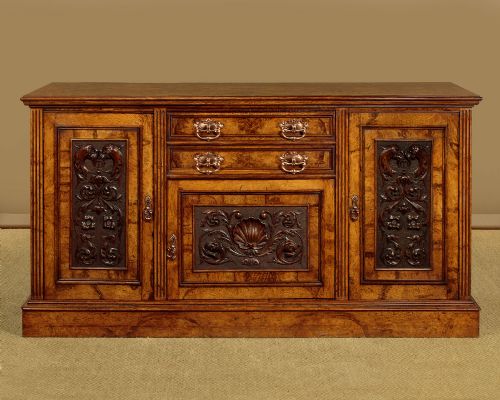
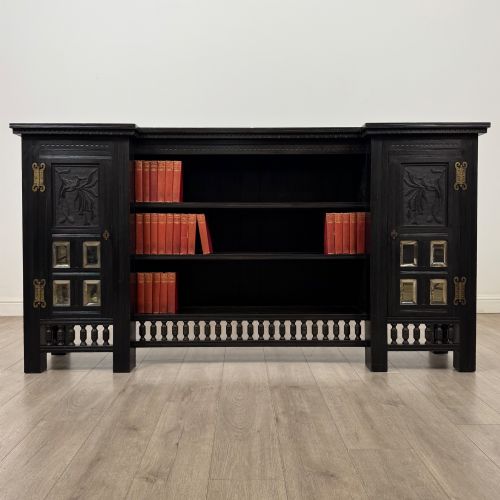
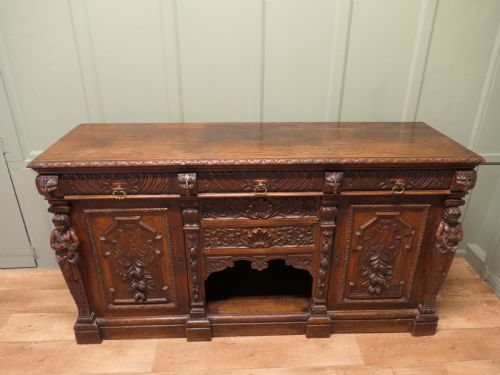
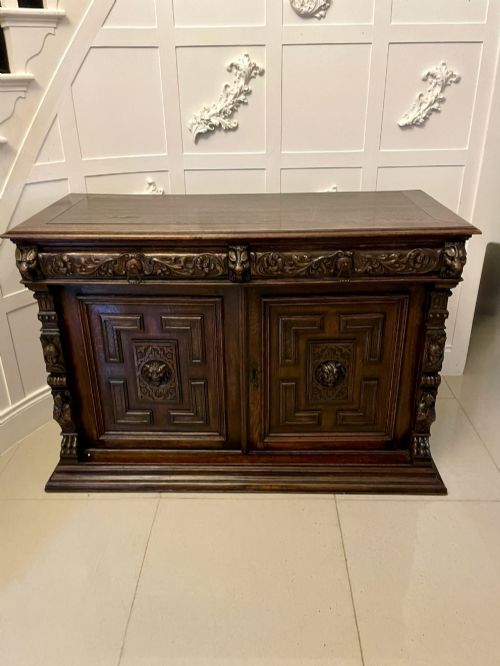
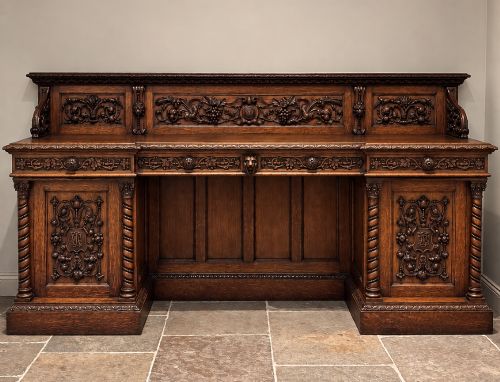
The pieces appearing on this page range from robust 18th-century dresser bases and Lancashire furniture to 19th-century Victorian carvings and Edwardian reproductions. Styles shift between straightforward George II joinery, heavily carved Gothic Revival motifs, and streamlined Arts and Crafts golden oak designs.
Most examples take the shape of low sideboards, court cupboards, or buffet cabinets. Walnut and fruitwood occasionally appear alongside primary oak structures, accompanied by brass, iron, or glass fittings.
Materials and construction
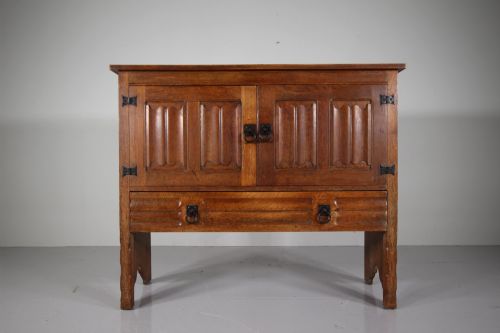
Makers built these pieces primarily from solid oak, sometimes combining secondary fruitwood or walnut panels within regional workshops. Construction relied on traditional framing, panel-and-frame doors, and sturdy peg joinery.
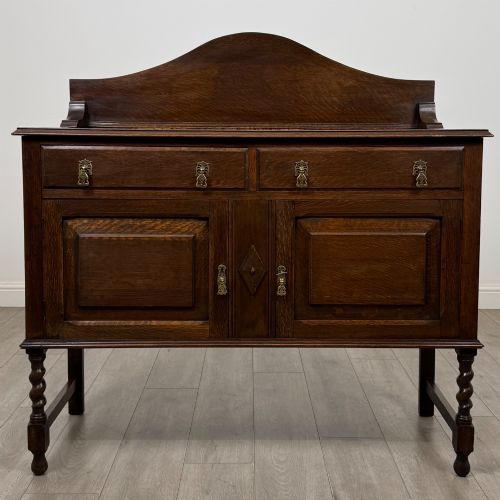
Surface ornamentation involved hand carving, linenfold panelling, and applied geometric moulding, particularly in revival pieces. Hardware typically consisted of brass drop handles, iron hinges, and occasionally mirrored glass backplates.
Listings feature oak server cupboards spanning from the mid-eighteenth century through the Edwardian period.
Distinctions in craftsmanship
Quality separates mass-produced later revival items from master cabinet-maker output through the depth of hand carving and the selection of timber grain. Superior examples display tight, stable joints and uniform oak boards across large cupboard doors and top surfaces.
The integrity of original brass or iron hardware and the crispness of applied mouldings indicate the level of care invested in the piece. Well-preserved surfaces retain a rich, natural patination rather than flat modern finishes.
Gomme·Heals of London
The Oak Server Cupboard Glossary
- Dresser base
- A low wooden table with drawers or cupboards beneath the top surface, used historically for serving food and storing tableware.
- Court cupboard
- A two-stage enclosed storage piece featuring recessed upper sections supported by pillars or corbels.
- Linenfold
- A style of carved wooden panelling that resembles folded cloth, popular during the Tudor and later revival periods.
- Barley twist
- A type of furniture leg or column turned in a spiral resembling twisted barley sugar, common in 17th-century and Edwardian furniture.
- Patina
- The surface sheen and colour developed on timber through age, light exposure, and handling.
Oak Server Cupboard: Frequently Asked Questions
What is an oak server cupboard used for?
These pieces provide heavy timber surface space for serving food and hosting dining utensils during meals.
Enclosed lower cupboards and drawers also store plates, linens, and provisions out of sight.
How do I identify a 17th-century style piece?
Revival items from the Edwardian era often copy earlier Jacobean or Tudor joinery techniques.
Look for deep geometric mouldings, heavy panelled doors, and turned supports that imitate seventeenth-century originals.
Are these pieces made of solid oak?
The majority of pieces listed are constructed from solid oak timber throughout their main frames and panels.
Some regional or later examples incorporate secondary woods like fruitwood or walnut within internal linings or drawer bases.
Where were these cupboards made?
The listings include English regional pieces from areas like Lancashire alongside Scottish and French buffets.
Specific workshops and London retailers also contributed to the variety of designs available.