
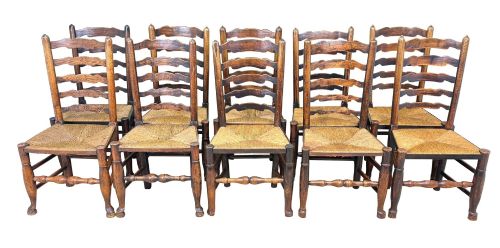
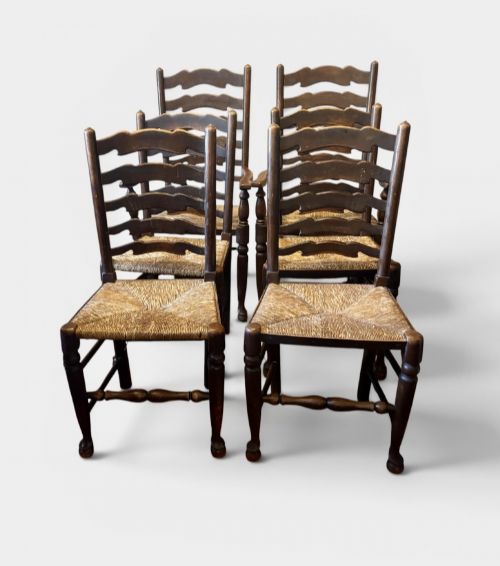


Oak Rush Side Chair
An oak rush side chair brings sturdy vernacular craft into daily dining, offering honest timber construction and tactile woven seating.
Oak Rush Side Chair
An oak rush side chair belongs to a long tradition of robust country seating designed for everyday utility. When you search for an oak rush side chair, you encounter practical dining and kitchen chairs originating from periods such as the Georgian era, the nineteenth century, and the early twentieth century.
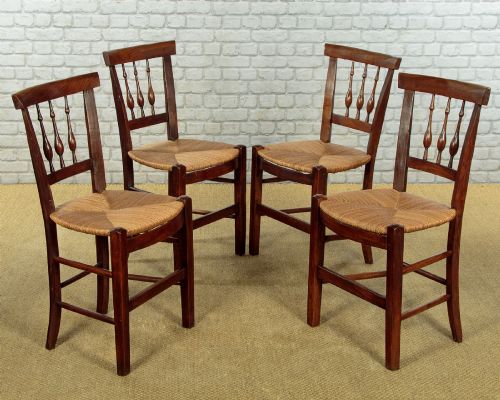
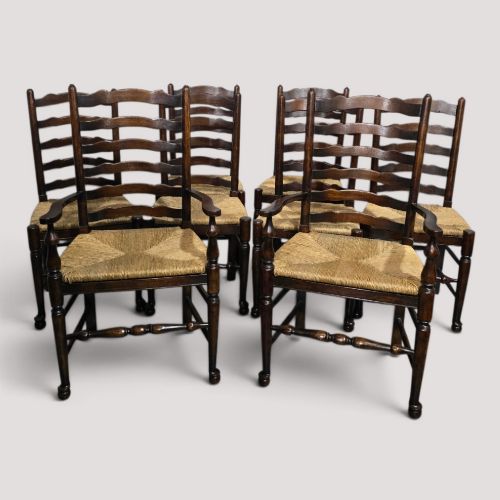
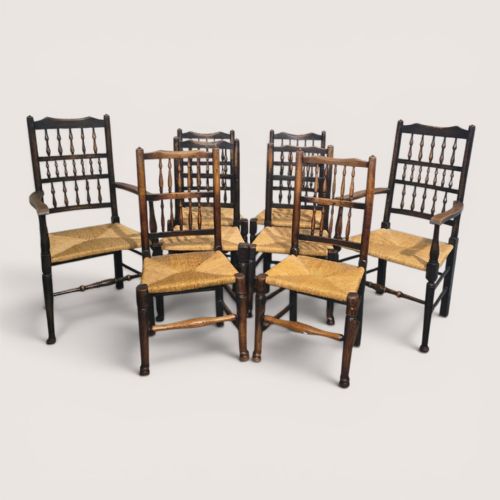
The versions most common on this page are ladder backs, spindle backs, and regional forms like Dales chairs or English and French country seating. Makers often paired solid oak frames with elm or ash components, creating dependable furniture for farmhouse kitchens and provincial dining rooms.
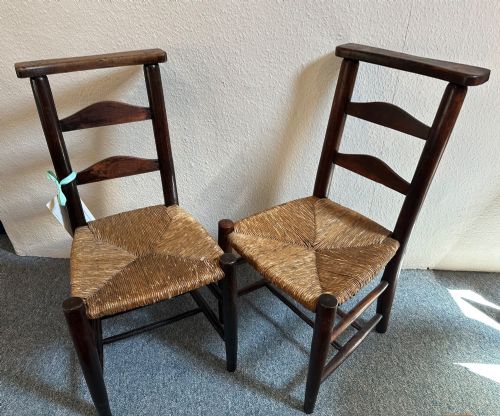
These chairs frequently appear in matched sets ranging from pairs up to sets of ten or twelve, alongside individual examples and harlequin groups. Their straightforward profiles suit domestic interiors that favour traditional materials and time-worn textures.
How they were made
Carpenters built these frames using domestic hardwoods, primarily oak combined with elm and ash for turned spindles, uprights, and stretchers. Joinery relied on traditional pegged mortise and tenon construction to withstand daily use.
Seats were woven by hand using natural rush material, wound tightly around the seat rails to form a resilient and supportive platform. This fibrous seating surface provides flexibility while maintaining the structural integrity of the wooden frame.
One notable set bears institutional markers reading St Paul's, having once served within the famous London cathedral.
What varies in quality
Quality rests upon the integrity of the timber frame and the tightness of the woven rush seat. Heavier solid construction and clean turning on ladder backs or spindle backs distinguish finer workshops from simpler utility pieces.
The consistency of a matched set and the survival of original surface patination elevate certain examples above standard kitchen seating. Maker attribution, such as pieces associated with Heal's or Lawrence Neal, further defines the upper tier of these designs.
Lawrence Neal·Edward Gardener·Heals
The Oak Rush Side Chair Glossary
- Rush
- Dried marsh grass woven tightly to form traditional flexible chair seats. It provides a durable and comfortable surface that responds to atmospheric humidity.
- Ladder back
- A chair back featuring multiple horizontal wooden slats between the vertical rear uprights. This regional vernacular design was widely adopted in English and French country seating.
- Spindle back
- A chair construction utilising numerous thin turned wooden rods in the backrest. These members offer lighter visual weight while maintaining structural strength.
- Dales chair
- A traditional regional ladder back chair style associated with northern England. These pieces typically incorporate rush seating and sturdy turned frames.
Oak Rush Side Chair: Frequently Asked Questions
How do I care for a rush seat?
Keep woven rush seats dry and clean them gently with a soft brush to remove dust.
Avoid excessive moisture, as natural plant fibres absorb water and can weaken over time.
Are these chairs suitable for daily use?
Solid oak frames and tightly woven rush provide robust construction suited to regular dining and kitchen seating.
Heavier examples easily withstand daily domestic demands while retaining their traditional character.
How can I tell the period of a chair?
Examine the turning styles, wood species combinations, and framing construction methods used in the undercarriage.
Nineteenth-century examples often display regional variations, whereas early twentieth-century Arts and Crafts pieces reflect specific workshop revivals.
What is a harlequin set?
A harlequin set consists of chairs sharing similar styles, materials, or periods gathered together rather than made as one original batch.
This grouping method allows collectors to assemble larger dining sets from individual antique pieces.