
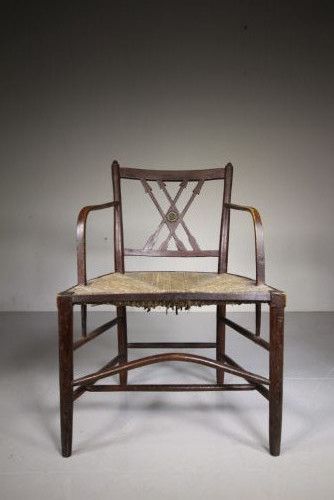

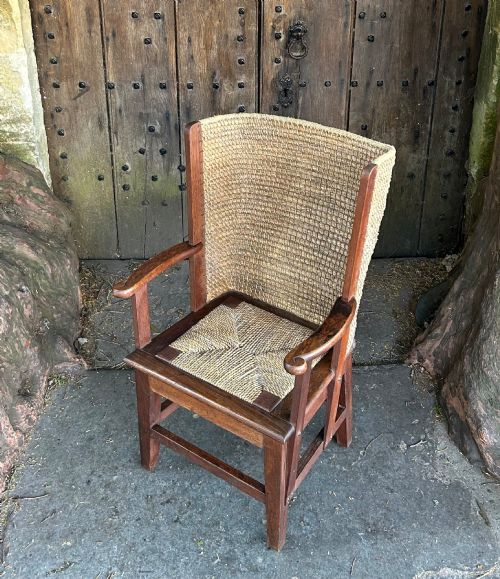
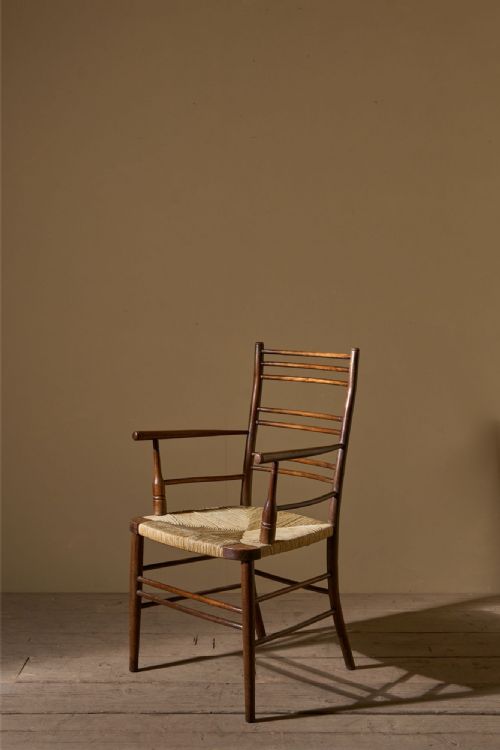
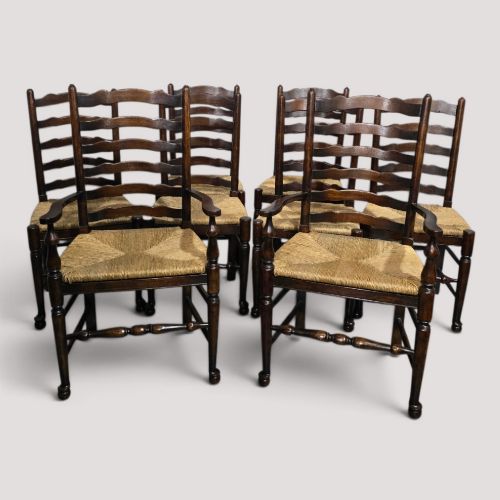





Oak Rush Armchair
An oak rush armchair is a sturdy country seat built with woven seating, holding centuries of practical British vernacular design.
Oak Rush Armchair
The oak rush armchair brings together robust local timbers and woven organic seating, shaped by regional makers across the British Isles and beyond. When you search for an oak rush armchair, you encounter robust seating ranging from straightforward nineteenth-century farmhouse examples to refined Arts and Crafts interpretations.
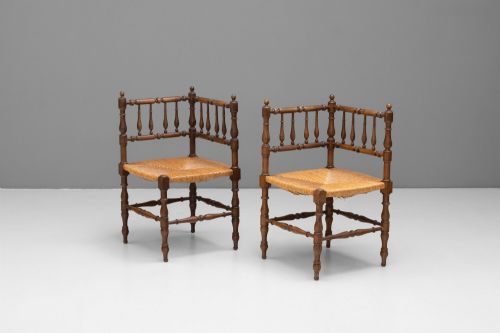
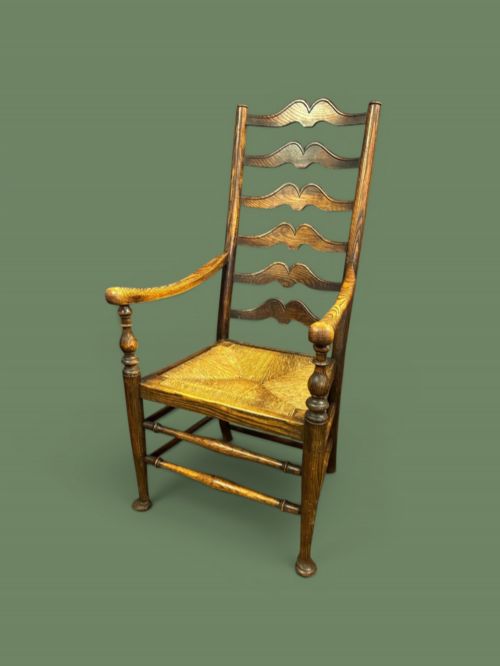
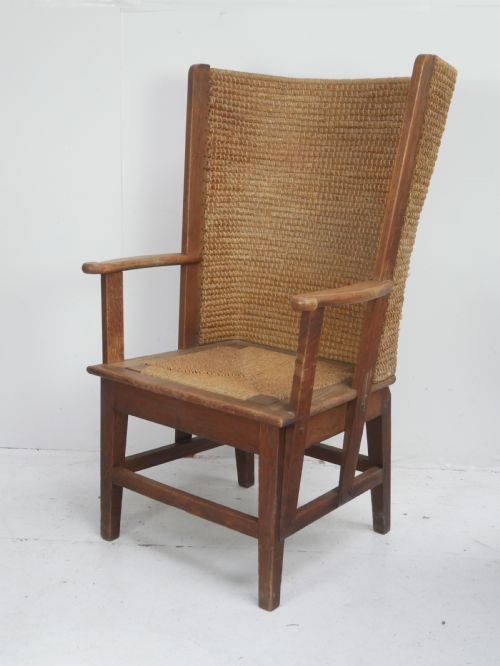
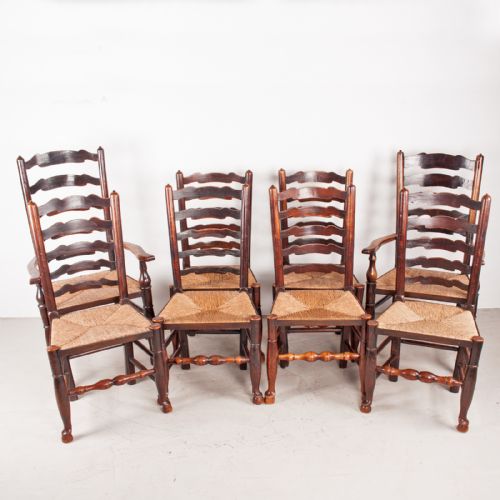
Most pieces you meet on this page hail from the nineteenth century or the early decades of the twentieth century, with earlier Georgian and eighteenth-century examples appearing periodically. Alongside standard armchairs, the selection includes ladder-back carvers, spindle-back designs, and regional variants such as Orkney and Lancashire styles.
Materials and Construction
Makers built these frames primarily from solid oak, frequently incorporating supporting elements of elm, ash, beech, or painted wood to suit local timber availability. The characteristic seats are woven tightly from rush or straw, creating a resilient, flexible surface designed to bear daily domestic weight.
Joinery relied on traditional pegged mortise and tenon joints, whilst ladder-backs and spindle-backs utilised turned wooden components shaped on a lathe. Painted finishes occasionally coated the wooden frameworks, particularly on regional vernacular pieces from Cheshire or French provincial workshops.
Listings feature oak alongside elm, ash, and beech, demonstrating the diverse timber choices of nineteenth-century regional carpenters.
Judging Quality
Quality rests upon the structural integrity of the timber frame and the tightness of the woven rush seat. Superior examples display balanced proportions, crisp wood-turning on the ladder or spindle backs, and minimal timber replacement over time.
Regional character and maker attribution elevate certain pieces significantly above standard utility seating. Original painted surfaces or untouched patination on the oak distinguish finer workshop pieces from ordinary domestic furniture.
Morris & Co·Liberty & Co·Dicon Nance
The Oak Rush Armchair Glossary
- Rush
- A marshland plant material twisted into cords and woven to form flexible, durable chair seats. It provides a comfortable, organic surface that responds to atmospheric humidity.
- Ladder-back
- A chair back featuring horizontal wooden slats or rails stacked vertically between the upright posts. This traditional form was widely utilised in regional English and French vernacular seating.
- Spindle-back
- A chair back constructed from numerous thin, turned wooden rods rather than solid slats. This design lightened the visual weight of the frame whilst maintaining structural support.
- Carver
- An armchair designed to match a set of dining side chairs, usually placed at the head of a table. These pieces share the stylistic traits of their accompanying dining sets.
- Vernacular
- Everyday furniture built by local craftsmen using regional traditions and readily available materials rather than following high-style academic designs. These pieces reflect the practical needs of rural households.
Oak Rush Armchair: Frequently Asked Questions
What is an oak rush armchair?
An oak rush armchair is a traditional wooden seat constructed with an oak frame and a woven rush or straw seating pad. These chairs emerged from rural vernacular traditions and later inspired Arts and Crafts movement designers.
They combine robust construction with organic materials, resulting in functional seating that has endured for generations in British and European homes.
How do I care for a rush seat?
Rush seats require stable indoor humidity to prevent the natural fibres from drying out and becoming brittle. Avoid placing them near direct heat sources or in damp environments.
Cleaning should be limited to gentle dusting with a soft brush, as excess moisture will damage the woven plant fibres over time.
Where were these armchairs used?
These armchairs served primarily as everyday seating in farmhouses, cottages, and provincial dining rooms. Their sturdy construction made them ideal for heavy daily use.
Later Arts and Crafts versions found a place in libraries, studies, and parlours where honest craftsmanship and simple materials were celebrated.