


Craftsman Oak Armchairs
These craftsman oak armchairs bring solid construction and honest design into any room, offering the robust comfort and enduring style collectors want.
Craftsman Oak Armchairs
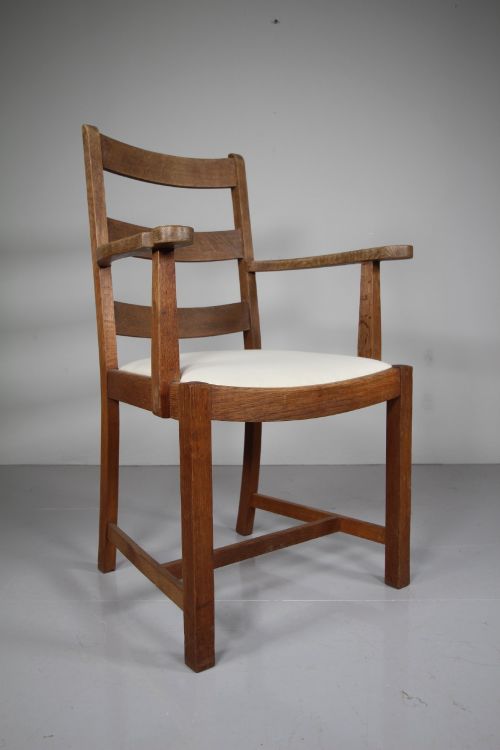
When you search for craftsman oak armchairs, you encounter seating rooted primarily in the Arts and Crafts movement from the Edwardian era and the early twentieth century. These pieces showcase straightforward forms and sturdy frames that reflect the ideals of hand-craftsmanship over mass production.
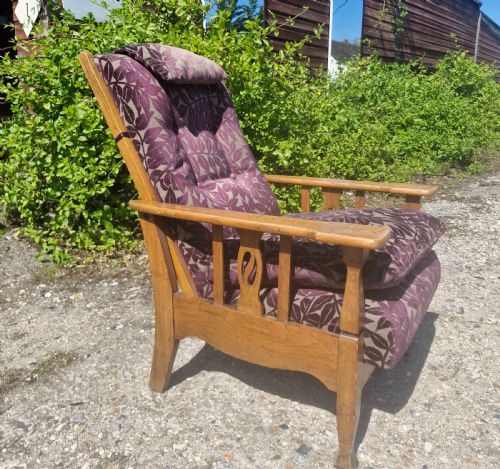
The versions you are most likely to meet on this page include reclining armchairs, low ladder-back seats with rush bottoms, and substantial wooden frames. Several examples connect directly to notable makers and retail houses of the period, whilst others represent classic vernacular workshop designs.
How they were made
Makers utilised English oak as the primary timber, building robust frames that often employed exposed joinery rather than concealed fixings. This honest approach to construction ensures the structural integrity of each piece remains visible.
Seating surfaces and supports incorporated traditional materials such as leather, fabric, linen, and rush seating. Certain pieces also feature decorative metal elements, including pewter inlay, to accent the timber framework.
The listings here concentrate heavily on early 1900 and Edwardian periods, utilising solid oak, leather, and rush.
What varies in quality
Quality in these armchairs rests upon the integrity of the timber selection and the precision of the joinery. Finer examples display thoughtful grain matching and careful execution of structural details like reclining mechanisms or carved motifs.
The distinction between standard workshop output and top-tier production also lies in attributed provenance or maker signatures. Pieces bearing direct association with recognised firms command greater interest from collectors.
Liberty & Co·Goodyers of London·Robert Mouseman Thompson·Shapland & Petter
The Craftsman Oak Armchairs Glossary
- Arts and Crafts
- A design movement spanning the late nineteenth and early twentieth centuries that prioritised traditional craftsmanship and simple forms. It rejected excessive industrial ornamentation in favour of honest construction.
- Rush seat
- A traditional seating surface woven from dried marsh rushes tightly wound over a wooden frame. This technique produces a resilient and tactile base common in vernacular chairs.
- Reclining armchair
- A functional seating form featuring an adjustable backrest mechanism. Early twentieth-century examples often utilised a brass bar or rack system.
- Ladder-back
- A chair back construction formed by a series of horizontal wooden slats set between two vertical uprights. This traditional layout provides sturdy lumbar support.
- Pewter inlay
- A decorative technique where small pieces of pewter metal are inset flush into grooves carved directly into the timber. It adds a subtle metallic contrast to the oak surface.
Craftsman Oak Armchairs: Frequently Asked Questions
What defines a craftsman oak armchair?
These armchairs are defined by their solid oak construction, visible joinery, and functional forms rooted in the early twentieth-century movement.
They reject superfluous decoration in favour of honest materials and structural clarity.
How do reclining versions function?
Period reclining versions typically utilise a mechanical adjustment system, such as a pivoting backrest secured by a bar or notches.
This allows the user to alter the angle of the seat back for comfort.
Where should I place one?
These sturdy armchairs suit living rooms, studies, or libraries where their substantial wooden frames can serve as a focal point.
Pair them with neutral textiles and complementary wood furniture to let the craftsmanship stand out.
How do I identify the period?
Dating relies on stylistic markers such as ladder backs, rush seating, and characteristic hardware like pewter inlay.
Most pieces date from the Edwardian era through the early decades of the twentieth century.