




Rush Seat Elbow Chairs
These rush seat elbow chairs bring enduring vernacular craft and tactile comfort straight into a modern interior.
Rush Seat Elbow Chairs
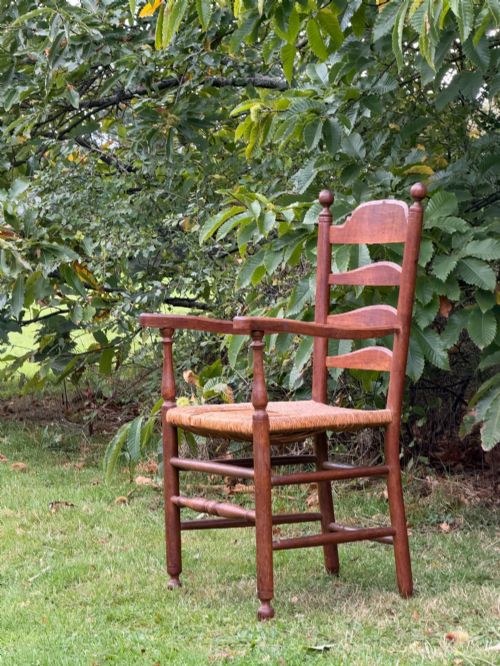
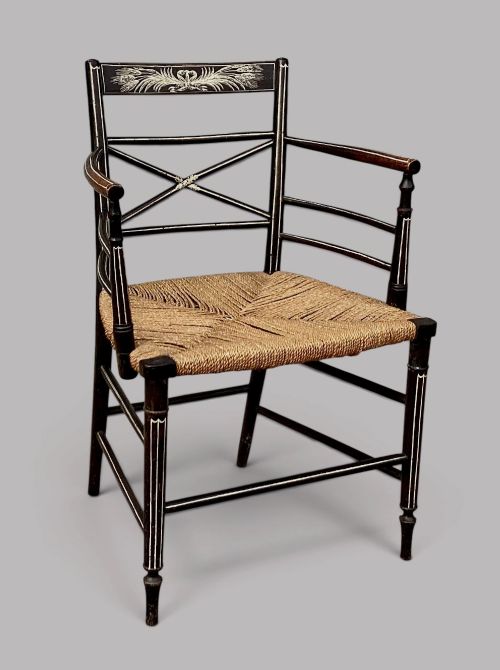
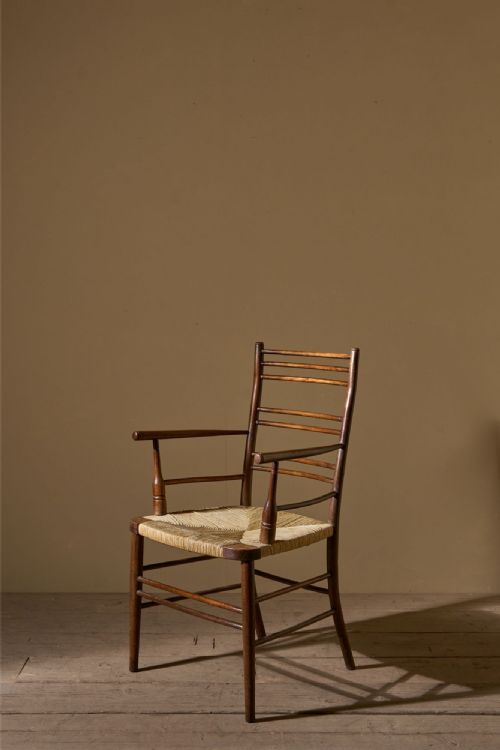
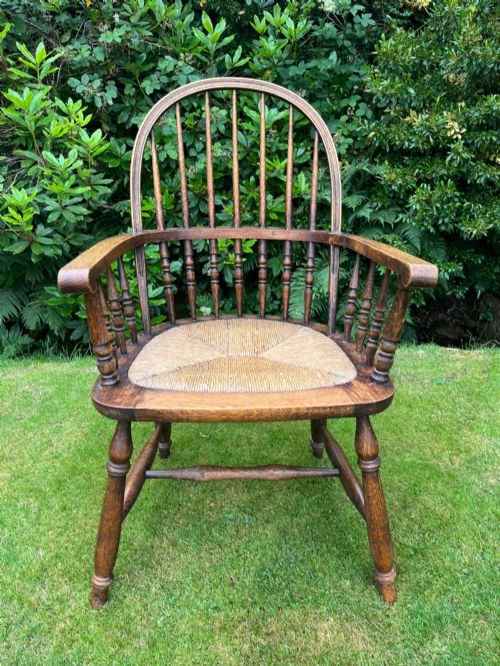
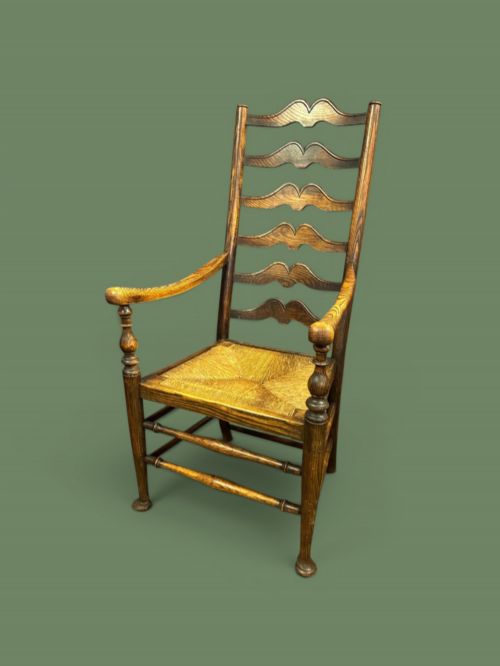
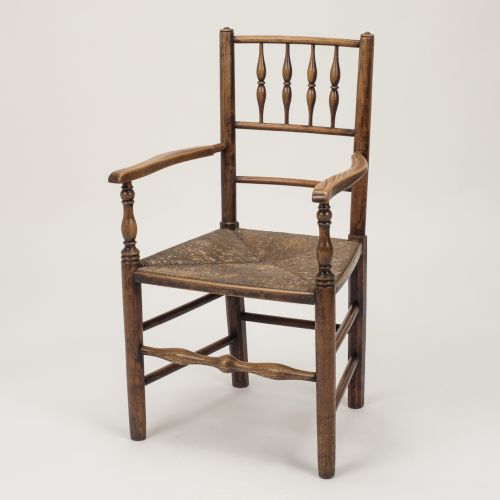
Rush seat elbow chairs encompass sturdy country carvers and vernacular armchairs designed for daily seating. When searching for rush seat elbow chairs, a buyer encounters forms spanning the Georgian, Victorian, and Arts and Crafts periods, alongside later twentieth-century interpretations.
The most frequent examples on this page are elm, ash, and oak ladderback or spindleback armchairs outfitted with woven rush seating. Makers ranged from rural West Country bodgers to London firms such as Liberty and Co, utilising local hardwoods and traditional turning techniques.
Materials and construction
Makers constructed the frames using native timbers such as elm for solid seats, ash or beech for resilient spindles and legs, and occasional fruitwood or mahogany for finer carvers. These components were often steam-bent or lathe-turned before being joined by pegged mortise and tenon joints.
Seats were woven tightly from natural marsh rush around wooden seat rails, creating a flexible and supportive platform that yields slightly under the sitter. Finished frames show the tool marks of the pole lathe or drawknife, keeping the character of the rural workshop intact.
Rush Seat Elbow Chairs Retail Price Guide 2026
Typical asking prices for rush seat elbow chairs among the pieces listed under this phrase on Sellingantiques today, from the lower quarter to the upper quarter. They describe what is for sale here now, not the wider market.
Several ladderback frames preserve faint pencil marks left by nineteenth-century turners on hidden tenon joints.
Judging quality and condition
Quality rests in the integrity of the timber frame, the tightness of the joinery, and the condition of the woven rush. Superior examples retain their original surface patination and tight, crisp rush work without sagging or replacement strands.
Lesser pieces often suffer from dry, brittle rush seating, replaced stretcher rails, or excessive wear to the arm terminals where hands gripped the wood over decades of domestic use.
Liberty Morris And Co·E W Godwin·Liberty And Co
The Rush Seat Elbow Chairs Glossary
- Carver chair
- An armchair, usually designed to match a set of single dining chairs, featuring open elbows for seated comfort.
- Ladderback
- A chair back constructed with horizontal arched slats between the upright rear posts.
- Rush
- Dried marsh grass twisted into cord and woven by hand to form durable, textured chair seats.
- Vernacular
- Everyday utilitarian furniture built by regional craftsmen using local traditions rather than high-style metropolitan designs.
- Spindleback
- A chair back filled with thin, turned wooden uprights rather than solid wooden splats.
Rush Seat Elbow Chairs: Frequently Asked Questions
Are these chairs suitable for daily dining?
Many examples on this page were built as robust carvers or dining chairs intended for regular household use.
Check the stability of the leg stretchers and the tightness of the joints before committing them to heavy daily seating.
What is the difference between an armchair and a carver?
A carver is historically an elbow chair designed to sit at the head of a dining table, traditionally offering slightly wider proportions.
Armchair is a broader term encompassing everything from low fireside seating to substantial vernacular reading chairs.
Can damaged rush seats be repaired?
Traditional rush seating can be completely removed and re-woven by a skilled artisan using matching marsh rush.
Original historic seating should be preserved wherever possible, while complete re-weaving is reserved for perished or collapsed seats.