

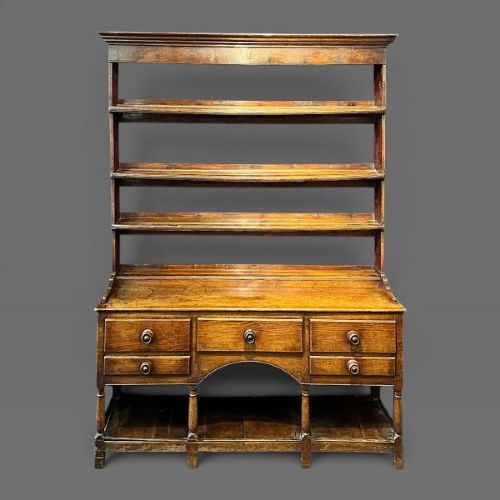
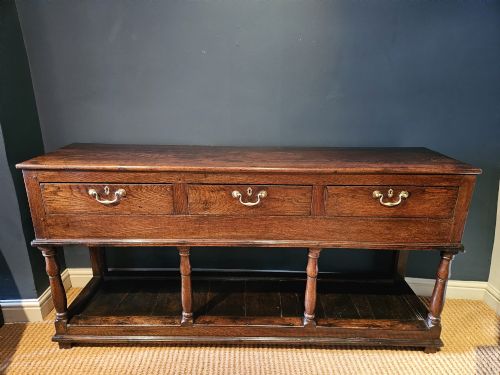
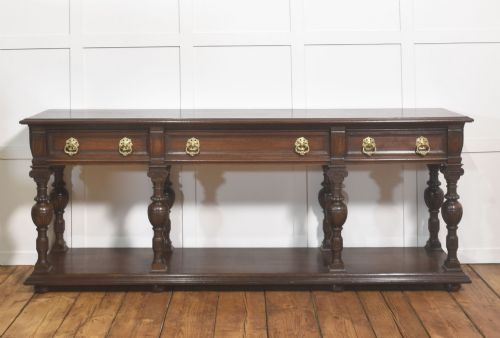
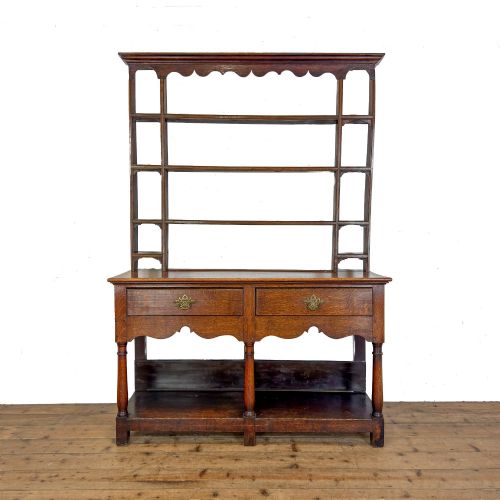

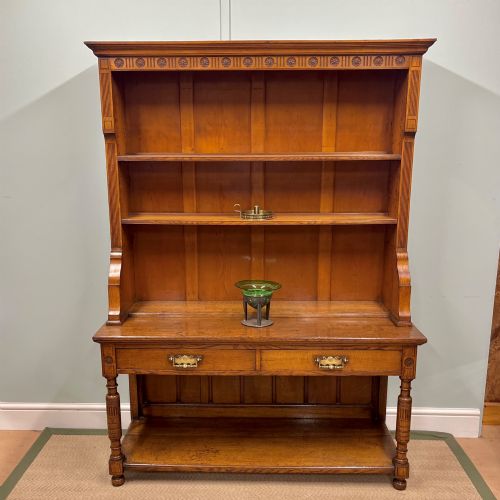
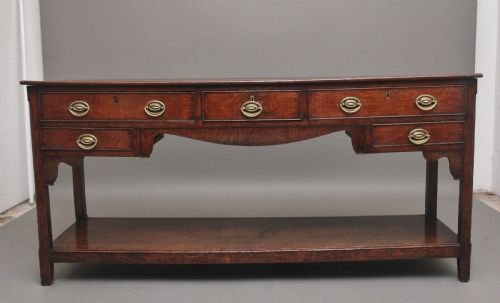

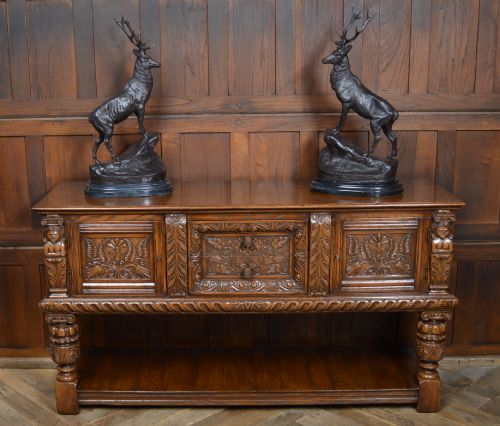

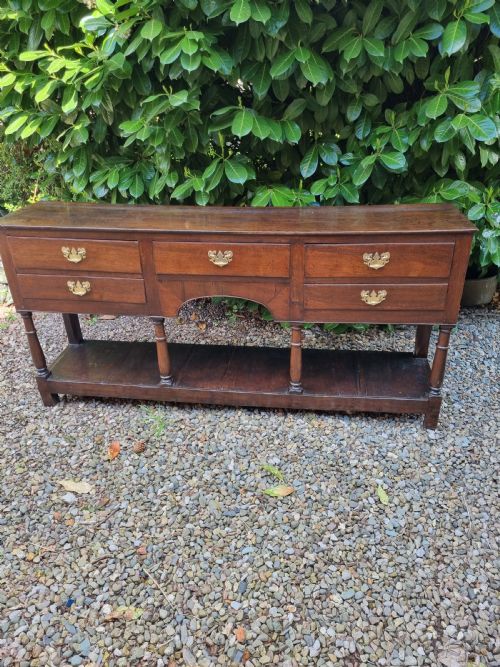


Oak Pot Board Sideboard
An oak pot board sideboard combines heavy timber construction with a useful lower display shelf designed for heavy domestic wares.
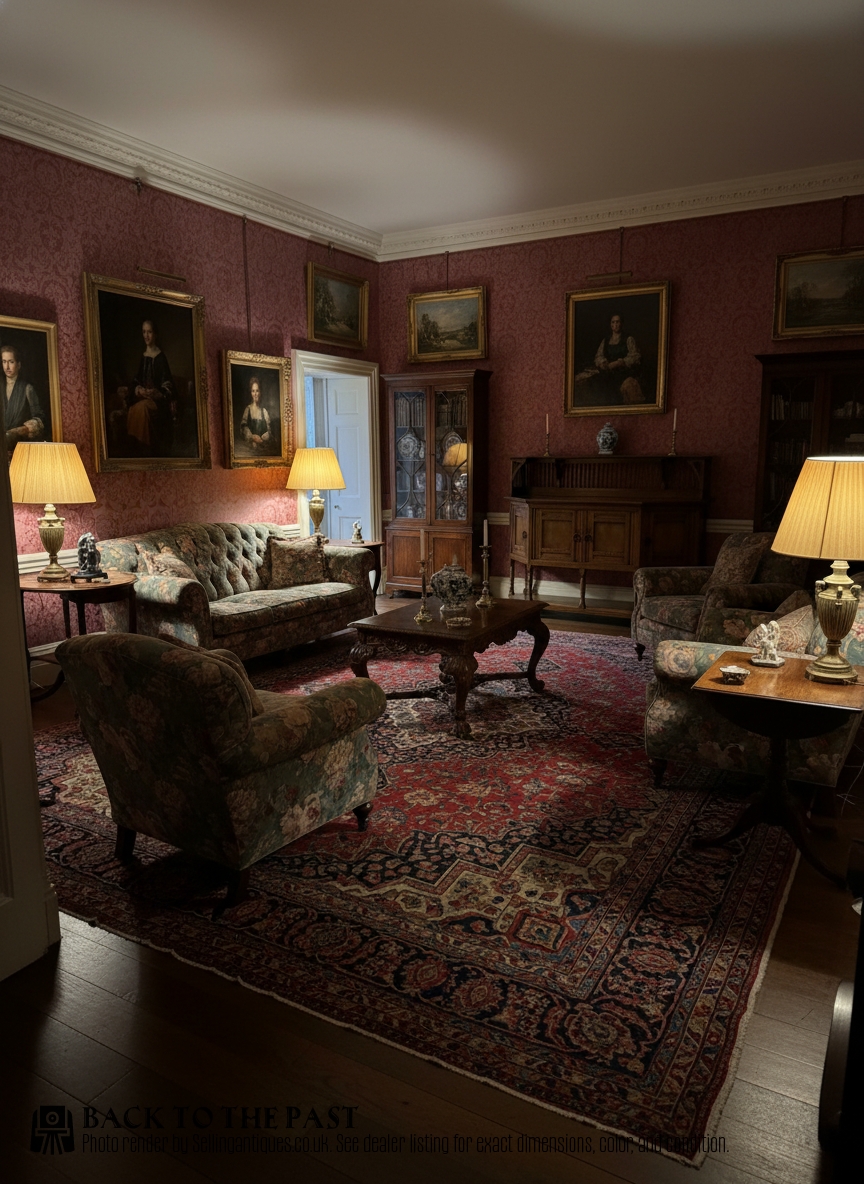
Oak Pot Board Sideboard
When you search for an oak pot board sideboard, you are looking at substantial country furniture originating mainly from the eighteenth and nineteenth centuries. These pieces typically feature a row of upper drawers above an open lower platform, known as a pot board, supported by sturdy legs or stiles. Welsh and English regional workshops produced these items to serve as working surfaces and storage units in large country houses and farmhouses.
The most common versions on this page are dresser bases and low dressers dating from the Georgian period through to the Victorian era. Many survive with their original planked tops and three-drawer arrangements, though some later revival pieces from the early twentieth century also appear. They range from small, compact proportions suited to modern rooms to longer five-drawer formats built for wider dining spaces.
Materials and construction methods
Makers built these pieces primarily using solid native oak, frequently supplemented with secondary woods like pine for internal drawer linings and backboards. The timber was commonly quarter-sawn to reveal rich medullary rays, then assembled using traditional pegged mortise and tenon joints. Additional metalwork in brass and iron appears on handles, escutcheons, and hinges.
Surface finishes vary from unpolished honey-toned timber to waxed surfaces that developed a deep patina through generations of use. Some examples incorporate decorative details such as fruitwood marquetry inlay, linenfold carving, or painted finishes, reflecting regional preferences and the stylistic revivals of later periods.
Oak Pot Board Sideboard Retail Price Guide 2026
Typical asking prices for oak pot board sideboard among the pieces listed under this phrase on Sellingantiques today, from the lower quarter to the upper quarter. They describe what is for sale here now, not the wider market.
Generations of heavy earthenware pots left permanent scuffs on the lower shelves of these sturdy farmhouse workhorses.
Evaluating craftsmanship and survival
The distinction between standard utility furniture and finer pieces lies in the thickness of the timbers and the integrity of the original construction. Superior examples retain their original joined pot boards and unreplaced hardware, whereas lesser or heavily restored items often feature modern timber replacements in the lower shelves or altered drawer configurations.
Proportion and surface preservation heavily influence the character of each piece. Well-proportioned lower dresser bases with minimal timber shrinkage and deep, undisturbed patination command greater interest among collectors than heavily bleached or overly scrubbed surfaces.
Liberty of London
The Oak Pot Board Sideboard Glossary
- Pot board
- The open lower shelf positioned near the floor between the legs of a dresser base. Originally used for storing heavy pots, pans, and ceramic dishes.
- Dresser base
- A lower cabinet featuring drawers above an open space or cupboard doors, functioning independently without the upper plate rack.
- Quarter-sawn
- A method of cutting logs radially to produce timber boards with enhanced structural stability and prominent grain figuring.
- Escutcheon
- A protective plate surrounding a keyhole, usually fashioned from brass or iron.
- Patina
- The surface sheen and colour acquired by aged wood through decades of handling, waxing, and exposure to light.
Oak Pot Board Sideboard: Frequently Asked Questions
What is a pot board sideboard used for today?
These versatile pieces serve well as kitchen sideboards, hallway consoles, or media units in contemporary living spaces. The broad top surface provides ample display area, while the lower pot board is ideal for stacking books or large decorative bowls.
The deep drawers offer practical concealed storage for dining linens or household items. Their solid construction allows them to endure daily use just as they did in past centuries.
How can I tell an 18th-century piece from a revival piece?
Eighteenth-century examples display hand-cut joinery, pegged tenons, and natural timber wear accumulated over generations. The grain patterns and hand-planed board surfaces show distinct irregularities absent in machine-cut timber.
Revival pieces from the early twentieth century often feature standardised machine-cut components and different interior woods. Examining the underside of the drawers and the joinery of the pot board usually reveals the true age of the construction.
Where were these sideboards originally made?
Many fine examples originated in Welsh counties such as Carmarthenshire and Montgomeryshire, where regional cabinetmakers favored robust oak construction. English provincial workshops also produced substantial numbers for local farmhouses and country estates.
Local timber availability heavily influenced regional designs, resulting in slight variations in leg turning and drawer layouts across different shires.
How do I care for antique oak furniture?
Maintain the finish by applying natural beeswax sparingly and buffing with a soft cloth to preserve the surface sheen. Avoid placing the wood near direct heat sources or in areas with fluctuating humidity to prevent timber splitting.
Routine dusting with a dry cloth keeps the grain clear without stripping the historical patina built up over centuries of use.