

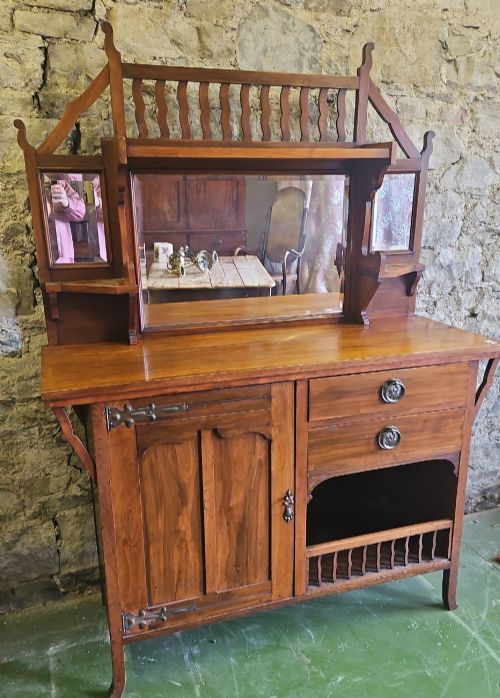
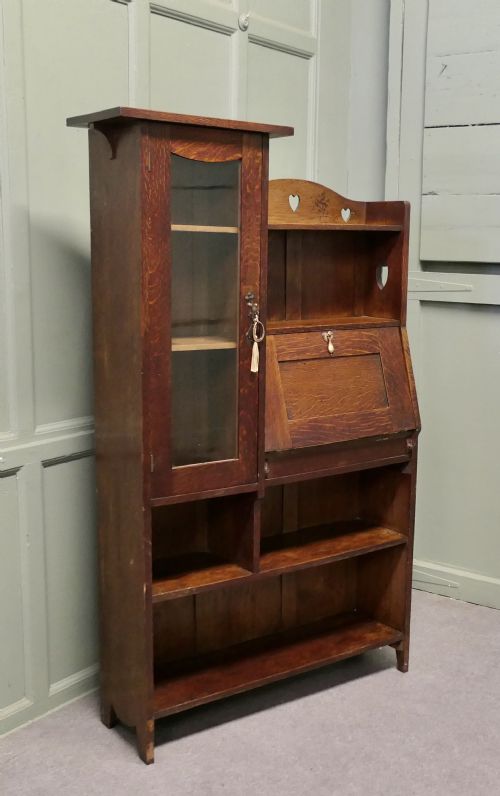
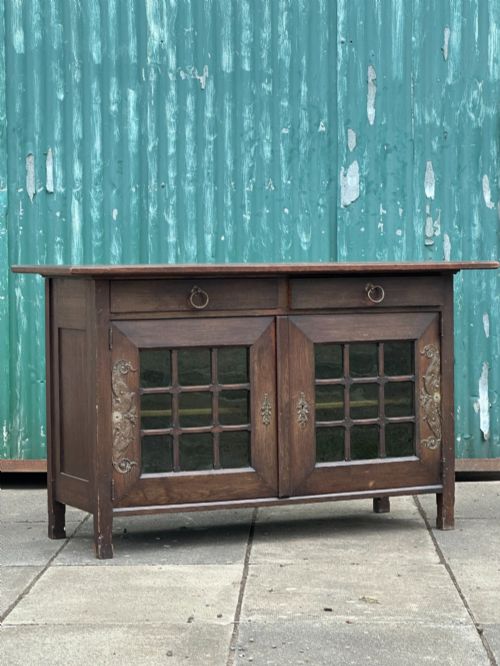

Liberty Style Oak Cabinet
These liberty style oak cabinet pieces bring honest construction and utility into your home, uniting practical storage with the bold ideals of the Arts and Crafts movement.
Liberty Style Oak Cabinet
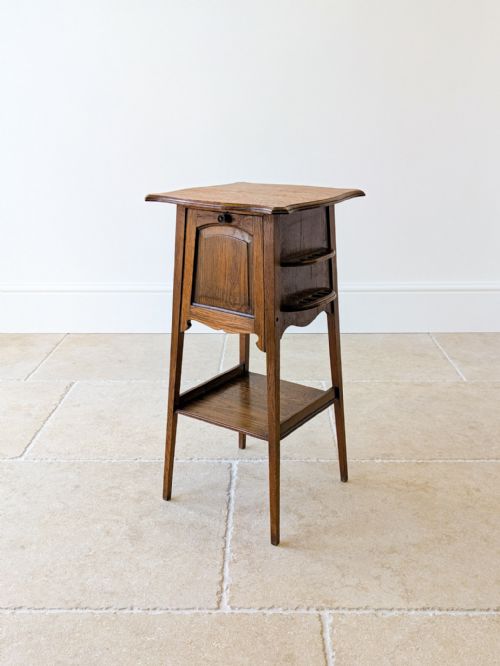
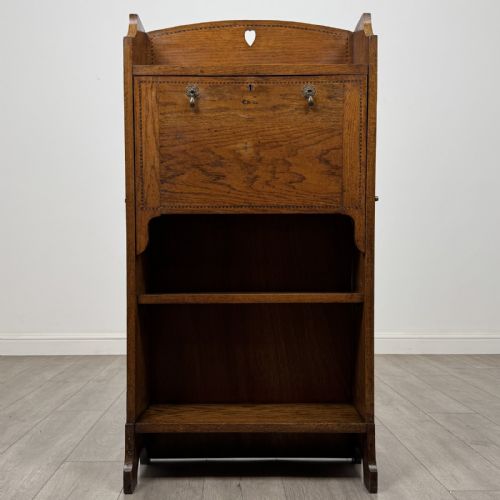
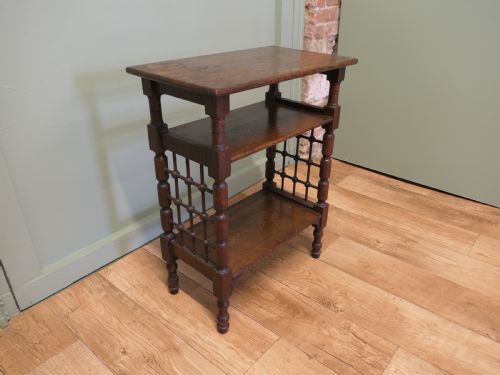
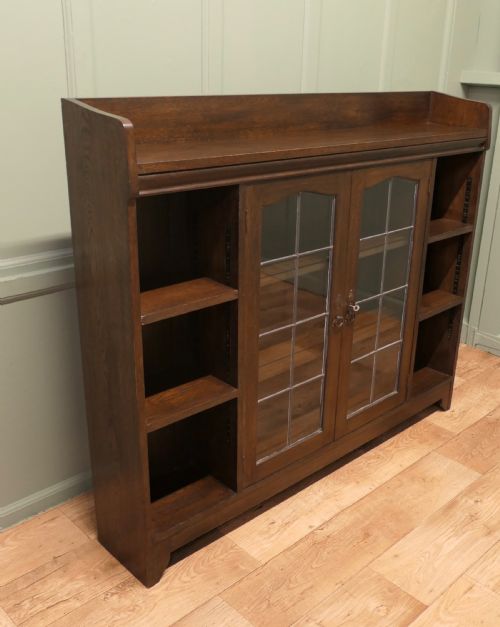
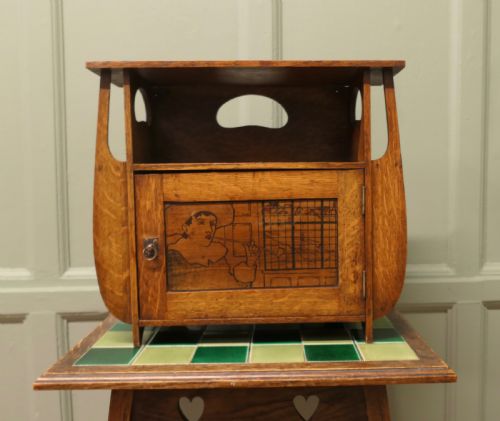
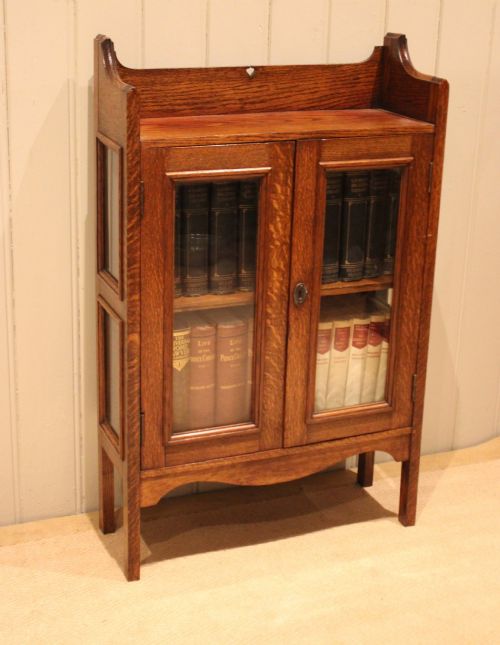
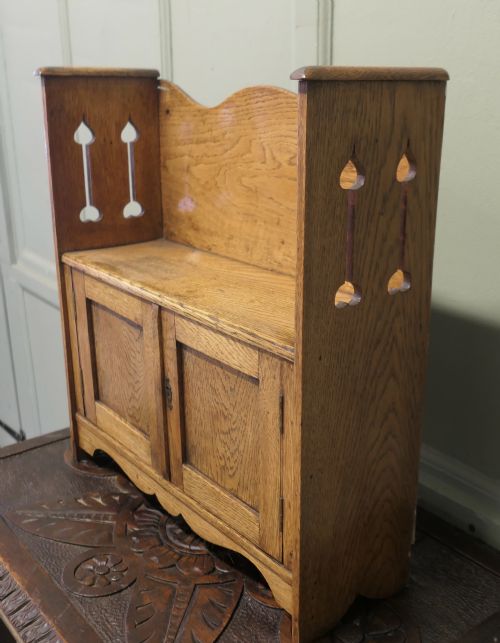
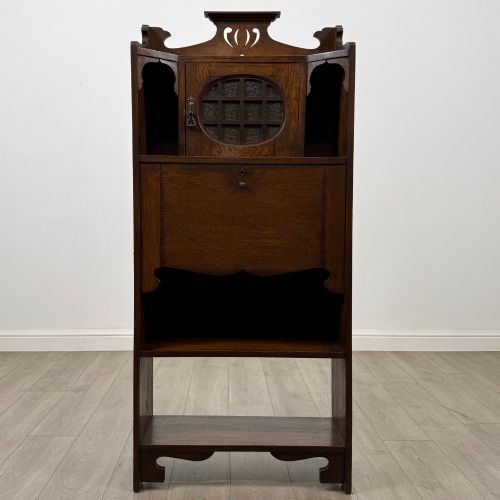
A liberty style oak cabinet reflects the reforming spirit of late nineteenth and early twentieth century design, drawing on Arts and Crafts principles of simple utility and visible craftsmanship. When exploring these selections, you encounter functional forms ranging from compact wall units and bookcases to substantial sideboards and bureaux.
The pieces on this page span several decades, reaching from the Victorian era through the Edwardian period into the early twentieth century. Oak serves as the primary timber across these diverse forms, often presented in warm golden tones or deeper patinas that highlight the natural grain.
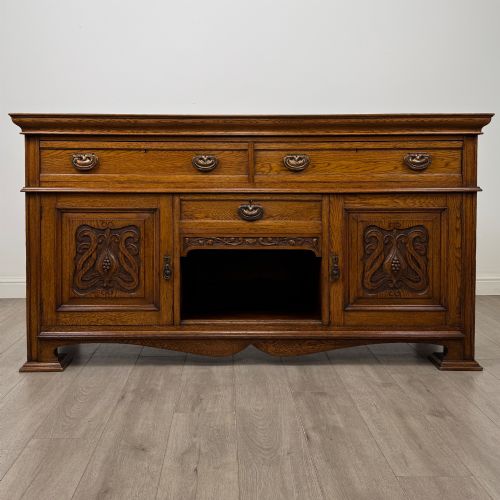
Makers and retailers of the period, most notably Liberty and Co. alongside workshops like Shapland and Petter, championed practical domestic furniture with understated ornamentation. You find sideboards, dressers, and side cabinets designed to anchor a room while providing dedicated storage for books, china, and everyday objects.
Materials and construction methods
Solid oak provides the structural foundation for these pieces, selected for its strength and the character of its grain. Cabinetmakers utilised quartersawn timber to reveal distinct medullary rays, adding subtle visual texture to large flat panels on sideboards and bookcases.
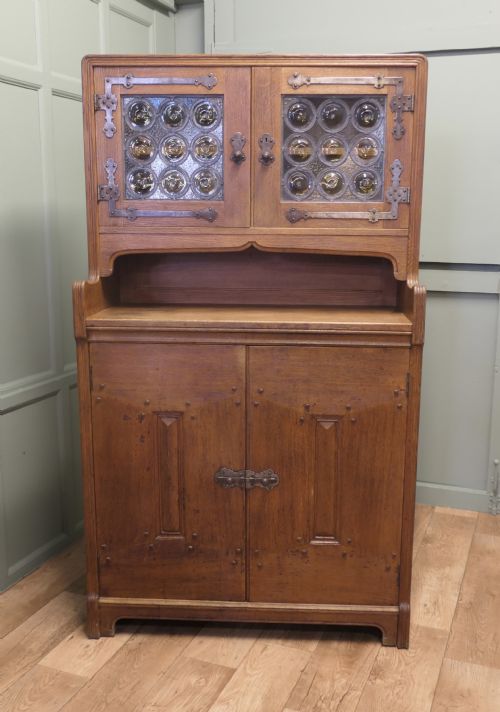
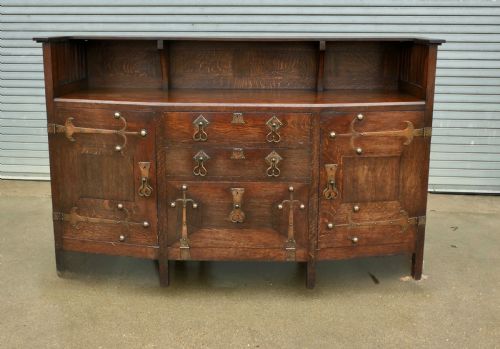
Metalwork played a defining role in the aesthetic, with hinges, drop handles, and backplates rendered in hammered brass, copper, and iron. These fittings were fastened visibly to the wood rather than concealed, celebrating the mechanics of the build.
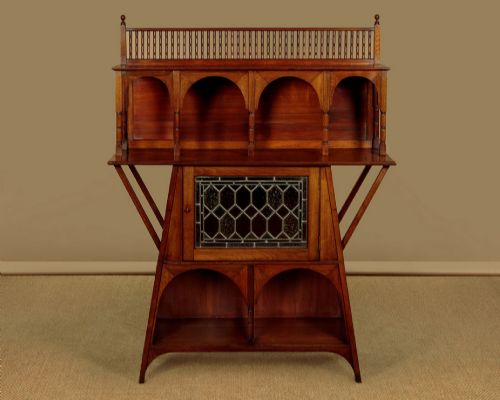
Glazing often incorporates leaded glass panels in geometric or stylised floral patterns, diffusing light while protecting the contents of wall cabinets and bookcases. Joinery relied on traditional methods such as tenon joints and pegged construction to ensure long-term durability.
Liberty Style Oak Cabinet Retail Price Guide 2026
Typical asking prices for liberty style oak cabinet among the pieces listed under this phrase on Sellingantiques today, from the lower quarter to the upper quarter. They describe what is for sale here now, not the wider market.
Some student bureaux come equipped with unexpectedly deep shelves designed to hold heavy reference volumes alongside inkwells.
Assessing quality in construction and design
Distinction across the range rests on the ambition of the original design and the fidelity of its execution by the workshop. Superior examples show considered proportions, where the weight of the solid oak balances harmoniously against the scale of the brass or copper hardware.
The treatment of the timber surface separates standard utility pieces from exceptional commissions. Fine cabinets retain an original finish that deepens the grain without masking the natural warmth of the golden oak.
Attention to detail in subsidiary elements, such as adjustable shelving within bookcases or hand-beaten metal hinges, marks the division between commercial production and high-art manufacture.
Liberty and Co.·Shapland and Petter·Leonard Wyburd
The Liberty Style Oak Cabinet Glossary
- Arts and Crafts
- A design movement spanning the late nineteenth and early twentieth centuries that valued handcraftsmanship, simple forms, and traditional materials over mass-produced ornamentation.
- Quartersawn oak
- Timber cut radially to the tree rings, producing a stable board marked by distinctive flecked patterns known as medullary rays.
- Leaded glass
- Small panes of glass held together by strips of lead, frequently utilised in cabinet doors during the Edwardian period to create geometric patterns.
- Bureau
- A desk featuring a sloping lid that folds down to reveal a writing surface and small pigeonholes, often integrated into a larger bookcase structure.
Liberty Style Oak Cabinet: Frequently Asked Questions
How do I identify a liberty style oak cabinet?
Look for honest oak construction paired with distinctive metal hardware such as hammered copper or brass hinges. The design prioritises structural utility over excessive ornament, often aligning with Arts and Crafts ideals.
Many pieces bear attribution or design connections to retailers like Liberty and Co., while others reflect the broader aesthetic of the period through leaded glass or open shelving.
Where should I place a wall cabinet?
A wall cabinet suits spaces where floor area is limited, such as a kitchen, hallway, or above a sideboard. Ensure the wall structure can support the weight of solid oak and glass.
Position the piece at a height that allows comfortable access to internal shelves while serving as a visual focal point in the room.
How do I care for golden oak furniture?
Maintain the timber by dusting regularly with a dry cloth and applying occasional applications of appropriate beeswax to nourish the grain. Avoid placing the cabinet in direct sunlight or near heat sources to prevent the wood from drying out.
Protect metal fittings from harsh chemical cleaners by using a soft cloth to preserve their original patina.
What is the difference between a sideboard and a dresser?
A sideboard generally functions as a low storage unit with cupboards and drawers, designed for dining rooms to hold tableware and linen. A dresser frequently includes upper shelving or a plate rack combined with lower cupboards.
Both forms utilise solid oak and often feature the characteristic metal hardware associated with the Arts and Crafts movement.