
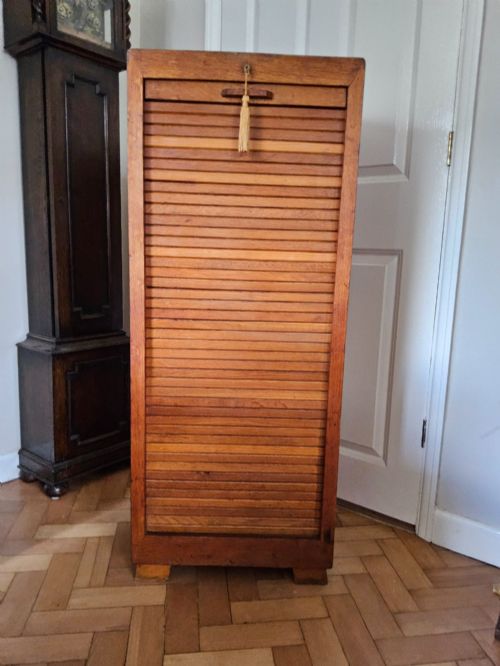
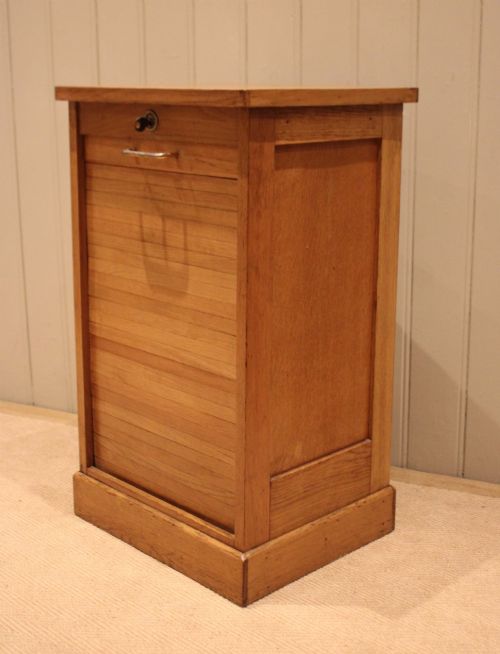
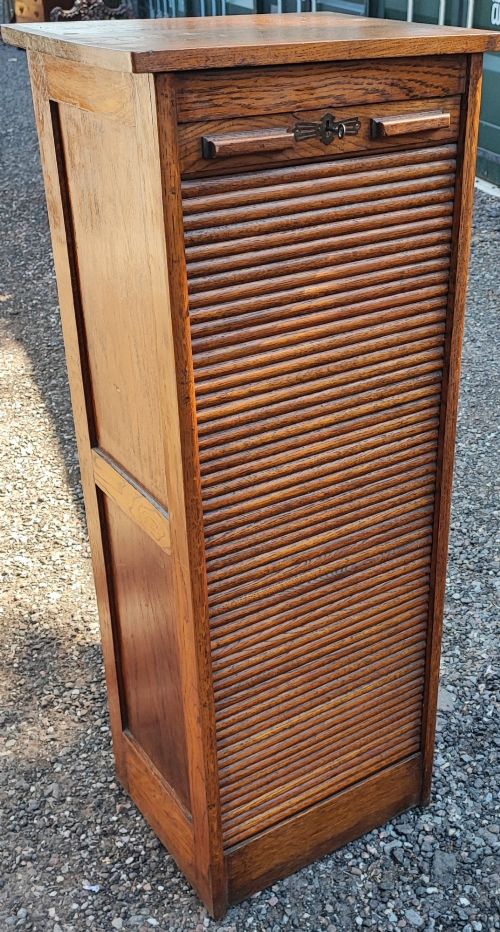
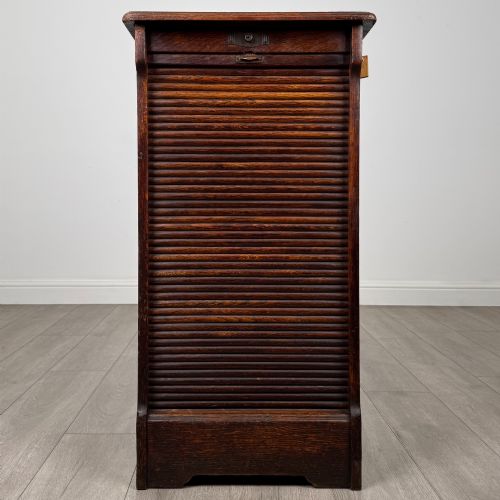
Oak Office Storage Cabinet
An oak office storage cabinet organises papers and books with robust timber construction and clever mechanical doors.
Oak Office Storage Cabinet
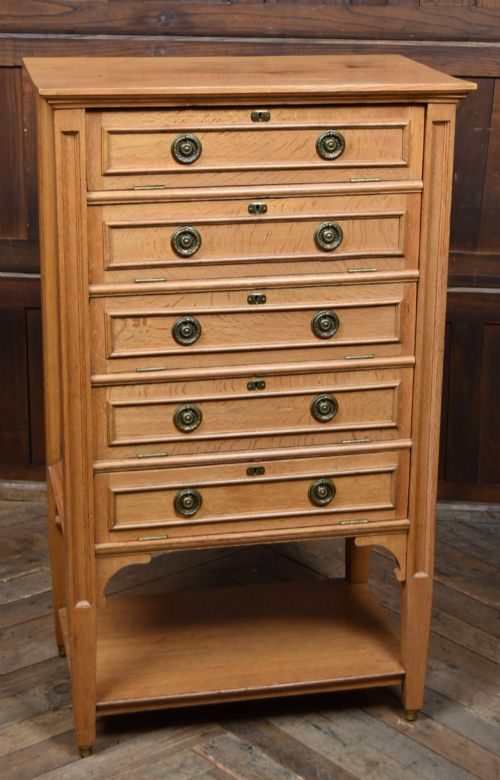
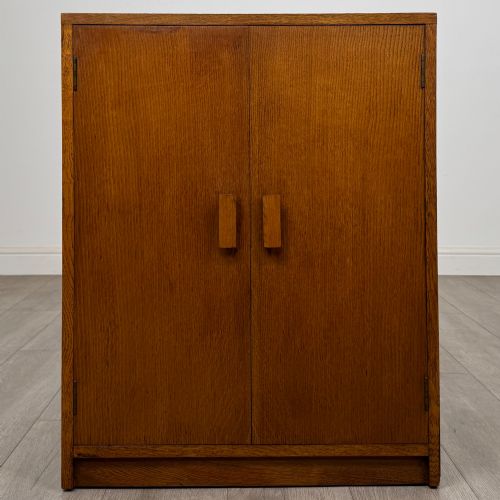
An oak office storage cabinet provides practical workspace organisation through specialised forms such as filing cabinets, banks of drawers, and modular bookcases. Buyers searching for an oak office storage cabinet typically encounter early twentieth-century designs, including Edwardian and 1930s pieces alongside industrial utility formats.
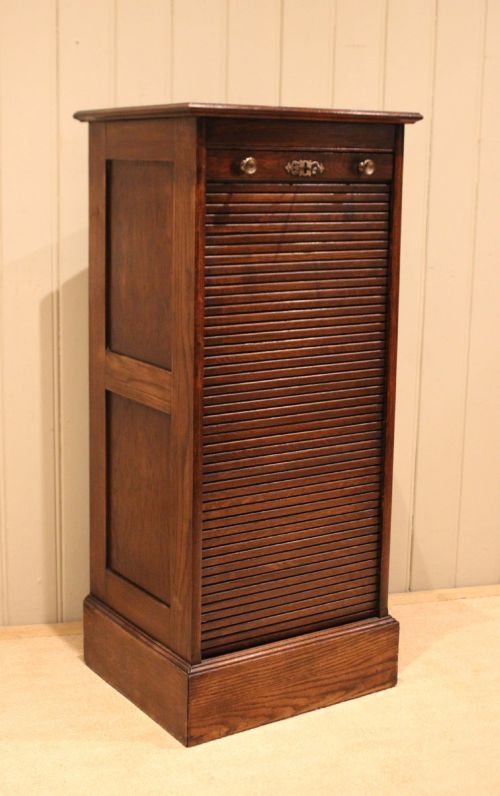
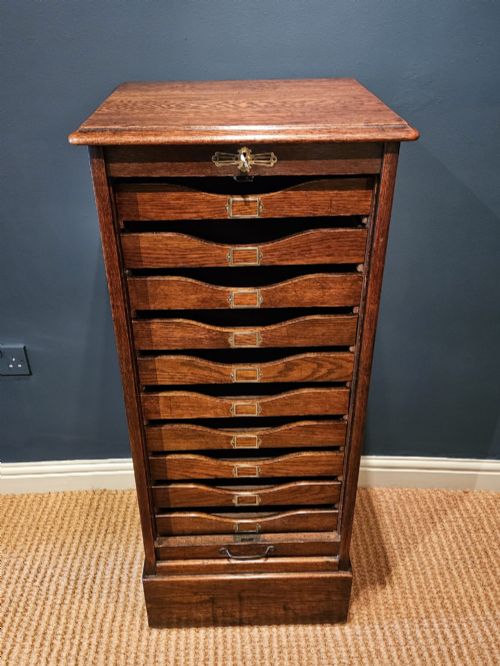
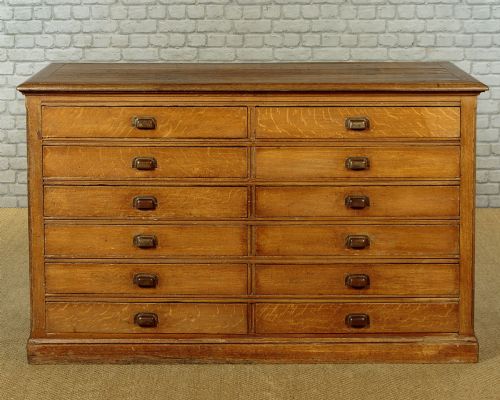
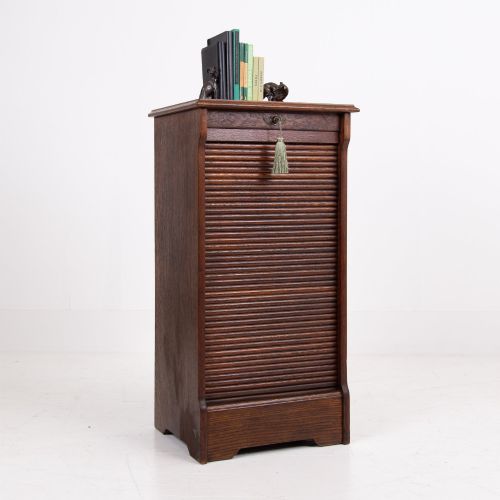
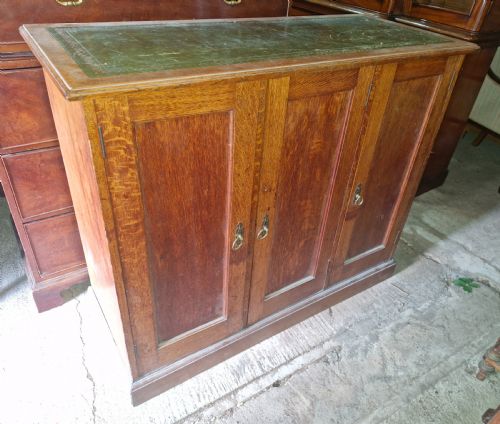
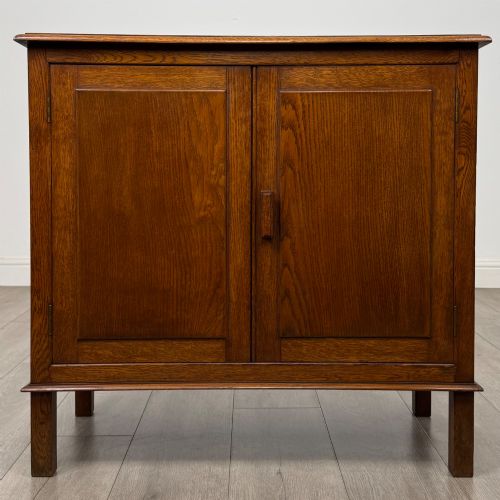
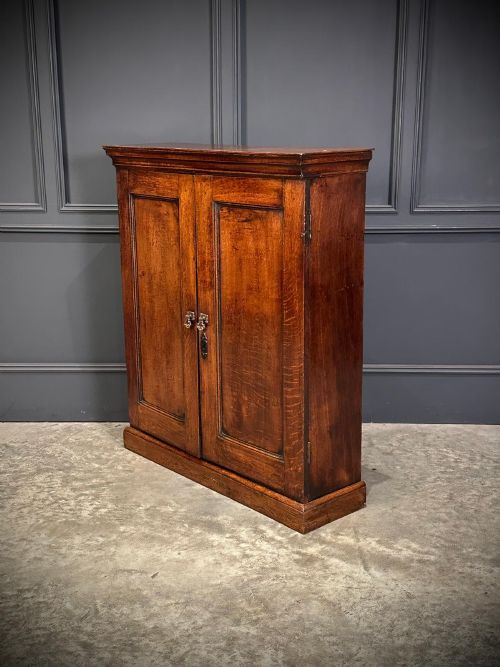
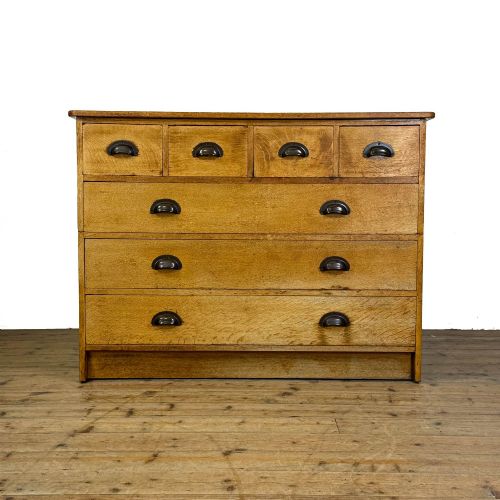
The selection ranges from single tambour front filing cabinets to large banks of drawers, fitted cupboards, and stacking barrister bookcases. These pieces originate from periods spanning the nineteenth century through the 1940s, with a strong representation of Edwardian and 1910s examples.
Materials and Construction
Makers built these pieces primarily from oak, often accented with brass or metal hardware, leather inserts, and glass panels. The timber receives treatment in various tones, yielding dark oak, golden oak, light oak, and pale oak finishes.
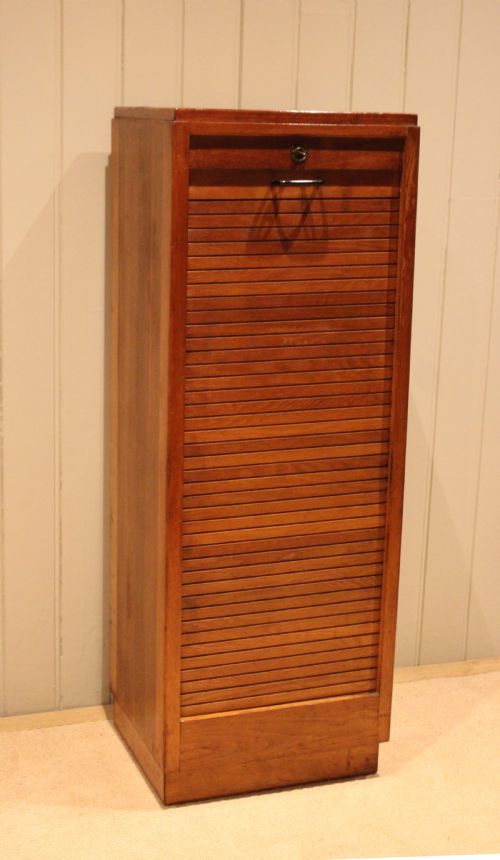
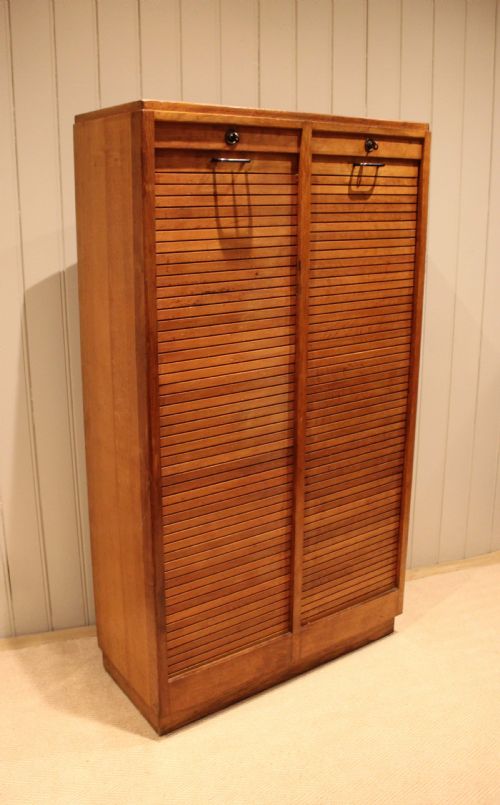
Functional mechanisms define many examples, notably sliding tambour doors made of narrow wooden slats running in grooves. Modular stacking sections and patent letter file mechanisms appear alongside traditional dovetailed drawers and panelled cupboard doors.
Listings feature oak as the primary timber, complemented by brass, metal, canvas, glass, steel, leather, and pine across multiple periods.
Factors of Quality
Quality rests upon the execution of moving parts, such as the smooth operation of tambour doors and the precise fitting of multi-drawer banks. Superior examples display careful timber selection, matching grain patterns across large surfaces, and robust internal framing.
Hardware integrity separates standard utility items from finer pieces, evident in the original brass handles, patent mechanisms, and branded markings such as Globe Wernicke or Amberg's systems. The retention of original patination on the oak surface further distinguishes better-preserved survivals.
Globe Wernicke
The Oak Office Storage Cabinet Glossary
- Tambour
- A flexible door constructed from narrow strips of wood glued to canvas backing, allowing it to slide smoothly around a curved track to enclose a cabinet front.
- Barrister bookcase
- A modular bookcase featuring stacking tiers with glass-fronted doors that lift and slide inward above each shelf.
- Bank of drawers
- A multi-drawer storage unit designed to hold large quantities of documents, letters, or specialist collections.
- Plan chest
- A wide, shallow set of drawers originally utilised for storing architectural plans, maps, and large format prints.
- Patent letter file
- A specialised filing apparatus incorporating patented mechanical holding devices to organise correspondence securely.
Oak Office Storage Cabinet: Frequently Asked Questions
How do tambour doors operate?
Tambour doors run on concealed tracks set into the frame of the cabinet, allowing the slatted wooden curtain to slide smoothly around corners and recess into the sides.
This mechanism saves floor space in compact offices by eliminating outward-swinging doors while concealing the interior contents completely.
Where were these cabinets used?
These storage units served in professional offices, legal chambers, libraries, and administrative departments during the late nineteenth and early twentieth centuries.
Today they function equally well in home studies and living spaces to store modern paperwork, books, and collections.
How do I care for oak office furniture?
Maintain the timber by keeping it away from direct heat sources and sudden humidity changes that might affect the wooden tambour tracks.
Apply a traditional beeswax polish occasionally to nourish the oak and preserve the natural sheen of the grain.
Are stacking bookcases modular?
Modular stacking bookcases consist of separate base, shelf, and top sections that rest one upon another without permanent fixings.
This design allows the bookcase to be easily disassembled, moved, and reconfigured according to your storage requirements.