

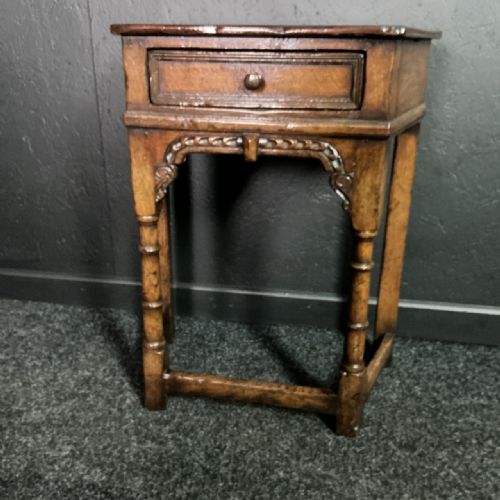
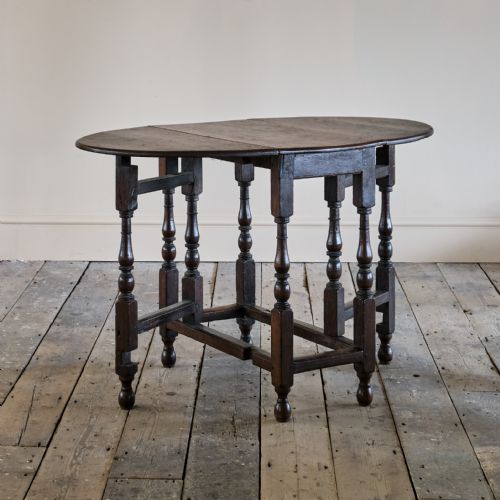

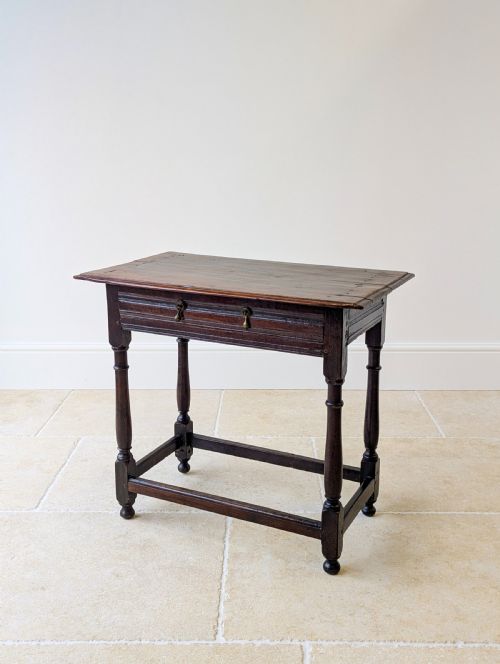


Oak Occasional Side Stool
An oak occasional side stool serves as a compact surface or seat, bringing solid timber character into hallways and sitting rooms.
Oak Occasional Side Stool
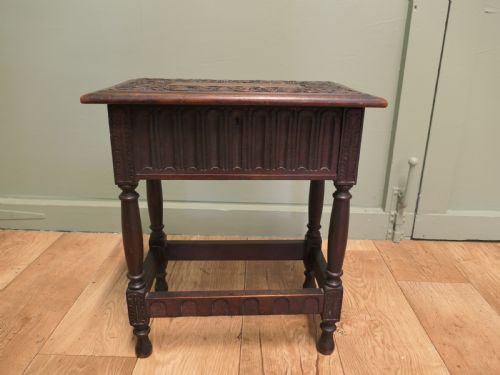
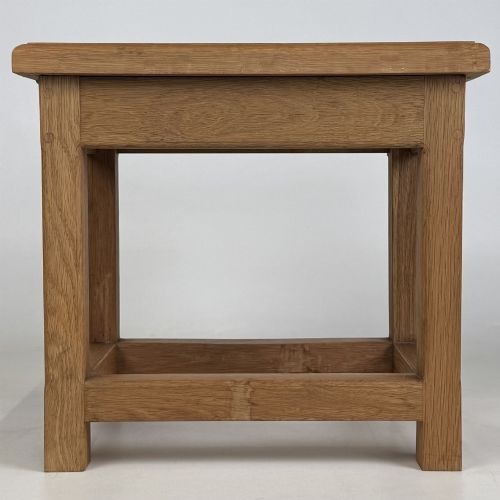
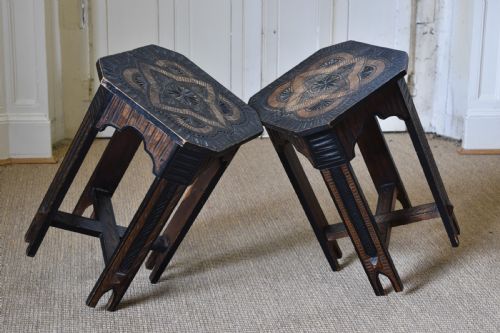
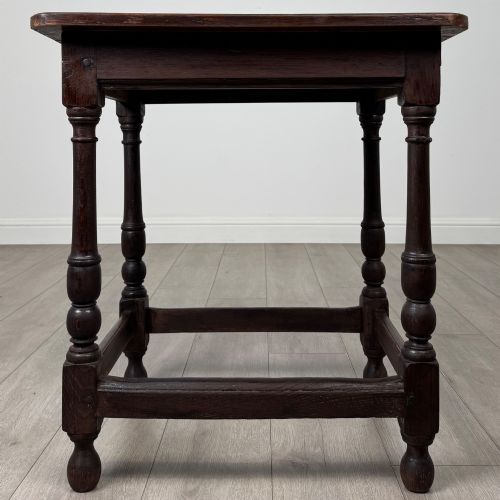
An oak occasional side stool spans multiple periods and forms, ranging from seventeenth century joint stools and lowboys to nineteenth century gateleg tables and Arts and Crafts triangulated seating. These pieces often blur the line between a low table and a sturdy seat, serving multiple functions in smaller spaces.
How they were made
Makers relied primarily on solid oak, frequently augmented with elm, walnut, pollard oak, or stained and ebonised woods for contrast and top surfaces. Construction methods draw on traditional joinery techniques, using pegged mortise and tenon joints to ensure rigidity without relying on metal fasteners.
Surface decoration involves chip carving, geometric panel moulding, and occasional brass hardware or iron accents on hinges and brackets. Finishes range from simple wax to polished surfaces that highlight the natural grain and figuring of the timber.
Materials extend beyond oak to include elm, walnut, pollard oak, iron, brass, and ebonised wood.
What varies in quality
The distinction between standard examples and superior pieces rests on the crispness of the hand carving, the choice of timber figuring such as pollard oak, and the integrity of the original joints. Period authenticity and the presence of untouched surface patina elevate an item above later decorative revivals.
Proportion and structural balance dictate the visual weight of the piece, with finer examples displaying harmonious leg turnings and precise stretcher placement. Subtle details like peg construction and timber selection separate utilitarian workshop items from master carpenter output.
The Oak Occasional Side Stool Glossary
- Joint stool
- A sturdy wooden seat constructed with mortise and tenon joints rather than turned legs glued into a seat. These pieces often double as small side tables.
- Lowboy
- A small oak or walnut table with one or more drawers, originating in the late seventeenth or eighteenth century. They function well as compact side tables.
- Gateleg table
- A table with hinged leaves supported by swing-out legs that fold away to save space. The evidence shows small oak examples used for occasional placement.
- Chip carving
- A decorative technique where small chips are removed from the surface of the wood to create geometric patterns. This appears on panels and table tops.
- Pollard oak
- Timber taken from trees that have been pollarded, producing wood with highly decorative and swirling grain patterns. It is typically reserved for prominent table tops.
Oak Occasional Side Stool: Frequently Asked Questions
Can I use a joint stool as a table?
Joint stools possess flat, sturdy tops that make them suitable for holding lamps or small decorative objects next to a chair.
Their historical use as seating does not prevent them from functioning well as occasional side surfaces in modern rooms.
How do I spot a later revival piece?
Revival items often feature machine tooling, lighter timber weight, and surface finishes that lack the depth built up by centuries of waxing.
Examining the underside and joint construction reveals whether the timber dates to the seventeenth century or a nineteenth century revival period.
What is a lowboy used for today?
A lowboy provides a narrow surface with drawer storage, fitting easily into hallways or tight alcoves where full sized furniture will not go.
The low height and compact footprint allow it to serve as a writing desk or an accent table beneath a mirror.
Does oak furniture require special care?
Solid oak benefits from occasional applications of natural beeswax to nourish the timber and protect the surface from excessive dryness.
Keeping these pieces away from direct heat sources and sudden humidity changes prevents the old timber from splitting or warping.