



Oak Marriage Trunk
An oak marriage trunk is a sturdy timber storage piece commissioned for unions, built from oak and iron to endure through generations.
Oak Marriage Trunk
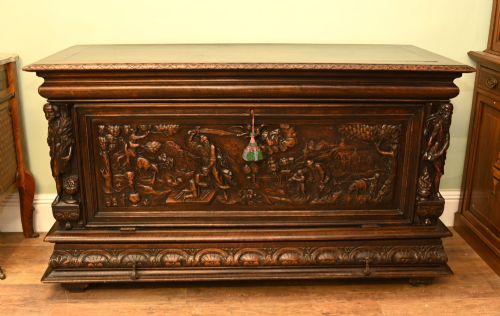
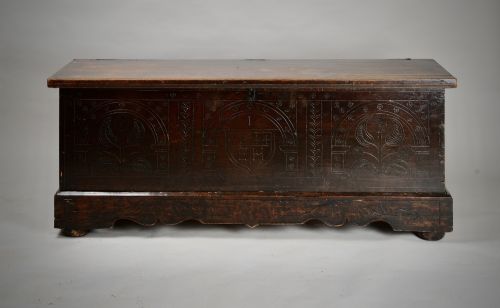
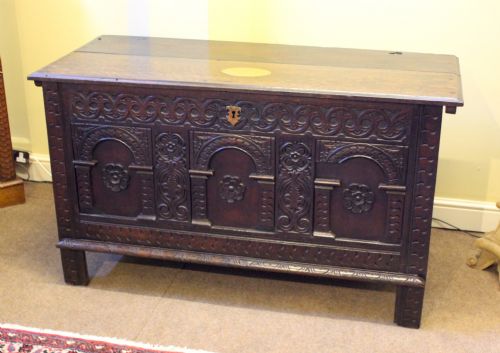
An oak marriage trunk serves as a substantial storage container for domestic goods, often commissioned for unions or dowries across different regions. When you search for an oak marriage trunk, you encounter forms that span from the seventeenth century through to the nineteenth century, including coffers, mule chests, blanketing chests, and cassones.
The pieces on this page originate from English, continental, and Swedish makers, displaying styles from Jacobean and William III to Queen Anne and Italian Renaissance. You are most likely to meet seventeenth-century and eighteenth-century examples built from solid oak, sometimes featuring carved or inlaid decoration and painted surfaces.
How they were made
Makers constructed these trunks primarily from solid oak planks, frequently utilising traditional joinery methods suited to heavy timber. Wrought iron and brass hardware reinforce the structures, appearing in hinges, lock plates, and mounts.
Surface treatments vary from hand-carved panels and inlaid details to painted finishes, particularly on continental dome-top examples. Walnut also appears alongside the primary oak construction in certain continental pieces.
Oak Marriage Trunk Retail Price Guide 2026
Typical asking prices for oak marriage trunk among the pieces listed under this phrase on Sellingantiques today, from the lower quarter to the upper quarter. They describe what is for sale here now, not the wider market.
The listings span the 17th century, 18th century, and 19th century, featuring materials such as oak, walnut, iron, brass, and paint.
What varies in quality
The standard of carving and inlay distinguishes the visual ambition of a piece, ranging from simple boarded surfaces to elaborate figural or geometric ornamentation. The choice of secondary timbers and the integrity of the original iron or brass hardware further define the caliber of construction.
Regional execution dictates the character of the design, with seventeenth-century English work differing markedly from Italian cassones or Swedish painted coffers. The survival of original painted finishes or early surface patination elevates the distinction of a trunk.
The Oak Marriage Trunk Glossary
- Cassone
- A traditional Italian chest or coffer, often highly decorated, used for storage in wealthy households. These pieces frequently served as marriage chests during the Renaissance and later periods.
- Mule chest
- A storage chest that incorporates one or more drawers beneath the main lift-top compartment. This form emerged in the seventeenth and eighteenth centuries to provide more accessible storage than a standard coffer.
- Coffer
- A heavy wooden box with a hinged lid used for storing valuables, linen, or documents. They represent the foundational form from which many later trunk designs evolved.
- Dome top
- A curved lid construction seen on specific continental and English trunks. This shape assists with water runoff and provides increased interior capacity.
Oak Marriage Trunk: Frequently Asked Questions
What is an oak marriage trunk?
An oak marriage trunk is a heavy timber storage chest traditionally commissioned to hold household goods or a dowry for a wedding. These pieces were built to last and often feature carved details or initials associated with the union.
They appear in various regional styles, including English mule chests and continental cassones, spanning multiple centuries of woodworking tradition.
How were marriage trunks used?
Historically, families used these trunks to store valuable textiles, linens, and clothing brought to a marriage. The sturdy construction and lockable lids protected contents from pests, moisture, and theft.
Over time, they transitioned from utilitarian storage to decorative furniture displayed within the home.
How do I date an oak trunk?
Dating relies on observing construction techniques, joinery methods, hardware types, and stylistic motifs. Seventeenth-century pieces typically show pegged frame-and-panel construction and Jacobean carving.
Later eighteenth and nineteenth-century examples may incorporate dovetail joints, drawers, or painted decoration that reflect the prevailing aesthetic of their era.
Where were these trunks made?
These trunks originated across England, Italy, Sweden, and other continental regions. Each area developed distinct regional variations in proportion, carving styles, and decorative finishes.
English examples often favour plain or carved oak, whereas Italian cassones and Swedish coffers frequently display painted surfaces or walnut elements.
How do I care for antique oak?
Care for antique oak involves maintaining stable indoor humidity and temperature to prevent the timber from splitting. Dust the surface regularly with a soft, dry cloth rather than using liquid polishes or silicone sprays.
Keep the trunk away from direct heat sources and strong sunlight to preserve the natural finish and patination.