





Oak Marble Side Tables
These oak marble side tables combine heavy timber frames with cool stone surfaces, offering robust utility and striking contrast for any room.
Oak Marble Side Tables
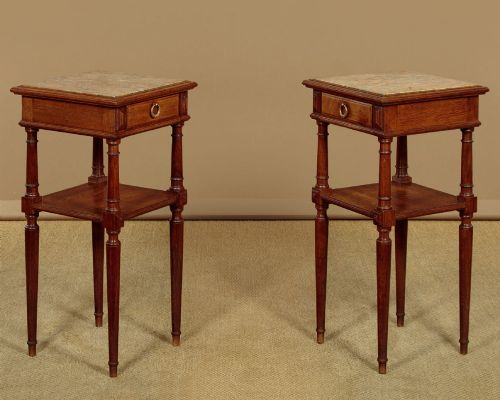
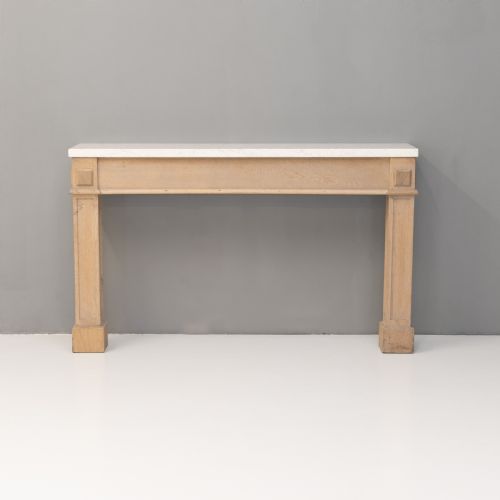
When you search for oak marble side tables, you encounter a varied selection of functional furniture that pairs sturdy wood with smooth stone surfaces. These pieces range from compact bedside cabinets and washstands to grand console tables and serving tables.
The versions most commonly met on this page span several distinct periods, notably the nineteenth century, Victorian era, and nineteen hundred. Makers utilised the durability of oak to support heavy stone slabs, creating practical surfaces for everyday use in domestic interiors.
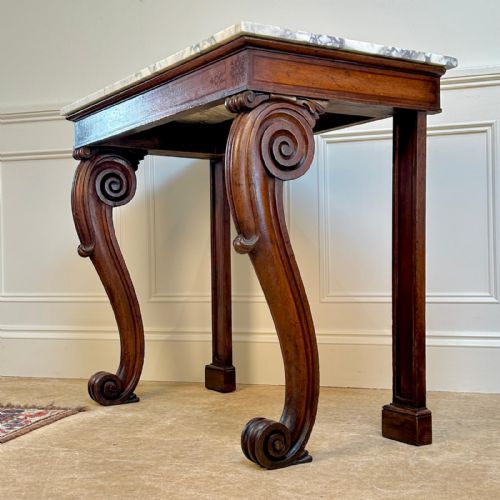
Styles fluctuate considerably across the inventory, drawing on Regency, French Provincial, Arts and Crafts, and French Art Deco design influences. Alongside standard side tables, related forms like etageres, buffets, and occasional tables appear with stone tops.
Materials and construction
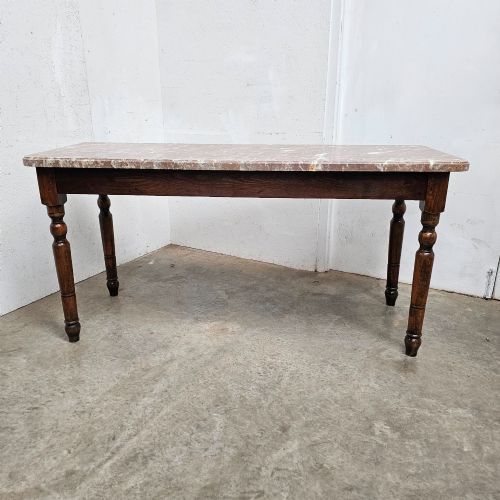
Carpenters built the structural frames primarily from solid oak, sometimes employing pine or ebonised wood for secondary elements. Surfaces often featured hand-carved details, column supports, or turned legs depending on the regional workshop tradition.
The defining characteristic remains the heavy top, which utilises various forms of stone including standard marble, Derbyshire fossil marble, granite, or onyx. Secondary materials such as brass fittings, ceramic elements, and cane work occasionally augment the primary timber and stone construction.
Oak Marble Side Tables Retail Price Guide 2026
Typical asking prices for oak marble side tables among the pieces listed under this phrase on Sellingantiques today, from the lower quarter to the upper quarter. They describe what is for sale here now, not the wider market.
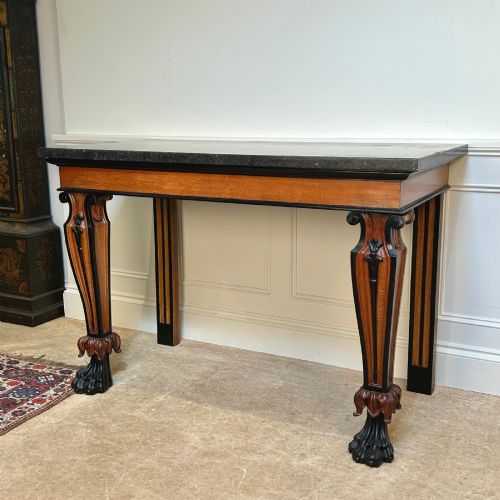
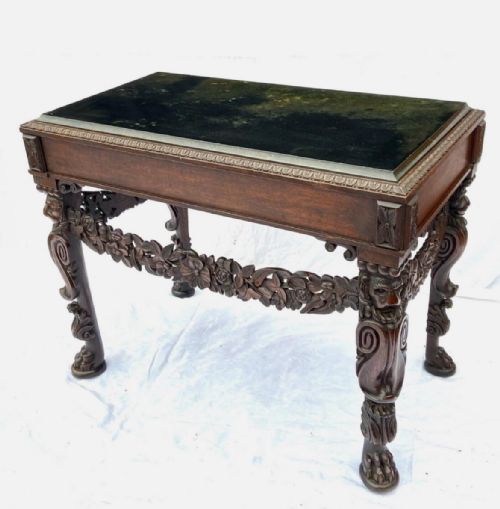
Several tables feature carved lion paws that look ready to grip the floor while holding up slabs of stone.
Assessing quality in construction
The standard of a piece rests heavily on the integration between the timber base and the heavy stone top. Finer examples display meticulous hand-carving on the oak frame, such as lion masks and paw feet, alongside tight joinery that supports the weight securely.
Stone selection also dictates the grade of the item, distinguishing basic marble slabs from specialised materials like specimen marble, Pietra Dura work, or original Derbyshire fossil marble. The harmony between the proportions of the wooden base and the thickness of the stone surface determines the overall balance.
KRIEGER of Paris
The Oak Marble Side Tables Glossary
- Console table
- A table designed to stand against a wall, frequently secured to the vertical surface or supported by elaborate front legs.
- Washstand
- A piece of bedroom furniture equipped with a stone top to withstand water splashes during washing routines.
- Pietra Dura
- An artistic technique using cut and fitted highly-polished coloured stones to create inlaid images on a table surface.
- Etagere
- A French open piece of furniture with multiple tiers or shelves for displaying small objects.
- Specimen marble
- A decorative surface composed of numerous different varieties of marble arranged in geometric or pictorial patterns.
Oak Marble Side Tables: Frequently Asked Questions
Where should I place a marble topped table?
These tables suit hallways, living rooms, and bedrooms where their durable stone surfaces withstand daily use.
They function effectively as serving surfaces, display areas for lamps, or bedside storage.
How do I clean an oak and marble table?
Wipe the stone surface with a damp cloth and mild soap, avoiding acidic cleaners that etch marble.
Treat the oak frame periodically with appropriate furniture wax to nourish the timber.
Are these tables heavy to move?
The combination of solid oak framing and dense stone tops makes these pieces substantially heavy.
Lift them carefully from the base rather than the top to protect the joints during relocation.
How can I tell Victorian pieces apart from earlier ones?
Victorian examples often incorporate eclectic revival styles, machine assistance in joinery, and varied stone inlays like Pietra Dura.
Earlier eighteenth-century and Regency pieces tend to show simpler hand-carved motifs and heavier proportions.