



Oak Library Seating
Oak library seating gathers heavy, timber-framed chairs built for reading rooms, studies and private libraries.
Oak Library Seating
When buyers search for oak library seating, they encounter sturdy wooden armchairs, desk chairs, and club seating designed for heavy reading spaces. The selection ranges from Victorian Gothic Revival heavyweights to early twentieth century swivel chairs and desk seats.
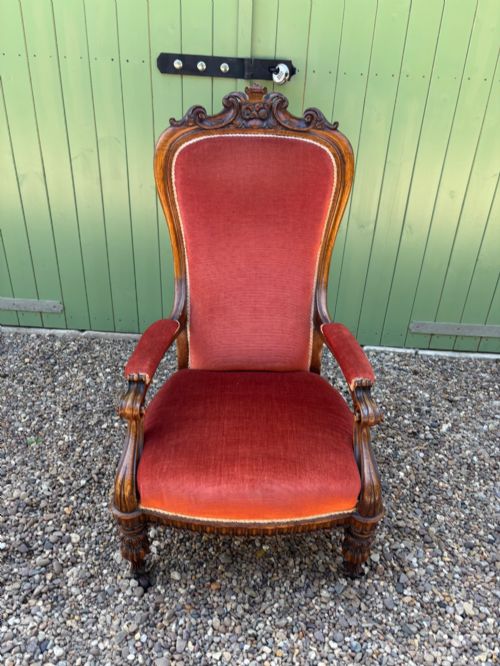
Most pieces date from the nineteenth century into the Edwardian era, spanning Victorian, Arts and Crafts, and revival styles. Forms include open armchairs, swivel desk chairs, and high-backed throne chairs carved from solid timber.
Materials and Construction
Makers built these chairs using solid oak, often complemented by golden oak or pollard oak frames joined with traditional methods. Beech and walnut also appear in specific desk chair frames.
Upholstery relies heavily on leather, embossed leather, woven leather, tan hide, and velvet, paired with brass studs, iron fittings, cane, and fabric. Structural support often includes buttoned cushioning and metal swivel mechanisms.
Craftsmanship and Proportion
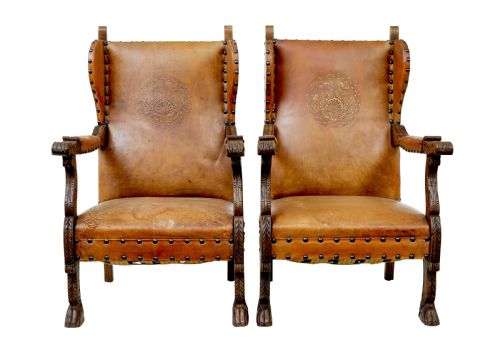
Quality rests upon the depth of the timber carving, the integrity of the joinery, and the proportions of the frame. Elaborate ornamentation, such as Green Man motifs, hand-carved hounds, and lions' heads, separates standard seating from exhibition pieces.
The grade of the leather upholstery and the retention of original swivel or adjustable height mechanisms also define the standing of a piece within the range.
Gillows·Bruce James Talbert·A W N Pugin·Charles Bevan
The Oak Library Seating Glossary
- Gothic Revival
- A nineteenth-century style drawing on medieval architectural motifs, pointed arches, and heavy carved tracery.
- Cockfighting chair
- A low, padded chair with a straddling seat and an upper rest for the arms or chest, historically used for watching seated events.
- Bergere
- An enclosed upholstered armchair with wooden frames and woven cane side panels.
- Club fender
- A low, padded perimeter seat built to fit around an open hearth, combining metal frames with leather cushions.
- Pollard oak
- Timber taken from trees that have been pruned close to the trunk, producing a dense grain with rich patterning.
Oak Library Seating: Frequently Asked Questions
What defines a proper library chair?
A library chair is built for prolonged reading, featuring a robust wooden frame and padded upholstery designed for sustained comfort. These seats often incorporate armrests and sturdy backs suited to private studies and institutional rooms.
Historically, they prioritized durability and support over decorative lightness, using dense timbers like oak to withstand daily use in formal rooms.
How do I identify Gothic Revival pieces?
Gothic Revival seating stands out through architectural details such as pointed arches, quatrefoils, and heavy linenfold or figural carvings. These pieces frequently display motifs like hounds, lions' heads, or Green Man masks.
The style draws directly on medieval stone and wood ornamentation, translated into domestic oak furniture during the nineteenth century.
Are desk chairs adjustable?
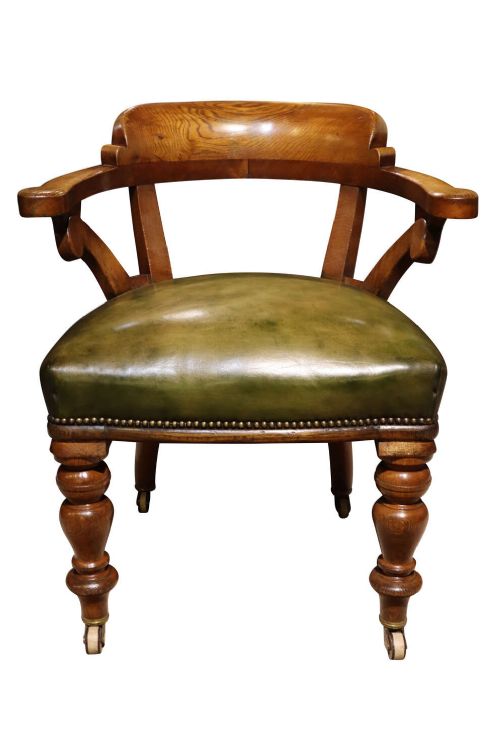
Certain nineteenth and early twentieth century desk chairs feature mechanical height adjustment and swivel bases. These examples use metal spindles and iron mechanisms hidden beneath the wooden seat.
Not all antique desk chairs swivel, as many retain fixed four-leg or cross-frame bases designed for stability rather than rotation.
How should I care for leather upholstery?
Leather upholstery requires regular dusting and occasional treatment with suitable conservation balms to prevent drying and cracking. Maintaining stable humidity levels in the room protects both the hide and the underlying oak frame.
Avoiding direct sunlight preserves the original colour and prevents the leather from becoming brittle over time.