


Oak Leaf Wall Mirror
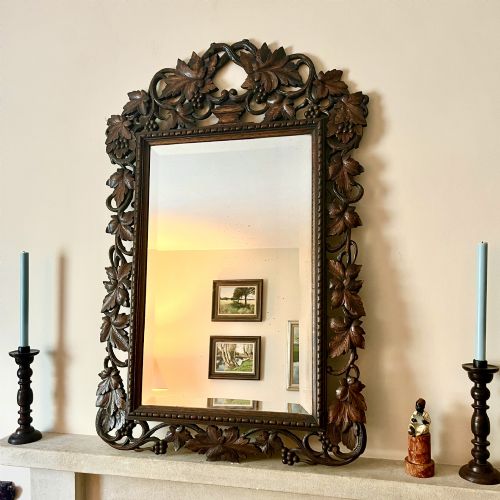
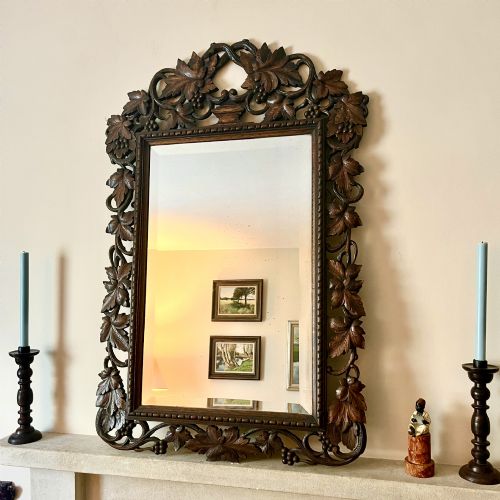
These carved oak leaf wall mirrors bring substance and botanical texture to a room, ranging from robust Victorian frames to ornate Black Forest and Rococo revival carvings.
Oak Leaf Wall Mirror
An oak leaf wall mirror is a framed looking glass built primarily from solid oak or carved wood, frequently embellished with gesso and gold leaf. When you search this phrase, you encounter heavy wooden frames defined by naturalistic foliage, deep relief carving, and architectural cushion profiles.
The examples available here stretch across the nineteenth and early twentieth centuries, spanning Victorian, Edwardian, and Baroque Revival styles. You will find French Rococo revival pieces alongside Black Forest works and seventeenth-century Continental interpretations.
How they were made
Cabinetmakers constructed these frames using seasoned oak, carving leaves, acorns, and scrolling motifs directly into the timber. Many pieces combine carved wood with applied gesso details to achieve sharp, high-relief botanical definition.
Gilding and gold leaf were often applied over gesso grounds to highlight specific ornamental areas, whilst other mirrors rely on the rich, dark grain of polished oak and carved wood alone.
Listings for this phrase feature pieces from the eighteenth, nineteenth, and early twentieth centuries, utilising oak, gesso, and mirror glass.
What varies in quality
Quality rests entirely in the depth and crispness of the carving, distinguishing fluid, hand-tooled leaf work from mechanical mass production. Superior frames display undercut foliage and confident asymmetry that brings the naturalistic subject to life.
The integration of the mirror glass matters deeply, as bevelled edges and original silvering indicate higher-tier craftsmanship. The weight of the timber and the architectural integrity of the cushion or rebate frame further separate ordinary pieces from masterworks.
The Oak Leaf Wall Mirror Glossary
- Gesso
- A plaster-based mixture painted onto wood to provide a smooth surface for gilding. It allows craftsmen to model intricate low-relief details before applying gold leaf.
- Cushion frame
- A convex, outwardly curving frame profile popular in seventeenth-century and revival mirrors. This shape catches light across its curved wooden surface.
- Black Forest
- A regional style of woodwork originating in Switzerland and Germany known for deep, naturalistic carvings of animals and foliage. These pieces often feature highly dimensional oak leaves and branches.
- Rococo Revival
- A nineteenth-century design movement resurrecting eighteenth-century asymmetrical scrollwork and organic motifs. It heavily influences the swirling foliage found on these frames.
- Bevel edge
- An angled slope ground around the perimeter of the mirror glass. This treatment catches light and adds depth to the reflection.
Oak Leaf Wall Mirror: Frequently Asked Questions
Are these mirrors genuinely antique?
The pieces listed span from the eighteenth century through the Victorian and Edwardian eras, utilising period materials like mirror glass and seasoned oak. Stylistic markers such as hand-carved grain and period gesso confirm their age.
Revival pieces from the nineteenth century specifically emulate earlier Baroque and Rococo aesthetics while maintaining genuine antique status in their own right.
How should I clean the carved oak frame?
Dust the deep recesses of the oak leaves gently using a soft, dry brush to prevent dirt accumulation. Avoid applying liquid cleaners directly to the carved wood or gilded surfaces.
If the wood requires conditioning, use a micro-amount of high-grade beeswax applied with care. Keep moisture away from the mirror plate edges to prevent silver degradation.
What rooms suit an oak leaf mirror?
The substantial presence of carved oak suits entrance halls, dining rooms, and libraries where rich wood tones dominate. Their botanical motifs complement traditional interiors and natural materials.
A large cushion frame also functions effectively above a fireplace mantelpiece, reflecting light while anchoring the vertical space of the chimney breast.