



Oak Kitchen Buffet
An oak kitchen buffet anchors a room with timber grain and honest storage, built for centuries of daily domestic use.
Oak Kitchen Buffet
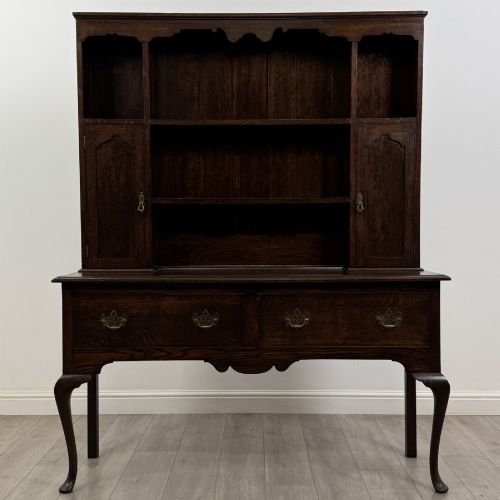
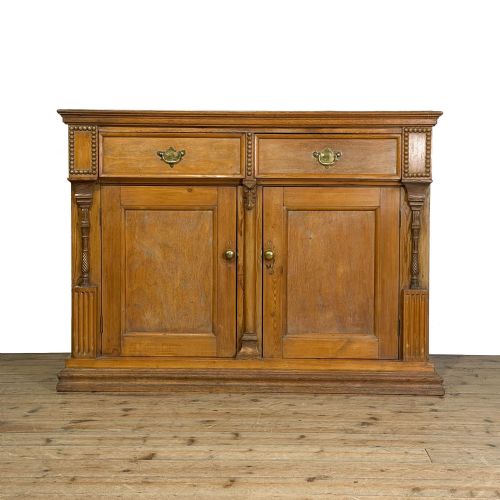
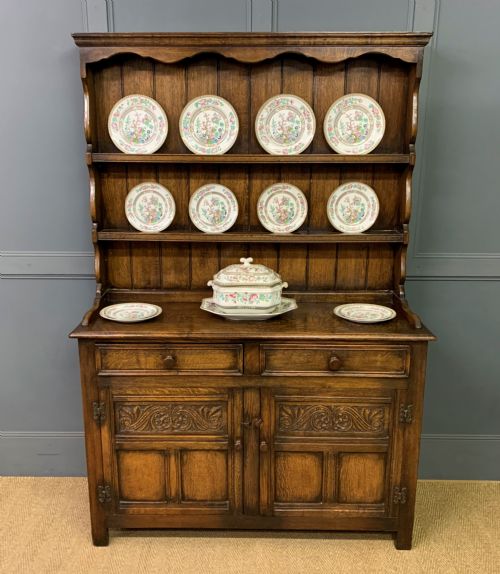
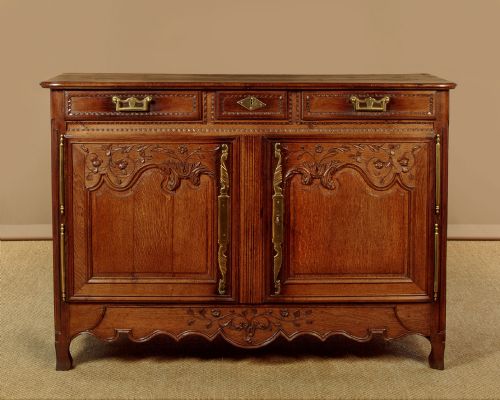
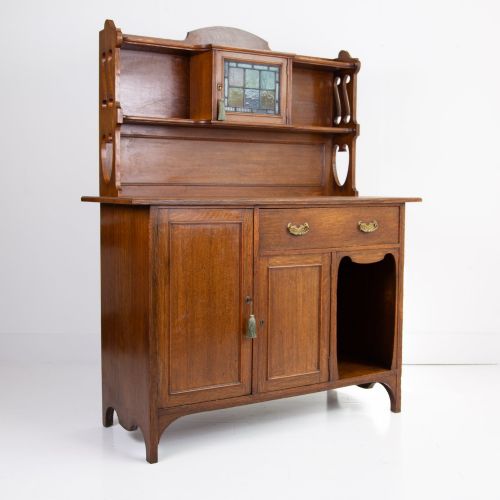
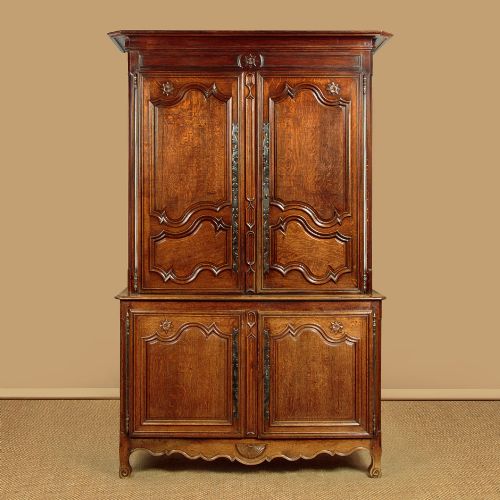
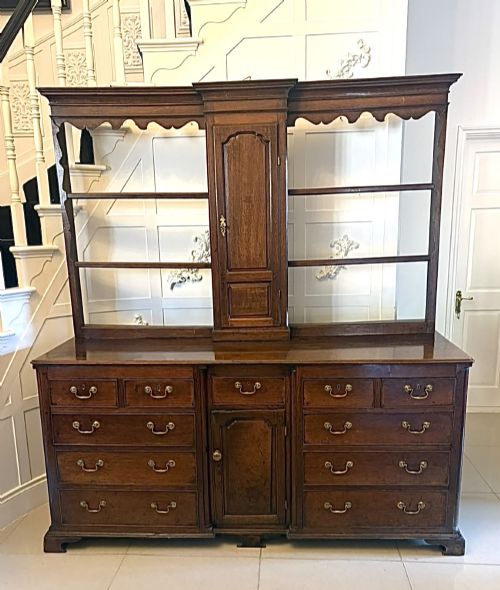
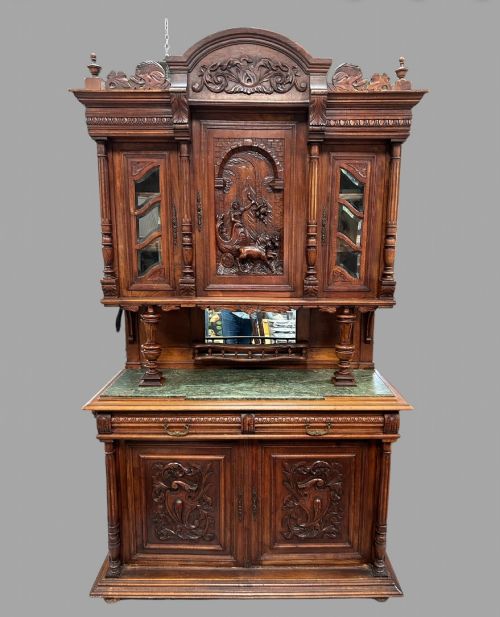
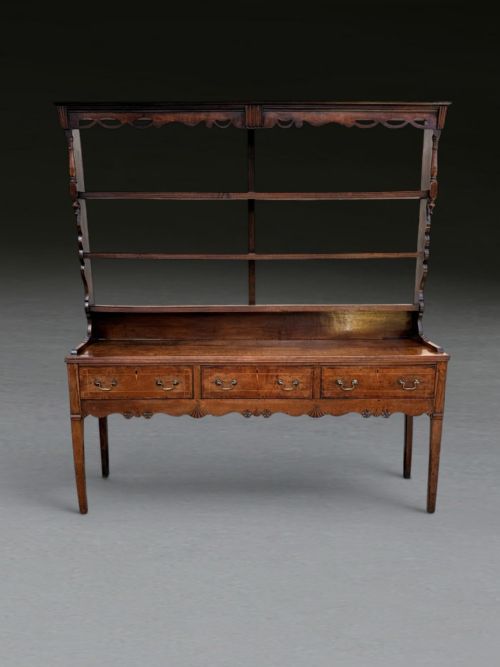
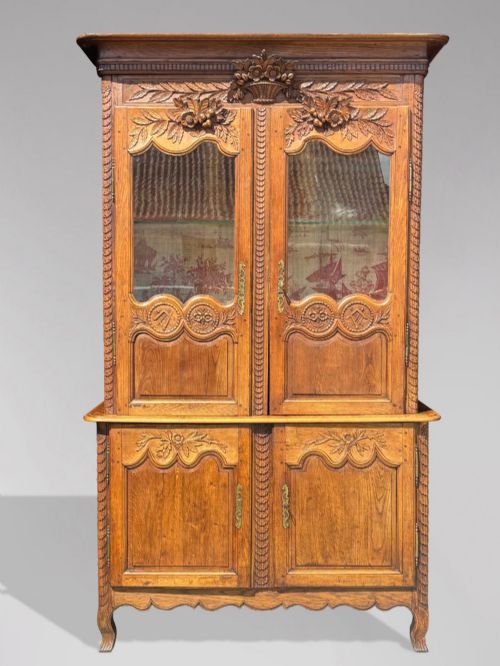
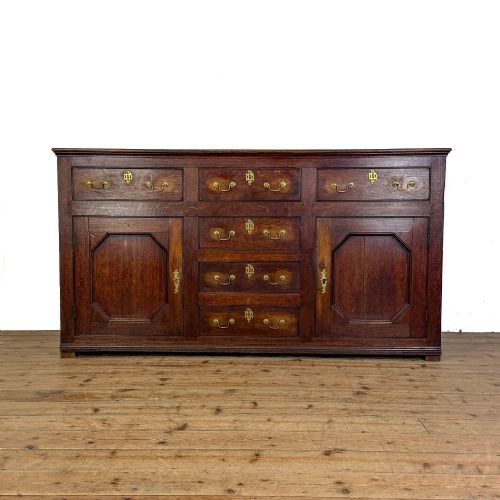
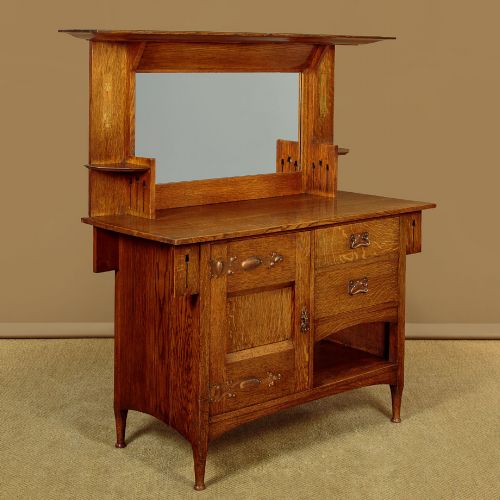
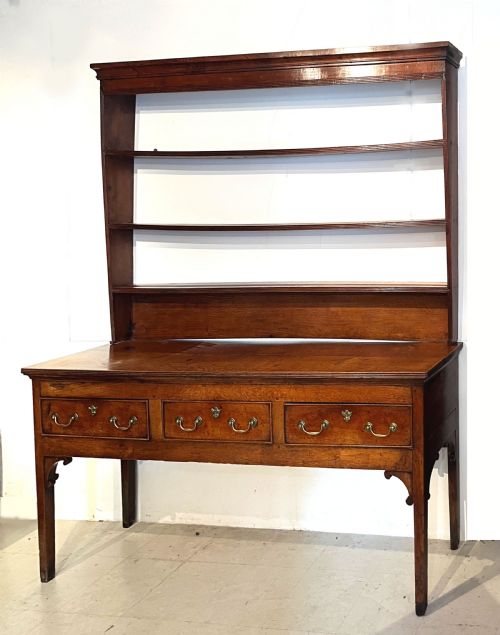
An oak kitchen buffet serves as a heavy-duty storage hub, combining lower cupboards or drawers with upper display shelving or enclosed upper cabinets. When searching for an oak kitchen buffet, buyers encounter diverse forms ranging from eighteenth-century Welsh dressers and two-part buffet deux corps to Edwardian Arts and Crafts cabinets.
The pieces on this page span several stylistic traditions, including Georgian country pieces, French provincial designs, and later Jacobean revival interpretations. Lower bases often feature pot boards, breakfront drawers, or simple sideboards equipped with brass hardware.
Origins stretch across English and French workshops, utilising regional vernacular forms like the low sacristy cabinet or the towering housekeeper's cupboard. Buyers most frequently meet vernacular dressers and sideboard cupboards constructed for utilitarian service in traditional kitchens.
Assessing quality in construction and material
Timber selection dictates the baseline of quality, separating dense quartersawn oak boards with distinct medullary rays from plain flat-sawn replacements. The integrity of the original plate rack relative to the base determines whether a two-part piece retains its historical unity.
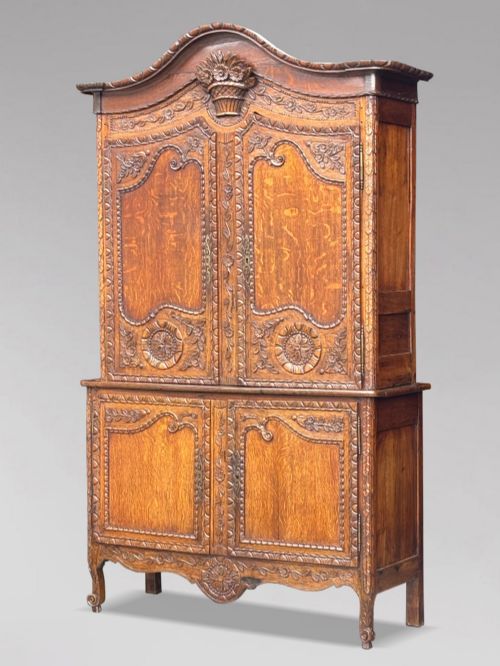
Carved enrichment varies from crisp, deeply undercut geometric motifs executed by skilled hands to shallower, mechanical later revivals. Original brass hardware, untampered hinges, and untouched surface patinas elevate a piece far above examples subjected to modern stripping or extensive timber replacement.
Oak Kitchen Buffet Retail Price Guide 2026
Typical asking prices for oak kitchen buffet among the pieces listed under this phrase on Sellingantiques today, from the lower quarter to the upper quarter. They describe what is for sale here now, not the wider market.
The inventory includes regional forms such as Welsh dressers, French provincial buffet deux corps, and Arts and Crafts cabinets.
The Oak Kitchen Buffet Glossary
- Buffet deux corps
- A tall two-part cupboard originating in France, featuring a lower sideboard base beneath an upper enclosed cabinet. This form provides substantial vertical storage for household provisions.
- Pot board
- An open lower shelf built into a dresser base, traditionally designed to hold heavy pots and pans. It stabilizes the legs while offering accessible floor-level storage.
- Plate rack
- The upper open-shelved superstructure attached to a dresser base, featuring grooved plate rails and small hooks. It displays ceramic tableware securely against the wall.
- Breakfront
- A cabinet design where the central section projects forward from the flanking outer cupboards. This configuration adds architectural depth and varied storage capacity to the facade.
- Quarter-sawn
- Timber cut radially across the growth rings, producing stable boards with decorative figure lines. Cabinet makers prize this cut for minimising warping in large panels.
Oak Kitchen Buffet: Frequently Asked Questions
What is an oak kitchen buffet used for?
These pieces serve as multi-functional storage and display units for tableware, linens, and provisions. Lower cupboards conceal bulky cookware while upper shelves or racks showcase ceramics.
Historically, they functioned as the central working hub of a domestic kitchen or dining space. Modern homes utilise them in kitchens and dining rooms for similar storage and display purposes.
How do I distinguish eighteenth-century pieces?
Eighteenth-century examples display hand-cut joinery, pegged tenons, and distinct timber shrinkage patterns around the panels. Hardware holes often show historical repositioning from early drop handles.
Later revivals from the Victorian and Edwardian eras feature more uniform machine-sawn components and standardised drawer linings. Examining the interior timber and nail types helps clarify the manufacturing period.
Are plate racks original to the base?
Many dressers survived with their upper racks intact, though some combinations represent later marriages of separate components. Matching timber species, wear patterns, and mounting marks indicate an original pairing.
Buyers should inspect the joint attachments where the rack meets the baseboard for consistency. A unified colour and patina across both sections generally confirms they belong together.
How do I care for antique oak furniture?
Maintain the timber by applying traditional beeswax periodically to nourish the dry wood fibres. Avoid placing these pieces near direct heat sources or strong sunlight to prevent timber splitting.
Clean surfaces gently with a soft, dry cloth rather than modern chemical polishes. Preserving the natural wax buildup protects the historic patina accumulated over centuries.