




Oak Index Cabinet
An oak index cabinet is a sturdy piece of period office furniture designed to organise records, which brings practical compartmentalised storage into a modern home.
Oak Index Cabinet
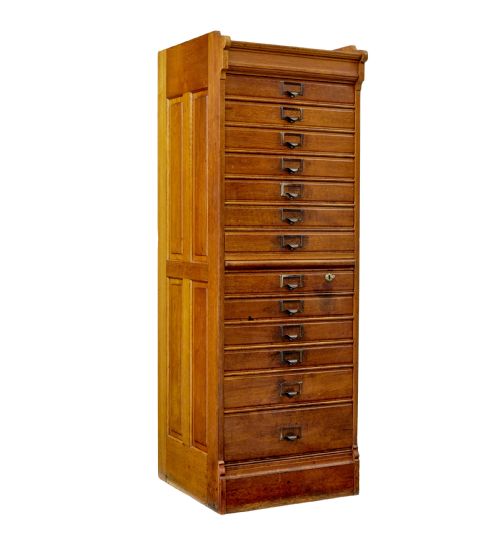
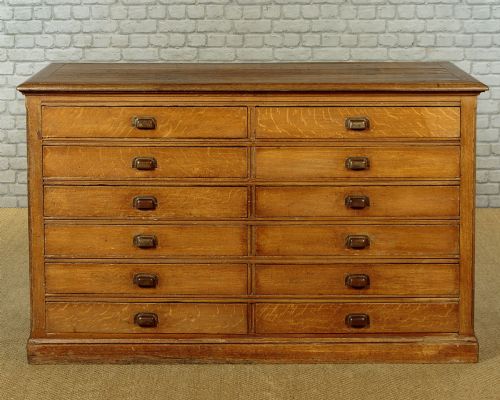
When you search for an oak index cabinet, you are looking at utilitarian office furniture built to hold correspondence, cards, and reference files. These units originate primarily from the late Victorian period, the Edwardian era, and through the 1920s and 1930s.
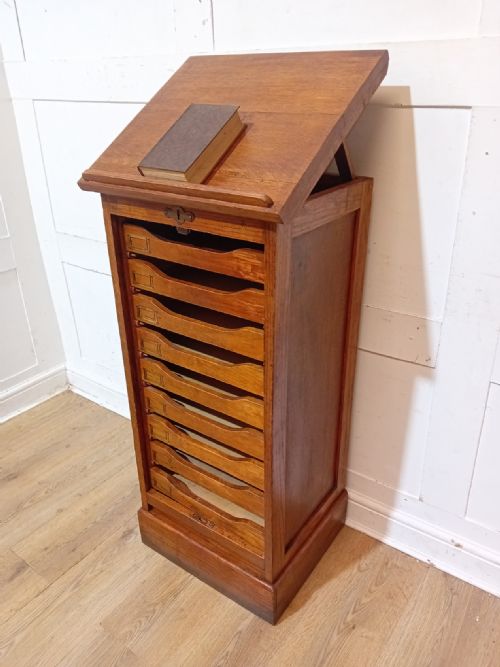
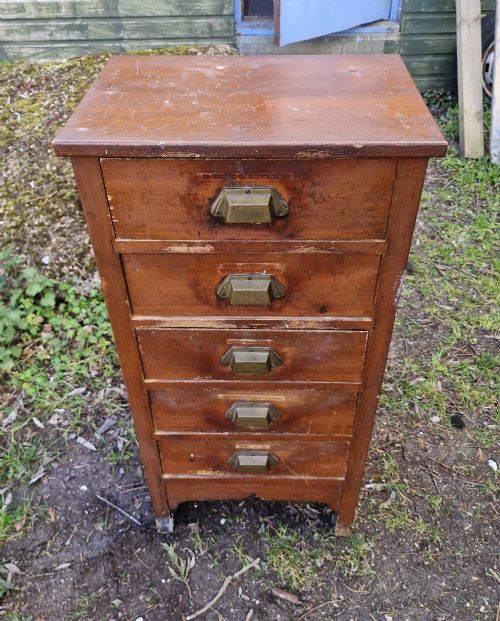
You will most commonly meet multi-drawer configurations on this page, ranging from compact desktop units to banks containing dozens of small drawers. Forms include patented letter files, tambour-front cabinets, and haberdashery-style chests designed for systematic organisation.
The materials reflect heavy commercial use, combining solid timber frames with functional metal hardware. They transition easily from corporate history to domestic spaces, functioning as storage units or repurposed side tables.
How they were made
Construction relies heavily on oak, frequently finished in golden or medium tones, paired with pine used for internal drawer carcases and secondary framing. Cabinet makers built these to withstand daily office wear using robust joinery.
Fittings are integral to the manufacture, featuring cast brass or metal handles, label holders, and specialised internal mechanisms such as patent letter filing systems or tambour roll-fronts.
Oak Index Cabinet Retail Price Guide 2026
Typical asking prices for oak index cabinet among the pieces listed under this phrase on Sellingantiques today, from the lower quarter to the upper quarter. They describe what is for sale here now, not the wider market.
Listings feature oak, brass, metal, and pine across Victorian, Edwardian, Art Deco, and industrial commercial periods.
What varies in quality
Quality reveals itself in the scale of the drawer banks and the complexity of the mechanism, where larger configurations with numerous matching drawers or patent systems command greater interest. The preservation of original hardware and matching label holders elevates the standard.
The choice of quarter-sawn oak displaying prominent medullary ray figuring separates standard utility pieces from finer examples. Solid construction throughout, including pine drawer linings without modern alterations, marks the better specimens.
Amberg·Shannon·Libraco
The Oak Index Cabinet Glossary
- Tambour
- A flexible shutter door formed of narrow strips of wood glued to canvas, allowing it to slide smoothly around a curved track to conceal the interior.
- Quarter-sawn
- A method of milling timber that highlights the growth rings and creates a distinctive decorative grain pattern often seen in quality period furniture.
- Medullary rays
- Natural ribbon-like flecks visible in oak timber, prized by cabinet makers for indicating superior sawing and material selection.
- Patent file
- A proprietary filing mechanism, such as those by Amberg or Shannon, designed to keep business correspondence securely sorted.
- Haberdashery cabinet
- A form of multi-drawer storage featuring shallow compartments originally intended for retail merchandise but widely utilised for collections.
Oak Index Cabinet: Frequently Asked Questions
How were oak index cabinets used originally?
These cabinets served in offices, libraries, and businesses to store correspondence, index cards, and records systematically. The numerous small drawers allowed clerks to retrieve specific documents quickly.
Over time, patented filing mechanisms were introduced to keep papers upright and ordered. They were built strictly for commercial utility rather than domestic display.
How do I date an oak index cabinet?
Dating relies on observing construction methods, hardware styles, and patent marks associated with the piece. Late Victorian and Edwardian examples often feature heavier mouldings and distinct brass pull handles.
Later 1920s and 1930s versions lean towards industrial utility and Art Deco influences with simpler lines. Maker plaques and patent dates stamped on the hardware also help pinpoint the era.
Can I use an index cabinet at home?
These cabinets adapt readily to modern domestic interiors for organising stationery, craft items, or small collections. Their modular appearance suits studies, hallways, and living rooms.
Larger banks of drawers are frequently repurposed into sideboards or coffee tables. The compartmentalised storage keeps household clutter concealed behind period timber.
What is golden oak?
Golden oak refers to a warm, honey-toned finish applied to oak furniture during the late nineteenth and early twentieth centuries. This finish accentuates the natural grain and figuring of the timber.
It became popular in commercial office furniture of the period. The tone deepens naturally with age and exposure to light.