
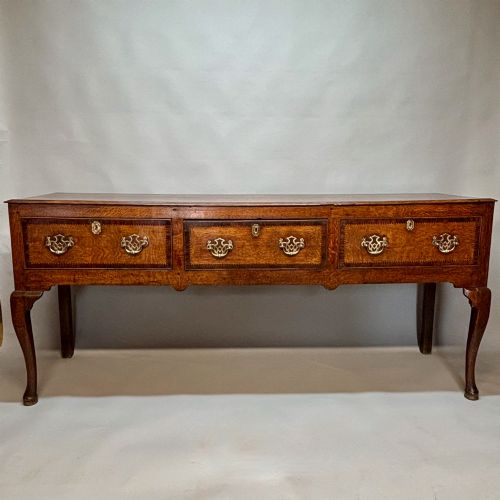
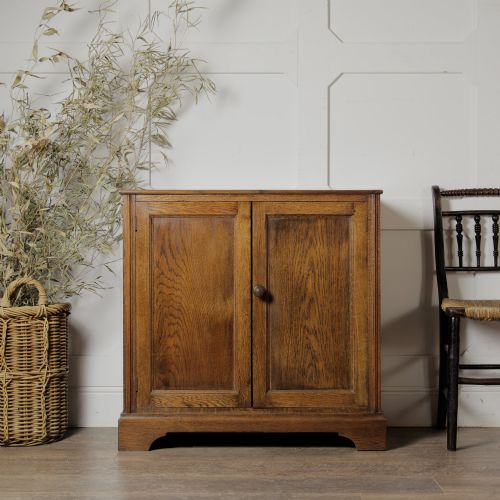
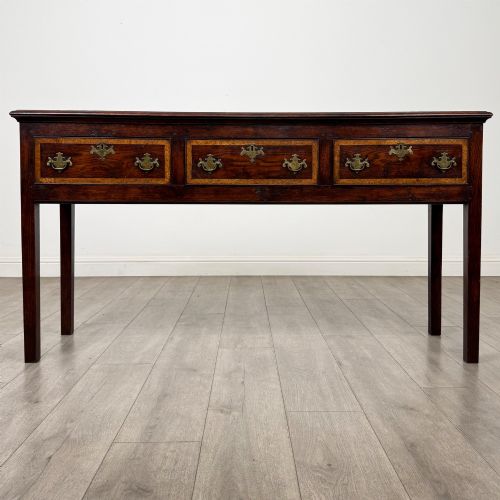
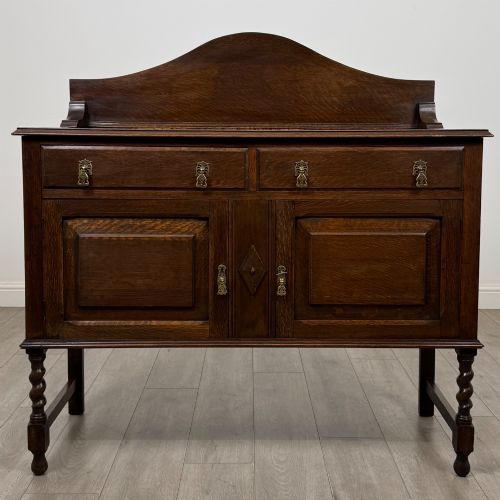
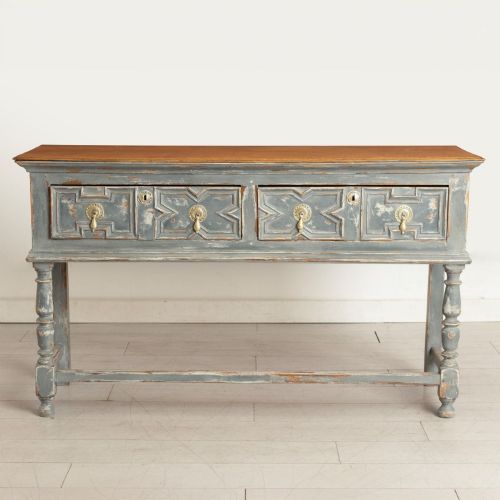
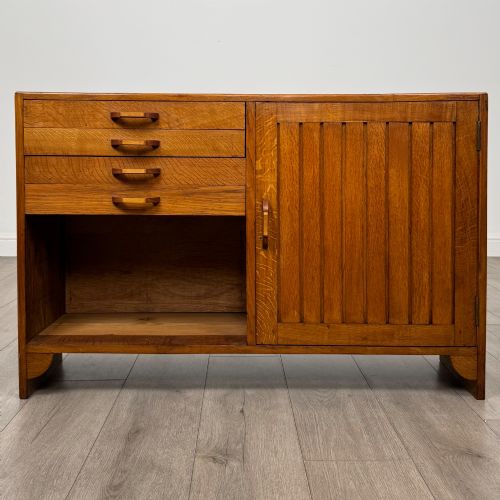
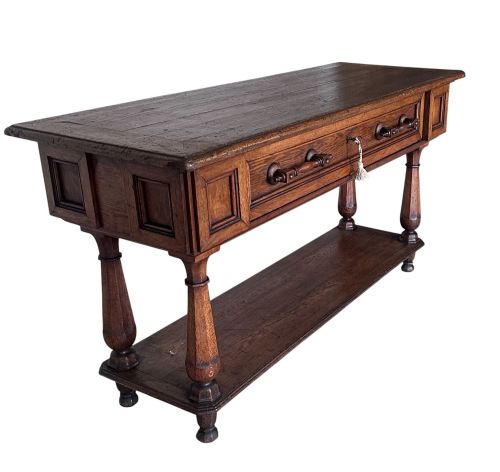
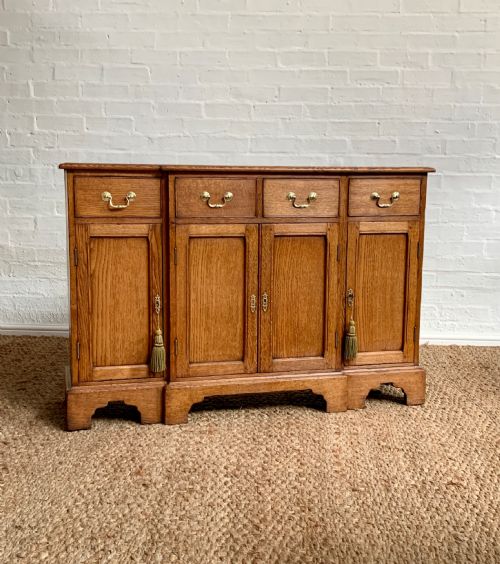
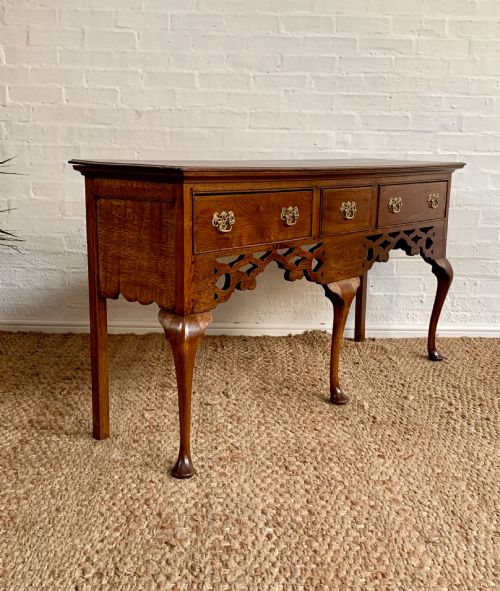
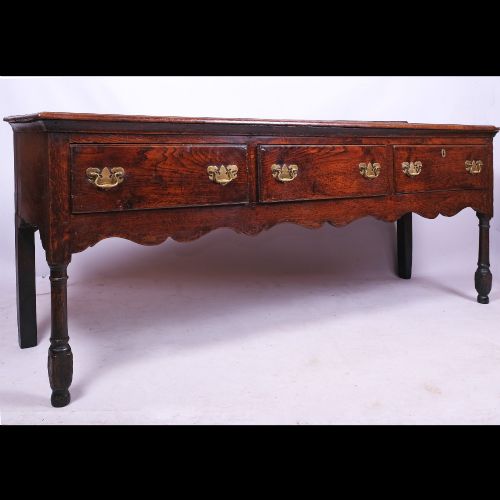
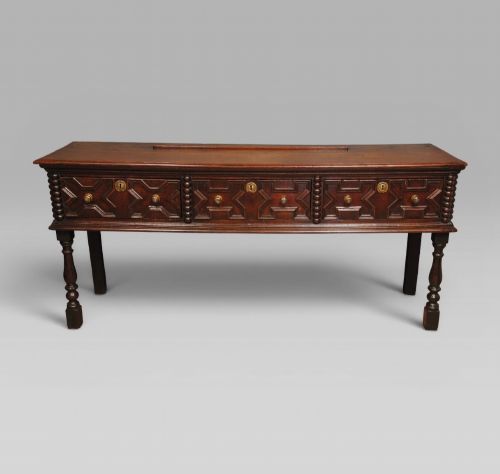
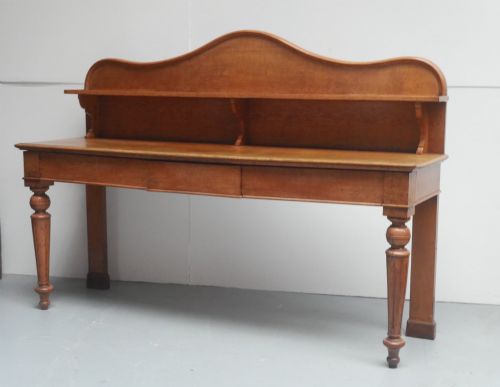
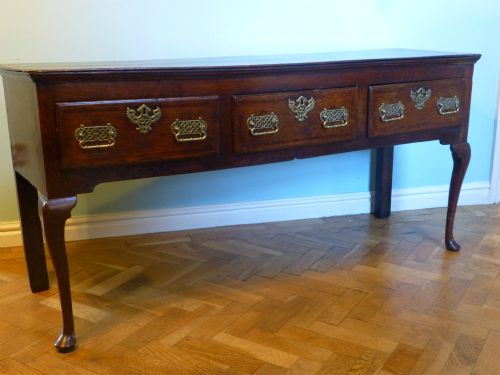
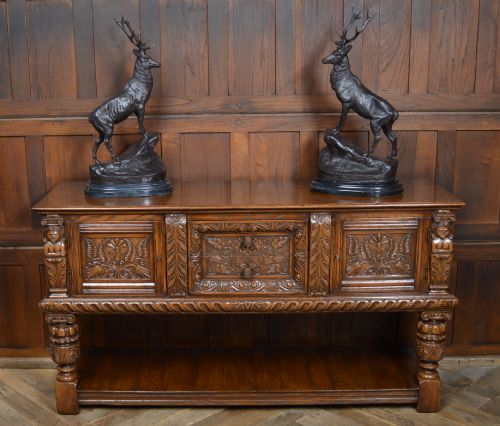


Oak Hallway Sideboard
These oak hallway sideboard selections bring practical timber storage and period character straight to an entranceway.
Oak Hallway Sideboard
An oak hallway sideboard serves as a practical surface and storage piece positioned near an entrance, often taking the form of a low dresser base, serving table, or narrow console. These items bridge formal dining furniture and functional corridor storage, providing surface space for daily items while keeping clutter concealed behind timber doors or within drawers.
Styles range across distinct eras, featuring Jacobean Revival twists, French provincial lines, Arts and Crafts restraint, and Victorian interpretations of earlier tastes. This variety allows an entranceway to carry either the austere dark timber aesthetic of earlier periods or the lighter golden tones typical of Edwardian and twentieth-century workshops.
Materials and construction methods
Solid oak provides the primary structural framework and visible surfaces across these listings, occasionally paired with secondary timbers like pine in drawer linings or backboards. Carpenters relied on traditional joinery methods, utilising pegged mortise and tenon joints for frames and hand-cut dovetails for drawer construction.
Hardware elements incorporate forged iron and cast brass for handles, hinges, and escutcheons, which secure operational doors and pull open deep drawers. Selected pieces display applied paint finishes or marble top slabs added to timber frames for enhanced utility and decorative contrast.
Listings feature oak items spanning from the seventeenth century through the Edwardian era, incorporating materials like brass, iron, marble, and pine.
Distinguishing quality across examples
Quality separates pieces through the crispness of hand-carved details, the tightness of structural joints, and the integrity of the timber's grain and colour. Superior examples display thoughtful proportions, balanced drawer alignments, and original hardware that matches the period of manufacture rather than later replacements.
The treatment of secondary woods and internal components also signals a higher standard of workshop production, where drawer bottoms remain undivided by modern plywood and rear panels show equal attention to timber selection. Surface patination achieved through decades of natural polishing distinguishes pieces that retain their original finish from those stripped or over-restored.
The Oak Hallway Sideboard Glossary
- Dresser base
- A low freestanding cabinet featuring a flat top surface above rows of drawers or cupboards, designed originally for serving food or storing household linens. They function exceptionally well in narrow corridors as alternative sideboards.
- Pot board
- An open lower shelf positioned near the floor between the legs of a dresser base, historically utilised for storing pots and heavy kitchen utensils. In a hallway context, this shelf provides visible display space for baskets or large ceramic vessels.
- Barley twist
- A type of woodturning shaped like a spiral or helix resembling twisted barley sugar, popular in seventeenth-century furniture and revived extensively during the Edwardian era. This decorative profile appears frequently on table and sideboard legs.
- Block front
- A cabinet front divided visually into three vertical sections, where the outer sections project slightly forward while the central section recedes. This sophisticated joinery technique creates pronounced shadow lines on early case pieces.
- Cabriole leg
- A furniture leg that curves outward at the knee and tapers inward toward the ankle, finishing in a pad, foot, or scroll. Originating from classical forms, this leg style brings a graceful silhouette to eighteenth-century serving tables.
Oak Hallway Sideboard: Frequently Asked Questions
How do I measure for a hallway sideboard?
Measure the available floor length along your corridor wall while leaving adequate clearance for doors to open and people to walk past comfortably. Account for the depth of the piece, particularly if drawer pulls or protruding cornices extend beyond the main frame.
Check the height of nearby light switches, baseboards, and radiators to ensure the sideboard sits flush against the wall without obstructing access points. Hallways require careful proportioning so the furniture aids movement rather than blocking natural pathways.
Will an antique sideboard fit narrow hallways?
Many dresser bases and console tables are specifically proportioned with shallow depths suited to corridors and entrance spaces. Compact Edwardian models and slim Arts and Crafts tables offer reduced footprints compared to dining room storage.
Review the specific dimensions listed for each item to confirm depth measurements against your corridor width. Smaller serving tables and low cupboards provide functional surface area without overwhelming confined architectural spaces.
How do I care for antique oak furniture?
Maintain oak surfaces by dusting regularly with a dry, soft cloth and applying a traditional beeswax polish sparingly to nourish the timber grain. Avoid placing wooden furniture near direct heat sources, radiators, or in strong sunlight to prevent warping and splitting.
Use protective coasters and felt pads beneath decorative items placed on the top surface to guard against moisture rings and scratches. Preserving the natural humidity of your home environment keeps ancient joints stable and secure.
How can I tell the period of an oak sideboard?
Examine the construction marks, tool traces on internal boards, and the specific style of hardware used to fasten doors and drawers. Hand-cut dovetails, pegged joints, and timber shrinkage patterns often indicate older seventeenth and eighteenth-century origins.
Compare stylistic cues such as carved mouldings, leg shapes, and wood tones against established design periods like Georgian or Edwardian. Regional variations, such as Welsh or French provincial builds, display distinctive regional woodworking traits that help pinpoint their origin.
What is the difference between a console table and a sideboard?
A console table is typically a narrow table designed to be fixed against a wall, frequently featuring open space beneath the top surface without enclosed cupboards. These pieces prioritise display surfaces and decorative legs over internal storage capacity.
A sideboard or dresser base incorporates enclosed storage in the form of drawers and lower cupboards, offering practical space to hide away clutter. While both sit neatly in hallways, sideboards provide significantly more enclosed volume for household items.