




Oak Gallery Desk
These oak gallery desk pieces combine sturdy timber with practical storage, offering a classic workspace that brings character and utility to any room.
Oak Gallery Desk
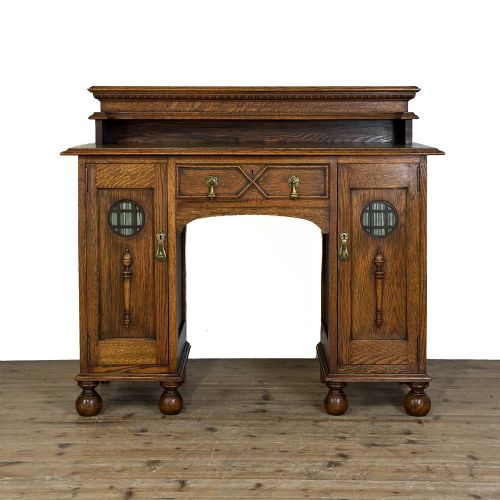
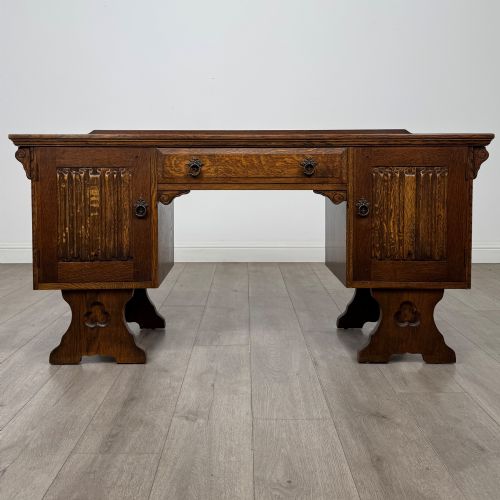
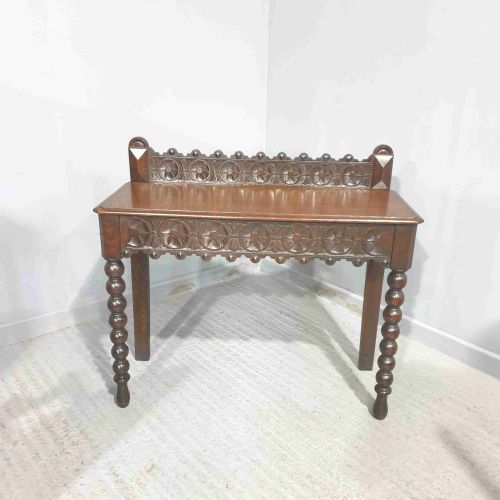
When you search for an oak gallery desk, you are looking at substantial writing furniture featuring a raised superstructure or stationery back along the top edge. The selection available spans various periods from the eighteenth century through to the Edwardian era, including Victorian Gothic interpretations and country house pieces.
You are most likely to meet Davenport desks, pedestal forms, and writing tables constructed primarily from solid oak or pollard oak. These items often incorporate associated pieces such as desk tidies, standishes, and hall tables that share the same distinctive timber and structural characteristics.
The styles range from plain utilitarian estate manager furniture to decorative Gothic Revival and George III designs with intricate crossbanding. Each example demonstrates how workspace organisation evolved to incorporate pigeonholes and small drawers within the upper gallery framework.
Materials and construction
Makers utilised solid oak alongside figured timbers such as pollard oak and burr maple for drawer linings, complemented by contrasting satinwood and kingwood crossbanding. This combination of robust structural wood and decorative veneers gave the furniture both durability and visual depth.
Metalwork played a functional role, with original brass handles securing the drawers and compartments of the desk bodies and stands. Glass and ebonised wood also appear in specific desk accessories, adding variety to the finishes achieved by the cabinetmakers.
Estate managers needed somewhere secure for the keys, so many Victorian oak desks feature surprisingly deep drawers for ledgers.
Assessing quality and execution
The distinction between standard utility items and finer examples lies in the selection of figured timbers like pollard oak and the precision of details such as satinwood or kingwood crossbanding. Superior cabinetmaking shows in the careful alignment of secondary woods inside the drawers and the integrity of the gallery superstructure.
The presence of original brass handles and intact interior fittings elevates a piece above those altered or stripped of their original hardware over time. Execution of carving, particularly in Victorian Gothic or revival styles, demonstrates the hand of a skilled workshop versus simpler commercial production.
Gillow & Co·Charles Bevan
The Oak Gallery Desk Glossary
- Gallery
- A raised wooden or metal framework running along the back or upper edges of a desk, designed to hold stationery and letters upright.
- Davenport desk
- A compact Victorian writing box form featuring a sloping hinged top above a bank of side drawers, often supported on front pillars.
- Standish
- A portable or stationary inkstand and desk tidy equipped with inkwells and pen recesses, frequently fashioned in oak with brass mounts.
- Crossbanding
- A narrow strip of veneer applied perpendicularly to the grain of the main surface, framing panels of satinwood or kingwood on quality desks.
- Kneehole desk
- A freestanding writing table with a central recess for the user's legs, flanked by pedestals containing banks of small drawers.
Oak Gallery Desk: Frequently Asked Questions
What is an oak gallery desk?
An oak gallery desk is a writing surface featuring a raised upper section of pigeonholes or small compartments designed to organise letters and papers.
These pieces range from compact Davenport forms to large pedestal desks and hall tables produced during the Victorian and Edwardian periods.
How were these desks used?
They served as private writing stations for correspondence, estate management, and household administration in period homes.
The upper gallery kept ink, pens, and stationery close at hand while leaving the main writing surface clear for documents.
How do I date an oak desk?
Dating relies on combining the structural style, such as George III or Gothic Revival, with the specific timber selection and secondary woods.
Evidence from nineteenth and early twentieth century examples shows shifts from plain country house utility to decorative crossbanding and carved detailing.
What timbers are used?
Construction primarily centres on solid oak, often paired with decorative pollard oak veneers for enhanced grain patterns.
Finer examples incorporate satinwood, kingwood, and burr maple within the interior compartments and crossbanded borders.