




Oak Framed Landscape Painting
An oak framed landscape painting brings a historical view onto the wall, enclosed in timber mouldings that suit the scene.
Oak Framed Landscape Painting
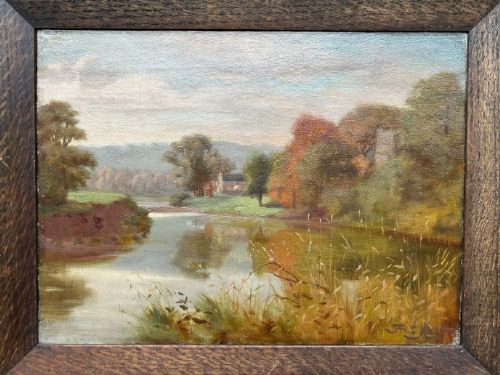
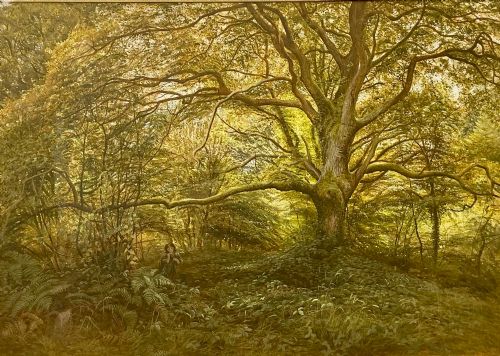
When you examine an oak framed landscape painting, you are looking at works executed across the eighteenth, nineteenth, and early twentieth centuries. These pieces encompass rural river scenes, pastoral views, woodland paths, and agricultural depictions framed in robust wood.
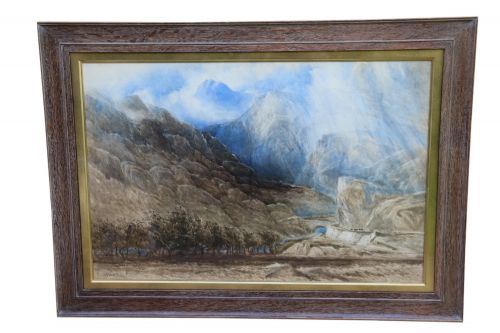
The most frequent version encountered here combines oil paint or watercolour on canvas, paper, or panel, secured within period oak surrounds. These physical components represent the standard pairing of subject and timber moulding found in British and European fine art traditions.
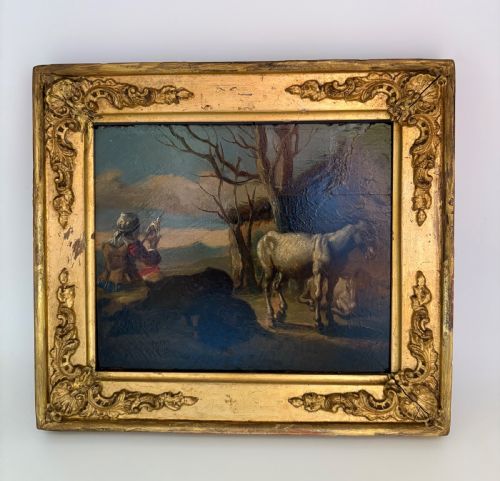
The scope extends from Georgian and Victorian naturalism to Edwardian pastoral views and naive folk art. Each example places the viewer before a historical countryside setting defined by the grain and colour of the surrounding oak.
How they were made
The physical construction of these works relies on traditional supports such as canvas, paper, wood panels, and occasional oil on paper. Painters applied oil paint, watercolour, and gouache using brushes to build up riverbanks, foliage, and skies.
The outer housings consist of wooden mouldings, predominantly oak, sometimes paired with gilt elements or inner slips. These frames protect the edges of the canvas or paper while providing a heavy structural border for wall display.
The selection includes British and continental landscapes spanning the Georgian, Victorian, and Edwardian eras.
What varies in quality
The distinction between tiers rests upon the sureness of the brushwork and the harmony between the art and its surround. Finer examples display confident handling of light in oil or watercolour, whereas simpler works lean towards naive execution.
The construction and age of the oak frame also influence the overall character. Hand-finished mouldings with appropriate patination elevate the visual weight of the landscape compared to plain replacement surrounds.
Frederick Marriott·Bonomi Edward Warren·Henry Martin Pope·Charles Gregory·Henry Charles Fox·Harry Wanless·John Constable·Philipp Peter Roos·John Atkinson·Andreas Schelfhout·Henry Birtles·Godfrey Douglas Giles
The Oak Framed Landscape Painting Glossary
- Oil paint
- Pigment mixed with drying oil, such as linseed, allowing for rich colour depth and textured application on canvas or panel. This medium dominates the nineteenth-century works recorded here.
- Watercolour
- Pigment suspended in a water-based solution, typically applied to paper to achieve translucent washes of colour. It forms the basis of many pastoral and topographical views.
- Gouache
- An opaque water-based medium that includes added white pigment for solid, matte coverage. Artists utilised this alongside watercolour to capture dense foliage and highlights.
- Panel
- A flat wooden support, such as oak, used by painters before canvas became standard. Panel works carry distinct physical stability compared to fabric supports.
- Gilt
- A thin layer of gold leaf applied to portions of the frame or inner slip. It accentuates the sight edge of the timber moulding.
Oak Framed Landscape Painting: Frequently Asked Questions
How do I hang an oak framed painting?
Secure a suitable wall hook into solid masonry or a timber stud to bear the weight of the timber moulding. Use traditional picture wire attached firmly to the frame back.
Position the centre of the artwork at average eye level to ensure proper viewing proportions within the room.
Are these paintings original works?
The inventory consists of hand-painted oils, watercolours, and gouache pieces rather than modern mechanical reproductions. Each surface records the direct touch of the artist's brush upon canvas, paper, or panel.
Signatures, artist attributions, and medium details confirm the individual creation date of every framed piece.
How should I care for an antique painting?
Keep the artwork away from direct sunlight and damp environments to protect both the paint surface and the oak frame. Stable indoor temperatures prevent the timber and canvas from warping.
Dust the frame gently with a dry, soft cloth and avoid applying liquid cleaners directly to the painted canvas or paper.
What periods do these landscapes come from?
The selection spans from the Georgian and Victorian eras through the late nineteenth century and into the early twentieth century. These periods cover distinct shifts in artistic style, from formal pastoral scenes to impressionistic and naive interpretations.
Framing styles frequently match the era of the painting, reflecting period woodworking and mounting techniques.