
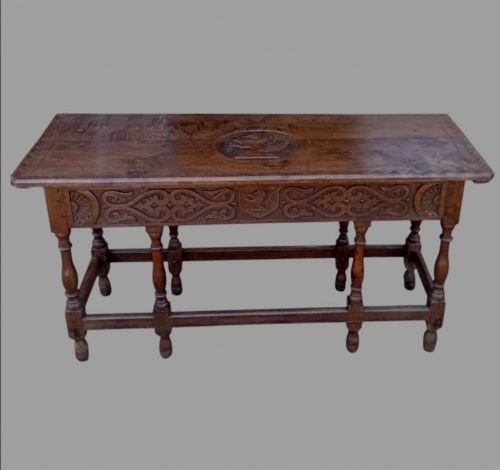
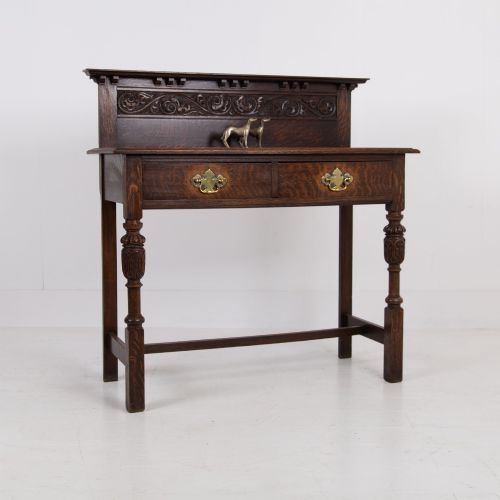


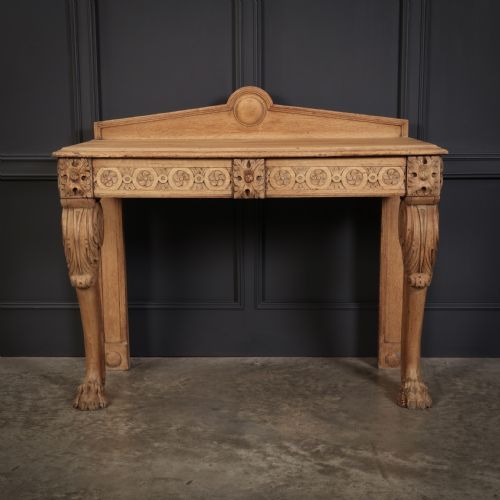
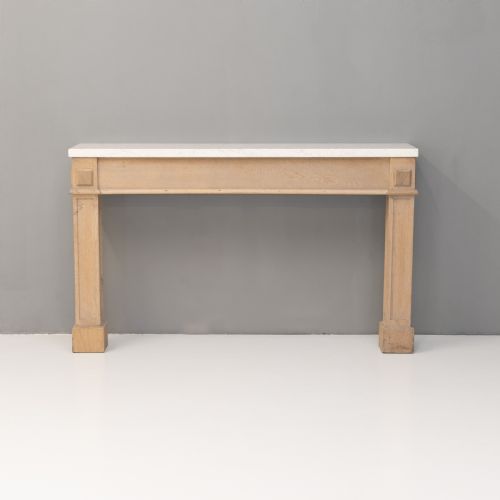


Oak Entryway Console Table
These oak entryway console table pieces offer practical surface space and period character for a hallway, built from durable timbers.
Oak Entryway Console Table
An oak entryway console table provides a narrow surface for a hallway or passage, often standing flat against a wall to save floor space. The selection here spans console tables, hall tables, hall stands, side tables, and small sideboards from various periods.
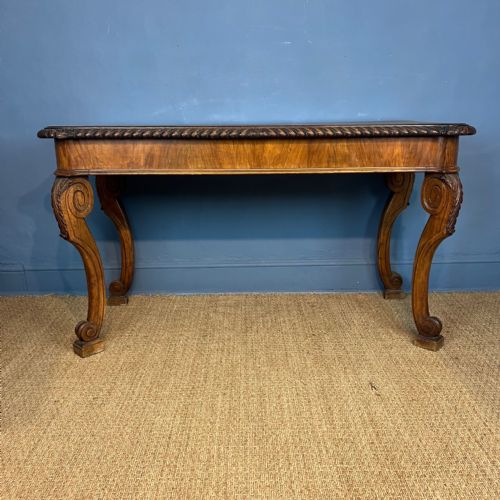
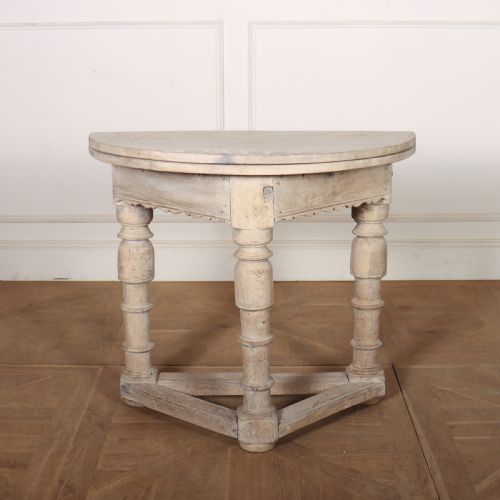
Most examples date from the nineteenth and early twentieth centuries, encompassing styles such as Jacobean Revival, Victorian, and Country House. These forms include two-drawer models, demi-lune shapes, and tiered tables designed specifically for narrow domestic spaces.
How they were made
Cabinetmakers utilised solid oak alongside complementary materials like brass hardware, marble tops, granite tops, and wrought iron supports. Surfaces frequently display hand carving, bobbin legs, or bleached finishes.
Construction methods range from traditional jointing on nineteenth-century country house tables to early twentieth-century production techniques. Certain pieces incorporate contrasting timbers such as walnut or giltwood detailing.
The listings feature oak as the primary material alongside brass, marble, granite, and walnut across nineteenth and early twentieth-century periods.
What varies in quality
The standard of carving and timber selection determines the distinction between standard utilitarian furniture and finer decorative works. Crisp detail in motifs like Green Man carvings or Gothic panels indicates skilled hand execution.
The integrity of secondary materials, such as fitted marble or granite inserts and original brass fittings, alters the overall character of each console. Proportions also vary, from small-scale pieces suited to tight corridors to substantial Regency formats.
The Oak Entryway Console Table Glossary
- Console table
- A table designed to stand against a wall, frequently fixed with brackets or supported by front legs. These pieces suit entrance halls and narrow passages.
- Demi-lune
- A half-moon shape used for console tables that sit flat against a wall. This profile reduces the furniture's projection into a hallway.
- Bobbin leg
- A turned furniture leg shaped to resemble a string of bobbins or spools. This decorative turning appears frequently on nineteenth-century hall tables.
- Bleached oak
- Oak timber treated to lighten its natural colour. This finish creates a pale, muted surface popular in nineteenth and twentieth-century designs.
- Green Man
- A sculptural motif depicting a human face disgorging foliage. This carved detail appears on nineteenth-century revival hall tables.
Oak Entryway Console Table: Frequently Asked Questions
Where should I place a console table?
These pieces fit naturally in entrance halls, corridors, and narrow reception spaces where floor space is limited. Their shallow depth allows them to sit against walls without obstructing passage.
They provide a convenient surface for post and keys upon entering the home. Paired mirrors or umbrella stands often complement them in traditional hall settings.
How do I identify a hall table's period?
Examine the timber finish, carving style, and construction methods used in the frame. Nineteenth-century examples often feature revival motifs like Jacobean carving or Victorian bobbin turning.
Twentieth-century pieces tend to show simpler lines or lighter bleached oak finishes. Comparing the hardware and secondary woods helps confirm the era of manufacture.
Are these tables suitable for small hallways?
Many examples are specifically proportioned as narrow hall tables or demi-lune shapes designed for compact spaces. Two-tier models and small drawer formats maximise storage without expanding the footprint.
Measuring the available corridor width before selection ensures adequate clearance for doors and movement. Low-profile designs prevent the hallway from feeling crowded.
What materials are used besides oak?
While oak forms the primary structure, makers incorporated brass for handles and hooks, and wrought iron for structural support. Marble and granite tops appear on specific continental and country house examples.
Some pieces integrate walnut veneers or giltwood details to provide decorative contrast. Bleached finishes and painted wood surfaces also alter the appearance of the timber.