

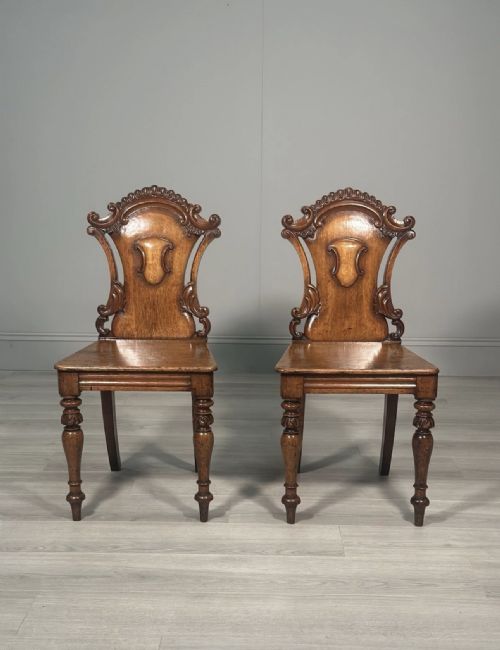


Oak Entryway Chairs
Oak entryway chairs offer sturdy historic seating for a hallway, bringing architectural presence and rich timber grain directly into a home.
Oak Entryway Chairs
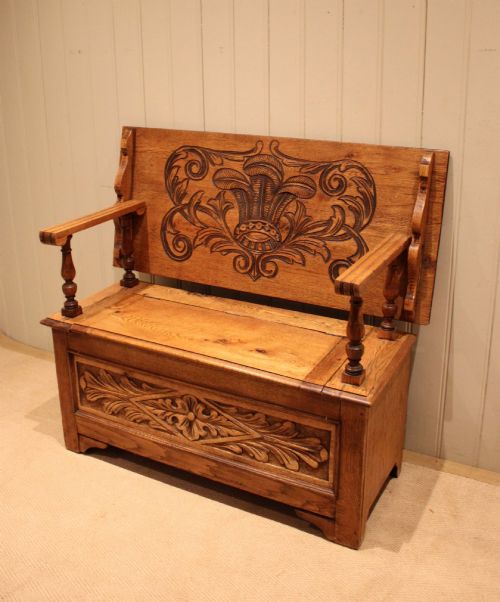
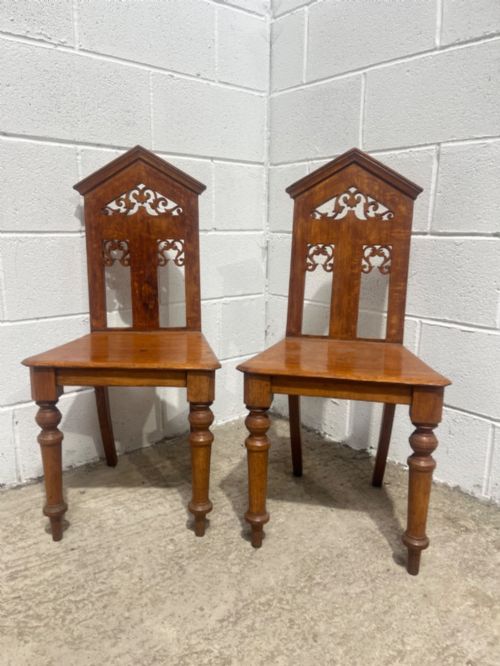
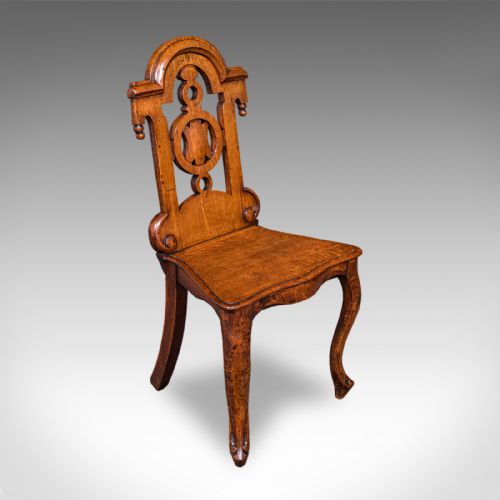
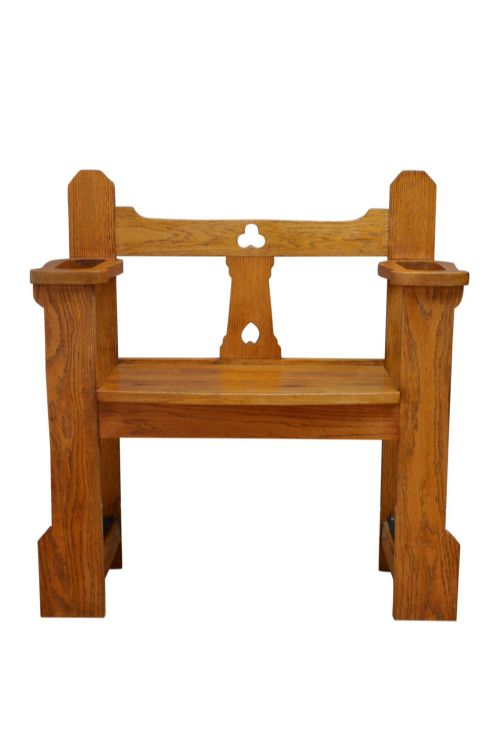
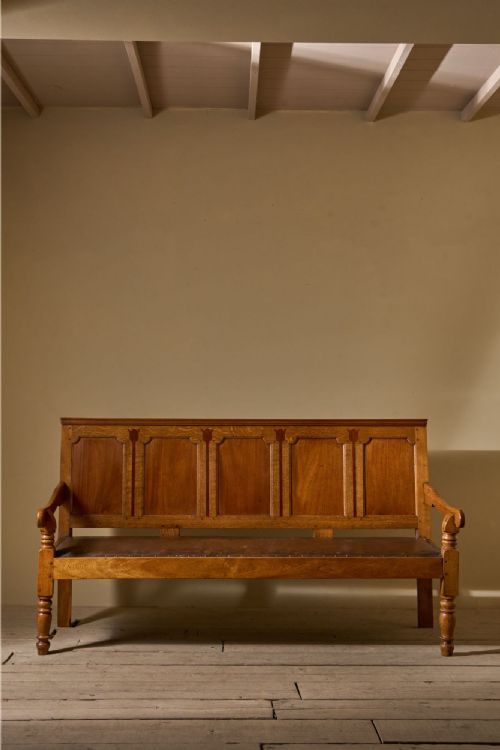
Oak entryway chairs encompass a variety of seating forms designed for transitional spaces, including single hall chairs, pairs, and compact benches with storage. The pieces span Georgian, Regency, and Victorian periods, alongside later Arts and Crafts and early twentieth-century examples.
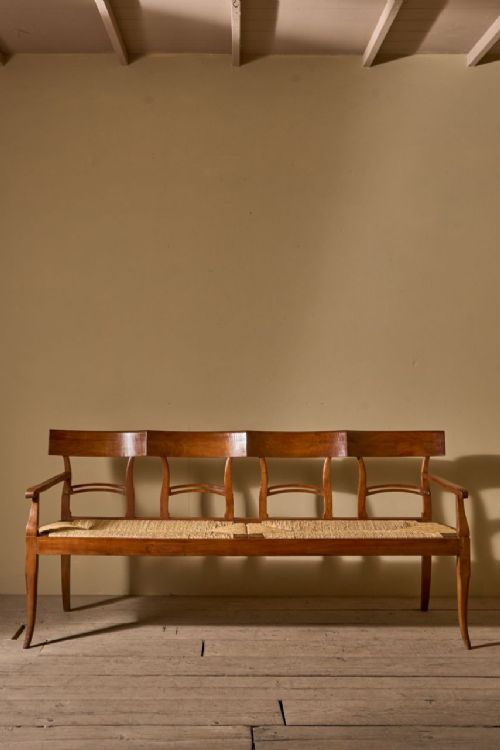
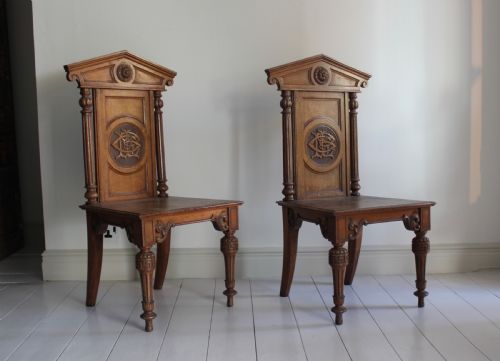
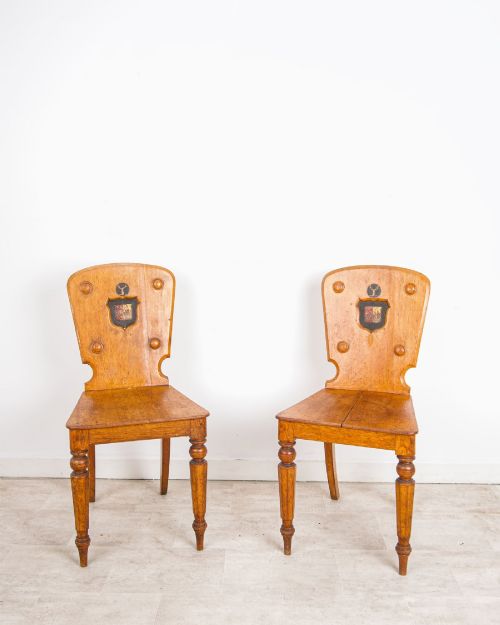
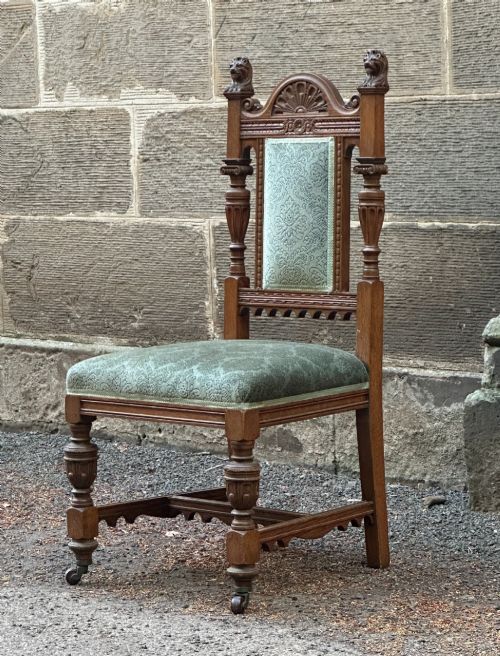
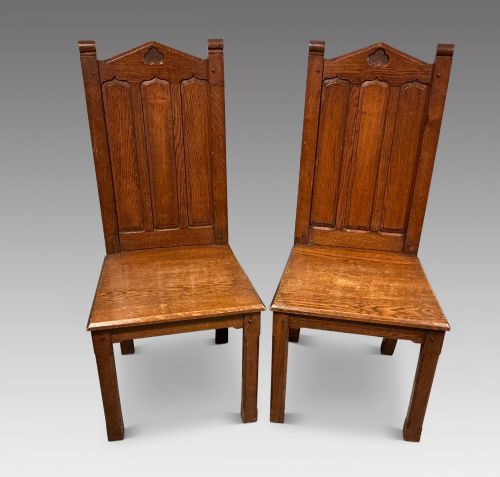
The most common formats found here are single hall chairs and pairs featuring carved wooden backs, alongside occasional benches incorporating rush or fabric seats. These pieces range from restrained eighteenth-century shield back designs to heavily carved Victorian Gothic Revival models.
Makers and regional workshops produced these seats primarily in solid oak, occasionally combining the timber with cherrywood, brass fittings, or leather upholstery. Their narrow proportions served the practical need of a hallway seat where space remained at a premium.
Judging quality
Quality rests in the crispness of the carved detail on the backrests and the structural integrity of the solid oak frame. Pieces with deeply pierced backs and balanced proportions demonstrate superior craftsmanship compared to simpler iterations.
Listings feature oak alongside cherrywood, brass, fabric, rush, and leather across Georgian, Regency, and Victorian periods.
Bruce Talbert·Gillows
The Oak Entryway Chairs Glossary
- Hall chair
- A rigid wooden seat traditionally placed in an entrance hall or corridor, often featuring a decorative carved back rather than upholstered comfort.
- Shield back
- A chair back shaped in the form of a heraldic shield, frequently carved with crests or foliage.
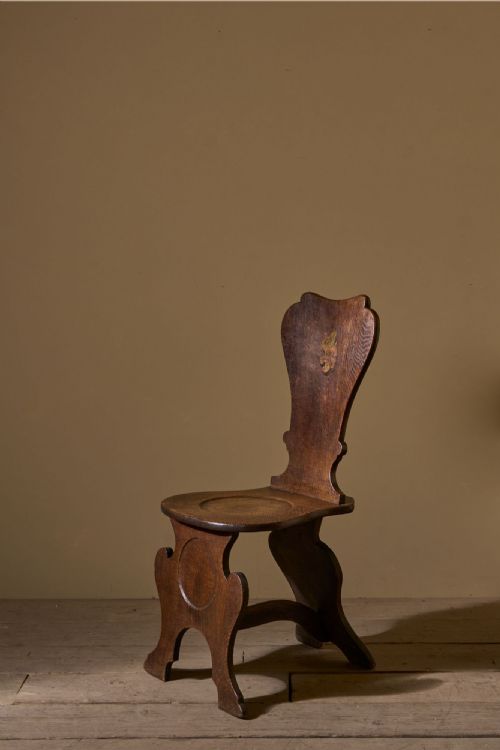
- Sgabello
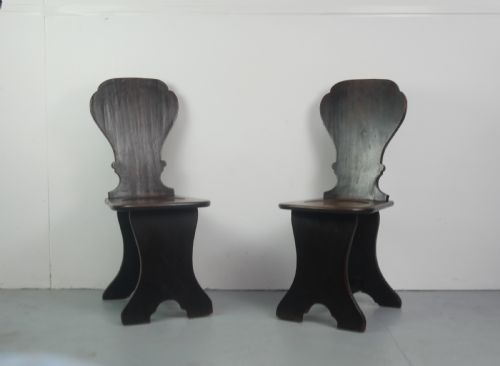
- An early Renaissance-style chair form featuring a wooden seat supported by solid trestles or boards rather than legs.
- Gothic Revival
- A nineteenth-century design style drawing inspiration from medieval architecture, marked by pointed arches and heavy carved tracery.
- Monks bench
- A multifunctional piece of furniture featuring a hinged top that converts a bench into a table.
Oak Entryway Chairs: Frequently Asked Questions
What is an oak entryway chair?
An oak entryway chair is a solid wood seat designed for a hallway or reception space. These pieces often feature decorative carved wooden backs rather than deep upholstery.
Such chairs provided brief seating for visitors and callers while displaying the homeowner's taste through period styles like Gothic Revival or Georgian.
How were hall chairs used?
Hall chairs served primarily as occasional seating in entrance corridors and reception rooms. Guests used them while waiting to be announced.
Due to their upright posture and firm wooden seats, they were not intended for long periods of relaxation.
How do I style an oak hall chair?
An oak hall chair works well standing alone against a corridor wall or paired beside a console table. Its architectural timber grain introduces texture to a neutral entryway.
Keeping the piece unencumbered allows the carved details of the backrest to remain visible as a focal point.
How do I date an antique oak hall chair?
Dating relies on examining the construction methods, timber patination, and stylistic motifs present in the carved backrest. Georgian pieces generally show restrained classical lines, whereas Victorian examples favour heavy Gothic revival carving.
Secondary materials like rush or leather upholstery and recorded period markers further help narrow the era of production.