
Oak Entry Seat
An oak entry seat sets the tone of a hall, combining practical domestic function with robust construction from centuries past.
Oak Entry Seat
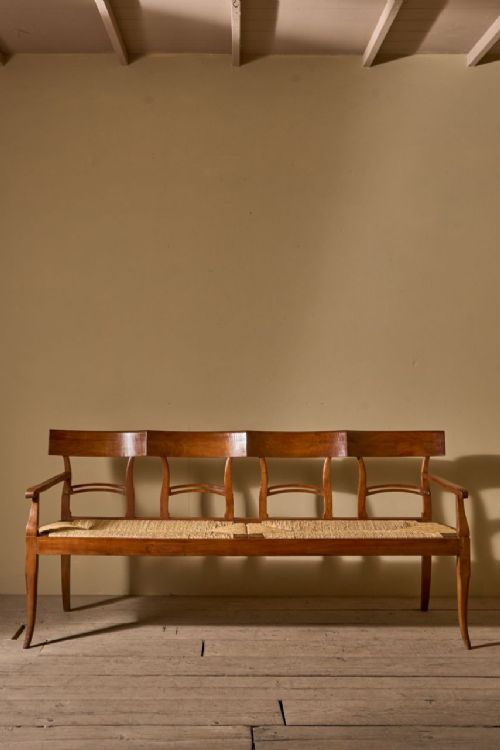
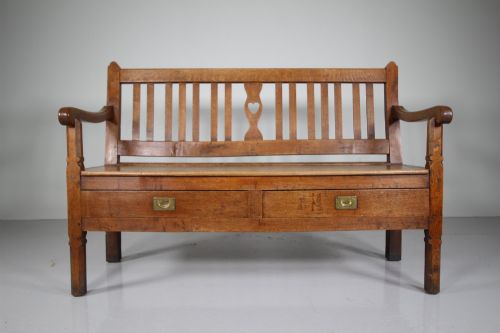
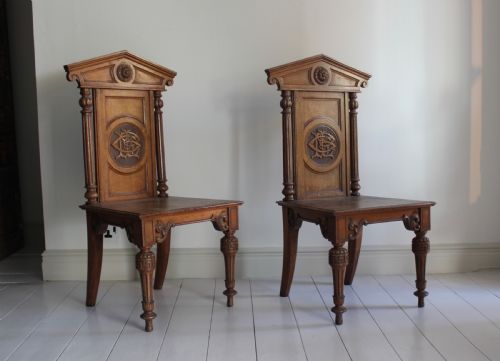
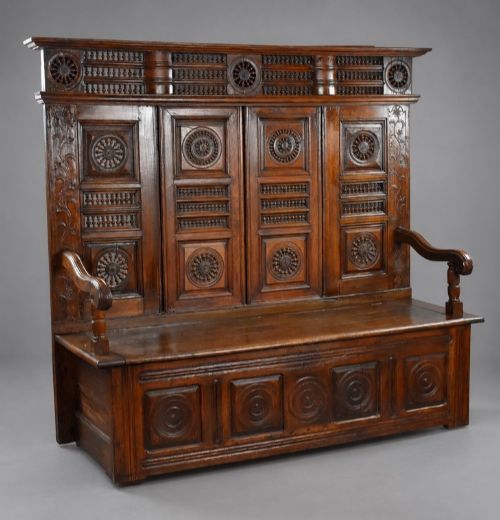
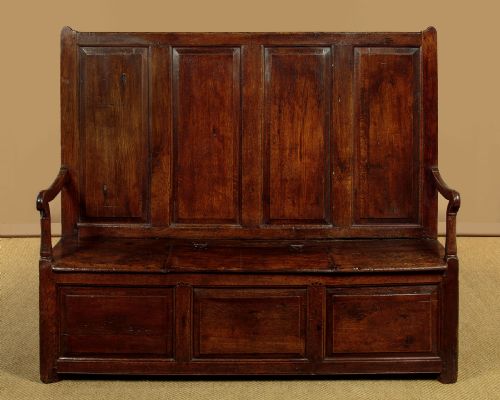
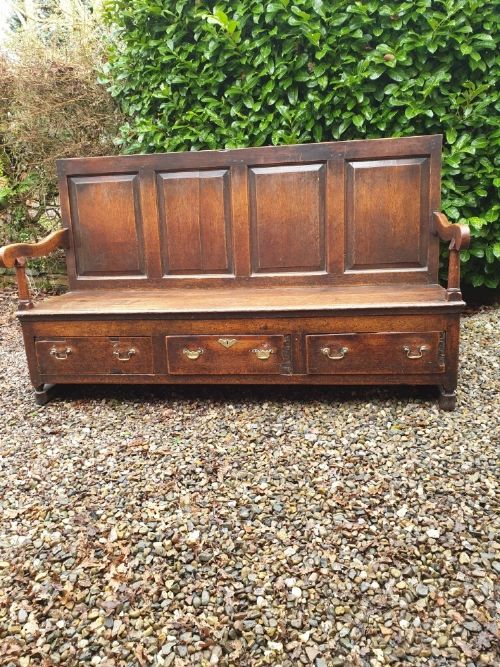
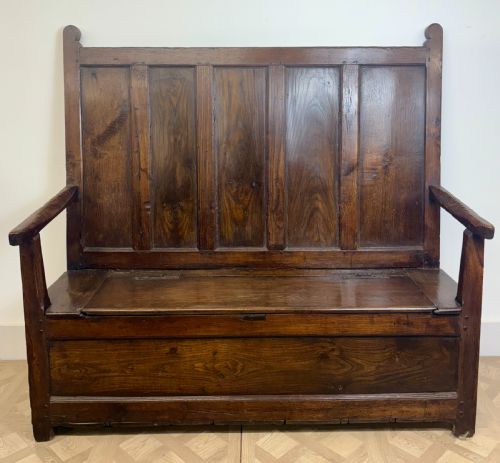
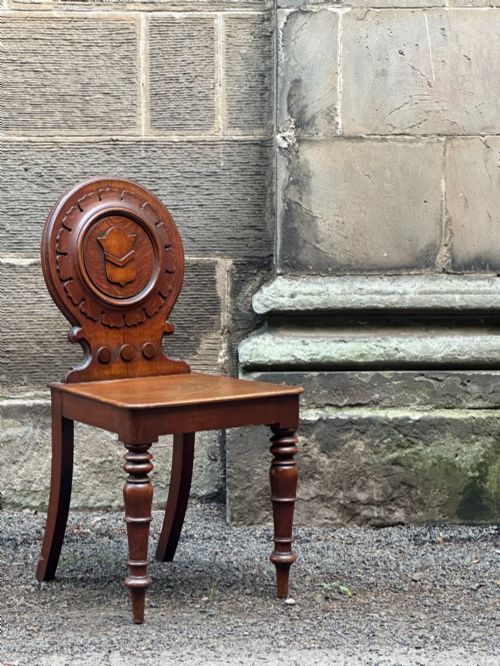
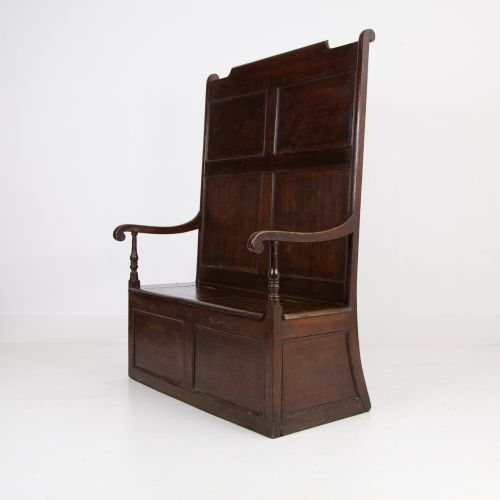
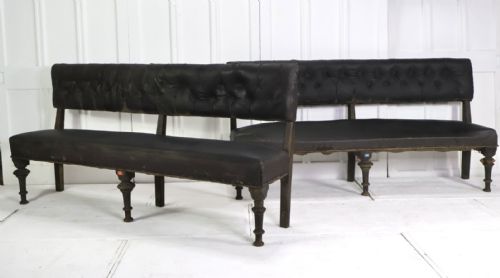
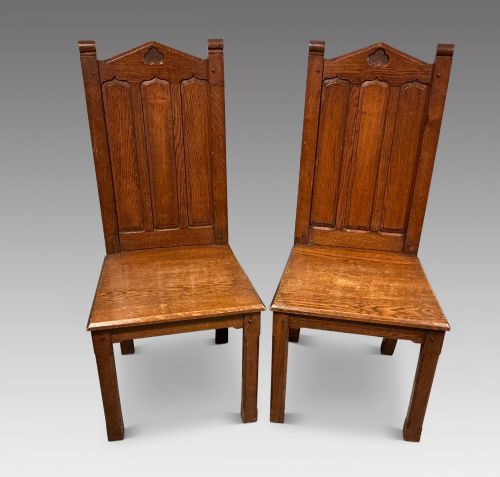
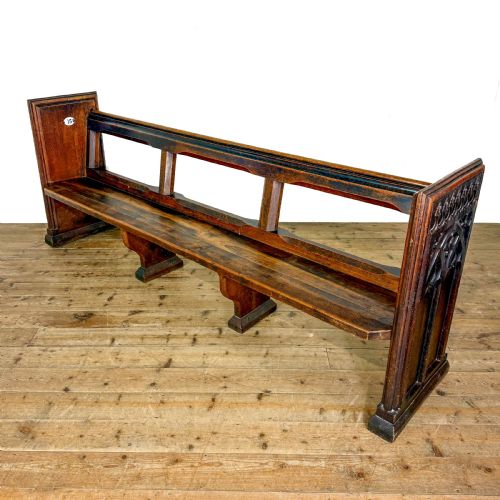
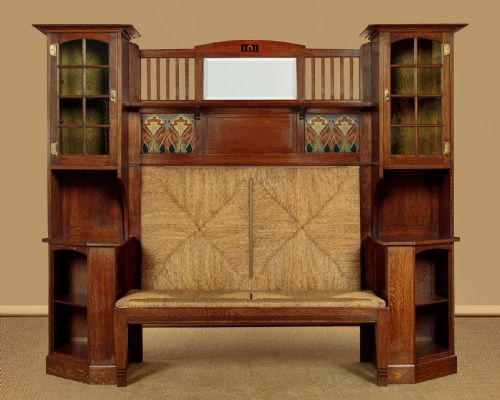
An oak entry seat encompasses several historical forms designed for the hallway, ranging from high-backed settles and box benches to pairs of carved hall chairs. These pieces span periods from the eighteenth century through the Victorian era and into the early twentieth century, reflecting shifting domestic fashions.
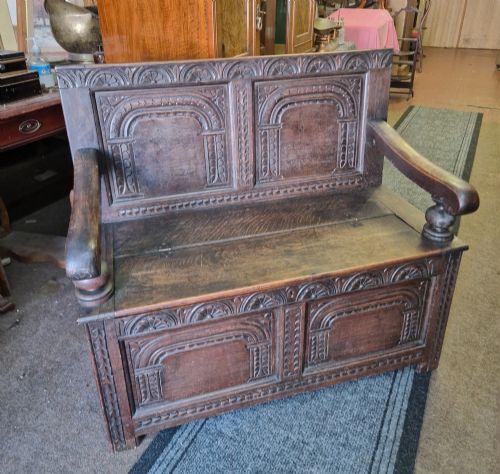
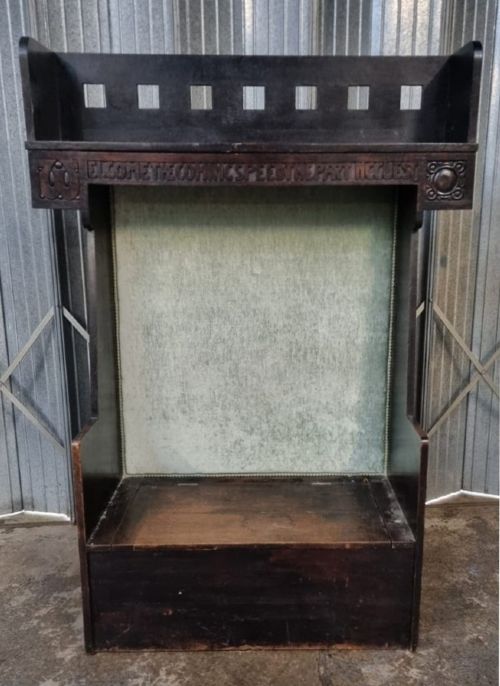
The most common examples encountered on this page are nineteenth-century carved oak benches and settles, alongside matched pairs of hall chairs. Pieces often incorporate storage beneath lift-up seats or integrate umbrella stands and panels characteristic of country houses and civic spaces.
Materials and Technique
Construction relies primarily on solid oak, frequently paired with secondary woods like ash or cherrywood, and assembled using traditional joinery methods such as panelling and pegged joints. Surface embellishment often takes the form of hand-carved relief work, displaying Gothic, Jacobean, or Arts and Crafts motifs.
Hardware elements such as brass or iron hinges, brackets, and hooks provide functional support on boxes and hall stands. Rush seating occasionally appears on chair pads, contrasting with the dense grain of timber panels.
Materials recorded across the selection include solid oak, walnut, ash, rush, brass, and iron.
Evaluating the Pieces
Quality in these items is determined by the crispness of the timber carving and the architectural proportion of the frame, where deeper relief and balanced proportions distinguish finer examples. The integrity of the original joints and the preservation of the timber surface finish further separate standard utility pieces from high-status country house commissions.
The Oak Entry Seat Glossary
- Settle
- A wooden bench with a high back, solid arms, and frequently a box compartment beneath the seat for storage. This form kept out draughts in older hallways.
- Hall Chair
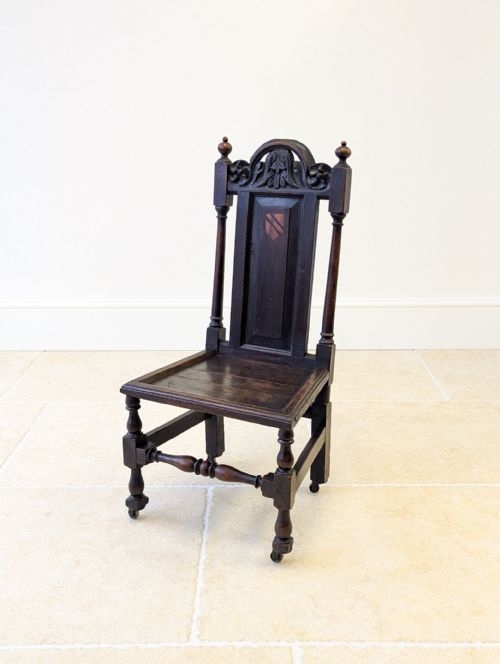
- A rigid, upright wooden seat designed for an entrance hall rather than comfortable lounging, often featuring a carved solid timber back. Pairs of these chairs were commonly placed symmetrically against hallway walls.
- Box Settle
- A form of seating featuring a hinged lid on the seat base to provide concealed storage for blankets or boots. It represents a practical multi-purpose item in historical homes.
- Monks Bench
- A convertible piece of furniture featuring a hinged back that folds down to transform the seat into a table. This versatile form persists across various revival styles.
- Gothic Revival
- An architectural and decorative style drawing inspiration from medieval design, characterised by pointed arches and tracery. It frequently appears on Victorian hall seating.
Oak Entry Seat: Frequently Asked Questions
Where were oak entry seats traditionally placed?
These pieces sat in the entrance halls or reception rooms of large houses, country cottages, and churches. They served as a practical place for visitors to wait or remove outerwear.
In larger properties, matched pairs of chairs lined the hallway to display status, while box settles offered functional storage for household items near the door.
How do I tell an 18th-century settle from a Victorian revival piece?
Eighteenth-century examples typically display hand-planed surfaces, pegged joinery, and simpler, utilitarian proportions born of necessity. The timber patination develops naturally over hundreds of years of daily use.
Victorian revival pieces often feature heavier, deeper machine-assisted carving and draw inspiration from earlier Jacobean or Gothic styles. The wood grain and interior construction methods usually clarify the manufacturing period.
Can I use an antique hall bench for everyday seating?
Most historic hall benches and settles are structurally robust enough for daily use in a modern entranceway. Solid oak construction provides considerable strength and durability.
It remains wise to check the stability of the joints and the clearance of any lift-up lids before putting them into heavy domestic service.