





Oak Entry Hall Tree
An oak entry hall tree offers a functional focal point for any hallway, combining storage for coats, hats, and umbrellas with robust period charm.
Oak Entry Hall Tree
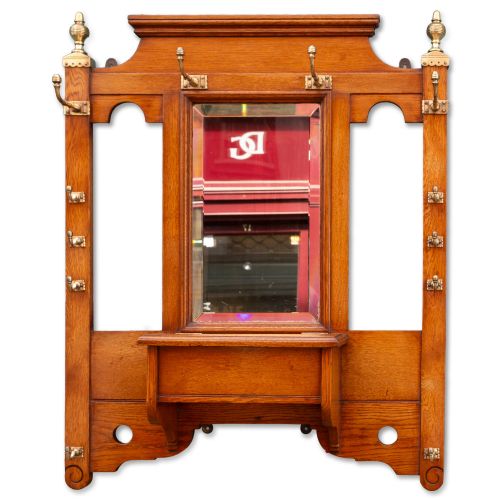
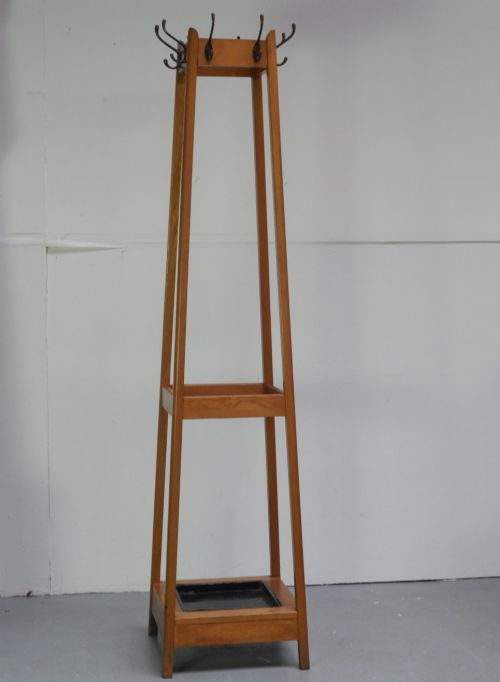
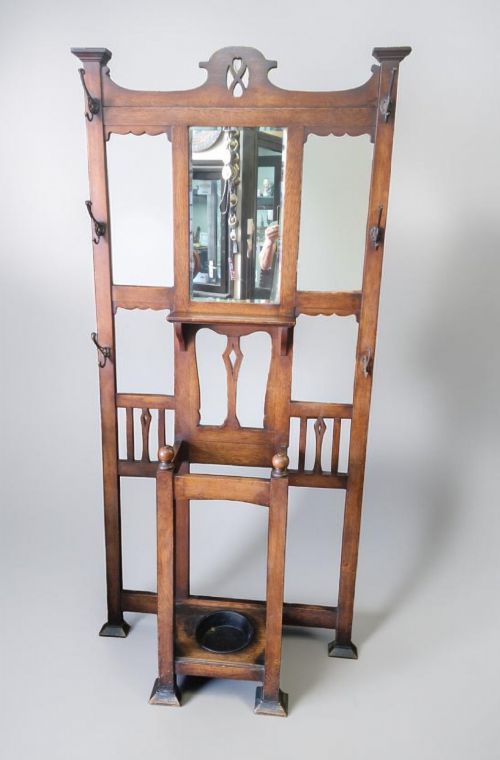
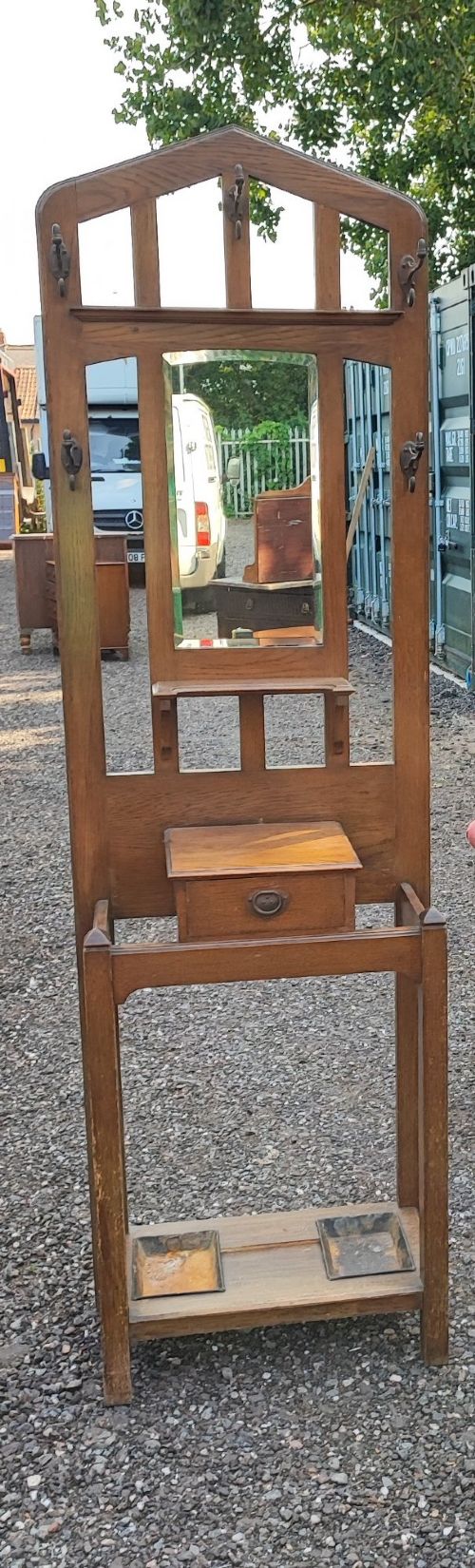
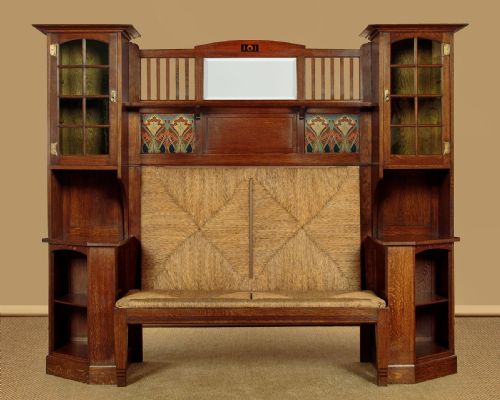
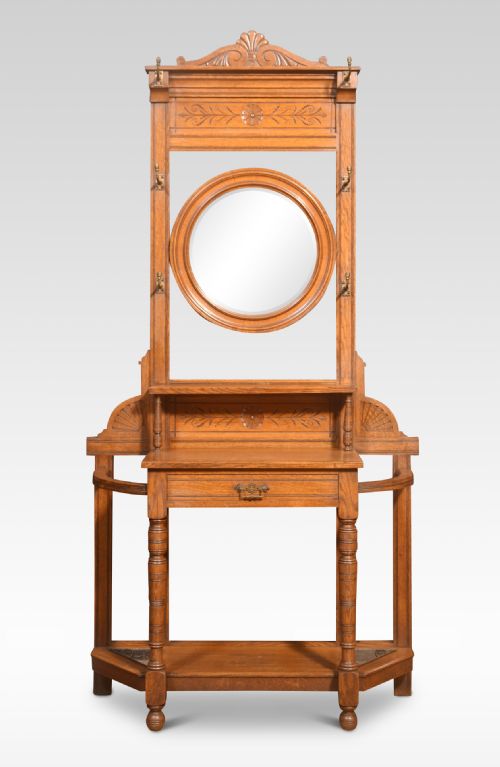
When you search for an oak entry hall tree, you are looking at substantial pieces of furniture designed for entranceways to manage outdoor wear. These items incorporate hooks, mirror frames, and often umbrella wells or benches within a single vertical structure.
The versions you are most likely to meet on this page date from the Victorian era through the early twentieth century, spanning styles such as Arts and Crafts, Art Nouveau, and English Industrial. They appear primarily as standing hall stands and wall-mounted racks made predominantly of solid oak.
Many examples feature intricate carvings, including Greenman motifs or Flemish designs, while others lean towards the simpler, cleaner lines of the Edwardian period and Arts and Crafts movement. Their physical presence ranges from narrow formats suited to compact spaces to very large proportions designed for grander hallways.
What varies in quality
The standard of carving defines much of the distinction between pieces, moving from simple linear mouldings to deep, sculptural relief work such as Greenman faces or elaborate Flemish designs. The integration of materials like marble inserts, bevelled glass mirrors, and substantial brass or cast-iron hardware also elevates a piece.
Structural ambition and scale create further division, separating standard hallway furniture from exceptionally large or narrow architectural forms. The choice of quarter-sawn oak displaying prominent medullary rays indicates a more selective choice of timber by the maker.
Oak Entry Hall Tree Retail Price Guide 2026
Typical asking prices for oak entry hall tree among the pieces listed under this phrase on Sellingantiques today, from the lower quarter to the upper quarter. They describe what is for sale here now, not the wider market.
Greenman carvings stare out from the oak foliage, watching over centuries of dropped walking sticks and damp umbrellas.
Astrola
The Oak Entry Hall Tree Glossary
- Greenman
- A sculptural motif depicting a face carved from or entwined with leaves and vines. This decorative detail appears frequently on Victorian carved furniture.
- Arts and Crafts
- A design movement valuing handcraftsmanship and simple materials over industrial mass production. Pieces from this style emphasise utility and honest construction.
- Flemish
- A style of heavy, ornate carving featuring scrolls, strapwork, and deep relief. It draws inspiration from continental European renaissance traditions.
- Fretwork
- Ornamental perforated woodwork created by cutting patterns through thin panels. It adds decorative lightness to heavy timber structures.
- Drip pan
- A removable metal or ceramic tray placed at the base of a stand to catch water from umbrellas. It protects the wooden floor of the hall stand from moisture.
Oak Entry Hall Tree: Frequently Asked Questions
What is an oak entry hall tree used for?
These pieces served as the primary storage station in traditional entrance halls for outdoor garments and accessories.
They provided designated hooks for coats and hats, hanging space for umbrellas, and often a mirror for a final check before leaving the house.
How do I date an oak hall stand?
Dating relies on observing stylistic markers, hardware materials, and construction methods. Victorian examples often feature heavy carving and applied mouldings.
Later pieces from the Edwardian era or the nineteen-twenties tend to display lighter oak tones and simpler Arts and Crafts or industrial influences.
Where should I place a hall stand?
A hall stand belongs in an entryway, vestibule, or large hallway where clearance allows for its upright frame and projecting hooks.
Consider the depth and width of the piece carefully to ensure it does not obstruct doorways or narrow passageways.
Did all hall stands include mirrors?
Many surviving examples incorporate a glass mirror into the upper central backboard, though simpler variants omit this feature.
Mirrors were bevelled in finer pieces and secured with small wooden frames integrated into the carved oak backing.