

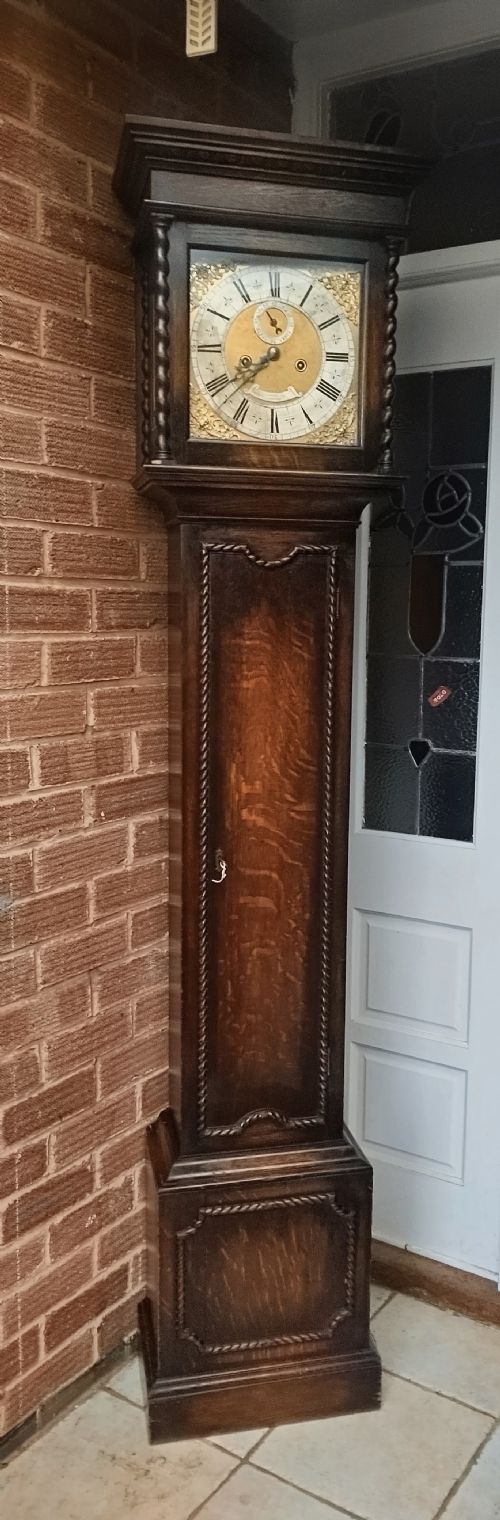


Oak Eight Day Clock
An oak eight day clock keeps time through a week-long mechanical movement housed in sturdy timber.
Oak Eight Day Clock
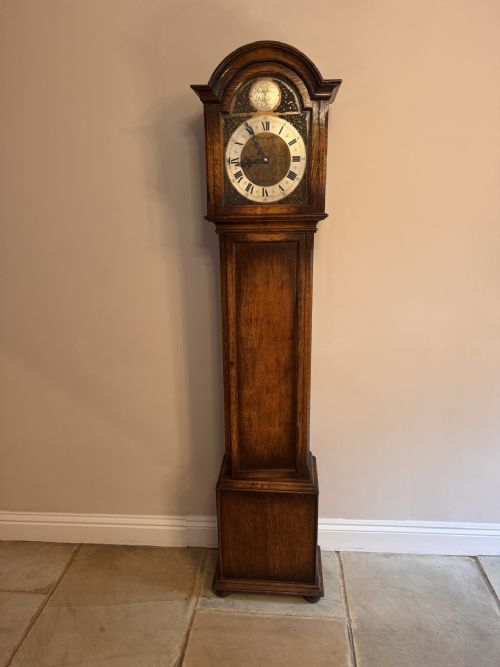
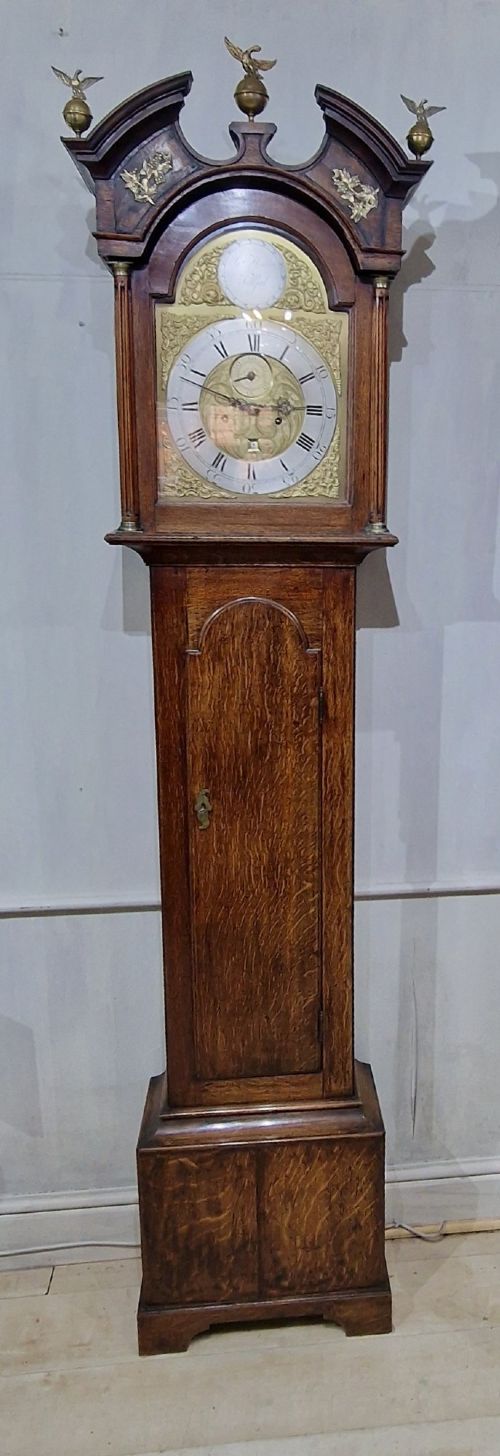
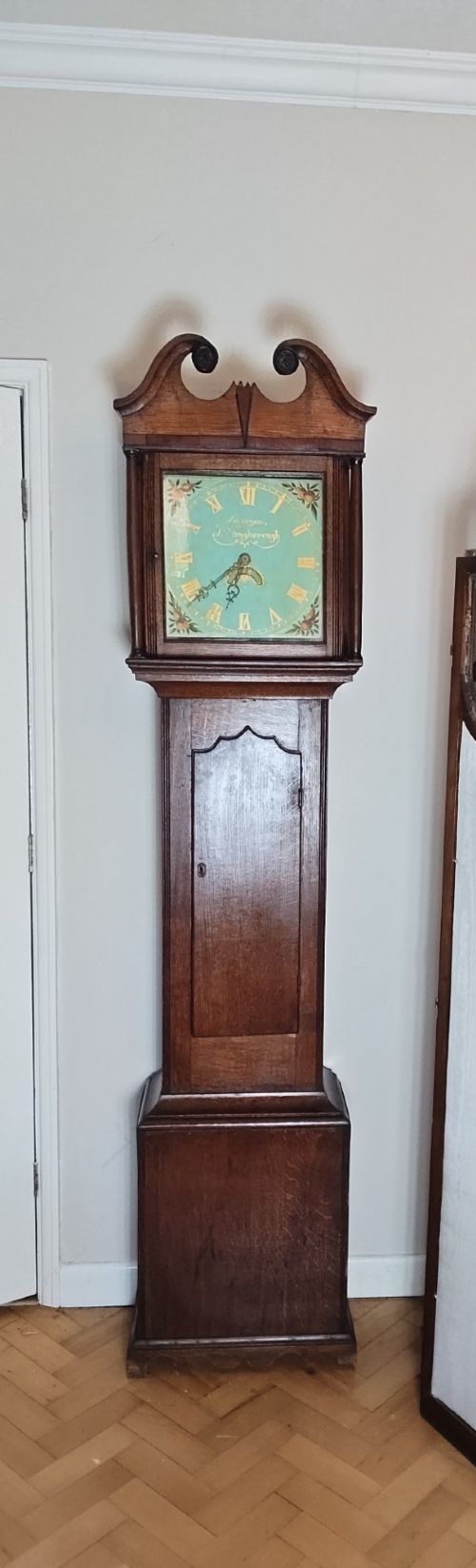
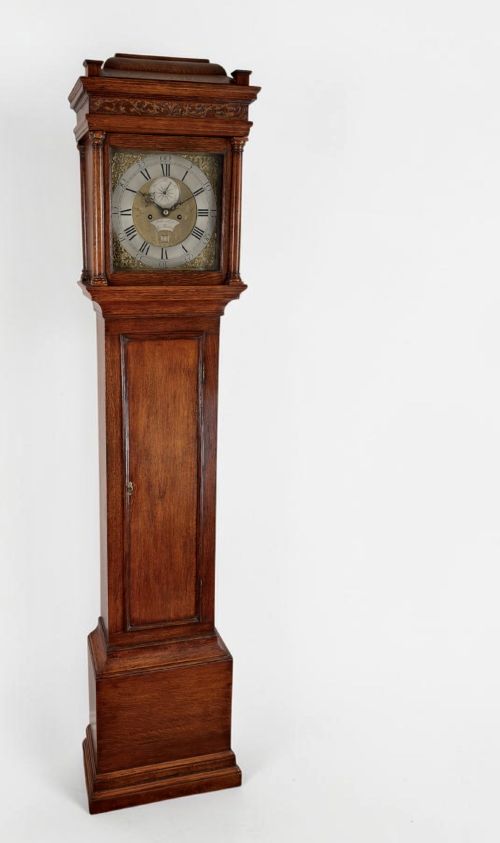
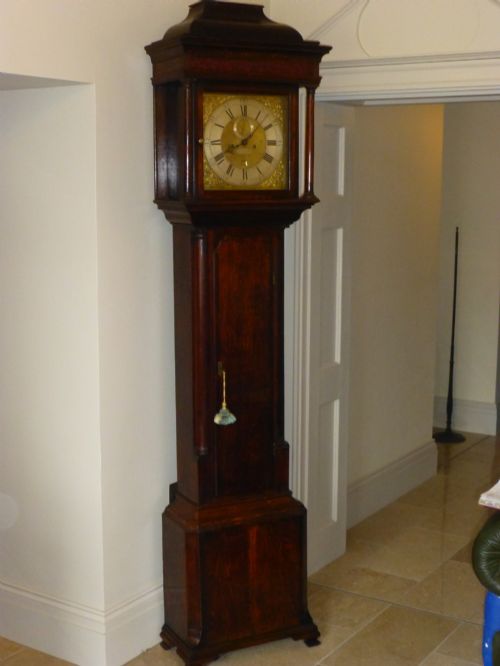
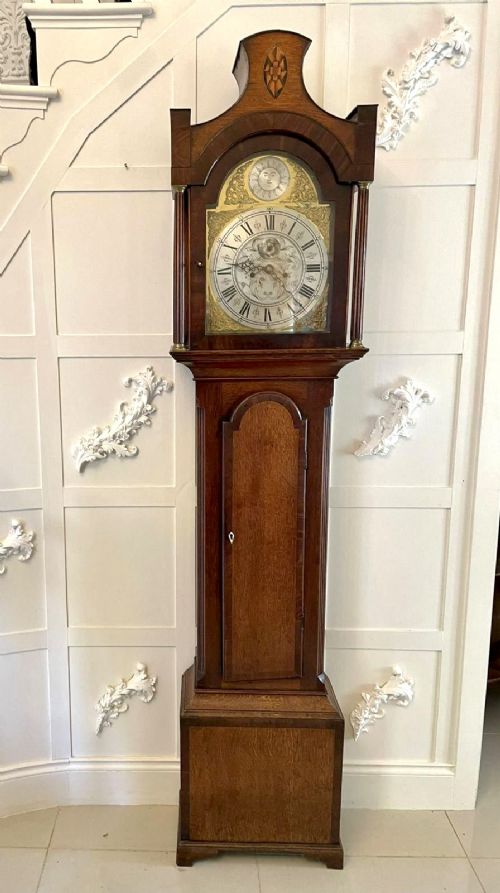
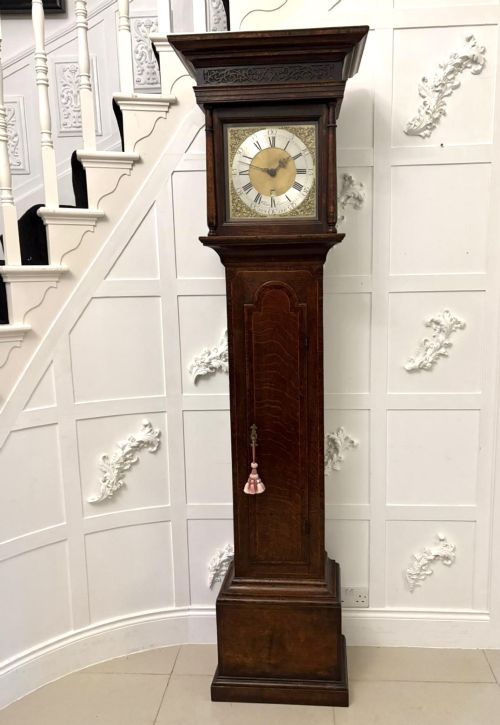
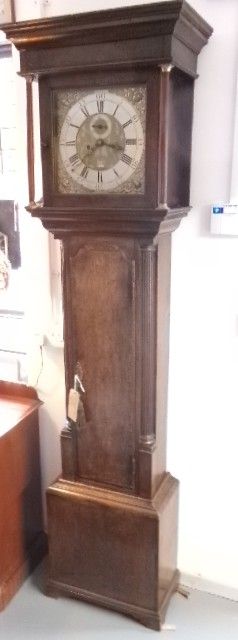
An oak eight day clock primarily appears as a tall longcase or grandfather clock, alongside wall clocks, grandmother clocks and bracket clocks. The selection spans Georgian, eighteenth century, nineteenth century, Victorian, Regency and nineteen hundred periods, anchored by regional British cabinet work.
The dominant forms display brass or painted dials set within architectural wooden hoods and trunks. Makers from diverse towns across Britain signed these longcase faces, ranging from simple country models to refined examples featuring mahogany bandings or rolling moon mechanisms.
Materials and construction
Casework relies heavily on solid oak, frequently paired with mahogany crossbanding, burr oak accents, or walnut details. Dial components combine cast brass, engraved chapter rings, glass covers, and iron or steel movement parts.
Movements utilise brass gears and plates driven by weights suspended on chains or cords, or in some instances spring-driven fusee mechanisms. Cabinets feature pegged joinery and hinged trunk doors designed to protect the pendulum and weights.
Oak Eight Day Clock Retail Price Guide 2026
Typical asking prices for oak eight day clock among the pieces listed under this phrase on Sellingantiques today, from the lower quarter to the upper quarter. They describe what is for sale here now, not the wider market.
Listed examples combine solid oak primary timber with secondary woods including mahogany, walnut, and maple, paired with brass and glass dial components.
Judging execution and finish
Superior examples show crisply engraved brass dial work, substantial cabinet timber thickness, and refined secondary veneers such as mahogany banding on the oak body. Lesser versions display plainer dial execution and simpler, unadorned box construction.
The proportion of the hood to the trunk and the crispness of any carved detailing dictate the visual strength of the piece. Well-preserved original dial signatures and clean movement plates distinguish the higher tier of surviving clocks.
Lee of Great Marlow·Richard Corless of Stockport·James Hendrie Falkirk·Fisher Of Preston·Dent of London·John Wylde Nottingham·Haythornwaite Kirkby Lonsdale·Richard Alexander Devizes·James Coster Of Henley·Grocott Holywell·Nicholas of Birmingham·Samuel Buxton Diss·W Prior Skipton
The Oak Eight Day Clock Glossary
- Longcase clock
- A tall pendulum clock enclosed in a wooden case standing directly on the floor. These instruments require winding every eight days.
- Dial
- The face of the clock displaying the hours and minutes. Eighteenth century versions frequently feature brass chapter rings and spandrels.
- Grandmother clock
- A scaled-down version of the traditional longcase clock. It occupies less floor space while retaining an eight day movement.
- Bracket clock
- A portable table or shelf clock originally designed to sit on a wall bracket. They often incorporate chiming or musical trains.
- Crossbanding
- A decorative border of veneer laid across the grain of the primary wood. Cabinetmakers utilise this technique on oak doors and plinths to frame the surface.
Oak Eight Day Clock: Frequently Asked Questions
How often do I wind an eight day clock?
These movements require winding once a week using a crank key to draw the internal weights back up.
Maintaining a regular schedule preserves the tension on the lines and keeps the timekeeping steady.
Where should I place a longcase clock?
Position the case against an interior wall away from direct sunlight, central heating vents, and dampness to protect the timber.
A stable floor ensures the pendulum swings evenly without catching against the inside of the trunk.
How do I tell an 18th-century dial from a Victorian one?
Eighteenth-century faces often use cast brass spandrels in the corners and engraved chapter rings with distinct minute markings. Later Victorian and nineteenth-century dials frequently incorporate painted iron surfaces or elaborate decorative cast iron.
The layout of the winding holes and the style of the hand cutouts also shift across these stylistic periods.
What is the difference between a grandfather and a grandmother clock?
Grandfather clocks are full-sized longcases standing over six feet tall, built to house long pendulums and heavy driving weights. Grandmother clocks are noticeably shorter and slimmer versions produced later.
Despite the reduced proportions, grandmother clocks still house functional eight day movements.