


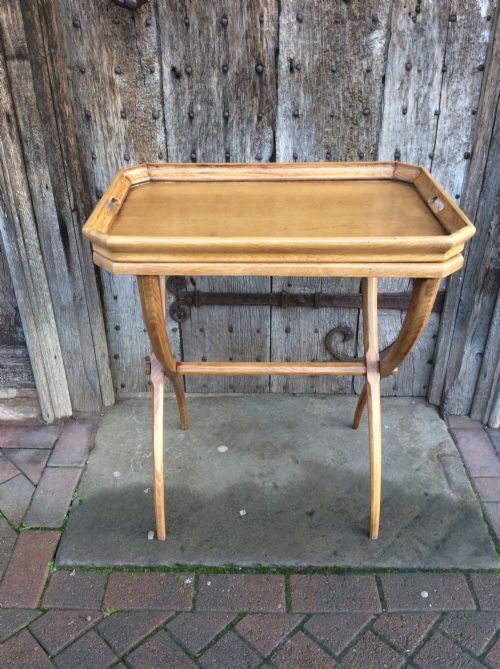
Oak Drinks Tray
An oak drinks tray serves as a practical surface for glassware and bottles, bringing sturdy utility and period character to entertaining.
Oak Drinks Tray
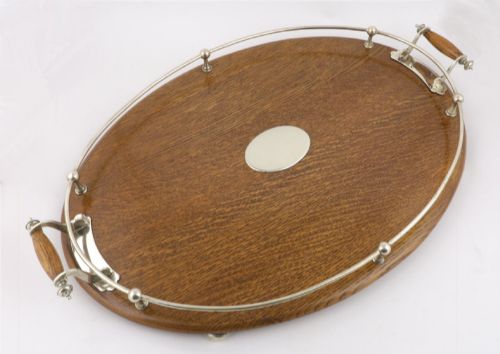
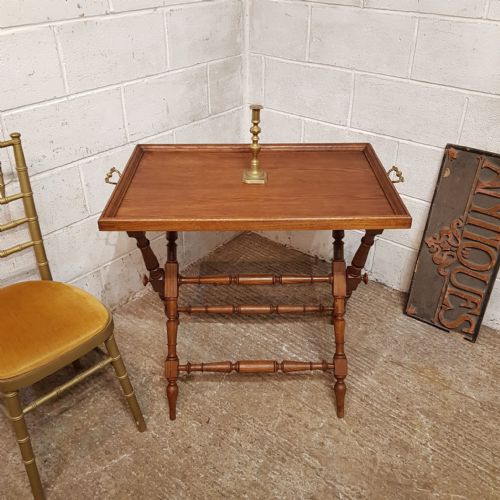
An oak drinks tray appears in several distinct forms, ranging from flat serving platters with raised rims to removable trays mounted on folding stands and rolling tea trolleys. Butler trays on stands dominate the selections, offering a portable surface that lifts away from its supporting legs.
Examples span from the Victorian and Gothic Revival periods through the Edwardian era and into the 1920s, reflecting changing domestic habits around hospitality and afternoon tea. English country pieces sit alongside more formal gallery designs fitted with metal mounts.
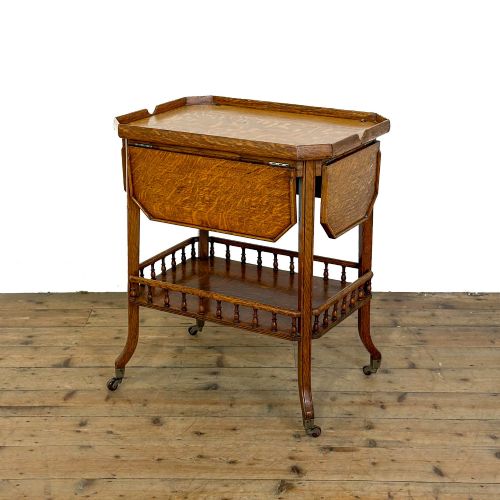
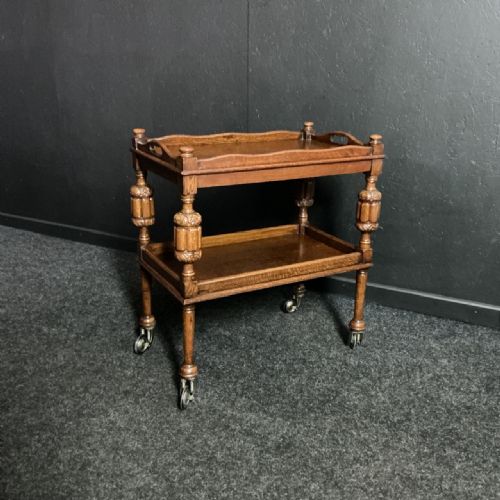
Buyers also encounter two-tier trolleys and tray tables equipped with wheels, which point to the development of mobile serving furniture during the early twentieth century. These variations provide options for both static display and active service.
Materials and construction
Solid oak provides the primary structural timber, often shaped with carved details or left with a plain grain depending on the period and style. Cabinetmakers joined boards using traditional methods, pairing the dense wood with metal handles and hinges.
Brass and silver plate frequently accent the timber, appearing as gallery rails, corner mounts, handles, and inset trays. Glass surfaces and paper maps occasionally supplement the wooden construction, particularly in serving trays and cartographic pieces from the Edwardian era.
Listings feature oak combined with silver plate, brass, glass, and paper across periods spanning the nineteenth century through the Edwardian era to 1920.
Craftsmanship and distinction
Quality rests upon the selection of the timber, the crispness of any hand carving, and the robustness of the joints connecting the tray to its stand or handles. Superior specimens display well-figured grain, tight joinery, and heavy gauge metal mounts that remain securely fixed to the wood.
The integration of fitted folding stands and the quality of silver plating on gallery rails distinguish finer examples from standard utility items. Wear on the wooden surface shows the history of actual service, though excessive distortion of the timber affects stability.
John Grinsell
The Oak Drinks Tray Glossary
- Butler tray
- A portable wooden tray with raised sides, designed to lift off a folding X-frame stand for serving. It offers a stable surface that packs flat when not in use.
- Gallery tray
- A serving tray fitted with a raised raised rim, often pierced metal or wooden spindles, to prevent glasses and decanters from sliding off. This style gained popularity during the Victorian and Edwardian periods.
- Tea trolley
- A mobile wooden table on wheels or castors, frequently featuring two tiers and a removable top tray for transporting tea or cocktails across a room. They became common in the early twentieth century.
- Gothic Revival
- A nineteenth-century design movement drawing inspiration from medieval architecture, characterised in these pieces by heavy carved tracery and pointed architectural motifs. It emphasises dark, solid timber.
- Silver plate
- A thin layer of silver fused to a base metal such as copper or brass, used extensively for handles, gallery rails, and decorative mounts on Edwardian trays.
Oak Drinks Tray: Frequently Asked Questions
How do I date an oak drinks tray?
Dating relies on combining the construction style, timber thickness, and metal hardware. Victorian pieces often display heavier carved decoration or Gothic Revival influences, while Edwardian versions frequently incorporate silver-plated galleries.
Trolleys and wheeled serving pieces typically point to the 1920s and the rise of mobile cocktail service in British homes.
Are these trays suitable for daily use?
Solid oak construction and sturdy metal mounts mean these pieces withstand regular handling. Many are built with water-resistant finishes or protected by silver-plated galleries.
Care should be taken with antique surfaces by using coasters and avoiding prolonged exposure to moisture to preserve the aged timber and plating.
What is the difference between a tray and a trolley?
A tray is a portable flat surface designed to be carried by hand or placed temporarily upon a stand. A trolley adds wheels and additional lower tiers for moving multiple bottles and glasses simultaneously.
Some trolley designs incorporate a removable top tray, combining the portability of a butler tray with the mobility of a tea cart.