

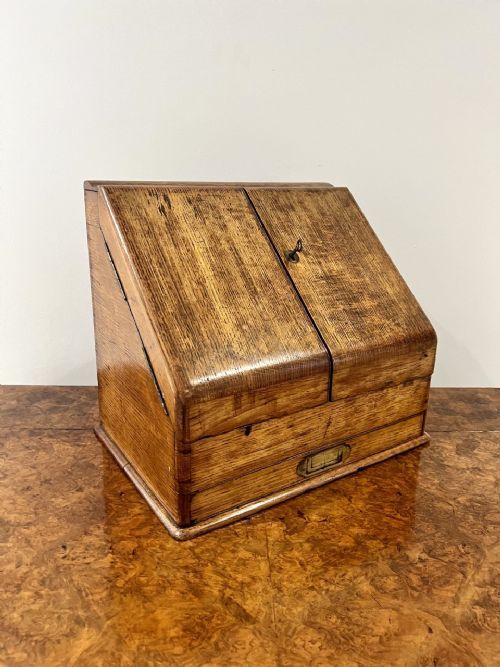
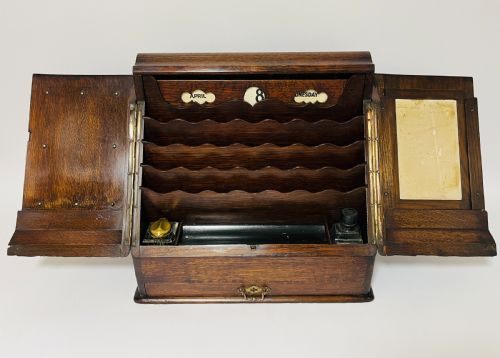


Oak Desktop Organizer
An oak desktop organizer keeps your correspondence in order, combining practical workspace storage with the rich grain of traditional timber.
Oak Desktop Organizer
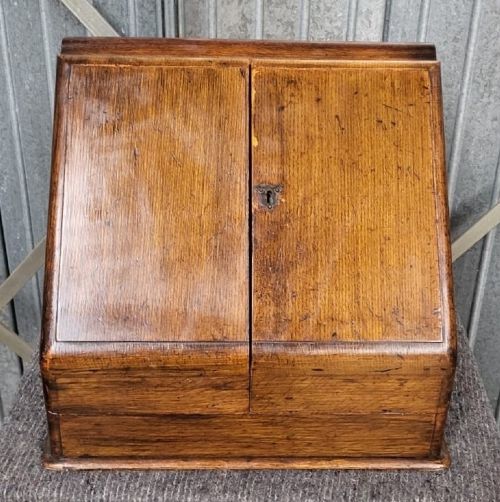
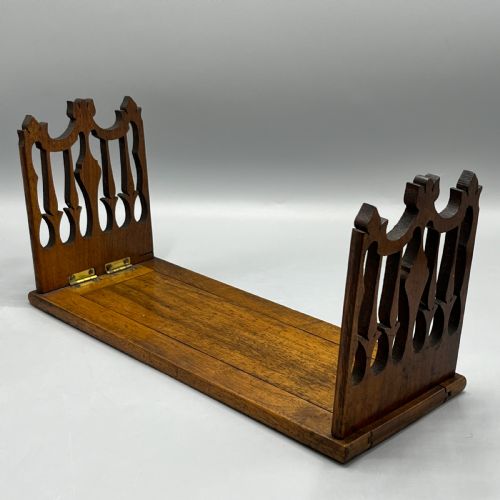
An oak desktop organizer groups together the stationary cabinets, letter boxes, and desk boxes that keep correspondence and papers tidy. These pieces range from simple letter racks and book slides to elaborate drop-front cabinets fitted with internal compartments.
The selections span the Victorian and Edwardian eras, alongside pieces reflecting Arts and Crafts and Georgian influences. You will frequently encounter stationery boxes and table-top cabinets designed to sit upon a writing desk or library table.
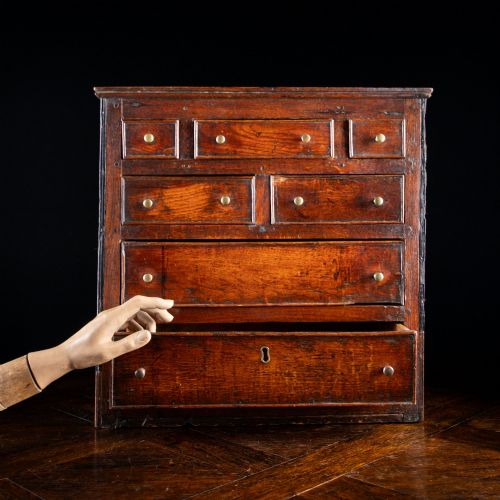
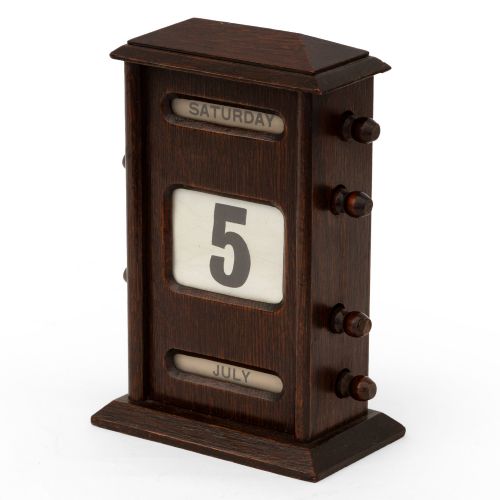
Earlier examples include desk boxes and Bible boxes from the eighteenth and nineteenth centuries, often featuring sloped lids or secret drawers. Later twentieth-century variations introduce compact drawers and perpetual calendars for everyday utility.
Materials and construction
Solid oak provides the structural framework for these desk accessories, frequently complemented by brass hinges, handles, and mounts. Glass ink bottles and metal components appear alongside leather and fabric linings within the fitted interiors.
Carpenters utilised traditional joinery techniques to assemble these desktop pieces, incorporating carved details and drop-front panels. Brass hardware secures the lids and doors, while key locks protect private correspondence in more elaborate boxes.
Oak Desktop Organizer Retail Price Guide 2026
Typical asking prices for oak desktop organizer among the pieces listed under this phrase on Sellingantiques today, from the lower quarter to the upper quarter. They describe what is for sale here now, not the wider market.
Several Victorian stationery boxes still conceal secret lower drawers tucked away beneath the main compartments for private correspondence.
Quality and execution
The distinction between standard utility items and finer pieces lies in the selection of timber and the crispness of any carved decoration. Superior examples display thoughtful grain matching and well-fitted internal compartments rather than purely functional assembly.
Original hardware such as brass handles, working locks with keys, and matching ink bottles elevate the integrity of a piece. Finer items retain their internal partitions and stationery dividers intact, showing careful proportion and balanced design.
The Oak Desktop Organizer Glossary
- Stationery box
- A tabletop container designed to hold writing paper, envelopes, and correspondence. These cabinets often feature sloping lids or vertical compartments.
- Letter box
- A specialised box featuring an aperture or slot for posting mail, frequently fitted with a lock and key. Country house examples often include brass mounts.
- Book slide
- An extending desktop rack intended to hold a small selection of volumes upright between bookends. They often incorporate hinged or expanding mechanisms.
- Arts and Crafts
- A design movement emphasising handcraftsmanship and simple forms. Pieces in this style highlight the natural grain of the oak.
- Perpetual calendar
- A desk accessory with adjustable panels or rollers to display the date year-round. These are frequently integrated into larger desktop organizers.
Oak Desktop Organizer: Frequently Asked Questions
What is an oak desktop organizer?
An oak desktop organizer encompasses functional desk accessories such as stationery cabinets, letter boxes, and writing chests. They were designed to hold letters, paper, and small writing implements.
These pieces range from compact Victorian stationery boxes to earlier Georgian desk boxes and Arts and Crafts letter racks.
How were stationery cabinets used?
Stationery cabinets organised correspondence in studies, libraries, and country house desks. Drop-front doors and vertical slots kept writing paper and envelopes clean and sorted.
Many included integrated ink bottles, pen trays, and perpetual calendars to handle daily administrative tasks.
How do I date an oak desktop piece?
Dating relies on stylistic clues, construction methods, and hardware associated with periods like the Victorian and Edwardian eras. Earlier pieces often feature hand-cut joinery and simpler Georgian proportions.
Later Victorian and Edwardian examples frequently incorporate brass gallery rails, matching ink bottles, and patented date mechanisms.
Do these organizers fit modern desks?
Many compact stationery boxes, letter racks, and book slides sit easily upon contemporary work surfaces. They provide practical storage for modern mail, notebooks, and pens.
Larger cabinets with drop-front doors require adequate surface depth to open fully and access internal compartments.