




Oak Desk with Cupboards
These oak desk with cupboards pieces are sturdy writing furniture built with storage, bringing character and practical workspace into a room.
Oak Desk with Cupboards
An oak desk with cupboards encompasses working furniture designed for storage, appearing across periods from 1700 through the Edwardian era and the 1920s. Buyers searching this phrase encounter forms such as bureaus, bureau bookcases, dressing table desks, and side cabinets.
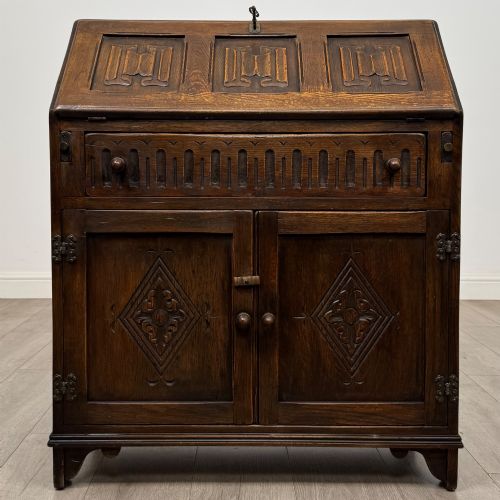
The selection on this page ranges from Georgian vernacualr pieces and 18th century examples to Victorian, Edwardian, and early 20th century iterations. Styles vary widely, taking in Jacobean Revival, Tudor Revival, Gothic Revival, Arts and Crafts, and Industrial Utility.
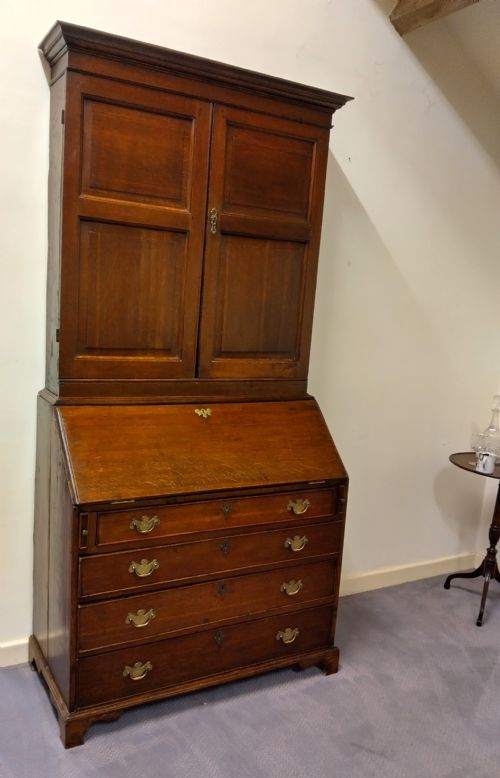
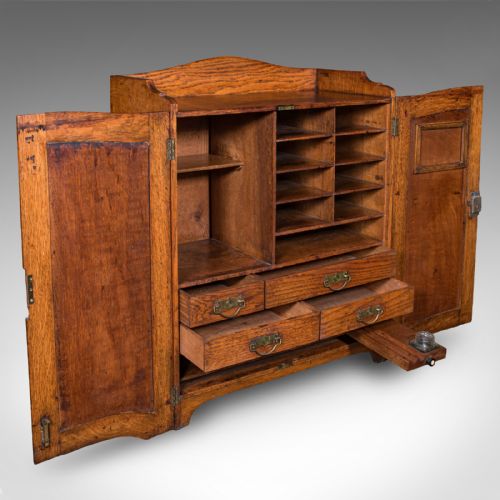
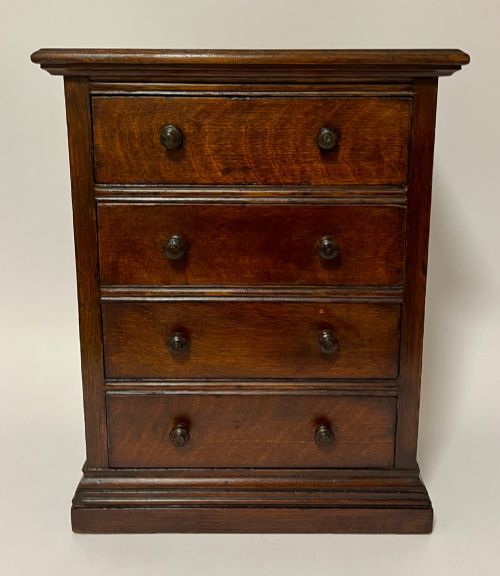
Many examples combine a writing surface with enclosed cupboard space, drawers, or upper bookcase sections. Miniature furniture and tabletop chests also emerge alongside larger office cabinets.
Materials and construction
Cabinet makers utilised solid oak and oak veneer for the primary carcases, occasionally incorporating secondary timbers like pine and mahogany. The natural grain of the wood determines the surface character of each piece.
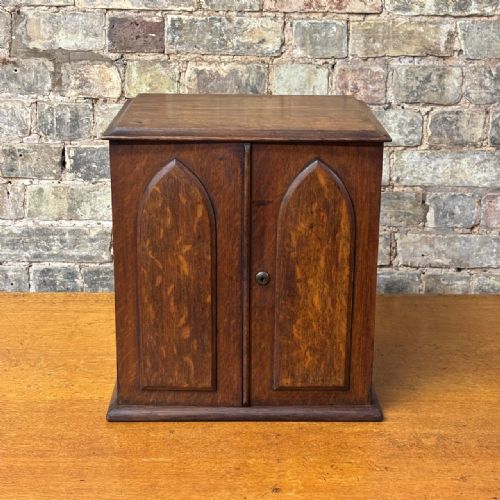
Hardware details include brass and iron handles, while specific examples feature glass panels and fabric elements. Carved ornamentation, linenfold panels, and Gothic panel doors demonstrate period decorative techniques.
Listings span from the year 1700 through the Georgian, Victorian, and Edwardian periods into the 1920s, constructed primarily in oak.
Assessing quality
The distinction between standard examples and superior pieces rests in the execution of the cabinet work and the retention of original elements. Original keys, period brass handles, and authentic surface patination elevate an item.
Adaptations alter the nature of older pieces, as seen in items adjusted for modern uses like television housing. The integrity of the timber, the subtlety of carved details, and the proportion of the bureau or cabinet dictate the overall merit.
The Oak Desk with Cupboards Glossary
- Bureau
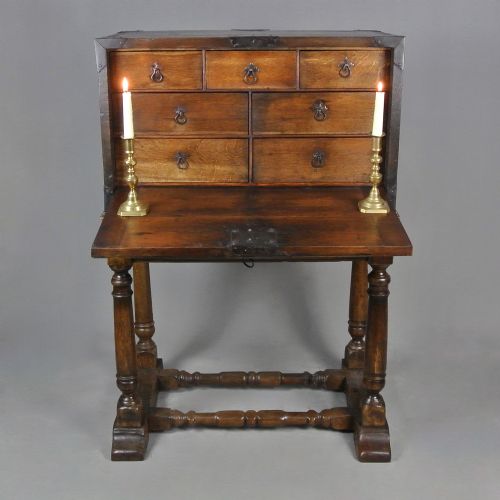
- A writing desk with a sloping hinged lid that covers a fitted interior of small drawers and pigeonholes. It provides a concealed workspace when closed.
- Bureau bookcase
- A two-part piece combining a lower bureau desk with an upper shelving or cupboard section enclosed by doors. These tall items offer extensive storage.
- Linenfold
- A style of relief carving used on panels to imitate folded linen. It appears frequently on pieces referencing earlier Tudor and Jacobean styles.
- Oak veneer
- A thin layer of oak applied to a base timber surface. This technique allowed cabinet makers to create decorative grain patterns on furniture carcases.
Oak Desk with Cupboards: Frequently Asked Questions
What periods do these desks cover?
The pieces span multiple centuries, starting from around 1700 through Georgian and Victorian times up to Edwardian pieces and the 1920s.
Styles shift across these eras from early vernacular forms to revival movements like Gothic and Jacobean.
How are cupboards integrated into these desks?
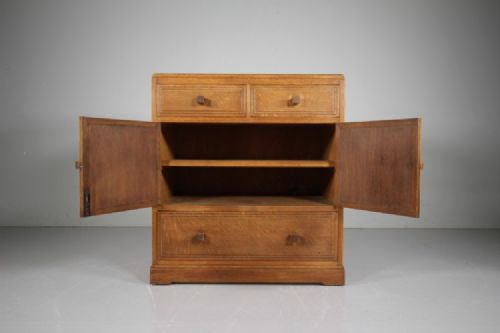
Cupboards appear as lower cabinet doors beneath writing surfaces, flanking compartments, or as upper bookcase enclosures atop bureau bases.
Some tabletop chests and side cabinets also use doors to conceal internal storage space.
Are all these pieces full sized?
The selection includes variety in scale, stretching from large bureau bookcases and office cabinets down to miniature furniture and tabletop chests.
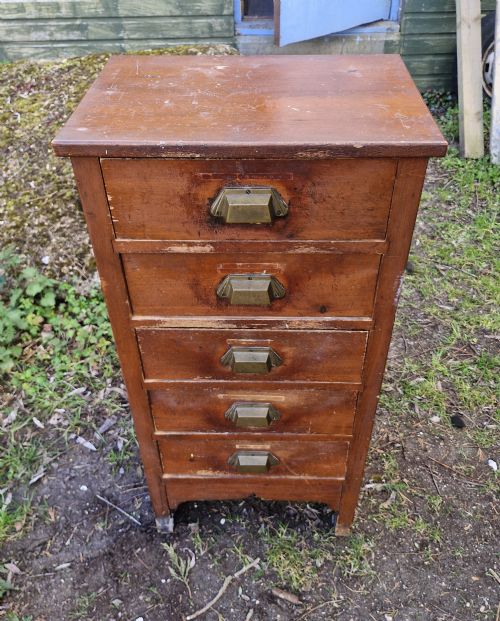
Dimensions depend entirely on the specific object type, whether a dressing table desk or a compact filing cabinet.
What woods besides oak appear?
While solid oak and oak veneer dominate the construction, makers occasionally incorporated pine and mahogany into the carcases or secondary structures.
Metal fittings in brass and iron appear alongside glass and fabric details.