


Oak Desk Green Leather
Oak desk green leather items bring substantial nineteenth and early twentieth century authority into a room through hard timber and traditional hide.
Oak Desk Green Leather
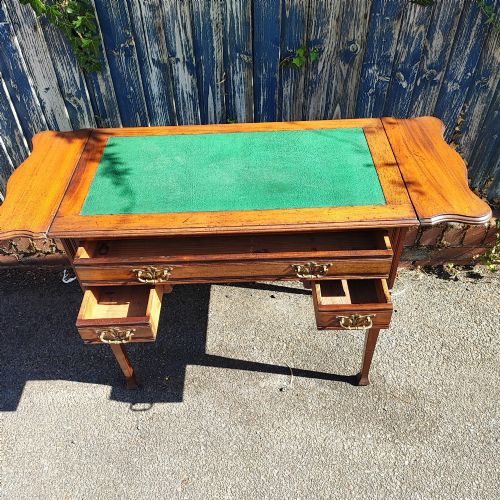
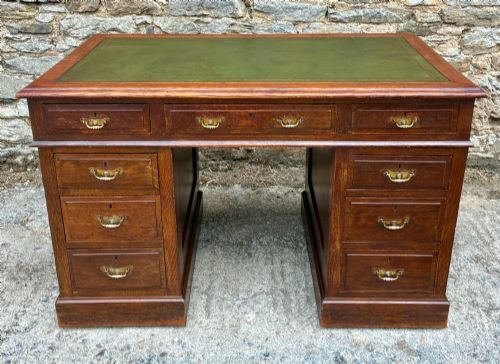
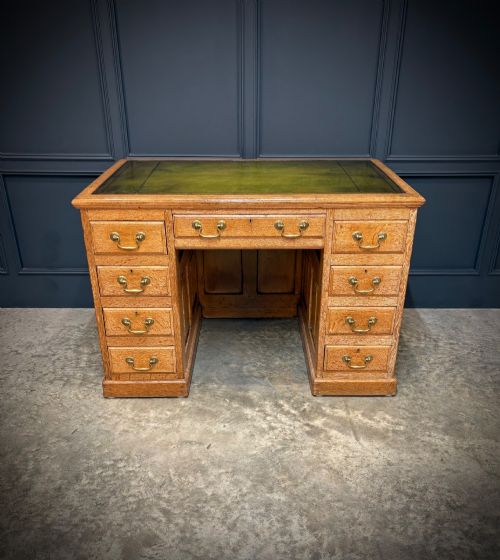
When searching for an oak desk green leather piece, buyers encounter functional workspace furniture primarily spanning the Victorian and Edwardian eras. These pieces range from substantial twin pedestal partners desks used in large offices to compact kneehole tables and Davenport writing desks.
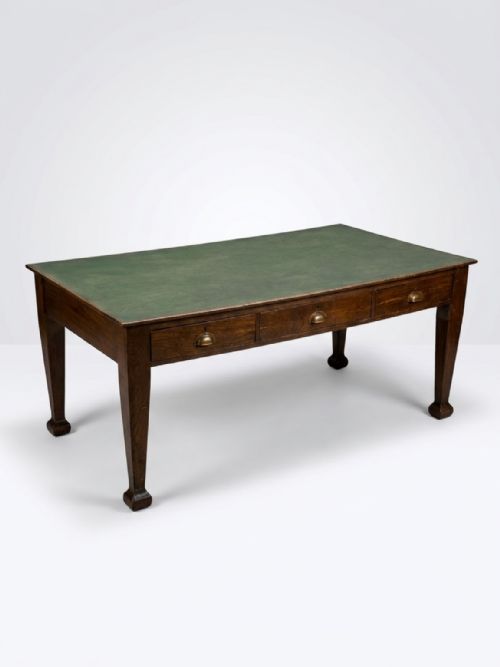
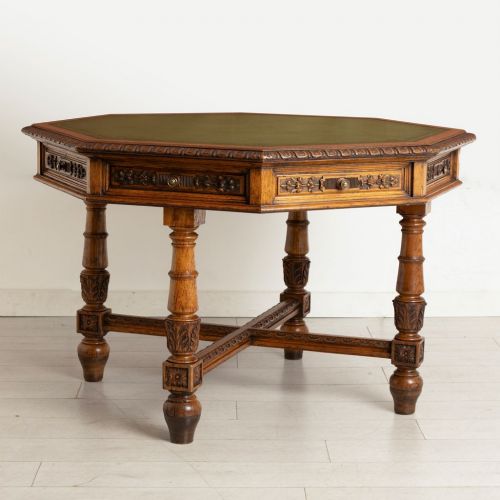
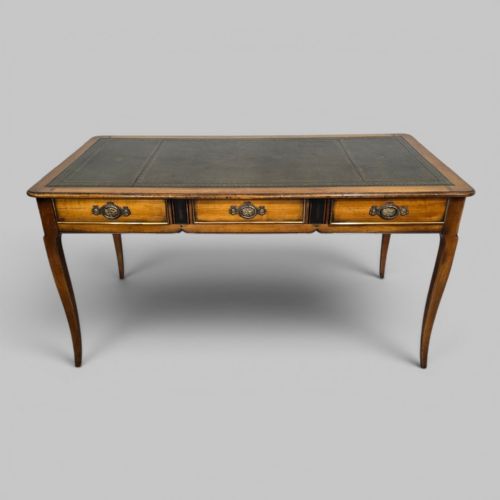
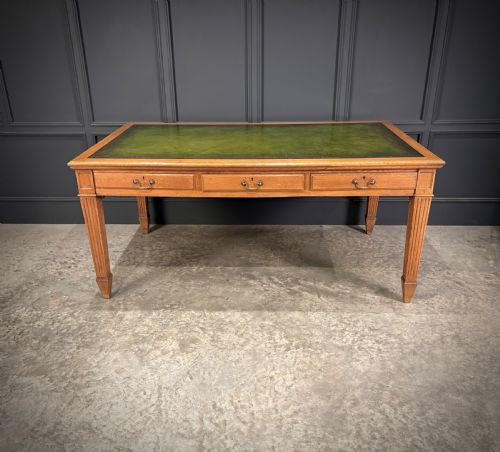
The most common configurations on this page combine a writing table or pedestal base with an inset leather writing surface. These range from domestic library tables to heavy institutional pieces produced for town halls and estate managers.
Materials and construction
Construction relies heavily on solid oak and golden oak timbers, supported internally and externally by secondary woods like ash and mahogany. Joinery techniques from the nineteenth and early twentieth centuries ensure rigidity in heavy pedestal and partners formats.
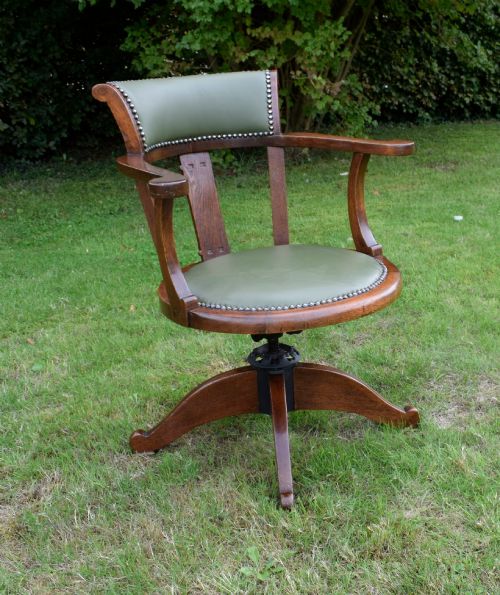
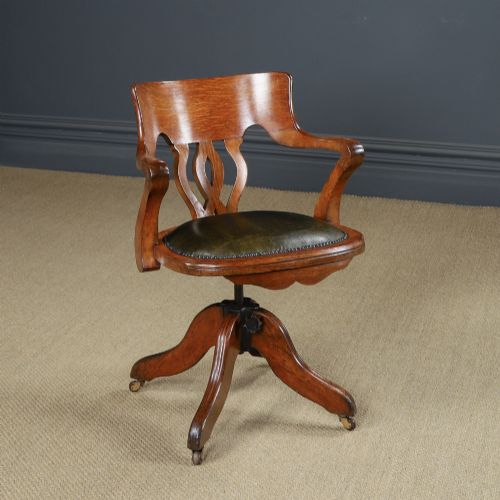
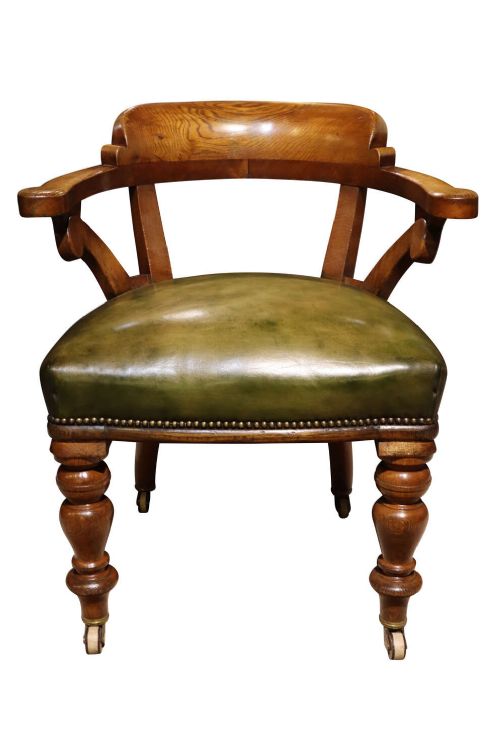
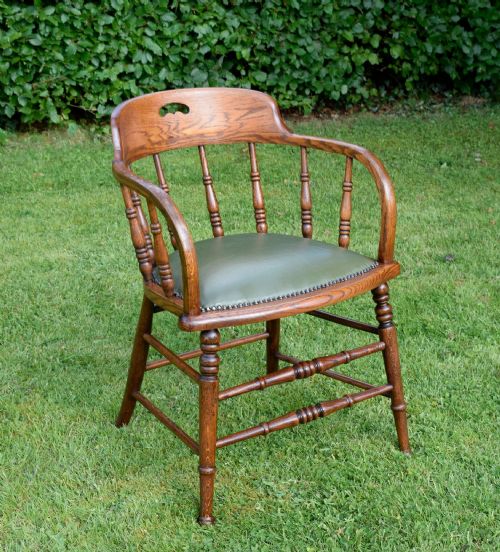
Writing surfaces feature inset panels of green leather, often bordered by blind tooling or gilt decoration. Metal hardware such as brass handles, cast iron swivel mechanisms, and copper fittings complete the structural assembly of both the desks and their matching revolving chairs.
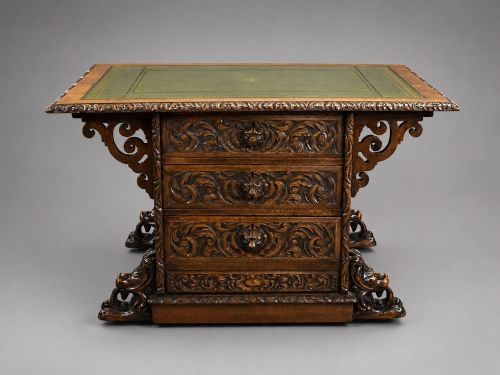
Several Victorian oak desks hide grinning Green Man carvings amongst their foliage, keeping a watchful eye on the paperwork.
Determinants of quality
Quality reveals itself through the selection of timber, such as figured golden oak versus plain stock, and the depth of hand-carved ornamentation like Jacobean or Gothic Revival detailing. Cabinetmakers applied distinct levels of craftsmanship to drawer linings, dovetailing, and structural framing.
The integration of the green leather top also dictates standard, with superior examples showing crisp tooling, rich hide texture, and careful edge pairing. Hardware complexity, including patent swivel mechanisms on office chairs and branded maker stamps, further separates standard workshop production from premier examples.
James Shoolbred and Co·T Wilson·Gillow and Co·Simpsons of Kendall·William Angus and Co·Heywood Brothers and Wakefield Co
The Oak Desk Green Leather Glossary
- Partners Desk
- A large double-sided desk designed for two people to work opposite one another, featuring drawers and cupboards on both faces.
- Pedestal Desk
- A heavy writing desk consisting of a top board resting on two separate drawer pedestals.
- Kneehole Desk
- A smaller writing table featuring a central recess for the user's legs, flanked by single or multiple stacks of drawers.
- Revolving Chair
- An office seat mounted on a central swivel mechanism, allowing the user to turn without moving the base.
- Blind Tooling
- An impressed decorative pattern on leather surfaces created using heated metal tools without gold leaf.
Oak Desk Green Leather: Frequently Asked Questions
What is a partners desk?
A partners desk is a large double-sided workspace built to accommodate two people sitting opposite each other. These pieces feature matching drawer arrangements and cupboards on both faces.
Cabinetmakers constructed them from dense timbers like oak, often finishing the expansive top with a central panel of green leather. They served primarily in professional offices, libraries, and large estate administrative rooms.
How do I care for the leather top?
The green leather top requires gentle cleaning with a slightly damp cloth followed by a neutral leather conditioner to maintain suppleness. Avoid harsh chemical cleaners and excessive moisture that might damage the underlying timber substrate.
Keeping the hide nourished prevents cracking and preserves the traditional appearance of the writing surface over decades of daily use.
Were swivel chairs common in the Victorian era?
Swivel chairs became widely used during the late Victorian and Edwardian periods, particularly alongside the expansion of office spaces. Manufacturers utilised cast iron and wood mechanisms to allow smooth rotation and height adjustment.
These revolving seats were paired with oak desks to provide mobility for clerks, managers, and professionals working in institutional settings.
How do I date an oak desk?
Dating relies on examining construction methods, drawer dovetails, hardware materials, and stylistic cues from periods like the Victorian or Edwardian eras. Earlier pieces often display hand-cut joinery and simpler framing, while later Edwardian examples incorporate patent swivel mechanisms and factory-produced iron fittings.
Maker stamps, stamps on locks, and overall proportions relative to specific design movements also help establish the decade of manufacture.